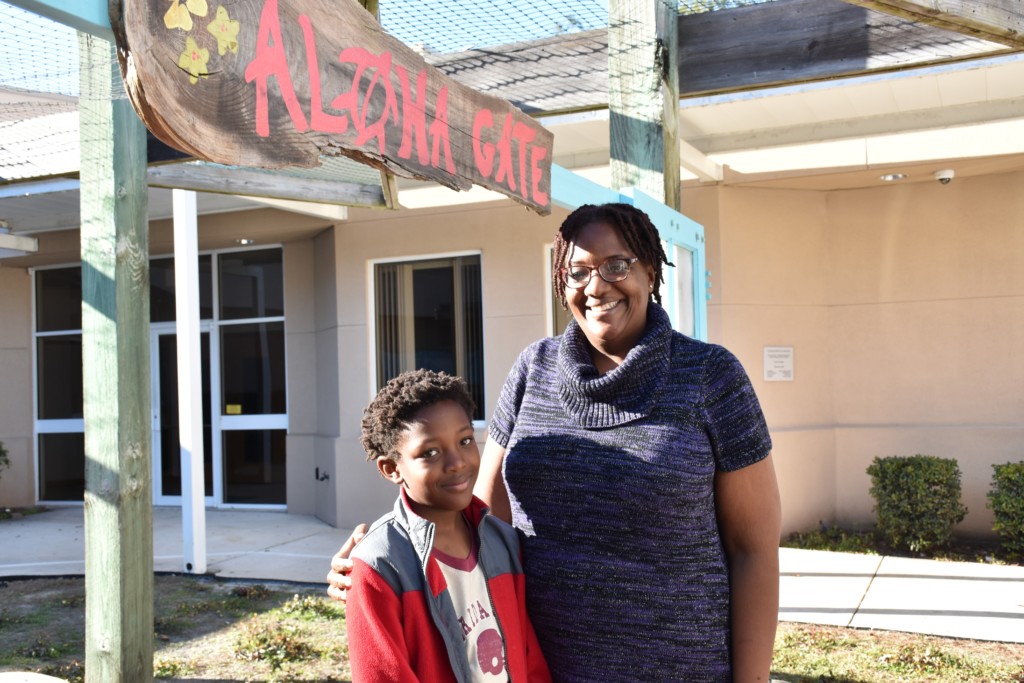
Landon Waters and his mother LaTanya Urquhart are ecstatic that Landon is enrolled at Seaside Charter San Jose in Jacksonville, Florida. After a recent move from Philadelphia, Landon struggled at his neighborhood school. At Seaside Charter, he feels like he belongs.
JACKSONVILLE – Landon Waters was unhappy about moving from Philadelphia to North Florida with his mother and older twin brothers in 2014. His mood didn’t improve when he started attending kindergarten in his new neighborhood school.
He wasn’t a bad student; he just didn’t like school very much. His mom, LaTanya Urquhart, said he was more interested in playing with pencils and daydreaming than listening to his teacher. He often threw tantrums or cried when she dropped him off in the morning.
LaTanya could see why Landon was struggling.
“The school was so rigid and restrictive,” she said. “When they were done with their work, a lot of times they’d just sit there at their desk, doing nothing. It was like torture for him. He likes to learn. I know, because we would do little science experiments at home and he’d love it, and he loves math.”
Landon’s life began to change after one of LaTanya’s friends told her about the school where she was a teacher, Seaside Charter San Jose. The A-rated K-8 charter school, administered by Seaside School Consortium, which operates two schools in Jacksonville, was about 30 miles from LaTanya’s home. LaTanya applied, and Landon entered as a third-grader.
It took a while for Landon to adjust to his new surroundings.
“He mostly struggled socially,” Seaside principal Rick Pinchot said. “At first, he got angry way more often and had trouble relaying his thoughts. He’d get mad and shout at people. It was nothing physical, but he could scare a child or two.”
The school operates under the Waldorf educational philosophy, a central focus of which is to stimulate students’ imagination and creativity. Seaside students “stay in touch with nature,” Pinchot said, tending a large garden and sharing the duties of planting seeds, watering plants and harvesting their crops. At Seaside, play time is almost as important as the school’s rigorous academics.
“We really focus on three principles: Be kind and respectful, always tell the truth, and everyone belongs,” he said. “I see Landon every morning at 7, and he and I will have a talk about football or his brothers.”
Pinchot said he suspects no educator has ever done that for Landon, but it appears to be something the child needed.
“I think he feels like he belongs, and should be here,” Pinchot said.
The values Landon has developed at Seaside have helped him overcome the culture shock of his move to Florida and the resulting angst of being away from family and longtime friends.
He has become a dedicated student with career ambitions that shift like the nearby Atlantic tide. One week, he wants to be a teacher when he grows up. By the next week, he has a brand-new idea.
After school on a recent weekday, he announced that he wants to play in the National Football League. LaTanya suspects this is a nod to his 15-year old brothers, who play football at their neighborhood school where they are thriving.
Landon, now a fourth-grader, also has declared he wants to become mayor.
“That way, after I retire, I won’t just be sitting at home and doing nothing,” he said. “I could run my own town.”
The 9-year-old, who is learning fractions, said he loves math. He’s also been enjoying his science class, where the students made posters to demonstrate how the school can conserve water. He rose to the challenge of a recent history project that involved the construction of Viking ships from cork board, Styrofoam and clay.
Landon’s ship capsized – he realized belatedly that he had used too much clay – but he didn’t get frustrated. Instead, he kept trying.
“I just took out some clay and used more toothpicks to keep everything together better,” he said.
Listening to Landon talk about his project brought a smile to LaTanya’s face.
“Those kids took that project and just ran with it,” she said. “Every student was engaged.”
LaTanya is so happy with Seaside that she took a part-time job in the school’s extended-day program.
“They really do use their environment to help them learn,” she said. “They’re not restricted to sitting in desks all day. They’re encouraged to use their imagination, and they have the freedom to learn the way they learn best.”
In a place where they all belong.
About Florida’s charter schools
Florida is home to 658 public charter schools, enrolling more than 313,500 students. Sixty-two percent are black or Hispanic; more than half qualify for free or reduced-price meals. The Florida Department of Education classifies 192 charter schools as academically high-performing.
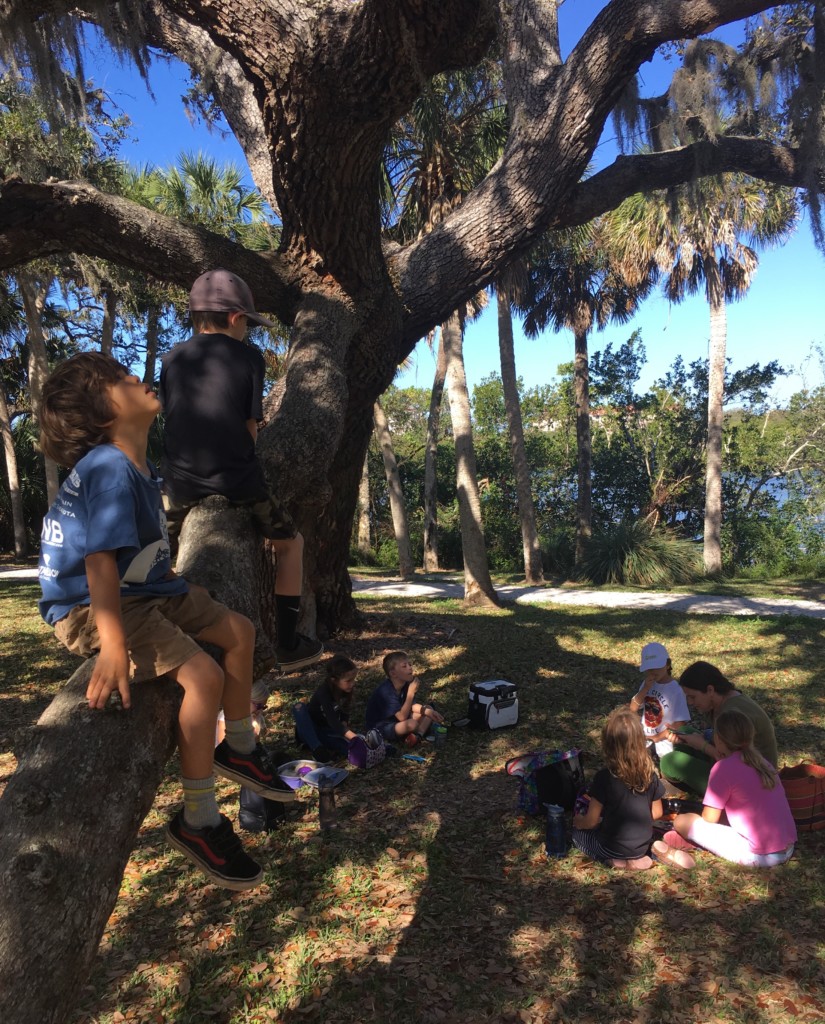
The students at Mangrove School routinely visit nature parks and beaches. More than half the students beyond preschool use school choice scholarships.
This is the latest in our series on the center-left roots of school choice.
SARASOTA, Fla. — At a nature park bedecked by oaks and palms, a teacher at Mangrove School mimics a wolf call through cupped hands, signaling to scattered students that it’s time to breeze over. “Let’s greet the day,” the teacher says. They all join hands, then take turns facing east, south, west, and north as their teacher offers thanks. To the rising sun. The palms and coonti. The manatees and crabs. Even to the soil.

So class begins at another choice school that defies stereotypes – and conjures possibilities.
On the one hand, Mangrove School is just another one of 2,000 private schools that accept Florida school choice scholarships. On the other, its mission to “honor childhood,” “promote world peace” and “instill reverence for humanity, animal life, and the Earth” is impossible to square with a pernicious myth – on the policy landscape, the equivalent of an invasive species – that school choice is being rammed into place by forces that progressives find nefarious.
“I hear that, and I look around here, and I think it’s very strange,” said Mangrove School director Erin Melia, a former chemist with a master’s degree in education. “I would think it (the perception) would be the opposite. The people most in need of choice are the people left behind.”
Mangrove School started as a play group 18 years ago. Now it has 43 students from Kindergarten to sixth grade, including eight home-schoolers who attend part-time. Nineteen of 35 full-timers use some type of school choice scholarship, most of them the Florida Tax Credit Scholarship for lower-income students.*
“We’re just trying to be available to as many families as possible,” Melia said.
That’s a standard view among private schools participating in Florida choice programs, including plenty of “alternative” schools. (Like this one, this one, this one and this one). Those private schools serve more than 100,000 tax credit scholarship students alone. Their average family incomes barely edge the poverty line, and three in four are children of color. Yet the narrative about conservative cabals feels as entrenched as ever.
Blame Trump and the media.
Last March, six weeks after he was inaugurated, the most polarizing man on the planet visited an Orlando Catholic school and held up Florida school choice scholarships as a national model. Just like that, they became a bullseye. In subsequent months, The Washington Post, The New York Times, NPR, Scripps, ProPublica, Education Week and Huffington Post all took aim. Every one of them prominently mentioned the connection to Trump and/or Education Secretary Betsy DeVos. Ditto for the Orlando Sentinel, which punctuated the year with a hyperbolic series that attempted to portray the accountability regimen for private schools as broken.
Not a single one of those stories offered a nod to the fuller, richer history behind school choice. Or to its deep roots on the left. Or to the diverse coalition that continues to support it. So, again, a reminder: (more…)
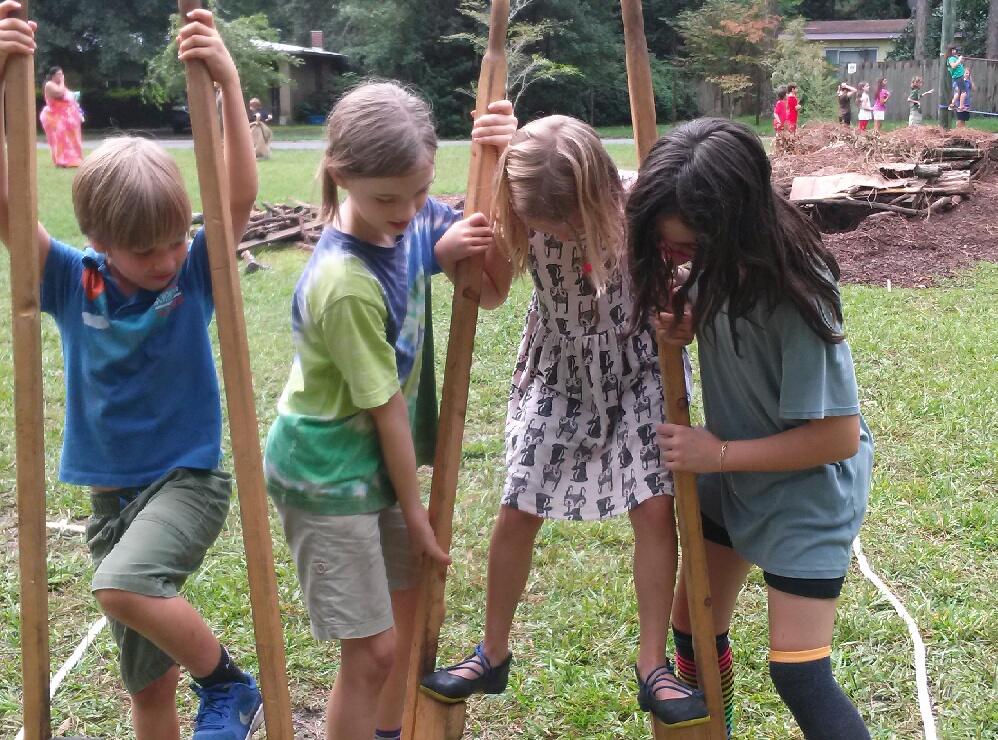
Twenty-six of 62 students at Heart Pine School use tax credit scholarships. One parent said when she and her husband secured one of the school choice scholarships for their son, "It was like we could breathe." (Photo courtesy of Heart Pine School.)
This is the latest post in our ongoing series on the center-left roots of school choice.
Gainesville, Fla. is a liberal college town that prides itself on being “green.” And if there’s a classroom that channels that vibe, it’s Wanda Hagen’s at Heart Pine School.
Hagen’s seventh graders raise tadpoles, hike in a park where buffalo lounge under live oaks, and hunt for shark’s teeth in Gainesville’s cherished urban creeks. On a whim, they might go for a stroll before a storm, to see if they can smell the change in the air. When children overcome the “nature deficit” of modern life, Hagen said, they and the planet benefit.
Plenty of folks in Gainesville would agree. And yet, the fingerprints of Gainesville progressives are all over two lawsuits that sees to end a school choice program that helps Heart Pine parents. Both take aim at the Florida tax credit scholarship for low-income and working-class students, which 26 of 62 Heart Pine students use.
Hagen, a self-described “independent liberal,” calls the suits “a real shame.”
“It’s Fahrenheit 451,” she said, referring to the classic novel about repression of dissent. If the lawsuits succeed, “The thinkers outside the box are not going to be appreciated.”
Heart Pine is another ripe example of the political left’s rift over school choice.
Despite a long history of center-left support, today’s progressives, especially white progressives, suffer from split personality disorder. Some still recoil from uniformity and bureaucracy. But others accept a warped view of school choice as a front for privatization, a position tied to the teachers union’s rise in Democratic Party politics. The ironic result is the biggest threat to a colorful school like Heart Pine, a school for grades 1-8 that follows the Waldorf model, isn’t conservatives. It’s fellow progressives.
In Gainesville, the fight pits neighbor against neighbor, even if neither side realizes it.
The lead plaintiff in the first lawsuit is Citizens for Strong Schools, a Gainesville group founded to push for higher property taxes for district schools. Its members include the president of the local teachers union, the spokesperson for the school district, and the woman who heads the Florida League of Women Voters’ “School Choice Project.” The plaintiffs are represented by Southern Legal Counsel, a Gainesville firm co-founded by Jon Mills, a high-profile Democrat and former Florida House Speaker. Their legal arguments are anchored in changes Mills helped engineer into a constitutional amendment that voters passed in 1998.
Filed in 2009, the suit blasts Florida’s entire education system, charging it has failed to live up to constitutional directives for “adequate” and “high-quality” schools. More funding is the big goal, but the plaintiffs are also firing at school choice programs, including the McKay Scholarship, which serves 31,000 students with disabilities, and the tax credit scholarship, which serves 95,000 students whose family incomes average 4 percent above poverty. (The latter is administered by nonprofits such as Step Up For Students, which hosts this blog and pays my salary.)
The second lawsuit trains its sights solely on the tax credit scholarship. It was filed in 2014 by the state teachers union and other plaintiffs, including the Florida League of Women Voters. In August, a three-judge panel of the First District Court of Appeal dismissed the suit, finding, like the circuit judge who did the same in 2015, that the plaintiffs provided no evidence to back claims of harm to public schools. The union requested last month that the Florida Supreme Court hear its appeal.
Many Heart Pine supporters want an alternative to mainstream schools, both public and private. Their school is housed in a former Presbyterian church, a replica of a Seminole chickee, covered with thatched palm, conspicuous on its playground. (more…)
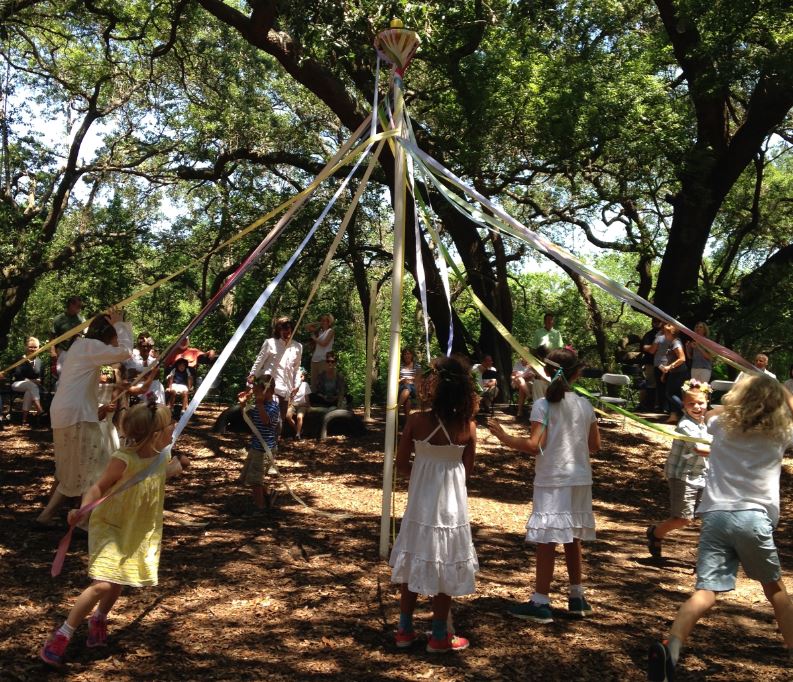
To help children grow into independent, compassionate adults, Suncoast Waldorf and other Waldorf schools emphasize art, a reverence for the natural world, a do-it-yourself resourcefulness. They like to have fun too. (Photo courtesy of Suncoast Waldorf.)
This is the latest post in our series on the diverse roots of school choice.
If the Suncoast Waldorf School in Palm Harbor, Fla. is part of a right-wing plot, it’s good at hiding it. Its students cultivate a “food forest.” Its teachers encourage them to stomp in puddles. Its parents sign a consent form that says, I give permission for my child, named above, to climb trees on the school grounds …
And yet, the unassuming, apolitical little school is solidly school choice. Sixteen of its 60 students in grades K-8 last year used tax credit scholarships to help defray the $10,000 annual tuition. And to those familiar with the century-old vision that spawned the Waldorf model – a vision whose first beneficiaries were the children of cigarette factory workers – there’s nothing unusual about it.
School choice scholarships make Waldorf “more accessible to a diverse group of families,” said Barbara Bedingfield, the school’s co-founder. “This is what we want.”
“Alternative schools” like those in the 1,000-strong Waldorf network help upend myths about choice being hard right. This small but thriving corner of the education universe is especially resistant to labels, but there is a nexus between many of these schools and ‘60s-era, counter-culture reformers like John Holt (think “unschooling”) and Paul Goodman (think “compulsory miseducation”).
“Thirty-plus years ago, school choice was almost entirely a cause of the left,” is how writer Peter Schrag described it in 2001, writing for The American Prospect. “In the heady days of the 1960s, radical reformers looked toward the open, child-centered schools that critics like Herb Kohl, Jules Henry, Edgar Friedenberg, Paul Goodman, and John Holt dreamed about. Implicitly, their argument had the advantage of celebrating American diversity and thus obviating our chronic doctrinal disputes about what schools should or shouldn't teach.”
Then and now, the contrarian outlooks of this species of ed reformer are often libertarian and left, both embracing of “progressive” goals and distrustful of government’s ability to deliver. Generally speaking, they aren’t fond of government-dictated standards, testing, grading, grade-level configurations or anything else subject to imposed uniformity. But they are willing to consider the potential of tools like vouchers to give parents the power to choose schools that synch with their values.
Suncoast Waldorf sits on two acres of live oaks, a leafy oasis off a busy road in Florida’s most urbanized county. It blossomed 17 years ago, just as the Sunshine State began blazing trails on the school choice frontier.
To help children grow into independent, compassionate adults, it emphasizes art, a reverence for the natural world, a do-it-yourself resourcefulness. Standardized testing is out (except for what’s required by state law for the scholarship program). So are letter grades and iPads. So is Common Core. (more…)
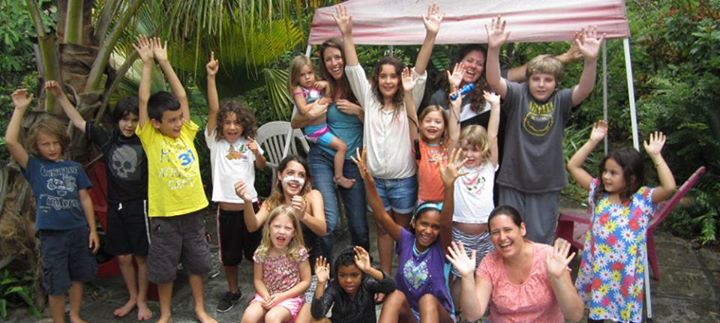
Last day of school this year at Sunset Sudbury School in Davie, FL.
Editor's note: Dionne Ekendiz founded the Sunset Sudbury School in South Florida. In her own words, here's why she did it.
I always wanted to become a teacher and make a difference in the lives of children. I truly believed in public education and wanted to be part of making it better. But like many “smart” students, I was dissuaded from that career path, especially by my math and science teachers. They encouraged me to do something “more” with my life, so I went off to MIT and pursued a degree in engineering. After 12 years as an engineer, computer programmer, and project manager in the corporate world, I finally had the confidence and courage to make a change. Others thought I was crazy to leave a great career, but I was driven to pursue my own passion.
 I entered a master’s of education program and sought to get the most of my experience there. When I heard about a professor who was conducting research in the “best” public schools in the area, I volunteered to be his graduate assistant. This took me into the schools twice a week. I loved working with the students, but there were things I didn’t like about the environment. One of the most disturbing was how teachers and aides would yell at students to “stay in line” and “don’t talk” in the hallways. Those were the times that schools felt most like prisons to me. But still, I believed a good teacher could learn to control his/her students in a more humane way, so I didn’t let it bother me so much.
A year into my education program, I gave birth to my first child. Watching her grow and learn on her own, especially during her first years, made me see the true genius inside her. Indeed, it is a genius that exists in all children. She was so driven to master new skills like walking, talking, and feeding herself. I was always there with love, support, and encouragement, but my instincts told me to stay out of her way as much as possible and let her own curiosity guide her. Because of my own experiences with schooling and well-meaning teachers, I was determined to let my daughter make her own choices. I knew that with curiosity and confidence intact, she could do and be anything she wanted to.
It slowly dawned on me that everything I was learning about teaching was contrary to the philosophy I was using in raising my own daughter. The goal of teachers, in the traditional setting, is to somehow stuff a pre-determined curriculum into students’ heads. Some teachers do it more gently than others and make it more fun, but the result is the same. Teachers must stifle their students’ own interests and desires to meet the school’s agenda. Simply put, regardless of how nice a teacher is, s/he must coerce students into getting them to do what s/he wants them to do. What I was once willing to do to other people’s children, I wasn’t willing to do to my child. That was a huge wake-up call for me. (more…)
Ryan Wallace left his big, cliquish high school last spring for The Foundation Academy, a non-denominational Christian school with vegetable gardens and an aquaponic farm. “I wanted a chance to try something new,’’ said Ryan, now a 17-year-old junior planning a dodge-ball fundraiser for his class president campaign.
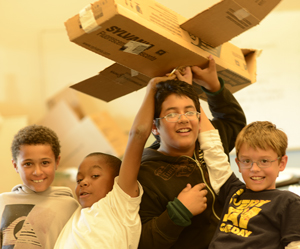
Boys in Aaron Unthank's single-gendered fifth- and sixth-grade class learn from each other, too. The setup gives Unthank more freedom to cater classes to meet boys' learning styles.
Twelve-year-old Marc’Anthony Acevedo came to the academy as a second-grader after being bullied at his old school. This year, he’s part of a single-gendered class of fifth- and sixth-grade boys. “Sometimes we have arguments, but we get over it,” he said. “We’re all friends.’’
For Cori Hudson, the Foundation was his last shot at a diploma. He messed up at the school district’s option of last resort. “I come to school every day now,’’ said the 16-year-old. “I feel like school is the most important thing to me.’’
These transformations are exactly what principal Nadia Hionides hoped for when she started the academy near Jacksonville Beach, Fla. nearly 25 years ago.
With a style that’s part Montessori, part Waldorf, the Foundation offers hands-on, project-based learning with a college-preparatory curriculum based on the philosophy that everyone learns differently.
The school has 280 students in kindergarten through 12th grade; 100 are in high school. They share a 23-acre campus that Hionides and her husband, a ship deck builder and painter, bought in 2008 for $600,000. The couple spent another $5 million for eight, prefabricated steel structures, which include a front-office foyer where the floor is made from vinyl records.
Tuition starts at $6,000 a year. But 81 students receive tuition assistance from Step Up For Students, the nonprofit that administers Florida’s tax-credit scholarship program for low-income kids and co-hosts this blog.
The academy separates students into groups of two grade levels - kindergarten and first-graders, second- and third-graders, etc.
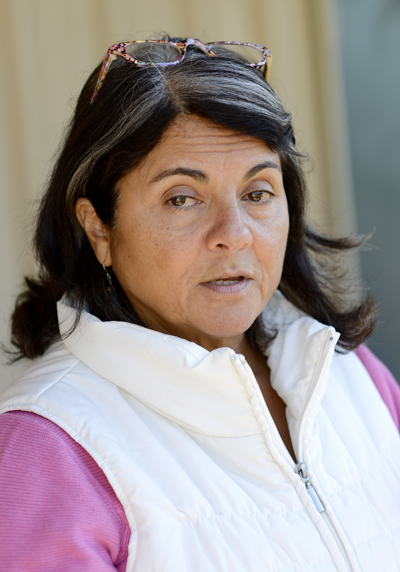
Hionides
“Because that’s real life,’’ Hionides said. Also, “they push each other to shine.’’
It seems to work in the fifth- and sixth-grade boys’ class – for the students and their teacher.
“It’s fantastic,’’ said Aaron Unthank, a longtime private school music teacher and baseball coach. “There’s a different kind of camaraderie as a class and there’s a lot more freedom I have as a teacher to talk about guy things.’’
The younger boys learn from the older boys, and the older boys gain confidence, Unthank said. He paraphrased Einstein: “You don’t know a thing well enough unless you can talk about it.” (more…)
 Waldorf schools are a splendid example of how the private marketplace can fill a learning niche. Their humanistic approach can work in perfect harmony with some families to produce creative, lifelong learners who become highly successful adults. And as redefinED editor Ron Matus pointed out in this post about the Waldorf Sarasota and an oped in today’s Sarasota Herald-Tribune, they also help make two pertinent points in the world of tax credit scholarships. One, not every school is right for every student; and, two, any education program that includes Waldorf is not easily described as a right-wing conspiracy.

