Christina Sheffield knew the Christian school she chose for her son, Graham, was high quality. It met the expectations she and her husband had for religious instruction. But Graham, who always finished his assignments ahead of his classmates, needed more of a challenge on the academic front.
When he completed his work, he would either just sit at his desk or be asked to help struggling classmates, a situation that Sheffield thought shortchanged her son.
“School was way too easy for him,” Sheffield said. “He was bored. He was forced to help others rather than being given something a bit more challenging.”
By the time Graham recached third grade, she said, “we knew we weren’t serving him correctly.”
So, Sheffield, a certified district elementary school teacher who switched to teaching virtual school after Graham was born, filed the paperwork with her district to begin homeschooling, which in Florida was illegal until 1985. Parents who dared to attempt it kept it hush-hush and made sure the blinds were closed. Over the years, she designed a customized learning plan for her son, now a seventh grader who loves computer coding.
Sheffield is one of a growing number of parents who has blurred the lines between the original definition of homeschooling, where the parent teaches his or her child in person all day, and the modern understanding that includes new approaches such as microschools, virtual schools, part-time in-person school, and community resources such as city recreation centers, public libraries and nonprofit fine arts centers.
In a word, “unbundled” education services, which allow parents to piece together customized learning plans for their children.
After doing some thorough online research, Sheffield bought the curriculum her son’s former school used and enhanced it with projects to give Graham a deeper dive. She made the decision to “start with what he knew and what I knew.”
It lasted about a semester. Graham, at the time an only child, craved socialization. So, she enrolled him at Wellmont Academy, a hybrid school that he attended two days a week and allowed him to learn from home the rest of the week.
That didn’t work so well either.
“Everything was too super easy for him,” Sheffield said.
Sheffield decided to have Graham, then in fifth grade, tested for academic giftedness through the Pinellas County School District. The results confirmed her suspicions that Graham was gifted.
Now officially identified, Graham, like other gifted homeschoolers, was entitled to district services for such students. He started going to a weekly class offered at his zoned elementary school. There, he was able to interact with other students whose intellect matched his.
“It was his favorite day of the week,” Sheffield said. “After I picked him up on the first day, he said, ‘Mom, I finally feel like I fit in.’ That made my mom’s heart happy.”
Sheffield finally had things figured out. She enrolled Graham in a part-time virtual gifted program at Florida Virtual School, with part-time classes in the Pinellas County School District’s virtual program. For enrichment, she turned to the Dunedin Fine Arts Center and Chosen, a Pinellas County homeschool co-op sponsored by a local church, which offers classes in everything from cooking to drama to skateboarding.
Graham participates in P.E. classes for homeschoolers through several community organizations and takes Tai Kwan Do lessons to stay fit and participate in a sport.
“There are a lot of little jewels and gems,” Sheffield said.
Though it’s clearly the best option for a lot of students, Sheffield said, it can get pricy.
Co-op fees can run several hundred dollars per year, depending on the level of participation. While that could be a deal breaker for families of modest means, more states are making education savings accounts available. ESA’s allow parents to withdraw their children from public district or charter schools and receive a deposit of public funds into government-authorized savings accounts with restricted, but multiple uses.
Those funds can cover private school tuition and fees, online learning programs, private tutoring, community college costs, higher education expenses and other approved customized learning services and materials. Some allow students to use their funds to pay for a combination of public school courses and private services, following the model Sheffield embraced years ago.
You can read about how Florida allows select students to use education savings accounts here.
Sheffield tweaks the formula each year to do what works best for Graham. Now that he is in middle school, that means full-time enrollment in Florida Virtual School’s gifted program. Because his district middle school’s daily programs for gifted students conflicted with his co-op electives, Graham has stopped attending those but gets the intellectual stimulation he needs from the FLVS program, Sheffield said.
“In the past year, I saw growth in him in a way I hadn’t seen,” she said. For the first time, she said, Graham had to work at doing well in school.
“He’s still a straight-A student, but he’s gone from K-5 where he was good at doing things and done in a hot second,” she said. “Things aren’t supposed to be handed on a silver platter to kids; they need to work through things and problem solve and learn about taking notes and using those notes.”
Sheffield makes it all look easy today, but there were hurdles to clear in the beginning. The first was her husband, who worried Graham would be stereotyped as “nerdy” and the family assumed “outside society’s mainstream.” A co-worker put those concerns to rest, telling him her kids are busier now than they were in “regular school.”
Today, Sheffield said no one has any regrets, especially Graham, who is thriving with a plan designed just for him.
“Graham says there’s no way he would ever go back,” Sheffield said.
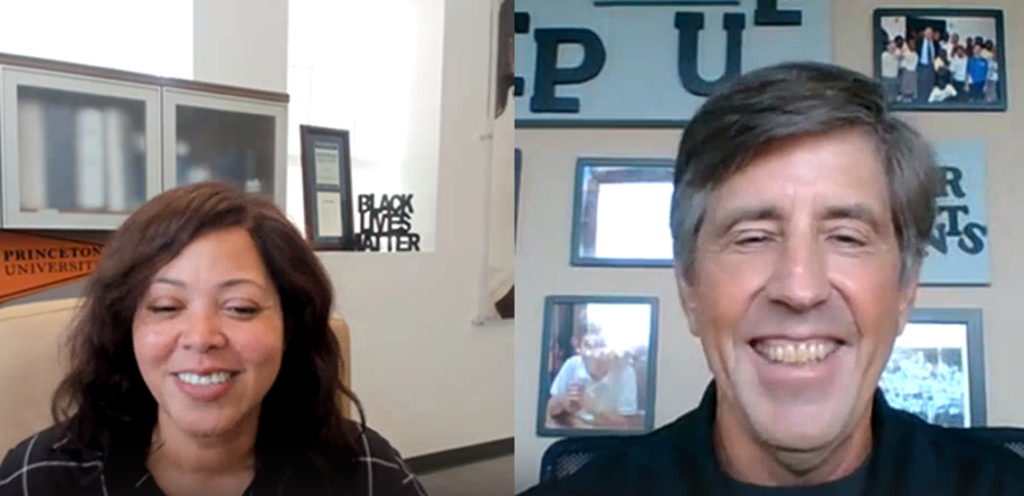 On this episode, Tuthill talks with the leader of a cohort of 16 charter schools in the Washington, D.C., area that primarily educate families of color. The two discuss how Friendship, which serves more than 4,500 students in prekindergarten through 12th grade, has adapted its education delivery in the wake of the global pandemic.
Brantley observes that one of her biggest surprises has been feedback from families of students with special needs who say their children are less distracted, learning more, and getting better personalized feedback from their teachers in digital or hybrid learning environments. She discusses with Tuthill the unbundling of education services to provide families with more flexibility and options, the growing trend of families creating small “pod” schools in their homes, and the necessity of providing internet access to all children to ensure educational equity.
"Adults need to think differently, and they need to catch up with kids … (Families in pods) are getting an amazing education. But that education is owed to all our children regardless of their parents’ resources. We need to figure out how we're going to get it delivered to them."
EPISODE DETAILS:
· What Friendship has learned over the past two semesters of innovation and how it plans to improve for the future
· Creating a robust professional development system for Friendship’s teachers and staff
· Strengths of the digital environment and how technological advancements can personalize education
· The benefits of unbundling education services and the ways entrenched systems may react and adapt
 In the second of a two-part interview, Tuthill and 50CAN’s executive vice president discuss the organization’s advocacy for federal funding to build new education infrastructure and its goal of giving individuals power and money to shift the future of public education toward greater diversity and choice.
Tuthill and Bradford also discuss the inflexibility of modern school districts and teacher unions, both of which have the potential to lead the charge in unbundling education services to offer families greater choice, but currently are resistant to do so.
"There is an opportunity here to talk about how we make sure we continue to have public schools that are sustainable, (rather than) continue to have a monopoly that isn't."
EPISODE DETAILS:
· How pushing for new federal funding of diverse choice options can filter down to shift long-standing state funding battles
· How school districts’ recalcitrance to offer compelling education options has led more families to explore other options
· How decentralizing district and teacher union power could benefit teachers
· The contradictory position of progressives who refuse to support education choice due to misplaced political loyalties
LINKS MENTIONED:
New York Times - Not Everyone Hates Remote Learning. For These Students, It’s a Blessing
Fund Everything – Emergency Education Investments in a National Crisis (Direct PDF link)
Measure Everything – Emergency Data Collection in a National Crisis (Direct PDF link)
You can listen to Part 1 of the interview here.
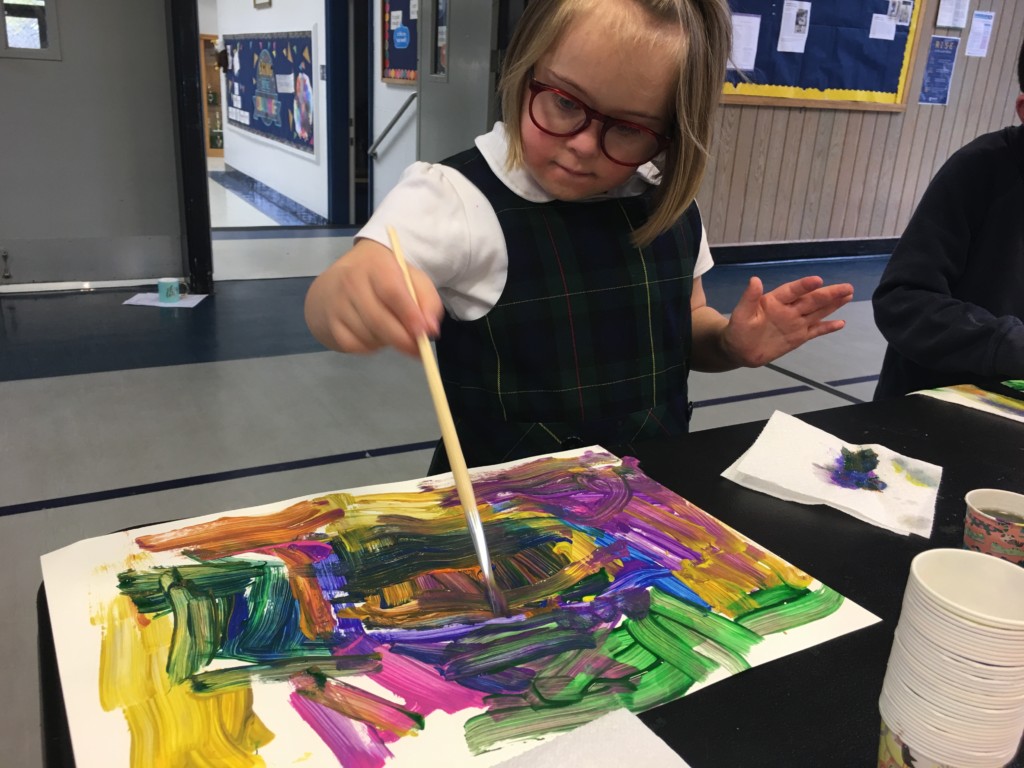
An education savings account ensures that Anna Ragusa of North Carolina can continue to receive needed therapies during social distancing.
Public education has historically been a poorly managed, underperforming market. The pandemic is driving changes that could, over time, lead to market improvements that will benefit families, students, educators and the public.
In effective and efficient markets, consumers control their purchasing power, monopolies do not exist, the barriers to entry and exit are appropriate (i.e., not too high or too low), information needed to make good decisions is available to suppliers and customers, and the public good is well served.
None of these features exist in public education today. About 90 percent of public education services are controlled by a single supplier – government. This market domination constitutes a monopoly. Almost all purchasing power is controlled by government.
When families have no control over their public education dollars, new suppliers are discouraged from entering the market. That’s because most families cannot afford to pay both school district taxes and the cost of education services from non-government suppliers. This barrier to entry is why there has been so little supplier diversity and innovation in K-12 education over the last 170 years. Giving families control over their education dollars would unleash demand and create a market that would attract more suppliers.
While the availability of information in public education has gotten better over the last 25 years, families and schools still lack the quality and quantity of information they need to make good decisions. These market flaws are causing taxpayers to get a poor return on their investments in public education.
Some of these market deficiencies are starting to be addressed as families respond to the pandemic by asserting more control over their children’s education. Affluent families are using their own funds to create and access alternative schooling models, including micro-schools, homeschooling cooperatives and pandemic pods. And a few governors are using federal stimulus dollars to fund scholarships so low-income families may have these same opportunities.
If this trend continues and more families gain greater control over their public education dollars, the barriers to entry for new, more diverse suppliers will be lowered and the creativity and innovation we are starting to see will increase. Using Education Scholarship Accounts (ESAs) to give families more flexibility over how they spend their public education funds will also open the market to providers such as tutors, counselors and therapists.
In healthy markets, more desirable supply attracts more consumers, which then attracts even more desirable supply, which then attracts even more consumers. This type of virtuous market cycle is emerging in a few communities and could start to erode the government’s monopoly on supply and further the development of a healthy public education market.
The unbundling of education services will also accelerate the improvement of a better public education market. Government has historically used its monopoly to force parents to access all their education services from a single provider (e.g., the neighborhood public school). While the unbundling of these services has been occurring slowly over the last three decades as families increasingly use programs such as virtual schools and dual enrollment, the pandemic is encouraging suppliers to accelerate this unbundling.
Some private schools are offering childcare services for families who want to access a virtual instructional program but need out-of-home childcare. Some school districts are providing breakfast and lunch programs for low-income families who are homeschooling. And some community organizations are providing extracurricular activities, such as theatre and sports programs, that are no longer available at some neighborhood schools.
We have almost two centuries of data showing that a dysfunctional public education market is not capable of delivering systemwide excellence and equity. The work required to develop the infrastructure necessary to support an effective and efficient public education market is daunting. But this horrific pandemic has provided us an historic opportunity we should not let pass.

