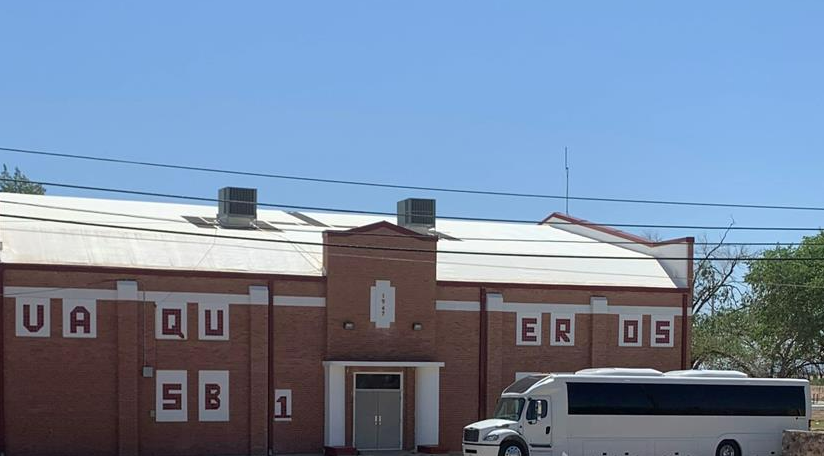
Sierra Blanca Independent School District is a small and rural district east of El Paso, Texas, with a single school that serves grades K-12. According to the U.S. Department of Education's National Center for Education Statistics, Texas has more than 2,000 campuses classified as being in rural areas.
Editor’s note: This commentary from Texas agriculture commissioner Sid Miller appeared Thursday on marshallnewsmssenger.com. You can read an exhaustive brief on the subject of rural school choice in Florida from Step Up For Students’ Ron Matus and Dava Hankerson here.
School choice is a human rights issue, no matter where you live. But not all schools are the same.
Rural public schools tend to outperform their urban counterparts for a variety of reasons. The consequence is that politicians often assume that rural voters have less interest in school choice than urban voters.
During the 2022 Texas Republican Primary, the platform plank most enthusiastically and overwhelmingly supported by rural voters was school choice. In that election, Texas Republicans from urban, suburban, and rural parts of the state all voted on Proposition 9 which reads, “Texas parents and guardians should have the right to select schools, whether public or private, for their children, and the funding should follow the student.”
To the shock of the Austin political class, nine out of 10 primary voters supported this proposition, and virtually every county in the state overwhelmingly supported it. Three-quarters of the counties that voted in favor by 95% or higher have populations under 20,000. Of the 67 most supportive counties, 58 have populations under 100,000.
Rural Texans overwhelmingly want education freedom and school choice! In fact, there was no statistical difference in rural and urban votes for this proposition.
To continue reading, click here.
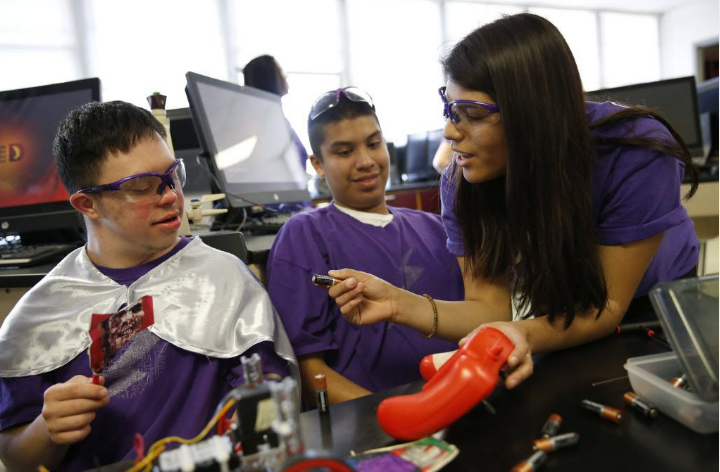
Ivonne Torres, a senior and captain of the robotics team at Sunset High School in Dallas, shows special education students Tomas Sosa (left) and Josh Preciado how to put a battery into a controller during an after-school session. PHOTO: Dallas Morning News
Editor’s note: This article appeared last week on dallasnews.com.
Texas lawmakers want a better way to educate students with disabilities, but will they turn to voucher-like programs to do so? A committee’s recent debate on expanding microgrants and other school-choice options could foreshadow the anticipated fight over school vouchers.
The Texas Commission on Special Education Funding recently discussed draft recommendations that include expanding a program that awards families of students with special needs one-time grants to use toward education services, such as tutoring or therapy. Supporters called the grants “one step away” from voucher-like efforts.
This month, the commission heard testimony on whether Texas should create education savings accounts for students with disabilities. Such accounts give parents public funds directly to pay for private-school tuition or for other education expenses.
More than a dozen speakers, including researchers, lobbyists, advocates and parents, spoke during the hearing that lasted more than five hours. Many touted the success of similar programs in other states, while others passionately warned the commission about the negative impacts voucher-like initiatives can have when they divert funding from public schools.
Many private schools could make room for students with education savings accounts, said Laura Colangelo, executive director of the Texas Private Schools Associations.
“There are many parents desperate for this option,” Colangelo told lawmakers.
To continue reading, click here.
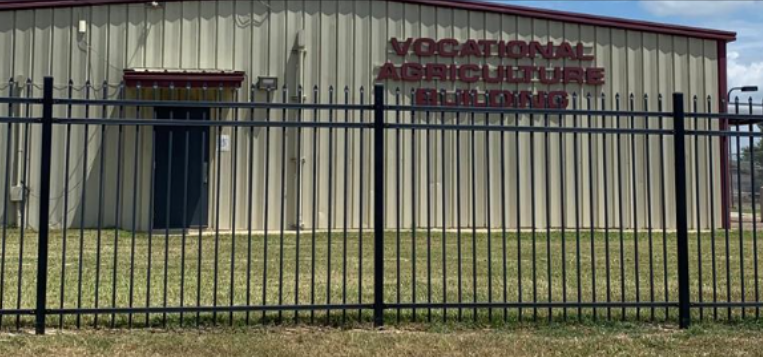
Jim Hogg/Conroe Independent School District is a rural district located in the ranching community of Hebbronville, Texas, near the Rio Grande. According to the U.S. Department of Education's National Center for Education Statistics, Texas has more than 2,000 campuses classified as being in rural areas.
Editor’s note: This commentary appeared last week on lubbockonline.com.
Is school choice bad for rural school districts? Joy Hofmeister certainly thinks so, going so far as to call vouchers and related programs “rural district killer[s].”
In case you aren’t familiar with Ms. Hofmeister, she’s the Oklahoma Superintendent of Public Education and was recently the Democratic candidate for governor. Election night didn’t go well for her: Incumbent Gov. Kevin Stitt, who supports school choice, cruised to a 55.5-41.8 victory. Ms. Hofmeister won only three counties, two of which contain Oklahoma City and Tulsa. Mr. Stitt won 63.2 percent of the vote outside these counties.
Evidently, rural parents are just fine with school choice. They don’t appreciate the efforts of Ms. Hofmeister and her ilk to restrict the educational options of Oklahoma’s children.
Texas politicians, take note: parents aren’t fooled by the false narrative on school choice anymore. School choice doesn’t hurt rural districts. If anything, it strengthens them by giving families additional options. Public education dollars should fund students, not systems. It’s time to make school choice a reality here in Texas.
School choice refers to a group of programs that give parents direct control over their children’s education funding. One example is vouchers: state-provided funds can be used for tuition at a school of the family’s choice.
A better example—one just implemented to great success in Arizona—is education savings accounts. Families can use state funds on a host of approved educational expenses, including homeschooling co-ops, “learning pods,” supplemental materials and activities, and mental health resources. It’s a transformative approach to education that puts students’ needs first.
To continue reading, click here.
Central Texas Christian School in Temple, Texas, one of about 900 accredited private schools in the state serving about 250,000 students, is an accredited member of the Association of Christian Schools International. The only interdenominational private school in the county, its mission is to educate students by inspiring a Godly character and integrity in life’s pursuits.
Editor’s note: This article appeared last week on texastribuneorg.
As a Texas school superintendent, Adrain Johnson is no stranger to the struggles small, rural public schools face, from trying to recruit teachers, especially after more than two years of navigating school during a global pandemic, to a general lack of resources. And now, after the school shooting in Uvalde, there’s a renewed conversation about campus security.
With so many problems to solve, Johnson, who oversees the Hearne Independent School District northwest of College Station, doesn’t understand why state lawmakers’ to-do lists heading into next year’s legislative session seem to focus more on school choice over something like school safety.
“There always seems to be a school choice debate every legislative year, and I’m not afraid of that. I think that debating is good. That’s part of democracy,” Johnson said.
But he also wonders why public schools always take a back seat to the pursuit of policies that could diminish them.
“Why not make it imperative to support the local school district?” he said.
Instead, from where he stands, the talk in Austin is already focused on school choice, the broad term applied to a host of taxpayer-funded alternatives to sending a child to the local public school.
To continue reading, click here.
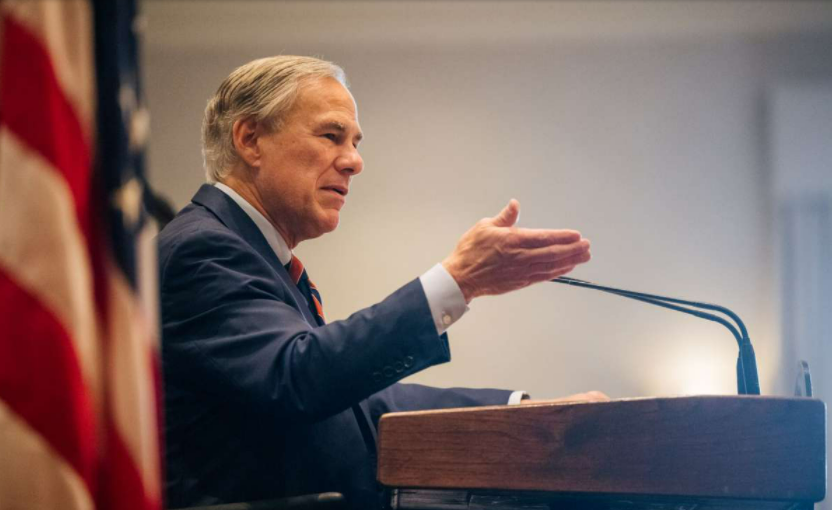
Texas Gov. Greg Abbott has announced plans to amend the Texas Constitution with a Parent Bill of Rights if re-elected and has pledged Texans will see a “stronger, swifter, more powerful movement advocating school choice” than they’ve seen in the history of the state.
Editor’s note: This commentary from former U.S. secretary of education Betsy Devos appeared Friday on the Fort Worth Star Telegram.
For decades, Texas and Florida have competed over which state will lead the nation in measures such as individual liberty, economic freedom, new jobs created and the number of people moving to their state.
Texas has often gotten the better of the battle, but there is one arena where the Sunshine State is leaving the Lone Star State in the dust: educational freedom.
In Florida, about 41% of K-12 students, about 1.2 million kids, use an education choice program to learn somewhere other than their government-assigned schools. State leaders have made it easy for students to attend a public school district other than the one in which they live.
Texas has made it hard. Florida has the largest virtual education program in the nation, while Texas has one of the smallest. Florida provides financial aid for 178,675 students to attend private schools, a number that grows every year. No child in Texas has this option.
Texas’ students felt this pain acutely during the pandemic, as many districts shut down and left students and families scrambling. Add in concerns about how public schools are handling issues such as teachings on race and sex, and it’s even more remarkable Texas continues to leave government, not parents, in control of education.
To continue reading, click here.

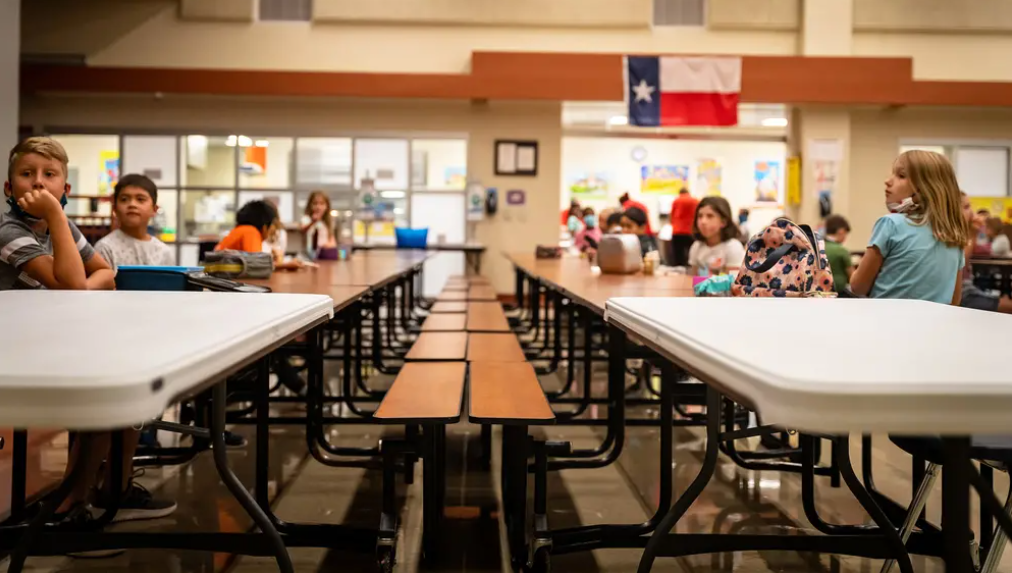
Founded in 1906, St. Mark’s School of Texas in Dallas is a nonsectarian, college-preparatory school for boys in grades 1 through 12. It is among about 900 accredited private schools in the state that serve approximately 250,000 students, according to the Texas Private Schools Association.
Texas, being a passionate, liberty-minded state, should be a national leader in school choice efforts.
Indeed, Gov. Greg Abbott, Lt. Gov. Dan Patrick, and the Republican Party of Texas all have called for an expansion of private school choice in recent years. Additionally, four Texas Democrats were listed as “School Choice Champions” by the American Federation for Children (AFC) in 2020.
But not only is Texas not a leader in parental choice efforts, it lags. This year, seven states created new school choice programs, while another 11 expanded existing programs. Several more are primed to join them.
Texas is not among them.
For more than a decade, an odd coalition of rural Republicans and urban Democrats, led by Republican state Rep. Dan Huberty, has stymied efforts to expand private school choice. Many of these opponents are homeschool advocates who fear government regulation or are rural public-school supporters who see anything beyond charter schools (and sometimes even charter schools) as a threat to community integrity.
Indeed, Texas deserves praise for its high-quality charter school network, but that network is no longer sufficient. Thousands of children are on wait lists, and Texas families are hungry for more and better choices they can access now.
Adding to that problem is the fact that many legislators have been squeamish for far too long, insistent on prioritizing the needs of school districts over the needs of students. Furthermore, there is no reason that school choice would suddenly limit what homeschooling parents can teach their children. There is no better time to expand school choice in Texas than the present.
Private school choice is incredibly popular with Texas voters. In 2019, long before COVID-19 was a consideration, an AFC poll found that 74% of Texas voters favored education savings accounts, while 64% supported tax-credit scholarships. With the pandemic’s chaos and learning loss now in clear view, one can only imagine what the support levels are now.
But there is a broader philosophical argument at play. Texas’ political culture is both individualistic and traditional. We care deeply for our families, traditions, and culture (don’t mess with Texas y’all), and education is fundamental in cultivating the virtues that make Texas, well … Texas. Love us or hate us, those qualities matter.
There is nothing more traditional or liberty-minded than putting parents in control of their children’s education. The presumption that governments and bureaucrats are better suited than parents to serve the needs of children is both absurd and un-Texan. Texas families deserve the same level of choice that families in states like Florida, New Hampshire, and West Virginia have.
The regular legislative session (and all its tendrils) may be over, but opportunities remain, a vital lifeline for families who are unable to wait for the next regular session in 2023. A growing number of legislators are clamoring for a special session to statutorily ban vaccine mandates. Under Texas law, the governor has the sole authority to call a special session and also is the arbiter of what will and will not be included in said session. Were Abbott to call another special session, he easily could include school choice measures as a topic of discussion.
Regardless of how change takes shape, Texas families need it now. They deserve the same breadth of options that children and families in other states have. One may call me naive for hand-waving the politics of the last 20 years away, but anyone paying attention can see where the winds are blowing. The parental choice movement is winning, both morally and politically.
It’s time for Texas to join the fight and expand school choice.

Both campuses of Anne Frank Inspire Academy in San Antonio, Texas, feature grounds that create a small, family-like environment with outdoor learning areas and green spaces to compliment state-of-the-art technology.
An empathetic and impassioned education leader from San Antonio, Texas, recently had this to say about the importance not only of giving families the power to choose which school to attend, but also how they attend that school:
“We believe that the best education happens on campus with students fully engaged, but we also understand parents and families deserve flexibility.”
Justin Johnston, head of schools at Anne Frank Inspire Academy, worked with his team early in the pandemic to ensure that families would have the choice for their children to attend class virtually or in person, daily. What began as a daunting task ultimately was made easier by the realization, “Of course you should have that choice,” Johnston says.
As a new school year begins, leaders on both campuses of Anne Frank Inspire Academy – a tuition-free K-12 public charter school that strives to “craft world leaders of tomorrow” through rigorous and innovative curricula, creative collaboration and guided learning using an inquiry-driven model – are working to strike the right balance to respect a family’s right to choose, keeping state of Texas procedures in mind.
One thing Johnston knows is crucial for his schools’ success is intentional parent communication and parent involvement. Here is what he had to say in a recent article for Project Forever Free:
“Anne Frank Inspire Academy believes the answer begins in our families’ voices. It looks like us providing a variety of ways for parents to offer feedback and suggestions. We cannot expect our parents only to listen; we must give them opportunities to be heard and build a strong relationship with them.
Parental communication must look like a genuine two-way relationship between school and families. Too often, schools practice this belief that we have all the important information and parents should just listen, establishing one-way communication with a student’s parents instead, and creating communication challenges. This assumption leads to a lopsided conversation missing crucial details being discussed in the home. To accomplish a more fluid conversation, AFIA believes the best way is to ensure an open dialogue and not just a one-sided school monologue.”
You can read the full article here.
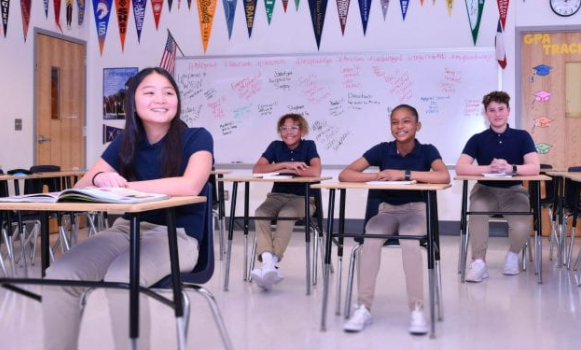
The Irving (Texas) Independent School District in the Dallas-Fort Worth area, which serves approximately 33,000 students across 37 schools, is one of several districts in the state that offer open enrollment.
While public school systems nationwide have had difficulties dealing with COVID-19, specifically around reopening classes to in-person activities, it’s clear the pandemic has opened many avenues for innovation. One example has come out of Colorado, where school administrators have opened public school enrollment to great success.
A recent Chalkbeat report found that Colorado has embraced public school open enrollment to great effect, with more students taking advantage of the opportunity to cross zoning lines than ever before, resulting in a 9% increase in students moving across districts.
The distribution of students attending schools outside their districts is not evenly distributed. In fact, the districts most likely to lose students to competing schools saw even greater decreases in enrollment. Unsurprisingly, a generally reciprocal increase in more desirable schools was found, too. Chalkbeat reports:
Where students went didn’t change much, though. The districts that already had high numbers of out-of-district students had even more this school year, and those districts that typically lost a lot of students to other districts continued to see that.
Colorado is not alone in pushing for open enrollment. States that have made similar pushes have found similar results. In Texas, the Reason Foundation found that parents sent their children to higher-performing districts when open enrollment was expanded:
Our analysis finds that three percent of Texas students transferred to a traditional public school outside of their assigned school district in the 2018-2019 school year.
These students tended to transfer to higher-performing school districts as measured by state accountability grades. In 2018-2019, roughly 45,000 Texas students transferred to a higher-performing school district at least a letter grade above their residentially assigned district.
The fact that open enrollment accelerated the trend of parents sending children to higher-performing districts indicates two things.
First, it shows that parents know their child’s district is underperforming. Parents must be able to identify good schools for open enrollment to fully flourish, and so this is a positive sign. Furthermore, it provides evidence that many parents had sent their children to local schools in previous years because zoning laws forced them to do so. It’s unlikely that open enrollment districts would return to stringent zoning laws.
Second, the fact that parents continued to send their children to districts that already were accepting more out-of-district students shows that higher-performing districts can maintain high academic rigor. If this were not the case, the trend would either start decreasing or reversing. But neither is happening. This is important because research suggests a school’s academic quality is the primary driving factor in open enrollment flows.
While Texas and Colorado are taking the right steps toward accommodating open enrollment, there is still much work to do. The good news is that 47 states allow some type of open enrollment. Unfortunately, the specifics and ease of these transfers vary greatly between states and districts. The variety is so great that a table provided by the Education Commission of the States is shockingly byzantine.
Some states have specific desegregation criteria that affect enrollment ability while others charge for moving across district lines. In other cases, the distance one must travel between schools is taken into account. Some states have mandatory inter-district open enrollment, while others allow only intra-district movement.
While these concerns may seem important to public school administrators, for parents, such regulations are unwieldy. Asking parents to go through arduous protocols to send their child to a school they know is better creates an adversarial relationship between parents and administrators. Students get caught in the middle.
Colorado has done the right thing by expanding criteria for public school enrollment. The move toward open enrollment has been beneficial for many Texas parents as well. More districts in the Lone Star state are following suit, and the number of children enrolling in schools of their choice is growing across the country.
Expanding open enrollment opportunities is a critical victory for students and parents alike. For students, it paves the way for higher educational achievement. For parents, it provides flexibility and peace of mind that their child is succeeding. While it may put pressure on administrators to deal with fluctuations in enrollment numbers, it is a worthwhile sacrifice if it benefits the student body.
We owe it to our kids to give parents the opportunity to enroll in the school of their choice through the vehicle of open enrollment.
Texas special education students have had limited access to resources since schools closed last spring because of COVID-19. PHOTO: Jordan Vonderhaar for the Texas Tribune
Texas legislators have passed a bill that will extend a program that provides $1,500 grants for purchase of services for additional educational support to families of children with special needs.
SB 1716, approved on a bipartisan vote of 21-9, will expand the Supplemental Special Education Services program, created during the COVID-19 pandemic for children who were cut off from essential therapies and interventions because of school closures.
The bill would require the Texas Education Agency to establish and administer the program for students who meet eligibility requirements for participation.
Nearly 600,000 Texas students received special education services in the 2019-20 school year according to the agency. Agency officials report that while about 60,000 of those students meet eligibility requirements for the Supplemental Special Education Services program, current funding covers only 20,000.
Emily Sass, policy director for Next Generation Texas at the Texas Public Policy Foundation, testified in favor of the legislation, stating that families whose children have disabilities were, and continue to be, especially vulnerable to disruption in their education services in the wake of COVID-19.
“This is an ongoing need,” Sass wrote. “A child’s struggles after over a year of upheaval and potential learning loss are not going to evaporate even with a widely distributed vaccine. Children of all backgrounds and needs have lost ground this year. Children with disabilities are especially vulnerable.”
 Alabama: Applications for the state's new tax credit scholarship program are now open (Alabama Opportunity Scholarship Fund, WTVY)
Arizona: Three charter schools will be shut down for poor performance (Arizona Business Journal).
California: The L.A. metro area has the largest number of students attending charter schools in the nation (LA School Report). Charter school growth booms in L.A. and San Diego (San Diego Union Tribune).
Georgia: NPR asks "what is school choice?" (WABE). Hall County ranks No. 1 in the nation for charter school enrollment growth (Access North Georgia). Charter school enrollment grows in the state as more schools request permission to convert to charters (Atlanta Journal Constitution).
Florida: If Catholic schools were a district, they'd be the 9th largest in the state (redefinED). 80,000 students attend charter schools in Miami-Dade, making it the 6th largest (numerically) metro charter area in the nation (Miami Herald). A virtual charter school is approved to set up shop in Pinellas County (Tampa Bay Tribune). Across the bay in Hillsborough, a school board votes down a charter school request by MacDill Air Force Base (redefinED). The number of students using "opportunity scholarships" to leave poor-performing schools doubles in Duval County (Florida Times Union). Florida Virtual School offers students flexibility (Townhall.com).
Indiana: Gov. Mike Pence wants vouchers for pre-k students (Indianapolis Star, Greenfield Reporter). Pence thinks charter school networks should be allowed to operate more like school districts (Courier-Journal). Public school districts will have to hold lotteries for public school choice if demand exceeds supply (Education Week). Gary ranks 5th in the nation for charter school enrollment (Post Tribune).
Louisiana: The Louisiana Association of Business and Industry is the most influential organization on education reform, according to a Brookings Institute study (Times Picayune). New Orleans has the largest percentage of students attending charter schools of any city in the nation...for 8 years in a row (Times Picayune). (more…)

