 Like the Democratic Party platform on education, this is no surprise: Democratic tension over school choice and parental empowerment is on display at in Charlotte. But some of the developments and statements are still worth logging in.
StudentsFirst co-sponsored a special screening of the new movie “Won’t Back Down” at the DNC yesterday, just as it did at the RNC in Tampa last week. And in the panel discussion that followed, Ben Austin, executive director of Parent Revolution, told the audience that the parent trigger law – upon which the movie is loosely based – is a progressive idea aimed at giving parents more power to right struggling schools. According to coverage of the panel by Education Week’s Politics K-12 blog:
The laws allow parents to "unionize and collectively bargain, just like teachers' unions," said Austin, who served in the Clinton White House. "Parent trigger fundamentally makes public schools more public. ... We need to be modern 21st-century progressives" who stand for government working.
To be sure, people like Austin and former California state Sen. Gloria Romero have tried, mightily, to dispel the notion that the trigger is a right-wing creation, but the myth persists. In June, the U.S. Conference of Mayors unanimously endorsed the parent trigger idea, and among the big-city Democrats who led the charge was Los Angeles Mayor Antonio Villaraigosa.
Villaraigosa is chairman of the Democratic National Convention this year, as the Huffington Post notes in this piece over the weekend. He’s also a former teachers union organizer. Wrote the HuffPo: “It is hard to paint the school reform movement as a right-wing conspiracy. Support for taking on teachers’ unions is growing in Democratic and liberal circles.”
More DNC coverage of the growing divide between Dems and teachers unions in the Los Angeles Times and the Washington Times.
 From redefinED host Doug Tuthill: Today we begin a new feature at redefinED – an ongoing dialogue between myself (that's me pictured on the right) and John Wilson, who writes the Unleashed blog at Education Week. For the last 25 years, I’ve been one of Wilson’s biggest fans. I worked hard for John when he ran for president of the National Education Association in the late 1980s (we lost), and I’ve always respected the sincerity and dignity with which he conducts himself. John is a passionate and intelligent advocate for children, teachers and public education - and he’s a gentlemen. So I was thrilled when John accepted my invitation to dialogue with me on redefinED about how best to improve public education. I’m looking forward to learning from John, and I’m hoping our exchanges will inject some more civility into our public discourse. Our first installment is below.
Doug Tuthill: John, I was pleased to read your endorsement of customization on your blog recently. For readers who missed it, you wrote, “our citizens want choice. Parents want to choose the school that best fits their children. Let's not stifle this customization, but embrace it.” But I was especially intrigued when you wrote that we need to “stop the fragmentation and welcome charter schools back into the community and the conversation.” The charter school folks I know think they are in the community and think they are part of the conversation. So I was hoping you’d elaborate on what you meant.
John Wilson: Doug, I always start with my strong support for the institution of public schools. I believe public schools are the foundation of our democracy, best prepared to educate the masses, and the most strategic driver of the American economy. Public schools deserve necessary funding to accomplish their mission, and they must be relevant to the needs of that public. For the 21st century, that means customization to assure every child receives an education that prepares them for success. That means a willingness to collaborate with more appropriate providers that serve children but within the public school institution. Creating a hodgepodge of providers outside the public schools causes fragmentation and weakens our public schools. We have tried division; I want us to try addition.
Doug Tuthill: John, I share your belief that public education lies at the foundation of our democracy. Public education is responsible for helping ensure every child, regardless of economic class, ethnicity, disability or race, has an equal opportunity to succeed. This promise is what holds our democracy together, and while I doubt we’ll ever achieve full equality of opportunity, this ideal should always guide our work. (more…)
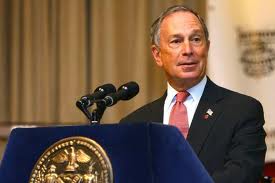 New York: For the third year in a row, New York City charter schools outperform traditional public schools, drawing praise from Mayor Michael Bloomberg, pictured here (New York Times). More from the New York Daily News.
New Jersey: The state teachers union fights new charters even as it attempts to unionize charter school teachers (NJ Spotlight). State education officials approve nine new charters, but reject 10 and postpone 13 (NJSpotlight), including a full-time virtual charter. (NJ.com)
Florida: State education officials reject appeals from three virtual charter schools seeking to open in the Miami-Dade school district. (Miami Herald) Education Commissioner Gerard Robinson defends charter schools at a town hall meeting (South Florida Sun-Sentinel). In a key Democratic primary in South Florida, state senate candidates differ over support for vouchers and tax credit scholarships. (Palm Beach Post)
Louisiana: Students and schools in the state's new voucher program are not likely to face the same regulatory accountability measures as public schools (Baton Rouge Advocate). A nonpartisan watchdog group recommends state education officials seek legislative guidance as they craft accountability rules (Associated Press). The state teachers union pans the academic results of the state's first all-grades, on-line charter school, but the school fires back with accusations of cherry picking (Baton Rouge Advocate).
Michigan: Democrats fear vouchers will be part of Gov. Rick Snyder's plans to overhaul school funding (MLive.com).
Washington: Gubernatorial candidates Rob McKenna and Jay Inslee agree on many aspects of education policy, but disagree on charter schools. (Seattle Times)
Elsewhere: Study finds students in K12 Inc. virtual charter schools are lagging behind their peers in traditional public schools. (Washington Post)
 Louisiana: School choice groups join the state in defending the new voucher program against a lawsuit filed by the state teachers unions and school boards association. (The Advertiser) A judge denies an injunction sought by voucher opponents to suspend the program while the case plays out in court. (New Orleans Times Picayune)
Florida: In one South Florida city, 14,000 students are on a waiting list to enroll in one of the city's charter schools even though the city's traditional public schools have a good reputation. (South Florida Sun Sentinel)
New Jersey: The state teachers union and school boards association want education officials to hold off on approval of virtual charter schools. (NJ Spotlight) Celebrity Rabbi Shmuley Boteach, running for Congress, supports a federal school voucher program. (NJ.com)
Georgia: A state senator forcefully reiterates his support for vouchers during a debate with his election challenger. (Cherokee Tribune)
Tennessee: A pro-charter school political action committee donates the maximum to school board candidates it backs in Nashville. (The Tennessean)
Pennsylvania: State education officials authorize four new virtual charter schools after closing a different one last week. (Education Week's Charters & Choice blog) (more…)
Pennsylvania: A budget deal expands the state's existing tax credit scholarship program and creates a new one aimed at helping students in struggling schools. (Philadelphia Inquirer)
 Washington: Bill Gates chips in $1 million for a ballot initiative to bring charter schools to one of the last states without any. (Associated Press) It appears supporters gathered enough signatures to get the initiative on the ballot. (Associated Press)
Florida: Former Gov. Jeb Bush endorses a local school board member who openly supports vouchers, tax credit scholarships and other forms of expanded school choice. (Tampa Bay Times) The incoming state House speaker also backs the board member. (Tampa Bay Times)
New Jersey: The state-appointed superintendent in Newark overrules a local advisory board and moves ahead with plans to lease empty buildings to charter schools. (NJ Spotlight)
Louisiana: State Superintendent John White continues to face criticism for his handling of a questionable private school that is seeking to participate in the state's new voucher program. (New Orleans Times Picayune) A state lawmaker now says she regrets voting for the program because she fears it will promote Islam. (Huffington Post)
California: The teachers union at Green Dot charter schools pushes for performance pay and evaluations tied to test scores. (Contra Costa Times)
Tennessee: A charter school operator vows to appeal to the state after a local school board rejects its plan to open charter schools in wealthy West Nashville. (The Tennessean)
Oklahoma: Online learning is growing more popular in Oklahoma, with supporters seeing it as an equalizer between districts that are big and small, rural and urban. (Tulsa World)
(Image from businessweek.com)
 New York: 5,000 charter school parents rally to send a message in the mayor's race. (NY1) More from the New York Times and New York Post. (New York Times photo at left shows students and parents from a KIPP charter school who attended the rally.)
South Carolina: A proposal for tax-credit scholarships got traction in the state legislature this year, but ultimately came up short. (The State)
Louisiana: As expected, the state teachers union files a lawsuit to stop the new statewide voucher program. (New Orleans Times Picayune)
Ohio: The state is ending a once federally mandated program that allowed low-income children to receive free, private tutoring but raised concerns about fraud and effectiveness. (Columbus Dispatch)
Michigan: State lawmakers get set to debate parent trigger legislation. (MLive.com)
Tennessee: A key state lawmaker says the legislature is likely to pass a voucher bill next year, limited to urban areas. (Memphis Commercial Appeal) The state plans to convert 10 struggling Nashville schools into charter schools. (The Tennessean) The state also okays the expansion of charter schools in Memphis. (Memphis Commercial Appeal) (more…)
Getting lost in the complexities of education reform is easy, so I use the following analogy to help me understand the daily ebb and flow of school reform issues.
 School districts are East Germany.
School choice programs are refugee camps comprised of people who have left East Germany.
The promised land (i.e., a better public education system) is West Germany.
The promised land becomes attainable when the number of families in refugee camps becomes large enough to make a well-regulated, market-driven public education system viable.
I equate school districts with East Germany because they are command-and-control, politically run monopolies where teachers and parents have little decision-making power. School districts employ legal barriers (i.e., the Berlin Wall) to prevent families from leaving, although affluent families have always been able to buy their way out. Increasingly, lower-income families are accessing resources (i.e., tax credit scholarships and vouchers) which allow them to get out also.
While this analogy is not precise, it does help me understand the motivations, tensions and contradictions that permeate the current education reform movement. Today we have two parallel reform movements. One is attempting to improve productivity within East Germany, while the second is trying to knock down the Berlin Wall and turn all of public education into West Germany. (more…)
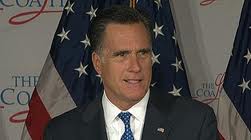 Mitt Romney is all in on school choice, at least according to the speech he delivered today at the Latino Coalition's Annual Economic Summit. Here's a piece of his prepared remarks:
First, I will expand parental choice in an unprecedented way. Too many of our kids are trapped in schools that are failing or simply don’t meet their needs. And for too long, we’ve merely talked about the virtues of school choice.
As President, I will give the parents of every low-income and special needs student the chance to choose where their child goes to school. For the first time in history, federal education funds will be linked to a student, so that parents can send their child to any public or charter school, or to a private school, where permitted. And I will make that choice meaningful by ensuring there are sufficient options to exercise it.
To receive the full complement of federal education dollars, states must provide students with ample school choice. In addition, digital learning options must not be prohibited. And charter schools or similar education choices must be scaled up to meet student demand.
Instead of eliminating the D.C. Opportunity Scholarship Program as President Obama has proposed, I will expand it to offer more students a chance to attend a better school. It will be a model for parental choice programs across the nation.
Romney came back to the D.C. program later in the speech. He used it as one of several examples where teachers unions blocked school choice programs and proposals. (more…)
 Florida: State report says charter school students perform better than peers in traditional public schools. (Florida Times Union) State task force will begin planning for digital learning. (Orlando Sentinel)
Washington, D.C.: President Obama should support the D.C. voucher program, which has shown good results and enjoys bipartisan support, the Washington Post editorializes.
Montana: Businessman gives $4.6 million to expand private school choice. (Bozeman Daily Chronicle)
New Hampshire: Lawmakers begin planning override of Gov. John Lynch's potential veto of a bill to establish tax credit scholarships. (New Hampshire Union Leader) (more…)
 Michelle Rhee and I are members of the same political tribe. We’re progressive Democrats. Throughout most of the 1800s and into the mid-1970s, our tribe supported school choice, including allowing parents to use public funds to help pay for private school tuition. Our group’s position began to change in the late 1960s as urban teachers, who are core tribal members, began to unionize. By the time Jimmy Carter ran for president in 1976, the transition was complete. Progressive Democrats opposed school choice.
In the late 1970s and early 1980s, school districts began using within-district school choice to promote voluntary desegregation, so our tribal position began to gradually evolve. I say gradually because in 1986, I led a floor fight at the annual National Education Association convention, on behalf of then-NEA President Mary Hatwood Futrell, for a resolution endorsing within-district magnet schools. The opposition argued that magnet schools were voucher programs which siphoned off money and the best students from neighborhood schools. The resolution failed.
As the number of unionized teachers working in magnet schools expanded, the NEA eventually embraced magnet schools and other within-district school choice programs, and progressive Democrats followed. Today most progressive Democrats support within-district school choice programs that employ unionized teachers, and they oppose publicly-funded private school choice. But this latter position is evolving. Increasingly, core progressive constituencies, such as African-Americans and Hispanics, are embracing full school choice, as are some progressive leaders.
At Florida Gov. Jeb Bush’s annual education reform conference a few years ago, Michelle Rhee began her morning speech by saying she was hired in Washington D.C. to reverse the flow of students into charter schools. But in her new position as founder and CEO of StudentsFirst, Michelle is slowly becoming more open to school choice. (more…)

