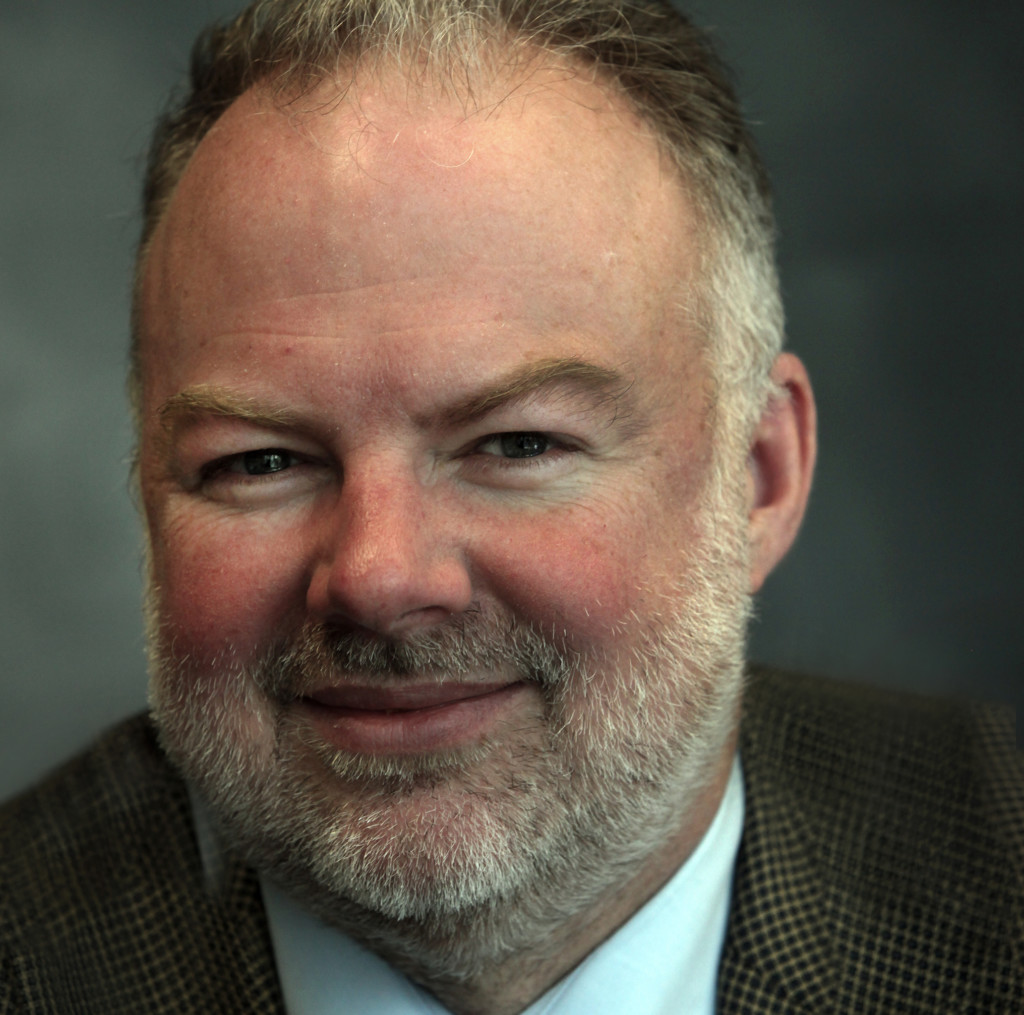
Matthew Ladner
The K-12 public education system is rigged in favor of the wealthy as much as the higher education system, but in Florida, things have changed for the better.
Wealthy families once enjoyed exclusive access to fancy neighborhoods zoned for high performing schools. Other families found themselves excluded from these schools. Wealthy families could also afford to pay private school tuition in addition to their school taxes. “Checkbook choice” used to be the privilege of the well to do, but today, choice programs have expanded opportunity.
Choice programs have changed things by expanding opportunities. Today, they give low and middle-income Florida families the opportunity to select the best school for the individual needs of their child regardless of where they live. An increasing number of Florida teachers have been founding new schools and using choice programs to intentionally include families from modest incomes as well as students with disabilities.
Florida needs more schools and more teachers. State projections foresee hundreds of thousands of new students on the way for Florida’s already often over-crowded public school system. The Florida Constitution guarantees funding for public education, and taxpayers have not only increased per-pupil funding, they also have footed the bill for expensive construction projects that are needed but which draw district resources out of the classroom.
Florida school districts have dramatically improved performance since the 1990s on national tests and always will be the indispensable base of Florida’s K-12 education system. District schools, however, will need all the help they can get in the years ahead.
Choice programs help taxpayers by expanding opportunities for families and teachers while relieving overcrowding and allowing districts to focus more funding on the classroom. A recent study by Florida Tax Watch found that Florida’s scholarship program for low and middle-income families produces better academic results with a 40 percent overall lower cost to taxpayers. Given the thousands of families on waitlists for the programs and the acute funding needs in other areas, expanding this program would be broadly beneficial to the public.
Florida families have exercised the opportunity to choose between a growing variety of public and private school options since 1999. The district system grew stronger, but no single system can be all things to all children everywhere. Each student is unique and deserves the opportunity to find a school which is the best fit for his or her aspirations and needs.
Research conducted by a state authorized academic evaluator has found academic benefits for both public and private school students from choice. Even families who choose their zoned district school benefit from having the option to find another school if they ever feel they need it.
Teachers benefit from these programs as well. Frustrated with bureaucratic systems, a growing number of teachers who once left the profession today have decided to become their own boss by founding a private school. This gives these teachers the opportunity to pursue their own vision of a high-quality education free from much of the red tape surrounding the current system. Many of these pioneering educators have utilized Florida choice programs so that they can create purposely diverse schools that include low-income students and students with disabilities. With hundreds of thousands of new students on the way and a shortage of both space and teachers willing to work in a district setting, this trend is a huge win for teachers, families and taxpayers.
Teachers and families need and deserve opportunities that will help them fulfill their promise.
Editor’s note: This February marks the 43rd anniversary of Black History Month. redefinED is taking the opportunity to revisit some pieces from our archives appropriate for this annual celebration. The article below originally appeared in redefinED in March 2017. Florida Gov. Ron DeSantis visited the school featured in this article while on the campaign trail.
Angela Kennedy’s decision to quit being a public school teacher was driven by a steady drip, drip, drip of frustration.
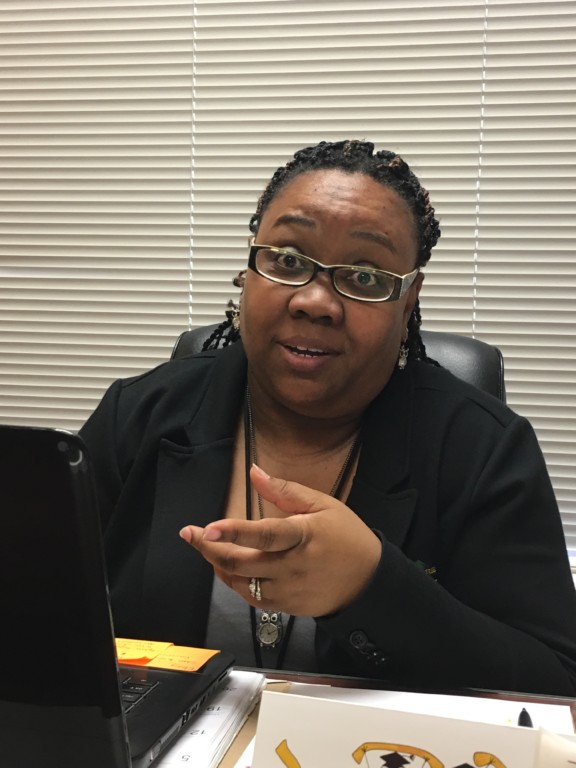
Dr. Angela Kennedy was a 14-year veteran of public schools when she left to start her own private school. She had been a classroom teacher and instructional coach, and had also coordinated curriculum compliance for English language learners. “I wanted parents and students and teachers to have another option,” she said.
In her view, teaching had become too scheduled and scripted, with new teacher evaluations rewarding conformity more than effectiveness. Cohort after cohort of low-income kids continued to stumble and fall, while people far from classrooms continued to impose mandate after mandate. Her passion for teaching began to fade.
Kennedy considered becoming an administrator, so she could attempt reform from within. But ultimately, she took a leap of faith. After 14 years in Orange County Public Schools, she did what educators in Florida increasingly have real power to do: She started her own school.
Deeper Root Academy began three years ago, with three students in Kennedy’s home. Now it’s a thriving PreK-8 with 80 students and nine teachers, including seven who, like Kennedy, once worked in public schools. Most of the students are black, and 80 percent are from in or near Pine Hills, a tough part of Orlando that drew President Trump to another private school this month.
“It was that back and forth, thinking about where I could be the most impactful,” Kennedy said. "Would it be to stay and try to start a change? To try to deal with a mammoth system? Not likely that I’m going to get very far ... "
 "But what I could do is give people an option. And that’s where this school came from. I wanted parents and students and teachers to have another option.”
Kennedy had options because parents had options.
Florida offers one of the most robust blends of educational choice in America, which is why Education Secretary Betsy DeVos gives it a nod. Forty-five percent of Florida students in PreK-12 attend something other than their zoned district schools, with a half-million in privately-operated options thanks to some measure of state support.
Charter schools, vouchers, tax credit scholarships and education savings accounts are all opening doors for Florida students. With far less fanfare, they’re doing the same for teachers.
“In my school,” Kennedy said, “I have the liberty to do what’s best for my kids.”
At Deeper Root, she and her staff are guided by the theory of multiple intelligences. Parents like it. Enrollment is rising fast from word-of-mouth referrals.
About 50 students attend with help from choice programs – tax credit scholarships for low-income students, McKay vouchers for students with disabilities, and Gardiner Scholarships, an education savings account program for students with special needs such as autism. The tax credit and Gardiner programs are administered by nonprofits like Step Up For Students, which hosts this blog.
It’s unclear how many of Florida’s 50,000-plus private and charter school educators once taught in district schools. But it’s easy to find examples of teachers who migrated from one sector to another (see here, here and here). And it wouldn’t be surprising, given the growth in choice programs, that the number of crossover teachers is rising too.
Kennedy said colleagues in district schools frequently call, wanting to know what it’s like to teach in a school that she herself shaped. Many are as frustrated as she was, and intrigued by the new possibilities. It’s highly unlikely, she said, that a massive system compelled to be “uniform” can ever meet the needs of every teacher. Just as with students, some teachers won’t fit the mold.
“I don’t think that anyone had malicious intent,” Kennedy said of the regulations that guide the state system. “I think they’re trying to get a structure in place that’s uniform.”
But “teachers are not robots.”
Deeper Root moved from Kennedy’s home, to a storefront in a shopping plaza, to now, the leafy campus of a trim, modern, Presbyterian church. At a Black History Month event, students in crisp uniform shared their knowledge with peers and parents in the church auditorium. One expounded on the 14th and 15th Amendments to the Constitution. Several gave a presentation about the slave ship Henrietta Marie. A fourth grader, poise far beyond his years, recited portions of Martin Luther King Jr.’s “Letter from a Birmingham Jail”:
Perhaps it is easy for those who have never felt the stinging darts of segregation to say, "Wait."
Kennedy considered a charter school, but decided the regulations were still too much. More importantly, she wouldn’t be able to create the faith-based environment she and her parents want.
Deeper Root students take Bible class and go to chapel every Wednesday. But their curriculum is not faith-based. The school teaches Florida state standards, which are based on Common Core. Many of Kennedy’s students arrive after stints in Florida public schools, and most will return there for high school. “I want them prepared,” she said.
Preparation includes life lessons too. Students grow cabbage and broccoli in planter boxes made from old shelving. They take field trips to Publix to learn how to read labels and choose healthy foods. They visit restaurants so they can order from the menu and leave a tip.
While choice can empower teachers, it’s still not easy, Kennedy said. Going solo was scary, particularly because she had no experience with the financial side of school operations. At one point, a bad business relationship drained her investment and forced her to take out loans.
The learning curve was painful, but compelled her to quickly learn the essentials. Now, Kennedy said, she can advise other educators who want to make the leap – and serve as proof it can be done.
This is the latest post in our ongoing series on the center-left roots of school choice.
Four years ago, Angela Kennedy, a teacher in Orlando, Fla., actualized an idea once prominently advanced by school choice supporters on the left. After 14 years of mounting frustration with public schools, she started her own private school.
Kids and parents aren't the only one who benefit from school choice. Teachers do too. Dr. Angela Kennedy was a 14-year veteran of public schools when she left to start her own private school. The Deeper Root Academy is now thriving with more than 70 students using school choice scholarships.
Today, thanks to more than 70 school choice scholarships, Kennedy’s faith-based Deeper Root Academy is a high-quality haven for low-income and predominantly black students. It’s also another concrete example of what’s possible, for teachers and principals, when school choice expands.
What better time than now to remind people.
This spring, progressives across America cheered teachers striking for more money, and it’s a safe bet the striking and cheering will resume this fall. But for decades, other progressives have urged teachers to embrace school choice so they can have more power.
In 1970, the War on Poverty liberals who led a school voucher experiment for the U.S. Office of Economic Opportunity stressed that choice would allow teachers to create their own schools, free from soul-sucking bureaucracies. “Given freedom and financial resources,” they wrote, “educators might create large numbers of schools that are significantly different from those now operated by local boards of education.”
In 1973, pioneering choice advocate (and former UMass ed school dean) Mario Fantini posited that expanding options would liberate “the imprisoned teacher.” “Obviously, we need to open up educational alternatives within the framework of public education, not by chance but by choice,” he wrote in “Public Schools of Choice” (his emphasis, not mine). “Teachers (and there are a significant number who feel imprisoned by the structure itself) ought to be encouraged to develop alternative forms that are congruent with their own styles of teaching and can offer them greater professional satisfaction and to increase significantly the chances for educational productivity.”
In 1978, Berkeley law professors Jack Coons and Stephen Sugarman opened “Education by Choice” with a story about a fictional student and a fictional teacher. The student is keen on art and bored at her school. But there isn’t an easily accessible option within the district, and her parents can’t afford private school. Meanwhile, the teacher has developed an arts-based curriculum, but can’t persuade the district to give it a shot. Starting his own school is out of the question because “he prefers not to run an elitist school” and no state-supported scholarships exist to promote equity and diversity.
The Berkeleyites’ solution: Give teachers power to create schools. Give parents power to choose them, or not.
In choice-rich states like Florida, growing numbers of teachers are using that power. (more…)
Angela Kennedy’s decision to quit being a public school teacher was driven by a steady drip, drip, drip of frustration.
Dr. Angela Kennedy was a 14-year veteran of public schools when she left to start her own private school. She had been a classroom teacher and instructional coach, and had also coordinated curriculum compliance for English language learners. “I wanted parents and students and teachers to have another option,” she said.
In her view, teaching had become too scheduled and scripted, with new teacher evaluations rewarding conformity more than effectiveness. Cohort after cohort of low-income kids continued to stumble and fall, while people far from classrooms continued to impose mandate after mandate. Her passion for teaching began to fade.
Kennedy considered becoming an administrator, so she could attempt reform from within. But ultimately, she took a leap of faith. After 14 years in Orange County Public Schools, she did what educators in Florida increasingly have real power to do: She started her own school.
Deeper Root Academy began three years ago, with three students in Kennedy’s home. Now it’s a thriving PreK-8 with 80 students and nine teachers, including seven who, like Kennedy, once worked in public schools. Most of the students are black, and 80 percent are from in or near Pine Hills, a tough part of Orlando that drew President Trump to another private school this month.
“It was that back and forth, thinking about where I could be the most impactful,” Kennedy said. "Would it be to stay and try to start a change? To try to deal with a mammoth system? Not likely that I’m going to get very far ... "
"But what I could do is give people an option. And that’s where this school came from. I wanted parents and students and teachers to have another option.”
Kennedy had options because parents had options.
Florida offers one of the most robust blends of educational choice in America, which is why Education Secretary Betsy DeVos gives it a nod. Forty-five percent of Florida students in PreK-12 attend something other than their zoned district schools, with a half-million in privately-operated options thanks to some measure of state support.
Charter schools, vouchers, tax credit scholarships and education savings accounts are all opening doors for Florida students. With far less fanfare, they’re doing the same for teachers.
“In my school,” Kennedy said, “I have the liberty to do what’s best for my kids.” (more…)
Ken Brockington was one of the best teachers I ever had. Cerebral. Serious. Always dapper. In the mid-1980s, he inspired me and countless others in AP American History. Time has fuzzed the details, but I can’t forget Mr. B’s yellow suit, or his red pen. “Interesting,” he’d write in the margins of my papers, next to yet another half-baked idea, “but keep thinking.”
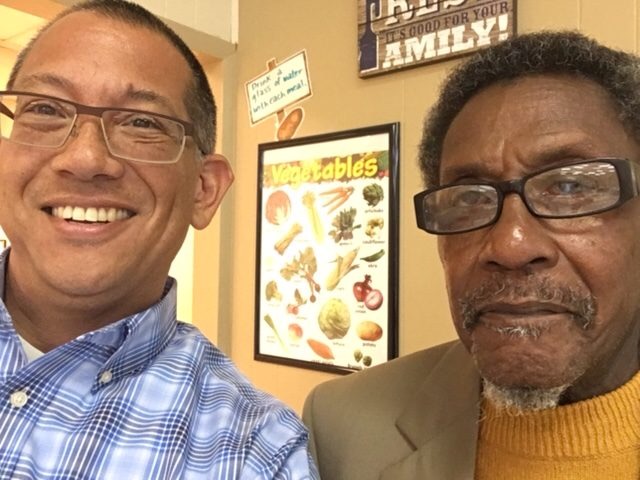
Me and Mr. B. Ken Brockington taught me AP American History in high school. Little did I know that he'd become a school choice pioneer.
The teenage me had no clue, but Mr. B was a pioneer. In the late 1960s, he was on his way to law school when a brief gig as a GED teacher detoured him into the teaching profession – and on to a new frontier. In Jacksonville, Fla. he became one of the first black teachers in integrated public schools. To get a sense of the challenge, consider many of those schools were named after Confederate generals, and one was named after the founder of the KKK. That’s where Mr. B taught me.
Today, at 68, Brockington is again surfing history. After 30 years as a teacher and principal in one of Florida’s biggest school districts, he’s now the academic dean of a private school. Cornerstone Christian seeks to uplift disadvantaged kids, and it’s able to serve them thanks to the Florida tax credit scholarship, the nation’s largest private school choice program.
Educators like Ken Brockington are part of another sea change in American education. At its heart, the school choice movement is fueled by the same drive for educational opportunity that spurred Brown v. Board of Education, and there’s no state where choice is becoming mainstream faster than Florida. Despite much-publicized skirmishes, like the lawsuit against tax credit scholarships and the NAACP attack on charter schools, choice is here to stay.
Take it from a history teacher.
Parents aren’t going back, Brockington said: “They’re beginning to understand the power of choice.”
Teachers aren’t going back either. Mr. B (now Dr. B) said many of his colleagues are exceptionally skilled, but constrained in conventional schools. “Choice will allow them to get outside the box,” he said.
As fate would have it, I am again in Mr. B’s orbit.
I work for Step Up For Students, the nonprofit that helps administer the tax credit scholarship and hosts this blog. This year, the program is serving 95,000 students, including 7,000 in Jacksonville and 229 at Cornerstone. When work brought me to Jacksonville last month, I got to thank Mr. B in person for teaching me. As a bonus, I got to learn from him again.
The lawsuit that aims to kill the scholarship program is led by the state teachers union. Brockington was a union member; at one time, he said, he was the local vice president. But he had no qualms about switching from public school to private school more than a decade ago.
At the time, Cornerstone contracted with a social service agency to teach some of the city’s most “at-risk” students – students with, as Mr. B described it, “a suitcase of problems.” Teen moms. Dads in jail. A long list of learning disabilities. Today’s students, while not as disadvantaged as those in the past, still face so many of the hurdles that come with poverty.
Mr. B said this is where he can best help them. Their academic outcomes aren’t where they should be, yet, but they’re getting the right mix of toughness and compassion, he said: “They’ve been written off. But now there’s light at the end of the tunnel.” (more…)
Editor’s note: This is the ninth post in our school choice wish series. See the rest of the line-up here.
by Gary Beckner
Gary Beckner
School choice policies are making daily headlines across the country. While we often highlight the successes of individual schools and students, teachers are largely left out of the broader choice conversation. This holiday season, it’s my wish that educators are recognized as essential contributors to this important movement in American education.
The fact is every educational setting is a choice. District schools, private and parochial schools, public charter schools, and virtual schools – these are all choices in action. As we adapt to a dramatically changing education landscape, educators everywhere are embracing these new teaching environments, with tens of thousands of teachers educating millions of students nationwide.
This new renaissance in education is both shaking up our classrooms and fundamentally altering the face of the teaching profession. Dedicated, professional teachers should be given credit for their role in supporting and participating in choice settings. In sharing their talents in these new and exciting education environments, teachers are helping to create a brighter future for students who need personalized options.
Educators on the front lines know a one-size-fits-all system does little to address the unique needs of all our students. Students learn differently, just as teachers have their own strengths and weaknesses. In adapting to system of choice, professional educators are realizing these advances are not only meeting needs for students, but also providing professional opportunity.
While some try to promulgate a myth that teachers are not in favor of choice policies, thousands of teachers support this new direction and are teaching in choice schools every day. According to Association of American Educators (AAE) membership surveys, teachers are warming to these ideas.
Specifically, 69 percent of survey respondents support the Washington, D.C. Opportunity Scholarship Program (OSP) that awards need-based annual scholarships to eligible District children. The program has received notable bipartisan support in Congress and is considered one of the most prominent choice systems in the country. There is an understanding amongst educators that options for students are beneficial and that educators, in turn, can also reap rewards.
Take AAE Member Amy Rosno for instance. (more…)
 A Florida public school teacher and teachers union member is speaking out against the lawsuit that threatens to dismantle the nation’s largest private school choice program – and take away the scholarship that is benefitting one of her children.
In an op-ed in today’s Miami Herald, Miami teacher and union steward Marlene Desdunes describes the lawsuit against Florida’s tax credit scholarship program, which is serving about 69,000 low-income students this year, as spiteful and “antithetical to our values” as teachers. She writes:
How could we, in the name of teaching, uproot these children from schools that are working for them? No one asked me whether my $837 in annual union dues could be used to try to throw my daughter out of St. Mary’s, and this court fight is turning school and union leaders whom I admire into politicians that I hardly recognize.
In Miami-Dade, more than 18,000 students use the scholarship, and yet when some of the parents showed up at a recent School Board meeting to protest the lawsuit, the board voted not to even hear what they had to say. That’s a degree of callous indifference to poor parents of color that I don’t ever remember seeing from the School Board. Do children in our community not matter unless they attend a district-operated school?
Desdunes’s op-ed notes she is the mother of three students – one who attends a Miami-Dade district school, another who attends a private school with help from a tax credit scholarship, and a third who attends a private with help from a McKay scholarship for students with disabilities. She is also among 15 parents who were granted intervenor status earlier this month to help defend the program against the Florida teachers union, Florida School Boards Association and other groups who filed suit against it Aug. 28. The program is administered by nonprofits like Step Up For Students, which co-hosts this blog.
Desdunes isn’t the only public school teacher making her opposition known. (more…)
Heidi Gonzalez is the mother of two children who participate in Florida’s tax credit scholarship program, the nation’s largest private school choice initiative. She’s also a public school teacher.
“Every kid is different,” said Gonzalez, 35, who teaches first grade in Miami. For her daughter, who struggled in public school, “I needed a school that helped her, that more fit her personality,” she said.
Too often, parental choice critics assume school choice parents and the people who support them are anti- public school. But records at Step Up For Students, a nonprofit that administers the scholarship program (and co-hosts this blog), show at least 700 scholarship parents are employed by school districts.
There’s no easy way to determine how many of those district employees are teachers, but it wouldn’t be a big surprise if a fair number were. Public school teachers are more likely than the public at large to put their own children in private schools. One of them, in fact, is among 15 parents who filed to intervene in the lawsuit that the Florida teachers union, Florida School Boards Association and other groups filed in August to end the scholarship program. (A hearing on the motion to intervene is set for Friday.)
Gonzalez, who calls the lawsuit “horrendous,” made a facebook video to call attention to it. She credits a tax credit scholarship with her daughter’s turnaround. (more…)
Students and parents aren't the only ones who benefit from school choice. Teachers do, too. We routinely hit on that point, and Doug Tuthill hammered it home last night on conservative news outlet The Blaze.
Here is what Tuthill, the president of Step Up For Students (which co-hosts this blog), said when asked by host Will Cain about his past as a teacher union president:
"I’ve always been an empowerment guy. And I got into education, and I got into teacher unions, because I really wanted to empower teachers. But what happens is, teachers are really disempowered in an overly regulated system. ... I wish the teacher unions in the country would embrace choice because at the end of the day, it’s good for teachers and for parents." School choice "allows them to be innovative, entrepreneurial," Tuthill continued. "And right now, you can’t in the current system."
The bulk of the interview focused on something we've been talking a lot about over the past week - the changing definition of education accountability in an era where parental choice is becoming the norm. The Heartland Institute's Joy Pullman weighed in on the topic this week in The Federalist, pointing specifically to recent goings-on in Florida, and Cain cited her take during the interview. By all means, click and check it out. 🙂

