Step Up For Students, the nation’s largest education choice scholarship funding organization, is pleased to announce it has been renewed as an SFO for the 2026-27 school year following a unanimous vote by the Florida Board of Education.
Step Up has served Florida for more than two decades, starting with the Florida Tax Credit Scholarship Program. The nonprofit currently administers five programs and one stipend with over 520,000 students, and processes 10 million financial transactions.
On Feb. 1, Step Up once again set the new national record in education choice: It received a record 200,000 applications in the first three days of Season Open, and by the 10th day it had received a record 300,000 applications. It is currently nearing 400,000 applications.
“Step Up For Students is grateful for the confidence the Board of Education has shown in our ability to manage the state’s education choice programs,” said Step Up CEO Gretchen Schoenhaar. “There is no initiative of this size, scope and complexity in the country, and we are honored to serve the parents, students, schools, providers and vendors as well as to partner with the DOE and legislature in Florida.”
When Florida in 2023 made all K-12 students in the state eligible for a scholarship program and transformed the programs into education savings accounts (ESAs) that gave parents more flexibility in how they spend their children’s scholarship funds, it unleashed unprecedented demand from families. Step Up has responded with technological innovations and process improvements that have defined the customer experience.
Central to that is Step Up’s Education Market Assistant (EMA), an online platform to manage an ESA program from start to finish, including the onboarding of parents through the online application, the processing of those applications and the reporting features required by the state. EMA also serves as the platform for education service providers, vendors, and private schools to engage with parents.
EMA brings together parents and providers in an efficient marketplace and ensures all ESA funds are spent effectively and efficiently consistent with state law, including preventing fraud. The platform has influenced similar technologies across the nation.
For the second year in a row, Step Up has realized significant improvements in performance even as participation in the state’s scholarship programs continues to grow:
Step Up welcomes continued collaboration with the Florida Department of Education and the Legislature to find solutions to systemic challenges in the education choice scholarship programs.
PALATKA, Fla. — All Risa Byrd wanted to do was start a little preschool. That’s it. But then the former public school teacher got swept up in one of the most epic education stories in American history. Now her fast-growing school is the latest example of what’s possible when school choice is the new normal.
In 2022, Byrd retired from a 26-year teaching career to start Little Sprouts Learning Center. The goal was modest: Get her granddaughter’s academic journey off on the right foot.
A few months later, though, Florida lawmakers passed, and Gov. Ron DeSantis signed, one of the most sweeping school choice bills of any state, ever. Suddenly, every student in Florida was eligible for a state-supported choice scholarship.
Byrd didn’t realize it at first. But her school had caught a wave.
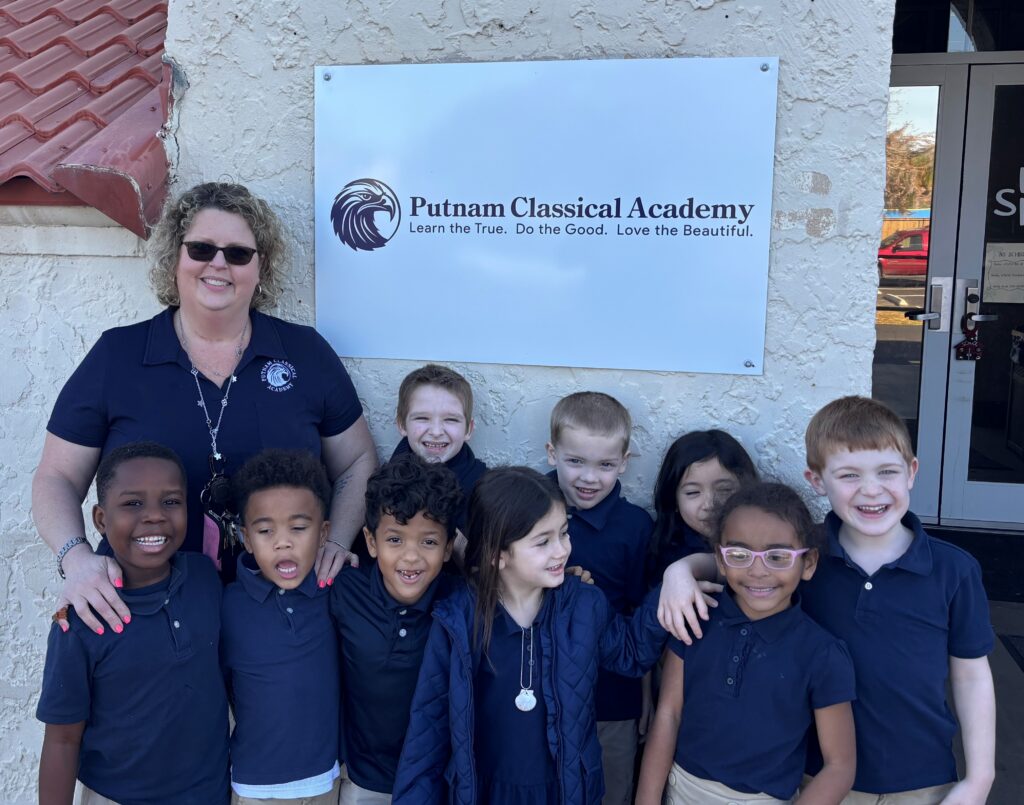
In the fall of 2023, Byrd added kindergarten and first grade, starting with eight students in those grades. She called the school for the higher grades Putnam Classical Academy.
By the fall of 2024, Putnam Classical had 50 students in grades K-5.
By the fall of 2025, it had 234 students in grades K-6, in addition to 60 in preschool.
Now Byrd’s looking for a whole other building to house a separate middle school. When she announced plans via Facebook, 111 students signed up in three days.
“Parents are desperate for their kids to be well educated,” Byrd said, particularly those from underserved communities. “They’ve been written off.”
Byrd is one of hundreds of former public school teachers who have leveraged Florida’s choice scholarships to create their own learning options. They can be found in every corner of the state, even in rural and semi-rural counties like Putnam, where a paper mill is the biggest private employer, the biggest town has 10,000 people, and the best-known landmark may be a blast-from-the-past diner.
The parents driving demand aren’t looking for anything exotic, Byrd said. They just want safe schools with top-quality academics, high expectations, and no drama.
“Parents got the word that we don’t play. That’s the biggest draw,” Byrd said. “They’re fed up. They know kids can’t learn, and teachers can’t teach, if there’s sheer chaos in the classroom.”
Byrd’s story may be a particularly dramatic example of what’s happening in Florida, and particularly symbolic.
More than half of Florida’s 3.4 million students are now enrolled in something other than their zoned neighborhood schools, and more than 1 million are enrolled outside of district schools entirely. Perhaps it’s fitting, then, that Putnam Classical leases a century-old building that once served as the local school district’s headquarters.
Despite the name, Putnam Classical isn’t truly classical yet. Byrd said she and her staff, which includes 20 teachers, will transition to a more recognizable “great books” curriculum within two years.
The first order of business is to establish a higher rate of basic literacy.
A self-described “data nerd,” Byrd is a “science of reading” adherent and a huge fan of Natalie Wexler, author of “The Knowledge Gap” and a leading proponent of using a content-rich curriculum to boost vocabulary and comprehension.
For the early grades, Putnam Classical uses an explicit, evidence-based phonics curriculum developed by the University of Florida. For the higher grades, it uses the highly regarded Core Knowledge curriculum for language arts, science, and social studies.
“If you teach these kids to read, you will change the trajectory of their lives,” Byrd said. “Then they can be an astronaut, a chef, anything they want to be.”
Byrd said as a public school teacher, she earned a reputation for working well with struggling readers, so more and more were sent her way. It became obvious, she said, that many students acted out because they couldn’t read well.
One time, she said, she stopped a 10th grader from disrupting her classroom, then took her out to the hallway to talk. The girl broke down and told her, in between sobs, “I’d rather everyone in that room think I’m a b---- than think I’m stupid.”
In three years, Byrd said she’s expelled two students. The school isn’t orderly because it’s draconian about discipline, she said. It’s orderly because kids are achieving academically and are proud of themselves. “When you learn to read,” Byrd said, “school becomes a lot more fun.”
About half of the students at Putnam Classical are Black or Hispanic; about 75% would be eligible for free- or reduced-price lunch in public school. The school does not charge tuition beyond the amount of the choice scholarship, which averages about $8,000 statewide and is far less than what districts spend.
Most of the students who switched to Putnam Classical were not reading at grade level when they arrived, Byrd said. Some incoming second graders didn’t know their letter sounds.
But now?
Now more than 60% are showing average or better growth compared to their peers nationwide, according to the STAR reading assessment Putnam Classical uses. In other words, students who were previously losing ground in their prior schools are now catching up and starting to get ahead.
Dalton Crews chose Putnam Classical for his 5-year-old, Delilah. He said he attended a private elementary school before moving on to public school and thought it built a good foundation for academics and character. He wanted the same for his daughter, and thankfully, he said, choice made it possible.
“I love the teachers. They communicate really well. They always tell me what’s going on,” said Crews, who installs fire sprinklers for a living. “They tear up when the kids leave. That’s love. They’re good people.”
Shentae Roberts said her 10-year-old granddaughter, Ja’Zyiah, was receiving good grades in her prior school, even though it was obvious to her family that she was struggling with basic material.
Her daughter tried contacting the school to get more information, she said, but never got a response. That’s why, in 2024, her daughter switched Ja’Zyiah and younger brother, Hakiem, to Putnam Classical.
“Best thing she did,” Roberts said.
Roberts said her granddaughter initially struggled at Putnam Classical, too. But the teachers gave her the attention and instruction she needed, she said.
The result: Ja’Zyiah “came back 10 times stronger,” Roberts said. “All the staff get to know the children, and they’re responding to them. They’re pulling the children to the next level.”
Byrd said more good things are ahead, not just for her school.
Even though Florida has been a national leader in private school choice for a quarter century, Byrd said she didn’t know much about it until HB 1, the landmark legislation Gov. DeSantis signed in 2023. Now, though, she realizes the game-changing potential not just for families but for teachers.
“Every public school teacher says, ‘If I were the boss, I would do it this way,’ “ Byrd said.
Well, now’s their chance.
By Lauren May and Ron Matus
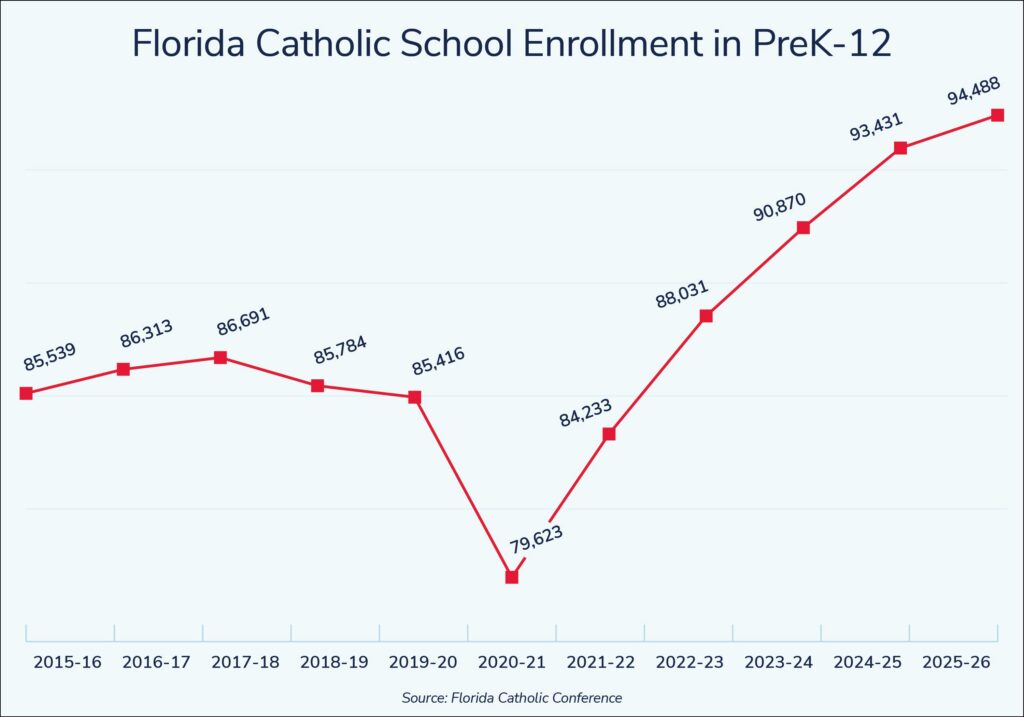
Catholic school enrollment in Florida is up again this year, rising 1.1% to 94,488 students, according to the latest numbers from the Florida Catholic Conference.
The continued growth is likely to bolster Florida’s reputation as the national standout in Catholic schooling. Through last year, Florida Catholic school enrollment was up 12.1% over the past decade. Nationally, it was down 13.2%.
To spotlight the trend lines, we published a special report in 2023, “Why Catholic Schools in Florida Are Growing: 5 Things to Know,” followed by update briefs in 2024 and 2025.
In that spirit, here are five things to know about the 2025-26 numbers:
The trend continues. This year marks five years of consecutive growth. Since 2020-21, when enrollment dipped in the wake of the pandemic, Catholic school enrollment in Florida is up 18.7%.
Special needs surge. Students with special needs are a leading factor. This year, Catholic schools in Florida are serving 13,482 students who use the state’s Family Empowerment Scholarship for Students with Unique Abilities. That’s up 19% from last year and triple the number from five years ago. FESUA students now encompass one in seven of all Catholic school students in Florida.
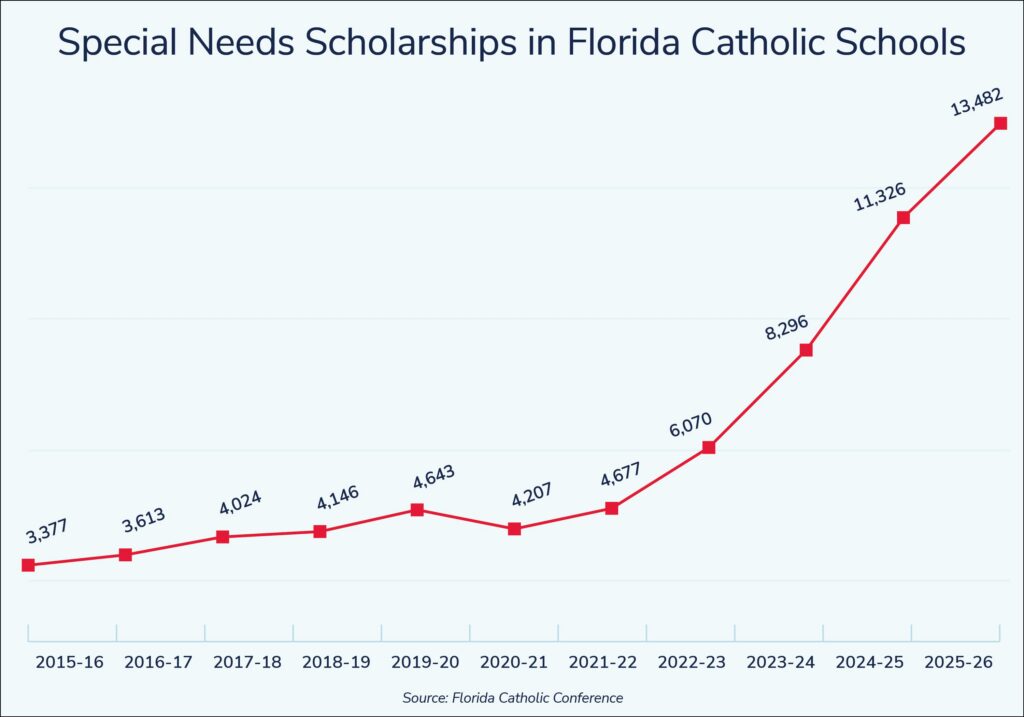
Non-Catholic students. Catholic schools have a long history of serving a diverse array of students. This year, 20% of students in Florida Catholic schools are non-Catholic, up from 14% a decade ago.
Choice scholarships are critical. In 2022-23, the year before choice in Florida became “universal,” 47.2% of all Catholic school students in Florida used choice scholarships. This year, 92.1% use them.
Context for the trend line. This year’s enrollment increase is smaller than any of the past five years. Time will tell whether that’s an anomaly. But it’s worth noting that except for a la carte learning, K-12 enrollment in Florida is slowing all over:
It’s likely that demographic shifts, including falling birth rates and declining immigration, are significant factors here. With private schools, it’s also possible that barriers such as zoning and building codes are preventing supply from better meeting demand. Last year, a Step Up For Students survey of parents who were awarded choice scholarships but didn’t use them found one in three said there were no seats available at the schools they wanted.
One final note: This post, not to mention our reports on Catholic education in Florida, wouldn’t be possible without the Florida Catholic Conference. FCC Director of Accreditation Mary Camp has been carefully tracking the enrollment and scholarship data for years. We are grateful to partner with the FCC and particularly indebted to Mary.
About the authors
Lauren May is Vice President and Head of the Federal Scholarship Tax Credit Program at Step Up for Students and a former Senior Director of Advocacy at Step Up For Students. As a proud graduate
of the University of Florida, she received her bachelor’s degree in special education
and her master's degree in early childhood education. She then completed another
master's degree in educational leadership from Saint Leo University. A former
Catholic school teacher, early childhood director, and principal, she was honored with
University of Florida’s “Outstanding Young Alumni” award in 2018. As a believer
that parents are the first and best educators of their children, Lauren loves working
with families across the state and beyond to ensure they can find and make
use of the best educational options for their children.
Ron Matus is Director, Research & Special Projects, at Step Up For Students. He
joined Step Up in 2012 after more than 20 years as an award-winning journalist,
including eight years as the state education reporter for the Tampa Bay Times, the
state’s biggest and most influential newspaper.
Updated Feb. 10, 2026
Record breaking interest continues with more than 300,000 students who have applied for Florida’s K-12 education choice scholarships for the 2026-27 school year.
Step Up For Students, the nonprofit organization that administers 98% of the state’s scholarships, opened applications for the 2026-27 school year on Feb. 1. A record 200,000 applied during the first three days.
By mid-day Feb. 10, a total of 300,106 students had applied for scholarships, which represents an 11.7% increase over the same 10-day period last year.
Step Up For Students CEO Gretchen Schoenhaar said last week that the organization’s team and systems were ready for the surge of interest. Step Up’s technology systems processed 15% more applications on the first day this year than at the same time last year. Of the families who called for assistance, more than 90% reported being “satisfied” or “very satisfied” with the support they received.
“Another record number of applications on our opening weekend shows that Florida families increasingly value options in their children’s education,” Schoenhaar said. “Step Up For Students smoothly processed the higher demand and is prepared to support families every step of the way.”
During the 25-26 school year, more than 525,000 students have been funded on Florida’s K-12 scholarship programs to access learning options of their choice. If these students were counted as a single school district, it would be the largest in the state and third largest in the country. That makes Florida the national leader in education options.
However, not all students whose families apply end up being awarded or funded.
Step Up is focused on supporting growth. By the end of the year, Step Up expects to process 3 million reimbursements and a total of 3 million MyScholarShop e-commerce transactions.
Current scholarship families have until April 30 to renew their scholarships for the next school year. All families who want a PEP scholarship must also apply by April 30.
Private School and Unique Abilities Scholarship applications will be available through Nov. 15 for families who want a new scholarship.
Applications and more details are available here.
We will continue to update the numbers in this post until applications close.
VENICE – He is not afraid.
Lyra Kerr wants to make that clear.
He is not afraid to climb a ladder that rises 29 feet above ground. He’s not afraid to stand on the small platform near the top of that ladder and reach for the bar that will swing him over the safety net.
Lyra is not afraid to hook his knees on the bar and dangle as he swings.
And he’s certainly not afraid to release his grip and spin once, twice, three times before bouncing to a stop in the net.
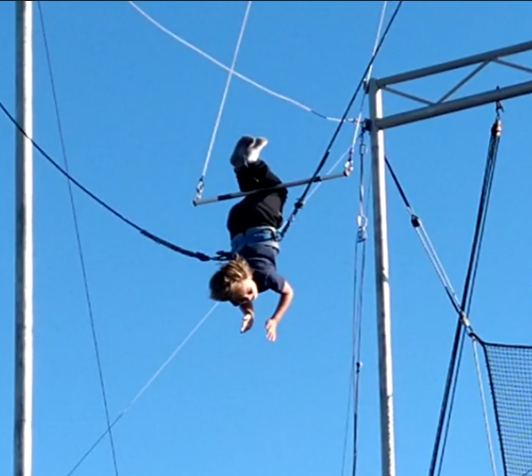
Yes, Lyra wears a harness and is assisted by two trained trapeze artists, but he’s 6, and the climb and the swinging and the spinning could be unnerving for a beginner, let alone one his age.
But, said his mom, McKenna Rodgers, “He’s fearless.”
“It’s not scary,” Lyra said. “It’s super fun.”
In fact, he added, it’s “the most super fun” thing he does.
For 90 minutes two days a week, Lyra is the daring young man on the flying trapeze.
He trains under world-renowned trapeze artist Tito Gaona at Gaona’s trapeze academy in Venice. The fee is reimbursed through his Florida education choice scholarship, managed by Step Up For Students.
Lyra, his stepsister and stepbrother each receive the Personalized Education Program (PEP) scholarship available through the Florida Tax Credit Scholarship Program. PEP provides parents with flexibility in how they spend their scholarship funds.
The scholarship enables McKenna to home-educate all three, who are enrolled in Florida Virtual School. She said her stepchildren, both teenagers, have improved scholastically since receiving the scholarship, especially in reading.
Lyra is just beginning his academic journey. McKenna is curious about where it will lead him and how, with PEP, she can tailor his academic needs and interests.
“I’m really happy to have access to it,” she said.
Lyra makes it look easy. (Video courtesy of McKenna Rodgers.)
The scholarship has paid for extracurricular activities for all three, including circus camp in the summer. Lyra is the only one who returned for training classes.
Tito Gaona said that Lyra can go as far as he wants to in the sport.
“Trapeze is a lot of fun, addicting. Once you get on a piece and you really like it, there's no end, because you fall in love with it because it's fun,” he said.
Venice, known as the “Shark's Tooth Capital of the World” for the tiny finds buried in the sand along its beaches, was once known as the “Winter Home of the Greatest Show on Earth.”
From 1960 to 1992, Ringling Bros. and Barnum & Bailey Circus brought circus performers, workers, and animals to Venice during the offseason.
McKenna, born and raised in Venice, has fond childhood memories of seeing the performers train during the winter, especially the trapeze artists.
Tito Gaona’s Trapeze Academy is located near the municipal airport. When McKenna drove by with Lyra, she would point at the students swinging through the air and tell him she always wanted to do that when she was his age.
One day, Lyra said he wanted to be a trapeze artist, and McKenna decided she was going to make it happen.
“It wasn't a vicarious thing,” she said. “It was just something we had around here that is not common and is unique to the area. The circus had its winter headquarters here, and should keep it alive in a way. Performance art is important.”
And Lyra did have some practice flying. Sort of. They lived for a time on a houseboat, and Lyra often dived into the water.
“I jumped off the boat,” he said. “Off the roof, really.”
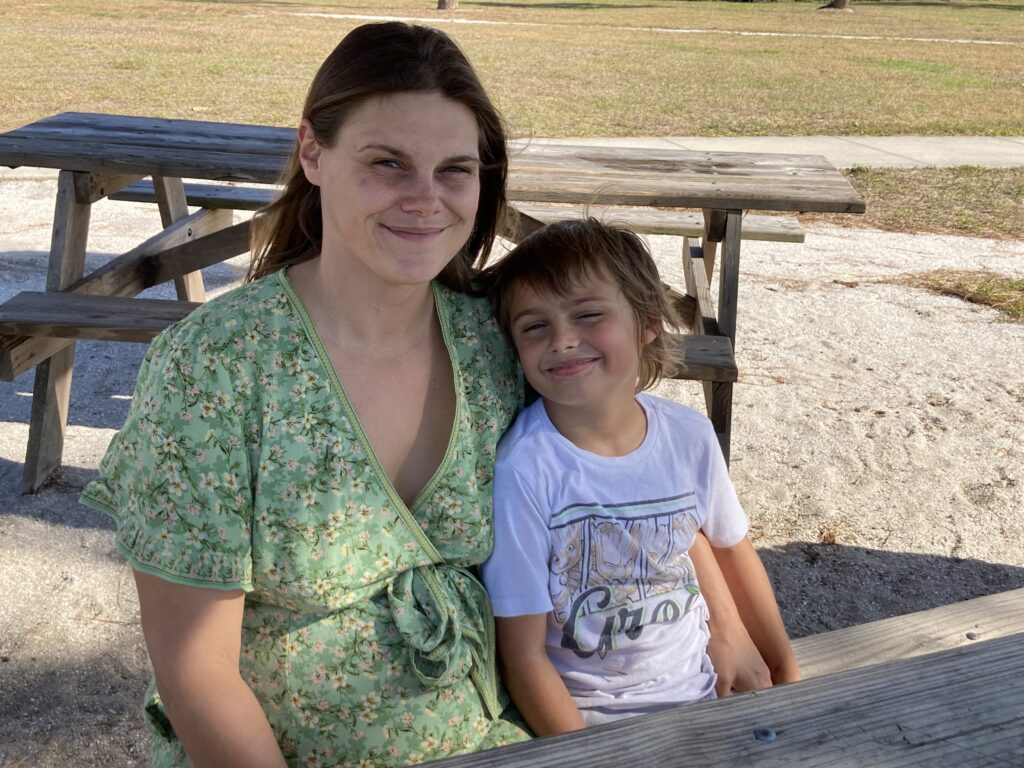
Looking for ways to harness Lyra’s energy, McKenna had already enrolled him in gymnastic classes. Tumbling through the air was a logical next step for a boy who loves to climb trees and dangle from bars in the playground near their Venice home.
Among the many perks of home education is that parents can set the daily schedule. This allows McKenna to keep some mornings free to take Lyra to the beach.
“No one’s there,” she said. “It’s my favorite time.”
Like a typical 6-year-old with boundless energy, Lyra’s interests are all over the place. He loves to swim, fish, play video games, and play with LEGOs. Right now, he is constructing “The Lord of the Rings: Barad-dûr,” the dark tower found in Middle-earth.
He even tried his hand at racquetball.
Nothing, though, beats the thrill of learning the trapeze.
The climbing, dangling, dropping, spinning.
To Lyra, none of it is scary.
It’s the most super fun.
VALRICO – Gov. Ron DeSantis announced Wednesday morning that Florida will opt in to the nationwide Federal Scholarship Tax Credit program established in August by the Trump Administration.
The federal program, which will launch in 2027, is designed to bring education choice to families across the country. In doing so, it will give families from coast to coast what those in Florida have enjoyed for more than 20 years – the final word in the education of their children.
“The great stuff we're doing here probably is going to be pretty groundbreaking in states that have not yet gone down the road of school choice,” DeSantis said. “But here we are, further empowering residents and families to be able to make the most around the country.”
The federal program allows individual taxpayers to contribute to approved scholarship granting organizations, enabling students from a wide range of backgrounds to pursue the learning environment and educational resources that best fit their needs. Students in both public and private schools will benefit from resources that support tuition, tutoring, educational tools, technology, and special academic programs.
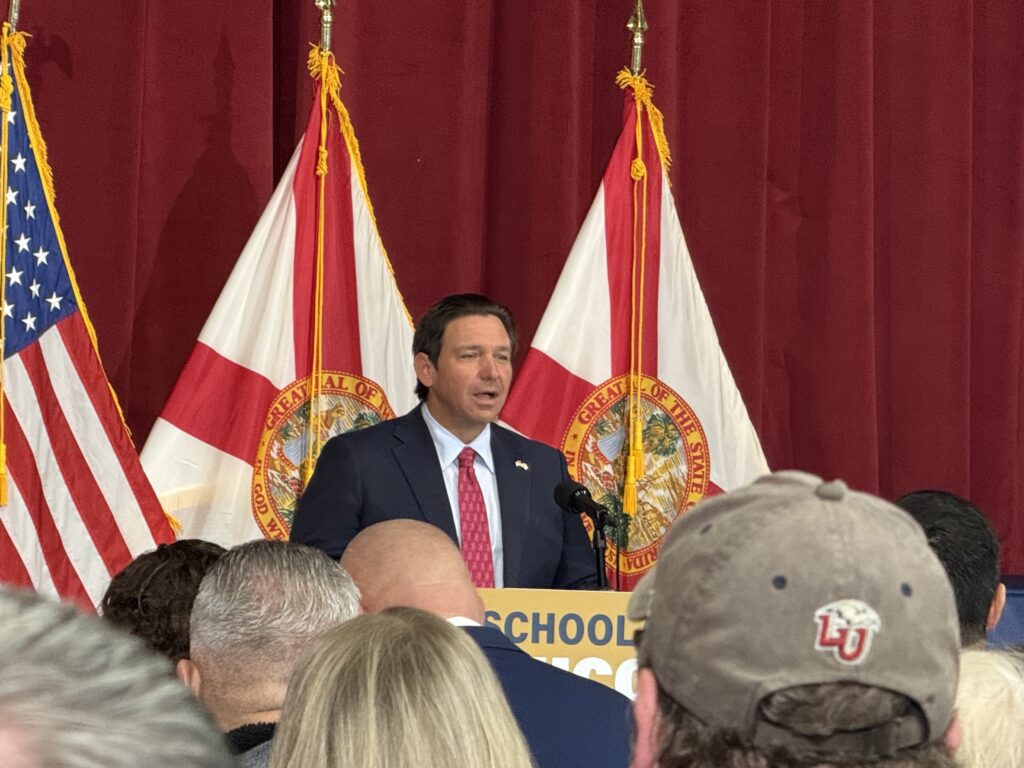
Step Up For Students, the Florida non-profit that manages the state’s education choice programs, will participate in administering the federal program by establishing the Step Up, Step Further Scholarship Fund, a separate 501c3 non-profit.
DeSantis made the announcement at Grace Christian School in Valrico as part of National School Choice Week. The school has 682 students on a Florida choice scholarship. The governor stood at the dais behind a sign that read, “School Choice Success. Florida is leading the nation.”
Anastasios Kamoutsas, Florida’s Commissioner of Education, followed DeSantis to the dais and said more than 1.4 million students in Florida benefit from a school choice option. More than 500,000 students receive one of the education choice scholarships.
DeSantis mentioned that Florida was the pioneer in education choice scholarships for students with unique abilities and for families who want to homeschool.
“Where do we rank in homeschooling? Do you know? At the top,” DeSantis said. “So we do good in homeschool because we embrace it and we empower.”
Kamoutsas said the purpose of National School Choice Week is to celebrate the freedom and opportunities that come with it.
“In Florida, that principle guides all that we do, and our students are better off because of it,” he said. “This week has been a time to showcase Florida's leadership in building the largest and most comprehensive school choice program in the nation.”
The spring trip to Sweden and Finland for a hockey tournament would be a scholastic problem for Nick Hacking if not for a Florida education choice scholarship.
The games will be played over 10 days in April. Add travel to and from that part of Europe, and that’s a lot of time away from school.
“If he were in a (traditional) school and missed that much time in April, I can’t even imagine that,” said Nick’s mom, Corrie.
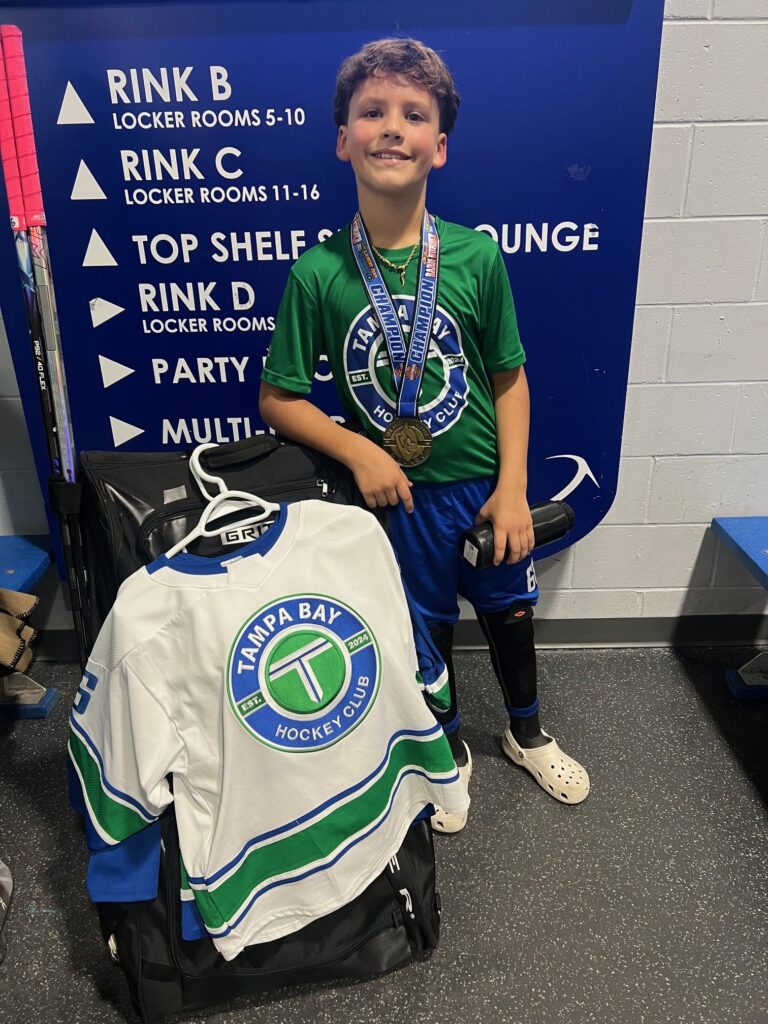
But Nick, 12, is home-educated and receives a Personalized Education Program (PEP) scholarship available through the Florida Tax Credit Scholarship Program.
Not only does the scholarship allow his parents the flexibility to customize Nick’s learning to meet his interests and needs, but because Nick learns at home, he has flexibility in his school day.

So do the more than 76,000 Florida students using the PEP scholarship program managed by Step Up For Students. Families seeking PEP and other school choice scholarships for the 2026-27 school year can apply starting on Feb. 1.
“The PEP scholarship is amazing,” Corrie said. “I cannot recommend it enough. From what I’ve seen with other parents, more and more families are looking into it as an option. You have control over your child’s education and curriculum, and you have control over the scheduling.”
So, when Corrie learned her son was selected for the Tampa Bay all-star team that would compete in a two-week tournament overseas, she took the planner that lists Nick’s spring curriculum, grabbed a pen, and made some adjustments.
“I said, ‘Okay, we still need to get these lessons done. How do we get these lessons done?’” Corrie said.
Easy. You squeeze in a little more time in March for math and science, and maybe double up on language arts.
“And when we get to April,” Corrie said, “we’re still ahead.”
Nick can even pack some schoolwork along with his ice skates, hockey stick, and equipment, and study while in Stockholm or Helsinki, two of the tournament sites.
“It gives us that flexibility,” Corrie said.
Corrie made similar adjustments last year when Nick traveled to Detroit for a hockey tournament.
The Hackings live in Palm Harbor, not far from the Tampa Bay Skating Academy in Oldsmar, where Nick practices with his Tampa Bay Hockey Club team. Nick has been playing hockey for six years, making the move from youth football after an ice-skating outing with his friends.
“He just put the skates on his feet and took off,” Corrie said.
He is a defenseman, partly because he’s not afraid of contact with opposing players and partly because he can blast the puck on net with long-range slap shots. He is among the top scorers on his team.
Not surprisingly, Nick’s weeks are filled with hockey. There are near-daily practices, Thursday morning training sessions, and Thursday afternoon skate-and-shoot sessions.

Nick spends almost his entire Thursday at the Tampa Bay Skating Academy. This also worked into his school schedule. He does the bulk of his schoolwork on Mondays, Tuesdays, Wednesdays, and Fridays. There is some time set aside on Thursday mornings for a quick lesson or review; otherwise, the day is reserved for hockey.
Nick said he loves the flexibility of learning at home, where the school day normally begins at 9 a.m. and ends in the early afternoon. Plus, his teacher (his mom) allows for a little rec time if she feels Nick needs some exercise.
Sometimes he'll take the dogs for a walk. Sometimes he’ll retreat to the family’s garage and begin shooting pucks at the walls.
“There are dents,” Corrie said with a measure of pride found among hockey moms.
Scott, a telemedicine family physician who works from home, and Corrie, a stay-at-home mom, began homeschooling Nick and his sister, Natalie, during the 2023-24 school year. (Natalie has since returned to her district school.)
Prior to that, Nick and Natalie attended a hybrid private school, which they attended three days a week with the other two spent at home.
“After doing the two days a week at home, I thought, “I can do this. I can do all of this," Corrie said. “I love it because I don't have to worry about someone I don't know teaching my kids.”
And she likes how she can tailor the curriculum. Nick is interested in math and science, where his average is in the high-90s in both. He spent two years learning Latin because he found the ancient language interesting, though he recently switched to Italian.
Natalie is a competitive cheerleader. Scott and Corrie frequently separate on weekends so one can attend Natalie’s cheer competition in one part of the state, and the other can put on a coat and gloves and sit inside a chilly ice rink to watch Nick play.
“We encourage our kids to do what makes them happy,” Corrie said.
If you want more proof of that, look no further than the Hackings’ oldest daughter, Dilyn.
“She’s a welder,” Corrie said. “She melts metal all day.”
So, they feed Natalie’s passion for cheerleading and nurture Nick’s dreams of one day skating for an NHL team.
And when needed, Corrie sits down with Nick’s class planner and makes the necessary adjustments, made possible by PEP.
A Tampa Bay area morning TV show kicked off National School Choice Week by highlighting a family who benefits from a state K-12 scholarship.
Arielle Frett appeared on Fox 13’s “Good Day Tampa Bay” program on Monday with her son, AnyJah, a ninth grader at The Way Christian Academy in Tampa. She said she moved to Florida from St. Thomas, Virgin Islands, in 2017 to find better educational opportunities for AnyJah, who has severe autism.
“No teachers were able to work with him on his level,” Frett told Fox 13 reporter Heather Healy. “Most of his learning in English and math are on fifth and sixth grade levels now.”
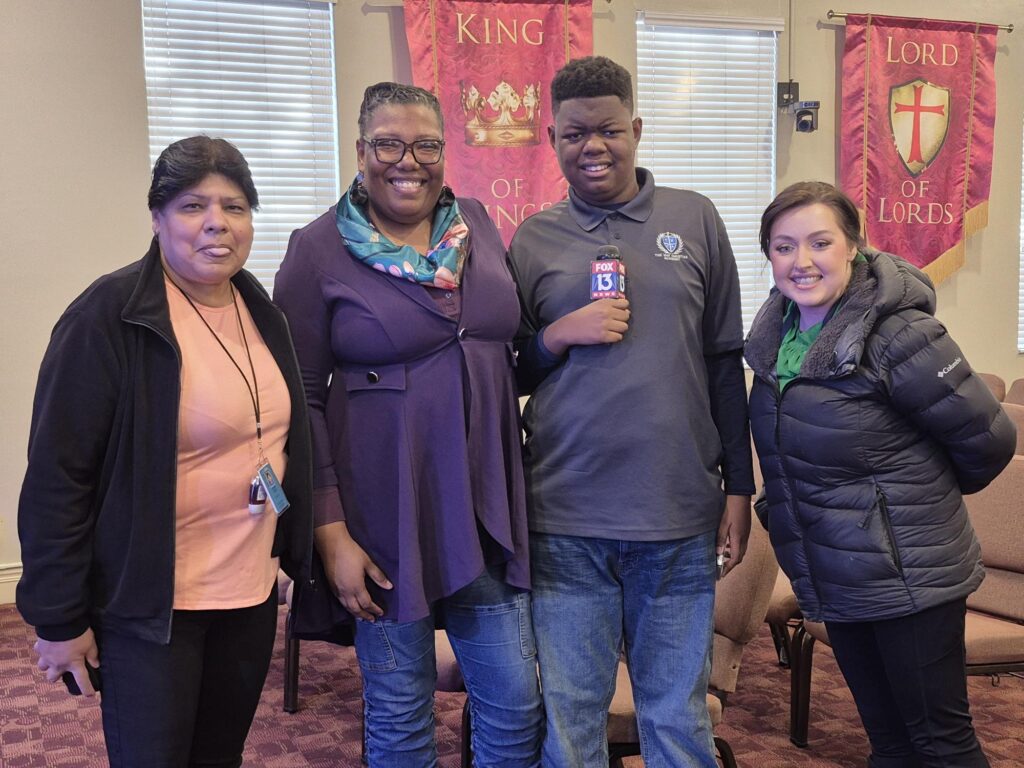
A U.S. military veteran and single mother of two, Frett said she would not have been able to afford a private school for her son without the scholarship.
She said AnyJah, who receives the Family Empowerment Scholarship for students with Unique Abilities, is “loved, protected, and thriving” at his school, where class sizes of 10 to 12 students allow for more individual attention. He can also receive his therapies during school.
The segment also featured information about Florida’s robust education choice options. Those include traditional public schools, district magnet schools, charter schools, private schools, microschools, homeschools, virtual schools, and customized education programs that allow parents to mix and match.
“We’ve gone from education and funding through the system to now empowering families by putting the money in their hands and allowing them to make the most appropriate educational decisions for families,” said Keith Jacobs, director of provider development at Step Up For Students, which administers most of the state’s education choice scholarships.
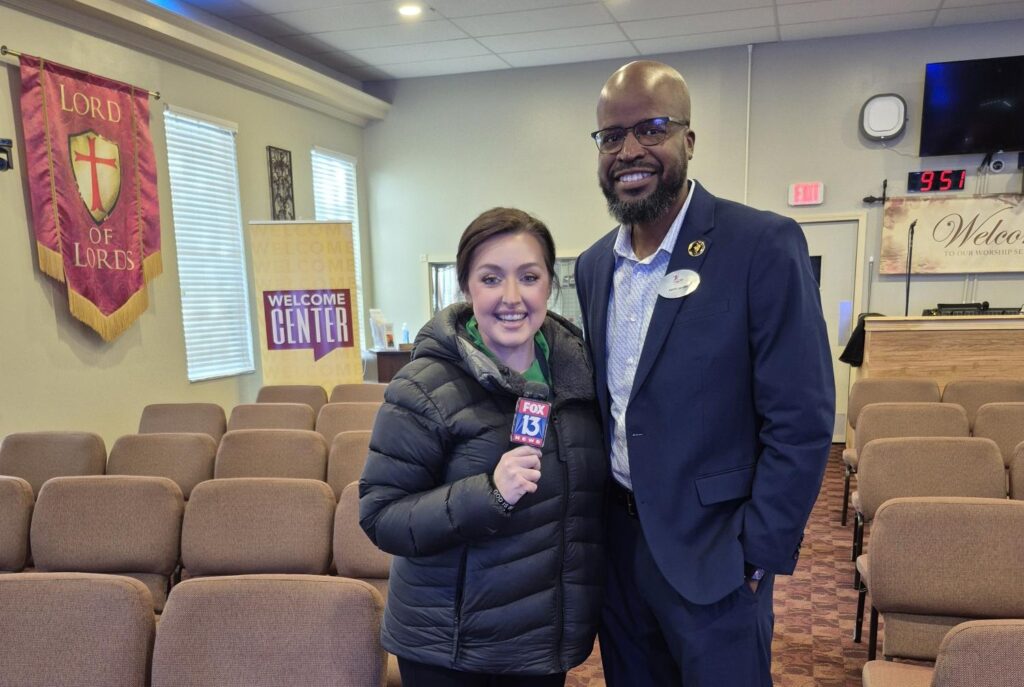
Jacobs has spent the past year working with school districts to provide individual courses to scholarship families whose students do not attend public or private school full time, paid for with scholarship funds. About 70% of Florida school districts are participating.
The scholarship application season for the 2026-27 school year begins Feb. 1. Visit Step Up For Students to learn more and apply.
Each school day at 2:35 p.m., Joshua Jones enters a classroom at Crescent City Junior-Senior High School and settles into an agriculture class for eighth graders.
It’s the only class Joshua attends at the school, located about six miles from his home. And it caps the academic portion of his day, which starts at 8:30 a.m. sharp when he and his younger siblings, Jacob (sixth grade) and Kylie (fourth), begin their home education with their mother, Ashley.
The Jones children receive Personalized Education Program (PEP) scholarships available through the Florida Tax Credit Scholarship Program and managed by Step Up For Students. PEP offers parents flexibility in how they spend their scholarship funds, allowing them to tailor their children’s learning to meet their individual needs and interests.
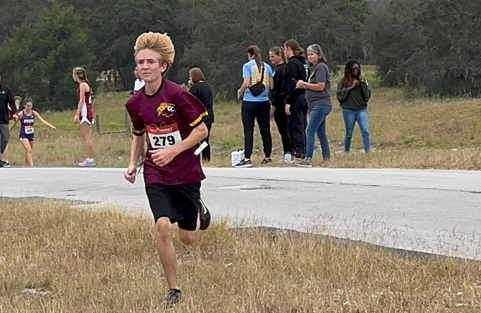
PEP allows families access to services and classes at public, charter, or virtual schools, adding another layer to hybrid learning for those who home educate.
Since the passage of PEP as part of House Bill 1 in 2023, 36 of the state's school districts are offering services to students with education savings accounts, with 12 more in the pipeline, according to Keith Jacobs, director of provider development at Step Up For Students. Those include some of Florida's large districts, such as Miami-Dade, Orange, and Hillsborough, as well as more rural districts such as Baker and Putnam, where the Joneses live.
That’s a welcome addition to the more than 500,000 students who are using state K-12 scholarship programs in Florida, where 51% of all students are using some form of choice.
Ashley and her husband, Daniel, use a portion of Joshua’s PEP funds to pay the Putnam County School District for Joshua to take the agriculture class and the fees for him to run cross country and play junior varsity soccer and baseball for the Raiders.
“This is a good opener for this year to figure out how this will work and if he will like it,” Ashley said.
Ashley used to teach elementary school music, art, and physical education. She is currently the girls' varsity volleyball coach at Crescent City Junior-Senior High and runs the local club volleyball program. Three years ago, she and Daniel, the pastor at South Putnam Church in Crescent City and a nurse at a hospital in Palatka, decided to home educate their children.
“The class sizes just were not feasible to me,” Ahsley said. “There were too many kids in the classroom. I love their teachers. I know them personally, but somebody’s going to get left behind. Somebody’s not going to get everything they need.
“Daniel and I decided that since I'm teaching kids anyway, I should be teaching mine. They're going to get so much more out of it, because it's just me and them.”
Joshua said he enjoys learning at home.
“We get done with school a lot quicker and have a lot more time to do things while still being able to learn,” he said.
Ashley teaches her children from 8:30 a.m. until the early afternoon. After that come chores and activities they can do outside in the fresh air and sun.
“My thing is this: I have intelligent children who I can teach, and they can be advanced and do it as fast as they want to, and that’s great. It just makes sense to me. This is the best model for us,” Ashley said. “I know it's not for everyone.”
The children are active in the community, are involved in sports and have a ton of friends, especially Joshua.
“He enjoys his social life,” Ashley said.
Crescent City is a small community. The city itself is less than three square miles with a population of fewer than 1,700. Ashley said it doesn’t lend itself to home education co-ops and chances for the Jones children to interact with other home-educated students during the day.
“That was the biggest piece that was missing for Joshua, going to school and seeing friends,” Ashley said.
So, when the opportunity was created for Joshua to return to a brick-and-mortar school, even on a limited basis, his parents pursued it. The agriculture class meets during the last period of the day, and Joshua was headed there anyway for sports.
Ashley called it a “great compromise.”
“He's going there to do something that he likes,” she said. “He loves the animals. He loves to learn about them. He’s going there for one of his electives, so that's one less thing that we do at home.
“He's already going to the school at the end of the day anyway, so now he just gets to see his friends and interact with people, and he's in a teacher setting, which I think is a good thing, too. It is hard when it's always mom. So, I think having a teacher also teaches life skills, so I don't think that's a bad thing at all.”
Joshua said he wants to continue with an agriculture class next school year. He would also like to join Future Farmers of America.
“It’s fun,” he said. “I get to go back to the school so I can still hang out with my friends and still get to take a class there.
“I do love learning about animals.”
ST. PETERSBURG, Fla. – Life, it’s often said, is what happens when you’re making other plans.
Tasia Mathis planned on joining the U.S. Navy Reserve. Then her grandmother, with whom Tasia and her younger brother Jeremiah lived with, died suddenly from complications of kidney failure.
“The papers were signed, but I wasn’t able to go through with it,” Tasia said. “I had to make sure he was OK.”
Tasia, 20 at the time, became her brother’s guardian.
While Tracy Crawford’s passing in June 2023 ended Tasia’s goal of joining the Navy, it didn’t end her goal of a bright future for herself and Jeramiah.
For that, she credits Florida's private school scholarships managed by Step Up For Students.
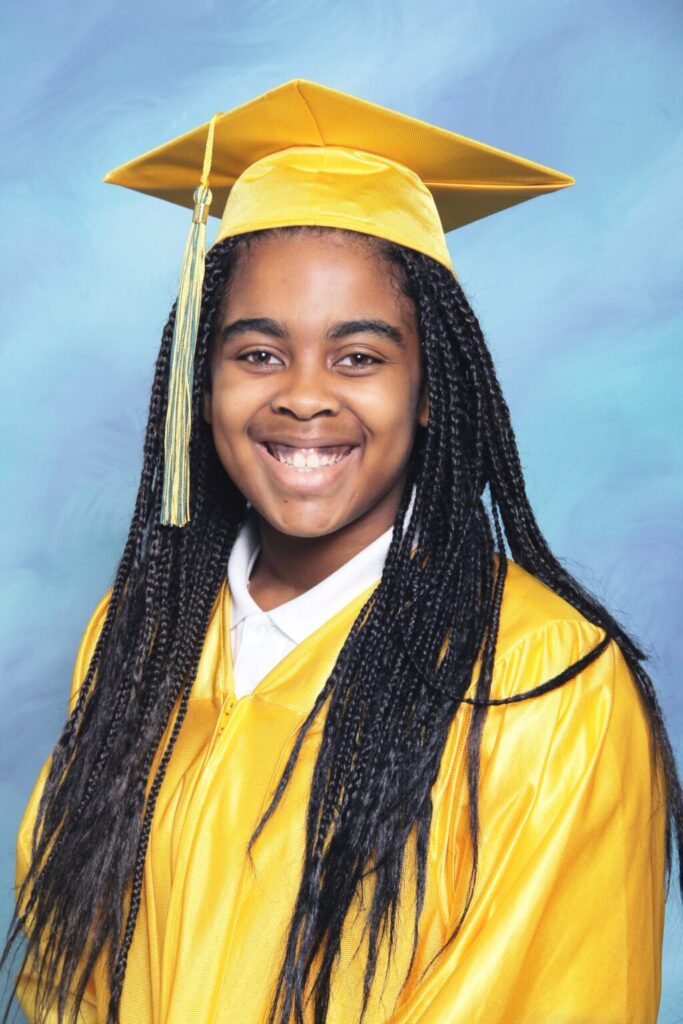
The scholarships enabled Tasia, now 22, and Jeremiah to attend Academy Prep Center of St. Petersburg for middle school and allowed Jeremiah, 15, to continue his private school education at Admiral Farragut Academy in St. Petersburg, where he is a sophomore this year.
“(The scholarship) gave us the opportunity to go to a school that we probably wouldn't be able to go to,” Tasia said. “It gave us the opportunity to expand our knowledge so good things can come into our lives.”
Tasia is studying to become a phlebotomist and works as a teacher at the Academy for Love and Learning in St. Petersburg.
Jeremiah would like to attend the United States Air Force Academy and work in cybersecurity.
The two, who share an apartment in St. Petersburg, have goals and are working toward them with a determination forged by Tracy Crawford, their grandmother, and reinforced by their years at Academy Prep.
“They don’t let you give up,” Tasia said when asked what she liked about attending Academy Prep. “Even if you had issues, they never let you give up.”
Could you blame them if they did?
Tasia was 8 and Jermiah was three weeks old when their mom died. Staci Crawford was only 34 when she suffered a heart attack. That left the children in the care of their grandmother, whose failing health forced Tasia to find work as a counselor at the Police Athletic League when she was 14.
“I had to help out with the bills,” she said. “By the time I was 16, I was cooking, washing everybody's clothes, helping my grandmother out the best I could.”
So, when asked what it’s like to have his sister as his guardian, Jeremiah said, “It’s kind of all I’ve known.”
Tracy wanted Tasia to attend a school that would challenge her academically and offer a safe environment. That’s why she used the private school scholarship to send her to Academy Prep.
At first, Tasia said, it wasn’t a good match. She was not a fan of the school’s long days (7 a.m. to 5 p.m.) or the fact that she had to wear a uniform.
“It took her a while to buy in, and then once she did, she was a high-achiever, and she set the tone for the other kids,” said Lacey Nash Miller, Academy Prep’s executive director of advancement.
For that, Tracy gets a big assist.
“She made sure my grades were straight, my attitude was straight,” Tasia said. “By seventh grade, it all came together.”
For high school, Tasia attended her assigned school because it offered a BETA (Business, Entrepreneurial, Technology Academy) program that interested her.
Jeremiah attended his assigned elementary school, but Tracy wasn’t a fan of his assigned middle school.
“It wasn’t up to her standards,” Tasia said. “She wanted to challenge him.”
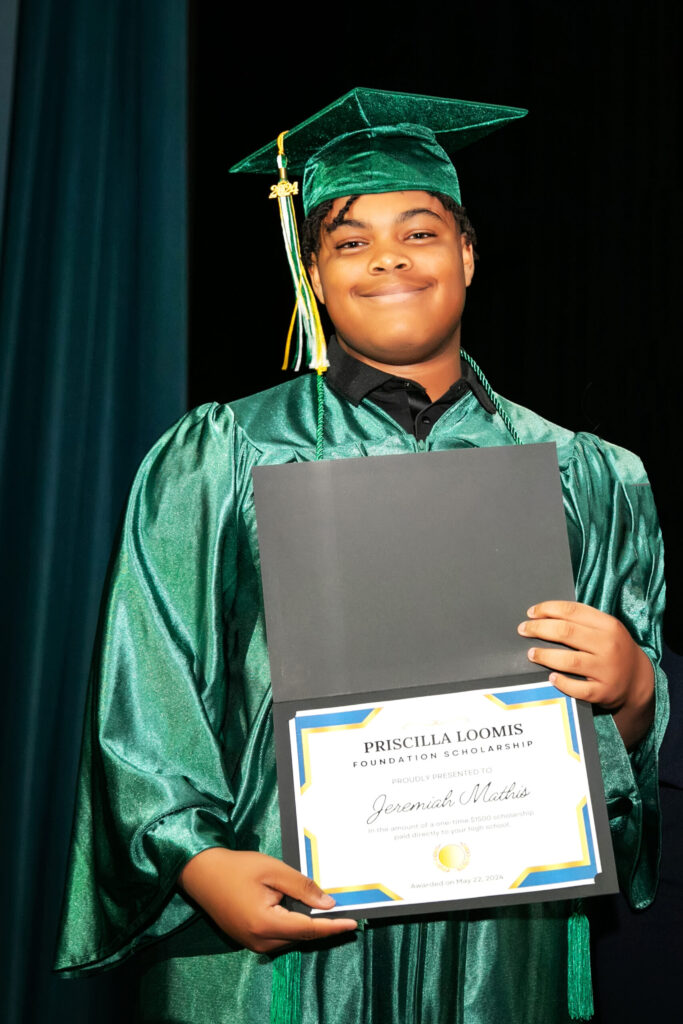
So, like his sister, Jeremiah headed crosstown to Academy Prep, where he said he benefited from the school’s academic environment and the self-discipline the teachers try to instill in the students.
Jeremiah said he became more extroverted during his years at Academy Prep.
“I was naturally a quiet person. I didn’t talk much,” he said. “Now, I talk to people. I try to start conversations.”
He also credited his teachers, specifically Zack Brockett, a science teacher, for guiding him toward being a young adult.
“He pushed us to grow up, so that we can go into high school as mature students,” Jeremiah said.
His teachers at Academy Prep describe Jeremiah as a quiet student who completed his assignments on time, helped out around campus, and amazed them with his drawing ability.
“Jeremiah is very self-driven,” Britanny Dillard, Academy Prep’s assistant head of school, said. “He’s one of those people that you kind of underestimate because he's so quiet that you don't even truly realize the talents that he actually has. He’s not the first to raise his hand, but he knows the answer.”
Jeremiah was a member of the school’s track team. He threw the shot put and discus. At graduation, Jeremiah received the Priscilla E. Frederick Foundation, worth $1,500 toward the balance of his freshman year tuition at Admiral Farragut. Frederick is a former Olympic high jumper who competed for Antigua and Barbuda in the 2016 Summer Games. Her foundation awards scholarships and grants to students raised in single-parent households. Jeremiah was the first Academy Prep student to earn that scholarship.
He is a soft-spoken, unassuming young man with a growing vinyl record collection and an interest in graphic novels and comic books. He will participate in track and field this year and will take an aviation class, which he feels will benefit him when he gets to the Air Force Academy.
Jeremiah spends his high school volunteer hours at Academy Prep. He helps grade papers, organize classrooms, and move supplies around campus.
Jeremiah and Tasia are spoken highly of at Academy Prep. Both Dillard and Nash Miller said they were “heartbroken” when they learned of Tracy’s death, and both admitted they were worried for the future of the siblings.
“They only had each other, and I think it speaks highly of Tasia that she was willing to accept that role,” Dillard said.
Said Nash Miller: “The news that her grandmother passed just gutted me. She had all these plans, and she just cancelled them to be her brother’s primary caregiver. What a superhero to put her brother’s needs ahead of her own.”

