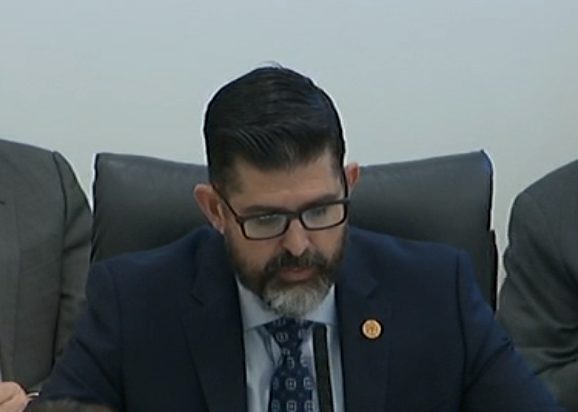
Sen. Manny Diaz Jr., R-Hialeah, lays out the parameters of SB 48 for his colleagues at today’s Senate Appropriations Committee meeting.
A bill that would simplify Florida’s education choice programs by merging five scholarships into two and add a flexible spending option is headed to a vote on the Senate floor after clearing the Senate Appropriations Committee today.
By a vote of 11 to 8 along party lines, with Sen. Aaron Beane absent, members approved SB48, which would transfer students receiving the Florida Tax Credit Scholarship Program to the Family Empowerment Scholarship and sunset the 20-year-old FTC.
“Parents are the best advocates for their children, and now more than ever, parents are seeking freedom from a one-size-fits-all system to look for resources and tools to uniquely tailor learning for their child’s individual needs,” said the bill’s sponsor, Sen. Manny Diaz Jr, R-Hialeah. Diaz added that the legislation will offer more options to more families by using money already dedicated for education.
The bill is among the top priorities of Senate President Wilton Simpson, R-Trilby, who praised Diaz for shepherding the legislation.
“School choice is here to stay,” Simpson said. “In recent months, the ongoing pandemic has even further highlighted the important responsibility of every parent to choose the best learning environment for their child, and with well over 100,000 students currently utilizing the variety of scholarship programs we have available, I’m glad we are streamlining eligibility and funding so that parents have a better idea of their full range of options.”
The bill also would merge the McKay Scholarship Program for students with disabilities and the Gardiner Scholarship Program, creating a new program for students with unique abilities called the McKay-Gardiner Scholarship Program. That program would allow families in all state scholarship programs to have flexible spending accounts, also known as education savings accounts, or ESAs. Currently, only students enrolled in the Gardiner program have such flexibility.
The accounts allow families to spend their money on pre-approved services and equipment in addition to private school tuition. Approved expenditures include electronic devices, curriculum, part-time tutoring programs, educational supplies, equipment, and therapies that insurance programs do not cover. The bill would expand eligible services for McKay-Gardiner students to include music, art, and theater programs, as well as summer education programs.
The scholarship programs are also available to homeschool students and those enrolled in eligible private schools. In addition, victims of bullying at district schools who transfer to private schools as part of the Hope Scholarship Program would also be served by the Family Empowerment Scholarship Program and receive the same spending flexibility.
Under the bill, donors would still be allowed to contribute to the tax-credit program through a newly created state trust fund. However, donations would go to serve K-12 education generally in the state, rather than pay for scholarships. Both the FTC and the FES are income based and serve students whose families meet financial eligibility rules.
The bill does not materially change the eligibility criteria for any of the scholarship programs and reduces the currently allowable statutory growth in some of the programs.
During the nearly two-hour debate, numerous individuals spoke in favor of the bill, including families who have benefited from school choice scholarships and others whose children have been denied scholarships because of a requirement that students applying for Family Empowerment Scholarships and McKay Scholarships must have attended a public school during the previous year.
SB 48 would eliminate that requirement.
“We have made great sacrifices, including taking second jobs, to send our daughters to Trinity Christian, a school we felt was best for them,” said Jerold Maynard, a firefighter from Apopka whose finances were hard hit by the coronavirus pandemic.
When the family applied for income-based scholarships, they were rejected because of the prior-public rule. Maynard said his daughters were heartbroken when they had to withdraw and attend a district school. He supports the bill because he wants to spare other parents from going through the same struggle his family endured.
“Ironically, now that the girls are in public school, they meet the prior-year requirement for the Family Empowerment Scholarship,” Maynard said. “But no family should have to pull their kids out of a school that works for them.”
Rasheda Alexander of Pensacola, whose two daughters receive scholarships to attend private school, said the program allows her children to enjoy a learning environment where “they don’t get lost in the mix.” Choking with emotion, she described how her older daughter was bullied at her prior district school because of a learning disability.
“I’m glad that Sen. Diaz’s bill would give parents even more options on how to spend their children’s education dollars,” she said. “This scholarship has truly been a blessing to our family. Without it, it would not be possible for me to put my children in the learning environment that is best for them.”
Support was not limited to parents. Mike Juhas, superintendent of Catholic schools for the Diocese of Pensacola/Tallahassee, recounted how the scholarship program came to the aid of a student with a heart defect by allowing her to afford tuition even as she and her mother lived paycheck to paycheck. Now a high school senior and honor student, the girl has been accepted to three colleges.
“I have seen firsthand how these scholarships change students’ lives,” he said.
Critics of the bill questioned how, with parents controlling the money, the program would ensure accountability.
Diaz responded that guardrails created eight years ago for the Gardiner Scholarship Program would apply to all educational spending accounts. An online purchasing platform includes only pre-approved items. If parents submit receipts for items not approved in the system, they run the risk of paying for the item or services on their own if approval is denied.
“This is not new to us,” Diaz said.
SB 48 was approved earlier this month by the Senate Education Committee and cleared the Senate Appropriations Subcommittee on Education two weeks later.
For more information about what the bill includes, click here.)
A companion bill is expected in the House.
The bill has received endorsements from several groups including the Central Florida Urban League. The Libre Initiative – Florida and Americans For Prosperity are sponsoring a joint campaign to promote the bill.
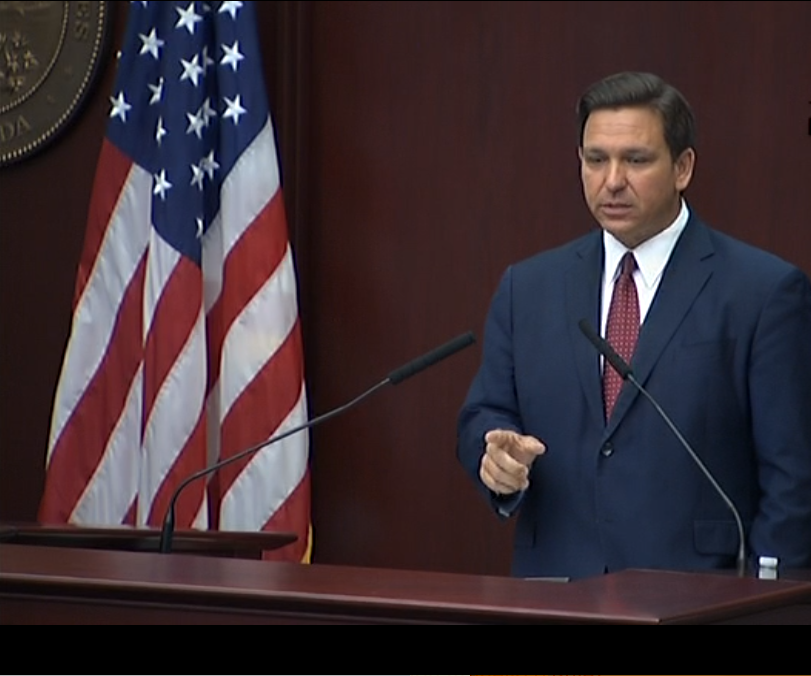 While other states were mandating lockdowns during the coronavirus pandemic, Florida was right to keep the state open, including its brick-and-mortar schools, Gov. Ron DeSantis said in his annual state of the state address today.
“Florida schools are open, and we are only a handful of states in which every parent has a right to send their child to school in person,” DeSantis told House and Senate members who gathered for the opening of the 176th legislative session. “We will not let anybody close your schools; we will not let anybody close your businesses, and we will not let anybody take your jobs.”
The governor also premiered a video that included scenes of happy, masked schoolchildren walking single file down the hall while being led by a happy, masked teacher. He thanked school administrators for their role in making sure campuses opened for the 2020-21 school year safely and smoothly.
In states that closed campuses, DeSantis said, the consequences will be “catastrophic and long lasting.”
Continuing the subject of education, DeSantis added that he hopes to build on last year’s priorities, which included a $500 million boost to raise district schoolteachers’ starting salaries to $47,500, putting Florida in the nation’s top five for teacher pay. He also cited education choice as a priority and congratulated the state for rising to No. 2 nationally in the percentage of graduating seniors passing Advanced Placement exams.
“Florida is leading in education, and we must continue to do so,” he said.
DeSantis’ remarks followed speeches from top legislative leaders delivered from their respective chambers earlier in the day.
State Senate President Wilton Simpson, R-Trilby, spoke specifically about Senate Bill 48, sponsored by Sen. Manny Diaz Jr., R-Hialeah. The bill would streamline the education choice system by combining five scholarship programs into two. It also would convert traditional scholarships to flexible spending accounts to give parents more control over their children’s education.
Simpson said the pandemic amplified the importance of parents’ ability to choose the best learning environment for their children. The scholarship programs, a patchwork system developed over two decades, needs to be simplified and accessible for the more 100,000 families who benefit from the program, which provides equity to lower-income families, he said.
“The fact is, school choice has always existed for wealthy families,” Simpson said. “I believe this option should be available to every family. It is the only way to truly break the cycle of generational poverty.”
You can read more about SB 48 here.
The 2021 legislative session is scheduled to run for 60 days and is expected to take up a number of education issues besides SB 48. These include school funding, dual enrollment affordability for private and homeschool families, career planning and workforce development and early childhood education.
Legislation under consideration includes SB 52, which would allocate $12.5 million to cover the costs of private and homeschooled who participate in dual enrollment programs by taking courses from a partnering college or university. The bill also would allocate $16 million to cover the costs of dual enrollment courses taken during the summer for all Florida students, including those who attend public schools.
The bill and its House companion, HB 281, would fix a glitch that occurred in 2013, when a change in the law shifted the cost of dual enrollment programs from colleges to school districts. Because school districts are state funded, the state picked up the cost. But private schools, which were not allowed pass the cost on to their students, had no alternative but to limit their dual enrollment offerings.
The Florida Conference of Catholic Bishops and the Florida Association of Academic Nonpublic Schools have each endorsed the dual enrollment bills.
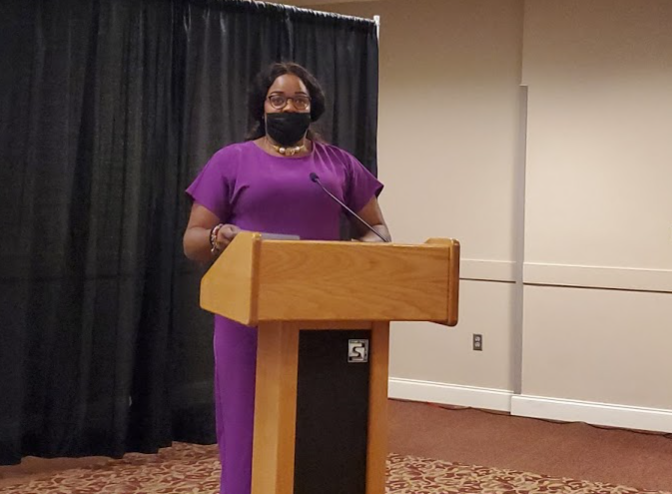
Natalie Wiley of Jacksonville was among parents and education choice advocates who spoke in favor of SB48, which would streamline state scholarship programs and provide additional flexibility for families. Three of Wiley’s children participate in scholarship programs, which she says have made a huge difference in their lives.
A bill that would simplify Florida’s education choice programs by merging five scholarships into two and add a flexible spending option advanced one more step toward passage today after clearing the Florida Senate Appropriations Subcommittee on Education.
By a vote of 6 to 3 along party lines, members approved SB48, which would transfer students receiving the Florida Tax Credit Scholarship Program (FTC) to the Family Empowerment Scholarship (FES), which was signed into law in 2019, and sunset the 20-year-old FTC.
“I am glad to see the bill will give myself, a single mother of four, and other families the opportunity to have flexibility in utilizing the scholarship,” said Natalie Wiley of Jacksonville, whose children are on FTC and FES scholarships. “This will improve programs that have made a huge impact in my family.”
The bill, sponsored by Sen. Manny Diaz Jr., R-Hialeah, was approved Feb. 3 by the Senate Education Committee. (For more information about what the bill includes, go here.) A companion bill is expected in the House.
“This bill is not an expansion but really a streamlining,” Diaz said during the subcommittee meeting. He said the pandemic amplified the need for increased innovation and flexibility, with many parents working with their kids at kitchen tables. “I still believe the parent is the best decisionmaker for the child.”
Under the bill, donors would still be allowed to contribute to the tax-credit program through a newly created state trust fund. However, donations would go to serve K-12 education generally in the state, rather than pay for scholarships. Both the FTC and the FES are income based and serve students whose families meet financial eligibility rules.
The bill does not materially change the eligibility criteria for any of the scholarship programs, and actually reduces the currently allowable statutory growth in some of the programs.
The bill also would merge the McKay Scholarship Program for Students with Disabilities and the Gardiner Scholarship Program, creating a new program for students with unique abilities called the McKay-Gardiner Scholarship Program.
That program would allow families in all state scholarship programs to have flexible spending accounts, also known as education savings accounts, or ESAs. Currently, only students enrolled in the Gardiner program have such flexibility.
The accounts allow families to spend their money on pre-approved services and equipment in addition to private school tuition. Approved expenditures include electronic devices, curriculum, part-time tutoring programs, educational supplies, equipment, and therapies that insurance programs do not cover. The bill would expand eligible services for McKay-Gardiner students to include music, art, and theater programs, as well as summer education programs.
The scholarship programs are also available to homeschool students and those enrolled in eligible private schools.
In addition, victims of bullying at district schools who transfer to private schools as part of the Hope Scholarship Program would also be served by the Family Empowerment Scholarship Program and receive the same spending flexibility.
Several families spoke in support of the bill. Natalie Wallace of Tampa told senators how programs allowed her son, daughter and nephew to attend Hillel School of Tampa after they were not academically challenged enough, and her youngest child was bullied.
“Hillel gives my kids smaller classes, more learning support, a safe environment, and it reinforces our family’s beliefs and values,” she said. “The scholarship has lessened the financial burden on my family and given us the same opportunities at a good education as those who are more privileged. And now, thanks to Sen. Diaz, this bill can make it even better by giving scholarship families more spending flexibility to further meet their children’s needs.”
In addition to scholarship families, the bill received support from the Libre Initiative – Florida and Americans For Prosperity, which have announced a joint campaign to promote the bill.
The bill’s next stop is the Senate Appropriations Committee.
 There are many important policy improvements in Florida Senate Bill 48, the innovative education choice legislation sponsored by Sen. Manny Diaz Jr. that is receiving so much national attention. But my favorite enhancement is the creation of education savings accounts (ESAs) for lower-income families.
This year, Florida is providing scholarships to about 140,000 lower-income families via the Florida Tax Credit (FTC) and Family Empowerment Scholarship (FES) programs. Currently, these scholarships can only be used to pay private school tuition and fees, or transportation costs to attend an out-of-district public school. The scholarship amount cannot exceed the annual cost of tuition and fees at a student’s chosen private school. If a student is eligible for a $7,000 scholarship but the tuition and fees at her private school are $6,000, then that student’s scholarship will be only $6,000.
This year, 17% of our FTC/FES scholarship recipients received scholarships that were, on average, $641 less than a full scholarship. That means 23,800 students, who researchers say are the state’s lowest-income and lowest-performing students when they receive a scholarship, did not get $15,255,800 in scholarship funds they were financially eligible to receive.
If the Florida Legislature and Gov. Ron DeSantis agree to turn these scholarships into ESAs, then every scholarship student will receive the full scholarship amount, and any funds not spent on tuition and fees may be spent on additional education services and products such as tutoring, books, summer school, and software.
Some private and charter schools already are planning to create afterschool tutoring and summer enrichment programs to serve families with excess ESA funds. Families also may use ESA funds to purchase services from their neighborhood district schools and certified teachers who create their own afterschool and summer programs. More small business development, especially in lower-income urban communities, is a benefit of the enhanced spending flexibility families have via ESAs.
An important feature of ESAs is that unspent funds roll over so parents may spend them in future years. Some elementary and middle school families, for instance, probably will roll over unused ESA funds to help pay for high school expenses, which are often unaffordable for scholarship families.
Sen. Diaz’s bill is a long way from becoming law. But Florida’s legislative leaders, in collaboration with our governors over the last 25 years, have made steady progress toward providing our state’s most disadvantaged students with more effective and efficient learning options.
I am confident that the education choice bills that become law this summer will continue this trend.
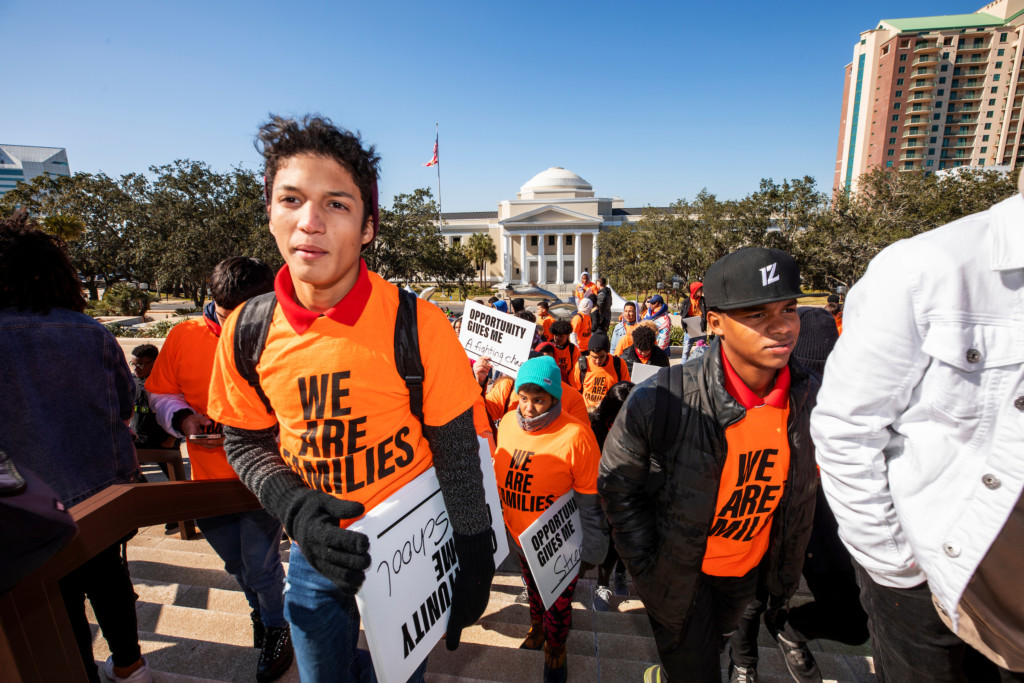
Last year at this time, hundreds rallied at the Florida Capitol for expansion of the Gardiner Scholarship program. New legislation introduced last week would allow families in all state scholarship programs to have flexible spending accounts, currently available only to students enrolled in that program.
 National School Choice Week kicked off Sunday and will continue through this Saturday. This year’s celebration is especially meaningful for Step Up For Students given it coincides with our 20th anniversary of serving disadvantaged students and their families.
Over the last 20 years, Step Up has raised about $5 billion in scholarship funds and funded over 1 million tax credit scholarship students. To impact this many lives has been an extraordinary honor. But we have lots more work to do.
Last week, state Sen. Manny Diaz, Jr. filed a bill that will streamline Florida’s education choice programs and give families more flexibility in how they spend their scholarship funds. The pandemic has caused all families to search for ways to keep their children safe while also meeting their academic needs. Many affluent families have organized innovative solutions such as homeschool cooperatives, micro-schools, and hybrid programs that combine virtual and face-to-face instruction, while most families with less resources have not had these opportunities.
Sen. Diaz’s bill will help address this inequity by empowering lower-income families to have better access to these more diverse teaching and learning options, including out-of-school learning options that are another source of public education’s growing inequality of opportunity.
As a former public-school teacher and teacher union leader, I am pleased by how Florida’s education choice movement is expanding opportunities for teachers to innovate and be entrepreneurial. Unlike doctors, lawyers, architects, accountants and other professionals, educators have few opportunities to take a path less traveled and do their own thing.
Because families do not control their public education dollars, they cannot choose to spend these dollars at schools that are owned and operated by teachers. This makes it difficult-to-impossible for teachers to create schools that are financially viable. But as the education choice movement gives families more control over their children’s public education dollars, teacher owned and operated schools will become viable and teachers will begin to have the same opportunities as other professionals.
With all these new opportunities for teachers and families come new responsibilities. We have historically implemented accountability in public education through government regulations, but as families and teachers are empowered to have more choices, finding the proper balance between regulatory and consumer choice accountability will be increasingly important.
Providing families with the information they need to match their children with the education programs that best meet their social, emotional and academic needs also becomes more important as families have access to more choices. Human development is a complex process. Ensuring families continually have all the information and support they need to help their children successfully navigate this process is essential.
Step Up currently runs the nation’s largest Education Savings Account (ESA) program. Consequently, we are well aware of the challenges associated with running ESA programs effectively and efficiently. If Sen. Diaz’s bill passes as currently written, Step Up will be managing well over 200,000 ESAs this fall. We know that the country’s education choice movement will be significantly impacted by how well we manage this task.
Education choice is the future of the school choice movement. We will know the education choice movement has reached maturity when National School Choice Week is renamed National Education Choice Week. That day is coming — sooner than most people think.
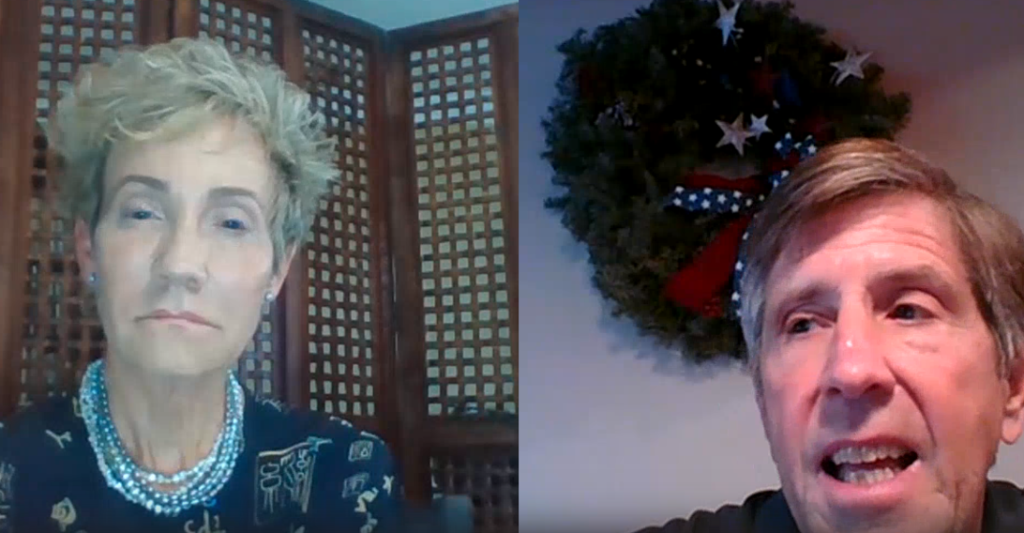
On this episode, redefinED managing editor Donna Winchester asks Tuthill about a landmark education choice bill filed Thursday in the Florida Senate. Sponsored by Sen. Manny Diaz Jr. (R-Hialeah), SB 48 would merge Florida’s five choice scholarship programs into two and add flexible spending options in the form of education savings accounts to better meet the individual needs of scholarship families.
The bill would transfer students currently receiving the Florida Tax Credit Scholarship to the Family Empowerment Scholarship, which was signed into law in 2019, and merge the McKay Scholarship Program for students with disabilities and the Gardiner Scholarship Program for students with unique abilities, creating a new program called the McKay-Gardiner Scholarship Program.
Tuthill discusses the bill’s potential to better align public education to the modern world of school choice, aiding not only students and families but educators and education providers as well.
"I think you're going to see a lot of very dynamic educators who would normally be pushed out of the profession because they're so frustrated (now) staying ... and creating lots of innovation. For the next 15 to 20 years, I think you will see an amazing amount of innovation driven by educators who finally have the freedom to be more creative, and families having the resources to access those kinds of choices. I think it's going to be a renaissance for teachers and families."
EPISODE DETAILS:
· An explanation of SB 48 and how it would enhance Florida’s choice landscape
· The genesis of Step Up For Students’ motto of “helping public education fulfill the promise of equal opportunity”
· How education choice empowers educators and promotes entrepreneurship
· Tuthill’s response to those who doubt a parent’s ability to make good educational decisions for their children
· What social science has to say about learning and internal motivation and how that message can guide education choice advocates and thought leaders

