With the start of classes just weeks away, Florida’s top education officials finally got some good news about the progress of a charter school’s efforts to turn around a persistently struggling school in Escambia County.
With a long-delayed contract in hand, officials with Charter Schools USA told the state Board of Education they had hired nearly two-thirds of the staff they will need to welcome students to the newly rechristened Warrington Preparatory Academy.
They are now convening teachers for three weeks of training and culture-building before the first day of school.
“We truly believe that on the first day that students do come back, they are going to come into a welcoming environment that they deserve and that they can be successful in,” said Eddie Ruiz, the state superintendent for the charter management company, which operates 90 schools across five states and 60 in Florida.
Warrington Middle School struggled with low test scores for more than a decade and is now the latest school to be brought under new management by a charter school organization tasked with turning around its low performance.
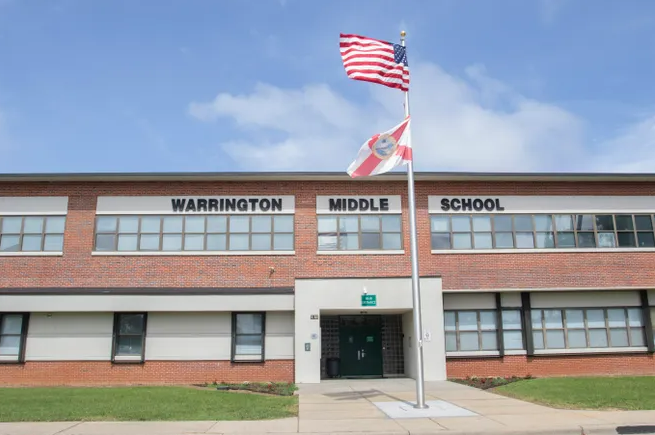 After a months of stalled contract negotiations that drew threats from the state Board of Education members to launch an investigation and withhold district leaders’ salaries, the local school board approved the agreement for Charter Schools USA to take over Warrington on May 16.
The timing gave Charter Schools USA a tight window to hire staff, reassure parents, and enlist community supporters.
Ruiz, a top leader with the South Florida management company, was sent to the Panhandle community as a “boots on the ground” presence. He said the company has prioritized renovations, repainted the building inside and out, cleaned and waxed the floors, and refurbished the gym.
The company has also hired a new principal, curriculum specialist and social workers “right off the bat” and filled 47 of 72 open positions, Ruiz said.
Education Commissioner Manny Diaz, Jr. and state board members pressed Ruiz for a contingency plan in case some positions remain unfilled when school starts Aug. 10. On its website, the school touts a $12,000 salary premium for new teachers compared to the surrounding school district.
“People are coming from all over the state and from nearby states to be a part of the changes happening at Warrington Prep,” Ruiz said.
He added that the company immediately reached out to parents to let them know about the new school, which will house grades six through eight this year and later be converted to serve students in kindergarten through eighth grade.
“There was a lot of confusion as to what had happened,” Ruiz said. He said they expect to have at least 660 students when classes resume.
State board members praised Ruiz and the company’s efforts so far but expressed a desire to continue monitoring the situation closely. They asked for another update in October and indicated they would be watching with interest when the school reports students’ fall and winter progress monitoring test results.
Board member Ryan Petty called the update “fantastic news” and recalled the concern he felt during a fact-finding visit to Warrington Middle School.
“I cannot get those images out of my head,” he said. “(Students) deserve better than they were receiving at that point.”
 Around the state: The Florida Department of Education released school grades statewide, Hillsborough officials face hurdles in building new schools, free meals in Charlotte and crowdfunding for teacher wish lists in Seminole. Here are details about those stories and others from the state’s districts, private schools, and colleges and universities:
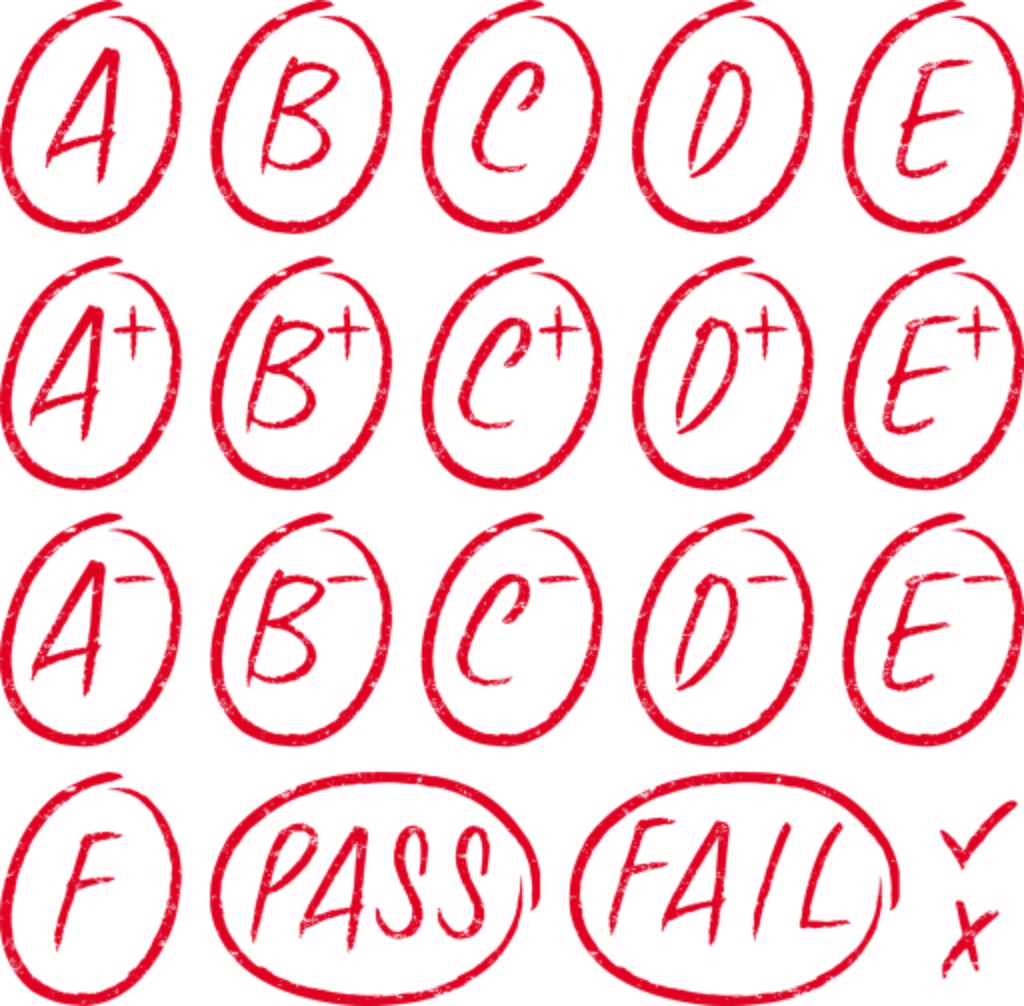
School grades: The Florida Department of Education released school grades for the 2021-22 academic year. Schools statewide exceeded expectations, with the 2021-22 grades marking the first full school grade data released since 2019. Some highlights: Fifty-three schools exited the school improvement support list in 2022, all schools graded 'F' in 2019 improved their grades in 2022 and 84% of schools graded 'D' and 'F' in 2019 improved grades in 2022. Statewide, the biggest gains were seen in elementary schools, where 1 in 5 schools improved by at least one letter, according to the Department of Education. News4Jax. Politico. Tampa Bay Times. Meanwhile, fewer schools earned 'A' and 'B' grades than they did in 2019. In Central Florida, for example, Seminole County Public Schools remained the top performer, earning an 'A' grade. Orange County Public Schools earned a 'B,' as did Lake and Osceola school systems. The state canceled school testing in 2020 when the pandemic closed schools, so no grades were issued that year. Last year, grades were optional because students were studying remotely, so this year marked the return of the grading system for schools and districts, based mostly on standardized test performance. Orlando Sentinel. Despite COVID-19 challenges, Lake County received a 'B' grade. Some families had trouble getting children to school during quarantines, but school officials say teachers, staff and administrators attentive to the needs of students, which was reflective in grades. WESH. In Sarasota and Manatee counties, Sarasota maintained its 'A' grade and Manatee its 'B' rating. Sarasota Herald-Tribune. In Collier County, the school district received an 'A' rating. Lee County received a 'B,' with 27 Lee County schools increasing their overall grade average since 2019. Ft. Myers News-Press. Fox4Now. Volusia and Flagler schools each earned 'B' grades, while St. Johns County district kept its straight 'A' performance. The Daytona Beach News-Journal. And of the seven largest school districts in Florida, only Palm Beach and Miami-Dade achieved 'A's' while Broward, Duval, Hillsborough, Orange and Pinellas earned 'B's.' Palm Beach Post.
Seminole: With teachers reaching into their pockets to pay for school supplies as inflation continues to soar, a few teachers here turned to social media to receive assistance by posting their classroom wish lists. A Facebook page started more than a decade ago by a realtor named Emma Reichert has been encouraging the community to lend a hand to teachers and students in need. WKMG.
Building hurdles: Hillsborough school officials are facing hurdles in their quest to make sure every student has a seat to learn while its population continues to grow. Capacity issues plagued Hillsborough at nearly 60 schools. While the district waited for funding to build new schools, construction costs have skyrocketed, officials say. The construction of schools is up 43% in the last three months, and 90% in the last year. ABC Action News. Meanwhile, Flagler County schools, county government and Palm Coast are at odds over how to bill builders for new schools. A meeting will be held today with representatives from the school board, county, Palm Coast, Flagler Beach and Bunnell to hash things out. Flagler Live.
Free meals: Students in the Charlotte County Public Schools system can get free breakfast and lunch daily during the 2022-23 school year, according to officials. The meals are made available through the federal Community Eligibility Program that allows schools to qualify as a "community" when the percentage of directly certified students reaches a certain threshold at a particular school. Port Charlotte Sun.
Artwork competition: A Martin County High School student's art is up for consideration in a national artwork competition called Doodle for Google. Sophie Araque-Liu won Florida's nomination, where students submit artwork to be featured for a day on the search engine's homepage. This year's theme was "I care for myself by..." Araque-Liu's artwork depicts her hugging her mother. Voting to select national finalists began Thursday. TC Palm.
Suspension inequality: Despite a decline in suspension as students moved to remote learning during the COVID-19 pandemic, Black children and those in special education were disciplined far more than white students and those in general education, a new study shows. The study also indicates that the behavior of students may have worsened this past academic year. The 74th.
Educator concerns: The president of the state's largest teachers union says educators are concerned about state legislation and recent education training that could threaten the bond between educators and their students, in addition to the separation between church and state. WINK.
University and college news: A state appeals court this month will delve into a dispute about whether the University of Florida should refund fees to students who were forced to switch to remote learning in 2020 as the COVID-19 pandemic began. A panel of the 1st District Court of Appeals is scheduled to hear arguments on July 20 after an Alachua County circuit judge last year refused to dismiss the potential class-action lawsuit. Two other state appellate courts have taken on similar cases from other schools. A key issue in the cases: whether schools breached contracts by not providing on-campus services in 2020 after students paid fees. WUFT. The board of trustees of the College of Central Florida on Wednesday approved renaming its Citrus County campus in honor of Sen. Wilton Simpson. The new name: CF Wilton Simpson Citrus Campus. Simpson served as a member of the Florida Senate since 2012 and is currently Senate president, representing the 10th district that includes Citrus, Hernando and part of Pasco counties. Citrus County Chronicle.
Opinions on schools: West Virginia's State Treasurer Riley Moore, who serves as chairman of the Hope Scholarship Board, issued a statement after Kanawha County Circuit Judge Joanna Tabit permanently enjoined the state's Hope Scholarship Program. In the statement, Moore says, "I am deeply disappointed that a judge has decided to halt this program which would help so many families in West Virginia. More than 3,100 West Virginia students were relying on having this funding in the fall, and now — at the last minute — they may not be able to get the educational services they want and need." reimaginED.
 Editor’s note: The Philadelphia Inquirer recently encouraged a debate between a local parent and veteran policy analyst and redefinED guest blogger Jonathan Butcher on the question of whether grading is necessary to keep students on track amid arguments that grades during the pandemic are ambiguous and unfair. Butcher argued in favor of the former. Here is his commentary.
Most of us will spend at least a dozen years in school starting at age 5. For an increasing share of young adults, the education experience lasts 16 years or more, as the percentage of 18- to 24-year-olds enrolling in college has risen from 35 percent to 41 percent since 2000.
Pandemics, mercifully, do not last as long as our school-age years.
Each school year builds on the prior one, so officials must prevent the 2019-20 school year from becoming a lost academic experience for Philadelphia students. Abandoning student grades during the pandemic would put everyone — policymakers, taxpayers, parents, teachers, and students — at a disadvantage next fall.
Thousands of students will return to physical, hybrid, or virtual city classrooms in August. Without some measure of how children finished the year, teachers will not be able to match instruction to each child’s needs.
Continue reading here.
Florida needs a better system for determining quality and imposing regulatory accountability. School grades are a one-size-fits-all solution. We can do better.
The state of Florida’s latest annual report on the performance of students receiving tax credit scholarships contained these facts: 22.9 percent of scholarship students came from public schools rated “D” or “F” in the prior school year, while 30.3 percent of came from public schools rated “A” or “B.”
School grades are intended to inform parents about the effectiveness of district and charter schools, but tax credit scholarship parents aren’t impressed. Apparently, most of these low-income and working-class parents are using other means to determine which schools will work best for their children.
I was skeptical when Florida first started grading schools.
Schools are not a monolith. As any teacher will attest, there at least five or six distinct mini-schools within a typical district high school. Even smaller elementary schools have several diverse subcultures. Yet schools are assigned a single grade that is supposed to signify a school’s effectiveness for all children.
I was also skeptical because of the strong positive correlation between standardized test scores and family income. Higher-income children, on average, have higher standardized test scores than lower-income students. Since Florida’s school grades are based on standardized test scores, I knew schools serving higher-income students would have the highest test scores and, therefore, the highest grades.
Sure enough, when Florida’s school grades first appeared, schools in affluent communities received As and Bs, while schools in low-income communities received Ds and Fs. To address this issue, the state quickly modified its grading formula to include annual test score gains so schools serving low-income students could increase their grades through gains, even if their absolute scores were still much lower than their peers in the affluent schools.
This modification did help reduce the number of schools receiving Ds and Fs. But it didn’t address the misconception that school grades are an accurate measure of how well a school will meet the needs of every student.
I finally came to appreciate school grades when I realized their true value had nothing to do with helping parents find the best schools for their children. Instead, state government was using these grades to coerce school districts into focusing more attention and resources on under-performing students, most of whom were from low-income families with little political power.
This was a use I could support. School grades have forced school districts to put more resources and effort into helping low-income and minority children, and the results have been impressive. Compared to their peers, low-income and minority students in Florida have made some of the biggest gains in the nation over the past 20 years. The state led the country in reading and math gains on the most recent National Assessment of Educational Progress, and according to an Urban Institute analysis, Florida ranks No. 1, No. 1, No. 3 and No. 8 on the four core NAEP tests, once adjusted for demographics.
Florida’s Advanced Placement test results are also noteworthy. Even though the state has one of the nation’s highest rates of students eligible for free- or reduced-price lunch, it ranks fourth in the percentage of graduating seniors passing AP exams.
Florida – and school grades – deserve credit.
At the same time, we can’t overlook the limitations of a one-size-fits-all regulatory system.
Florida’s low-income fourth graders now rank No. 1 in the nation in reading, after being near the back of the pack 20 years ago. But being No. 1 in reading still means only 30 percent of Florida’s low-income fourth graders are proficient. We can and should celebrate Florida’s pace-setting progress while acknowledging it’s nowhere near enough.
Flaws in school grades have also helped generated ongoing conflict.
I sympathize with teachers who reject evaluation systems that use inadequate and, often, inappropriate data to judge their effectiveness. Holding teachers responsible for student achievement in subjects they aren’t teaching makes no sense. Meanwhile, many middle- and upper-class parents resent the excessive test prep and increased focus on basic skills. It’s not the state’s fault if school districts are not customizing teaching enough to provide remediation for those who need it and enrichment for those who don’t. But a system built on standardization is prone to standardized responses.
Florida needs a better system for determining quality and imposing regulatory accountability. School grades are a one-size-fits-all solution in a pluralistic world. We can do better.
The future of public education is customization. Soon, public education will be able to continuously provide every child with customized learning options. Some of these options will occur in schools; others in venues such as libraries, museums, nature parks, and online. Faced with this plethora of options, parents, students, and teachers will need to access information that will help them choose the best learning options at any given moment. This is the information system that will replace school grades.
Once all parents have the power to choose and pay for their child’s learning options, and once they have the information they need to make good choices, Florida’s state government will no longer need to use school grades to coerce school districts to address the needs of disadvantaged children. Until then, state government should keep using school grades to maintain the political pressure on school districts.
We can and should appreciate the progress school grades have helped spur, particularly for our most disadvantaged students. At the same time, we should acknowledge that better systems are coming – and push to get them here with all deliberate speed.
Editor’s note: redefinED continues its journey through the archives, reviving on Saturdays interesting posts on various topics that deserve a second look. Throughout March, we’re featuring pieces on school accountability. In today’s post, which originally appeared in August 2018, Step Up For Students president Doug Tuthill suggests we can do better than the one-size-fits-all approach of school grades in determining quality.
Last year, Florida lawmakers created a new program called Schools of Hope. Its goals were twofold: Ratchet up the pressure on low-performing public schools to quickly increase student achievement, and encourage new alternatives — especially proven charter school operators — to take root in struggling communities.
School letter grades released yesterday suggest the first part of the plan is working. The number of persistently low-performing district schools (those rated F, or those rated C or lower for three or more years) fell by about 40, from around 90 to around 50.
There were some success stories that might deserve more attention, like Broward County's Martin Luther King Montessori Academy. The district created the public Montessori magnet to turn around persistent low performance in a high-poverty school after gathering input from the community. The initiative appears to have worked. MLK's grade rose from an F to a C this year.
Then there were schools like Matthew Gilbert Middle School in Duval County.
The school has earned D's and F's since 2012. Last year, it earned 333 points in the state's school grading formula and received a D. This year, it rose to a C, bolstered by improved performance on state civics tests. Last year, 144 students took the civics test, and 47 percent passed. This year, only 44 students took the civics test, and 95 percent passed. Increased social studies scores netted the school 40 points in its A-F score this year, and it earned a total of 402 — enough for a C. Without the civics improvement, it would have narrowly missed a C and faced takeover under Schools of Hope.
The Florida Coalition of School Board Members, an association of conservative-leaning school officials, made waves this week when it decried similar civics maneuvers in other Duval schools, as well as some in Polk and Manatee Counties.
Here's what happened. Most Florida public-school students take their civics tests in seventh grade. This year, some districts decided a large number their students, particularly low-scoring students in low-performing schools, would take their civics tests in eighth grade, instead.
As a result, a large number of low-scoring students in these districts did not take the civics test this year, and will likely take the test next year. The civics passing rates in their schools rose substantially. In some cases, letter grades did, too. (more…)
In a year when A-F grades improved across the state, Florida's charter schools can breathe a sigh of relief. Not a single charter school faces automatic closure for receiving consecutive F's.
Ten Florida charter schools have shut down under the law in the past two years. This year will be the first without "Double-F" closures since the state paused school accountability consequences in 2015 during a transition to new academic standards.
The number of F-rated schools fell across the board in letter grades released today by the state Department of Education. Only seven charter schools received F's, and four were receiving their first grades ever. It's common for charters that serve large numbers of disadvantaged students to receive lower grades out of the gate before gaining their footing in future years.
There were other bright spots across the state. Among them:
Charter schools – and especially virtual charters – were over-represented among the schools receiving "incomplete" grades in the state's preliminary release. Complicated testing logistics for full-time online schools may be part of the reason. Schools have a month to appeal their grades before they become final.
 School grades. For Florida's public schools, fewer A's, but also fewer F's. Three of five academically struggling schools highlighted by a Pulitzer-prize-winning investigative series improve their letter grades. Tampa Bay Times. Four charter schools face closure for earning multiple F's. redefinED. Parents are rallying around a South St. Petersburg charter school that could soon be shuttered after earning its third consecutive F. Tampa Bay Times. Affluent St. Johns County is one of three districts that keep their A grades. St. Augustine Record. More coverage from the Tampa Bay Times, Gradebook, Tallahassee Democrat, South Florida Sun-Sentinel, Palm Beach Post, Orlando Sentinel, Florida Today, Panama City News Herald, Daytona Beach News-Journal, Gainesville Sun, TC Palm, Naples Daily News, Lakeland Ledger, Pensacola News-Journal, WPTV, Bay News 9.
Low performers. The state also released a list of schools with the lowest student proficiency in reading. Gradebook.
Private schools. A former Polk County public-school teacher, who quit the district in frustration, decides to launch a private elementary school. Lakeland Ledger. A private school for special needs students moves to a new location. Florida Today.
Bonuses. The Florida Department of Education says it lacks legal authority to set further guidelines around "Best and Brightest" awards. Gradebook. (more…)
Four Florida charter schools could soon be shut down after receiving multiple F's under the state's grading system.
The preliminary letter grades, released this morning by the state Department of Education, are the first that will carry real consequences for schools under a revamped accountability system tied to new state tests once they become final.
In most years, charters that receive F's in two consecutive years can be shut down automatically. But 2015's A-F grades were considered an informational baseline that did not carry consequences for schools. The state switched to the Florida Standards Assessment that year, meaning this is the first year the state could calculate learning gains based on multiple years of data from the new tests.
The department explained in a recent memo that charter schools that received an F's in 2014, 2015, and again this year will face automatic termination. Those that received F's in 2014 and again this year could also be shut down if they were rated incomplete, or received no grade at all, in 2015.
The four schools that could soon be shut down under those rules are: (more…)
Accountability. Florida officials prepare for the new federal law, which gives states more flexibility. Politico Florida. Palm Beach Post.
Charter schools. Audits of Florida charter schools show signs of financial stress. Florida Times-Union. A Bay County charter school may have to trim its budget. Panama City News Herald.
Funding. School districts are being advised to tighten their belts, since major K-12 funding increases likely won't be in the offing. Pensacola News-Journal.
NAACP. The civil rights organization should stop fighting a scholarship program in court, a parent argues in Capital Outlook. (Step Up For Students, which publishes this blog, helps administer the tax credit scholarship program.)
Credit recovery. Bay County emulates a Leon County program that allows students to earn out-of-state diplomas while bypassing Florida testing requirements. Panama City News Herald.
(more…)
The Commish. Pam Stewart is up for a performance evaluation before the Board of Education next week. Gradebook. StateImpact Florida.
Testing. Three-person panel meets today to begin selecting independent reviewer of state tests. Gradebook. Political Fix Florida.
STEM. Black students in Florida are being steered away from the most lucrative college majors, which tend to be in STEM fields. Bridge to Tomorrow. Some Okaloosa students hear from experts whose jobs hinge on STEM. Northwest Florida Daily News.
Middle schools. The Hernando schoool board backs a plan to create a new center for struggling middle school students. Tampa Bay Times.
Turnaround students. Pasco honors them. Tampa Bay Times.
Principals. One in Broward is Florida's Principal of the Year. South Florida Sun Sentinel.
Employee conduct. A former Orange County principal is reprimanded for not immediately reporting a case of possible child abuse to authorities. Orlando Sentinel. (more…)

