 Accountability in education has been a contentious issue for decades. Unfortunately, the word accountability is too often used to mean “sameness” rather than “to be held responsible for results.” The misuse of the term complicates school choice debates as both choice supporters and critics tend to forget the political and historical context surrounding education “accountability.”
Take Wisconsin’s voucher program. Republican lawmakers proposed an “accountability” bill in late 2013 that would have required private schools accepting voucher students to a) use the same state standards b) use the same state test to measure student achievement c) be graded on performance in the same manner as public schools and d) face sanctions for low-performance.
Democrats and the teacher union in Wisconsin wanted even more “accountability,” arguing the need for state certified teachers in participating private schools as well.
Only “sanctions for low-performance” meet the definition of “accountability.” Sanctions, such as closing or restructuring schools, are a means of holding schools responsible for results. The rest are either inputs – believed by some to be necessary for desired results – or are a means of measuring results.
How, for example, does requiring all private school teachers to be state certified hold schools responsible for results? A state certified teacher is an input, not a result. This is clearly an example of someone using the word “accountability” to mean “sameness,” not “holding responsible for results.”
The misuse of the term appears to be rooted in a belief that it might be unfair, or even hypocritical, to operate school choice programs without subjecting private schools to the same rules as traditional district schools. A little history is in order. (more…)
Eleven states currently offer tax credits to specified taxpayers who make contributions to tax-exempt non-profit organizations that in turn use those contributions to fund scholarships for qualifying, financially-needy, elementary and/or secondary school students attending private schools. This fairly recent development is currently empowering perhaps 150,000 lower-income families, who generally are unable to afford private schools, to make this sort of school choice for their children. To be clear, these plans provide benefits for taxpayers who make contributions that help other people’s children attend private schools.
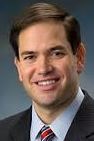
Sen. Rubio
Sen. Marco Rubio, R-Fla., has just introduced a bill that would expand this tax credit scholarship initiative nationwide. To understand the good (and dubious) features of Senator Rubio’s proposal, it is important to appreciate the state law background against which it is set.
Florida has the financially largest of these 11 state tax credit programs, with about 50,000 children currently participating. It restricts the scholarships to children from truly low-income households; the child must be eligible for a free- or reduced-price school lunch – currently just over $40,000 a year for a family of four. Other states are more generous, with Oklahoma reaching well into the middle class since there a family of four can still qualify with $120,000 in annual income. Senator Rubio’s plan, while not as tightly restricted as Florida’s, focuses the scholarships on families with income no more than 250 percent of the poverty level, which is a bit over $50,000 today. The main thing to emphasize here is the senator clearly seeks by his bill to empower the least well-off Americans who are currently least able to exercise school choice – a choice that more well-to-do families make by either moving to a better public school district or paying for private schools on their own.
Several state plans give tax credits to both individual and corporate donors (and for corporate donors the plans sometimes allow credits against a variety of state taxes). Senator Rubio’s bill does the same – allowing married couples and single taxpayers both to obtain a federal income tax credit for an annual contribution of up to $4,500, and allowing corporations an annual corporate income tax credit of up to $100,000. Florida by contrast only allows corporate tax credits and Arizona (which was the first state to adopt this program) initially granted only individual tax credits. Senator Rubio’s proposed tax credit limit for couples and individuals is about twice that now allowed in Arizona. Some states have no cap on donations, and indeed in Florida a few very large corporate donors contribute millions each year to the plan.
Senator Rubio’s proposed tax credit is a 100 percent credit, as is true in both Florida and Arizona, for example. This means that for every qualifying dollar contributed, federal income taxes would be reduced by a dollar. This essentially makes contributions costless to the donors. They, in effect, are able to re-direct their tax dollars to this specific cause – helping needy families send their children to private schools. It is worth nothing, however, that some states grant only a partial tax credit, such as the 65 percent credit allowed in Iowa and the 50 percent credit allowed in Indiana. In those latter states, donors must put up some of their own money.
Most states that adopted these plans imposed a maximum overall limit on the amount of tax credits that may be claimed each year in support of the program. These maxima vary enormously and even so are often not reached. Senator Rubio’s plan has no such limit. It probably would be complicated and costly, but clearly not impossible, for the IRS to administer an overall ceiling in a way that allowed would-be donors to know whether their contribution was within the national maximum and hence truly eligible for the credit.
One important difference between many state plans and Senator Rubio’s proposal is there is no limit on the amount of the scholarship that may be awarded. Florida, for example, caps scholarships at $4,335 at present; in Georgia the limit is just over $9,000. Hence, as appears to be the case in states like Iowa and Indiana, it would be legally possible under the senator’s plan for a child to win a full scholarship to a very high cost, elite private school and hence indirectly obtain government financial aid well beyond what is now being spent on public schools. This is perhaps unwise. Note, however, that nothing in Senator Rubio’s bill would require scholarship granting organizations to award full scholarships or high-value scholarships. In many states at present, the average scholarship is less than $2,000 a year. Since it would be rare to find a school with tuition that low, either the families must find some way to come up with the difference, or the schools must use their own financial aid plans to make up some or all of the gap.
The most striking difference between most state plans and Senator Rubio’s is children already enrolled in private schools would be eligible for scholarships. (more…)
Editor's note: This guest post from StudentsFirst is authored by Vice President of Fiscal Strategy Rebecca Sibilia and fiscal policy analyst Sean Gill.
We appreciate Doug Tuthill’s recent redefinED post challenging StudentsFirst to consider supporting voucher or tax-credit scholarship programs that aren’t just limited to what he describes as the “failing schools” model. We agree with his assertion that school choice policies, including private school options, are about empowering parents to select the best school for their child.
It is true that we believe voucher programs should prioritize low-income students in low-performing schools. However, we want to make clear that this position is not based simply on a “politically safe compromise.” Indeed, our entire State Policy Report Card judges not what is politically popular, but rather the laws and policies we believe, through evidence, best practices, and common sense, will deliver the best results for kids.
We think it is important that states focus on more than policies that just provide access to schools; states must prioritize expanding access to high-quality choices for families that traditionally lack them. A Brookings study found that students from low-income households are much more likely to attend low-performing schools than middle or high-income students. This is important because the same study further confirms that low-income kids can actually achieve at high levels when they attend high-performing schools. Unfortunately, as Florida Education Commissioner Tony Bennett has mentioned, low-income families often lack the resources to enroll in potentially higher-performing private schools or to relocate to a school district that offers a better public education.
Policymakers must always consider tradeoffs and unintended consequences when considering how to budget limited resources. Consider if a state adopted a universal voucher program. This would provide the most theoretical choice, but it could also easily have the unintended effect of simply subsidizing the students already enrolled at private schools and those in families who may otherwise be able to afford private school tuition. This would result in few new students being able to attend a high quality school option, and wouldn’t expand access to those who need it the most. Presumably, avoiding this problem is one of the reasons why the Florida Tax Credit Scholarship program is currently limited to low-income children.
Using this logic, we believe that when state resources are limited or the existing supply of desirable private schools is limited, it also makes sense to prioritize vouchers or scholarships for those low-income children attending a low-performing school or living in low-performing school districts. There are practical, administrative considerations that also make targeted programs more effective. For instance, when looking at the state of Tennessee, where Gov. Haslam has proposed a voucher program, we’ve determined that the four districts with the lowest performing schools also have both higher concentrations of low-income families and private schools in their communities.
We find that most voucher and scholarships programs are capped by enrollment or appropriation levels. Given that low-income students can be found in most counties throughout a state, these caps then create an unintended consequence of spreading out scholarship recipients among multiple communities, which would not provide enough demand to create new private school options. (more…)
Vouchers and testing. A new report from the Fordham Institute finds that mandated testing - and even public reporting of test results - isn't that big a concern for private schools worried about government regs tied to vouchers and tax credit scholarships. Coverage from redefinED, Choice Words, the Cato Institute's Andrew J. Coulson and Gradebook. AEI's Michael McShane says Florida's tax credit scholarship program (which, altogether now, is administered by Step Up For Students, which co-hosts this blog) finds the "sweet spot" with its testing and financial reporting requirements: "These regulations don’t sound too crazy to me; they seem to strike a good balance of accountability for safety, fiscal responsibility, and academic performance without being overly dictatorial in how schools must demonstrate any of those."
 Shooting rockets. Senate President Don Gaetz tells the Associated Press that Florida needs to slow down on ed reforms until it rights the new teacher evaluation system and other changes in the works: "We need to quit shooting rockets into the air. We need to give schools and school districts, teachers and parents time to institutionalize the reforms that have already been made. We need about a two-year cooling off period."
Ford Falcons. Schools need competition. EdFly Blog.
School choice. Education Commissioner Tony Bennett says at a National School Choice Week event in Tampa that some Florida districts deserve credit for expanding public school options such as magnets and career academies, reports redefinED. More from Tampa Tribune.
Charter schools. The National Alliance for Public Charter Schools ranks Florida fifth for its charter laws. SchoolZone. Gradebook. South Florida Sun Sentinel. StateImpact Florida. The Pinellas school district postpones a decision on whether to close a long-struggling Imagine school in St. Petersburg, reports the Tampa Bay Times and Tampa Tribune. The Volusia district's decision to shut down a struggling charter in Deland is headed to appeals court, reports the Daytona Beach News Journal. (more…)
 The Friedman Foundation’s latest “ABCs of School Choice” guide is out, and the numbers go like this: 21 states, 39 programs, 255,000 kids.
The guide offers a state-by-state rundown of the publicly funded, school choice options that are a vital piece of the overall school choice picture. It includes profiles of the students, parents and teachers who benefit from them. And it presents some thought-provoking stats, like how the value of each choice option compares to per-pupil funding in traditional public schools.
In Florida, a tax credit scholarship for low-income students is 34 percent of what’s spent on a traditional public school student, according to the Friedman analysis. Our own back-of-the-envelope calculations would put the percentage slightly higher, but the point is spot on: “voucher” students receive far less for their education than their public school peers. It’s a relevant detail that deserves more attention as the debate unfolds over testing for scholarship students and regulatory accountability measures for the private schools that enroll them.
The Florida section of the guide also includes a mini-profile of Davion Manuel-McKenney, a former tax-credit scholarship student who is now a freshman at Florida State College at Jacksonville. (Full disclosure: the tax-credit program is administered by Step Up For Students, which co-hosts this blog.) The story of Davion and his mother is a moving one. Click here to read more about it.
New Florida Education Commissioner Tony Bennett offered more hints Wednesday that he is not satisfied with the current accountability framework for Florida private schools that accept students with vouchers and tax credit scholarships.
Making his first appearance before the Senate Education Committee, Bennett was asked by Sen. Bill Montford, D-Tallahassee, for his thoughts on “holding everybody accountable that receives tax dollars.” His response:
“I would suggest to you that this is a place where with all candor, sir, that even some of my supporters have been uncomfortable in the past. Because I do believe that schools that receive state funds should be held accountable and I believe that accountability should be just as transparent as what we expect from our traditional public schools.
“So I would share with you that in Indiana, every school that received state funds got a letter grade that was all calculated the same way. A public charter school got its letter grade calculated the same way as the traditional publics. Schools that received vouchers – and we did have the nation’s most expansive voucher program, pure voucher program – they got a letter grade, based on the same measurements as our traditional publics. And that way the public could make an informed choice around school quality.
“Now I know that constitutionally, the voucher situation here isn’t the same was Indiana. And I know there’s that discussion about state funds. So I want to lay that out there. But again, these were all schools that received money from the state budget. And I believe as a steward of the state tax dollars, we have to think about making sure that our citizens know the performance of schools that receive state tax dollars. And our job is to set the expectations for those schools and drive to those expectations.”
Senators also asked Bennett about a wide range of other issues. His biggest priorities, he said: implementing Common Core standards and reviewing SB 736, the far-reaching 2011 law that changes how district teachers are evaluated and paid. (more…)
 Florida earns a C- for policies and program aimed at empowering parents, but that’s good enough for a No. 4 ranking nationally, according to a report card released today by StudentsFirst.
Overall, the state earned a No. 2 rank – and a B- grade – from the report, which looked at progress in three areas: elevating the teaching profession; empowering parents; and spending wisely/governing well. Louisiana came in at No. 1, also with a B- grade. A dozen states earned F’s. StudentsFirst is led by Michelle Rhee.
In the parent category, Florida racked up points for grading public schools and requiring public school parents to be notified when their kids are placed with ineffective teachers. But the group says Florida should require consent from parents whose children are placed with such teachers. It also says Florida should pass a parent trigger bill.
Among other areas, Florida got dinged a bit for its tax credit scholarship program (which is administered by Step Up For Students, the co-host of this blog). In short, StudentsFirst doesn’t think the program is funded enough or accountable enough, although the report doesn’t spell out how it falls short on the latter.
The program is available to all low-income students – which we think is a good thing - but the report says it should be limited to low-income students in “chronically failing public schools.” The report also says Florida should amend the program to provide a scholarship amount “that is competitive with private school tuition.” The amount this year, $4,335, is far below the amount spent per student in Florida public schools.
With charter schools, the report says Florida should allow other bodies besides school boards to be authorizers (although that involves issues with the state constitution). It also says the state should reform "skimming provisions" that allow school districts to keep up to 5 percent of charter school funding.
Count newly-elected Florida Rep. Manny Diaz, Jr. among a number of state lawmakers who are public school district employees. But Diaz, an assistant principal in the Miami-Dade public school district, isn’t just a cheerleader for traditional public schools.
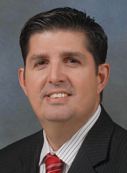
Rep. Diaz
He’s also a huge – and very vocal - advocate for school choice.
“We have an evolving student body – different than what it was five years ago,’’ Diaz, a Republican who represents his hometown of Hialeah, said during a recent telephone interview with redefinED. “I do believe we have to look at all the options.’’
Diaz has been appointed to the House Education Committee, as well as the K-12 and Choice & Innovation subcommittees. Among his goals there: to help guide fellow lawmakers and education leaders toward reform that is “student-centered and parent-centered.’’
To that end, Diaz said he fully supports district programs, such as magnet schools; high-quality charter schools; and other nontraditional options, such as tax credit scholarships.
“I think the competition makes our educational choices better,’’ he said. And better can only be defined by results. “I’m big on the accountability side,’’ Diaz said. “It’s a matter of having the political courage to move forward, to take measures already in the law.’’
If a district school isn’t helping students succeed academically, bring in interventions, he said. If a charter school isn’t operating ethically, shut it down.
Diaz also responded to recent news reports in which Gov. Rick Scott called for private schools that accept tax credit scholarships to give those students the same tests as their public school peers. (more…)
Florida Catholic schools are embracing Common Core academic standards and seriously considering whether to take the coming state tests aligned to them. In the meantime, their leaders say, 30 to 40 Catholic schools want to administer the FCAT in 2014, in what would be a trial run for potential transition to Common Core testing.
“Our mission is the same, public or Catholic school, to create productive citizens in our world that actually have the skills in life they need,” Alberto Vazquez-Matos, schools superintendent for the Diocese of St. Petersburg, told redefinED. “We’ll all be raising the standards and talking the same academic language.”
The push by Catholic schools towards common standards - and perhaps common tests - is an interesting counterpoint to the debate that followed last week’s comments by Gov. Rick Scott. Scott re-opened the door to a long-running conversation about voucher and tax-credit scholarship programs by saying he wants to see students in those programs take the same tests as their public school peers.
Right now, the state does not require tax credit scholarship students to take the FCAT, but they are mandated to take another comparable, state-approved test such as the Stanford Achievement Test or Iowa Tests of Basic Skills. Disabled students who use McKay vouchers to attend private schools are not required by the state to take any such tests.
This year, Catholic schools in Florida enroll 7,673 tax credit scholarship students. (The scholarship program is administered by Step Up for Students, which co-hosts this blog.)
Scott’s comments sparked suggestions from some school choice critics that private schools were dodging comparisons to public schools. But Florida’s Catholic schools have been quietly moving towards Common Core for more than year. In fact, all 237 Catholic schools in Florida will be rolling out a “blended’’ version of the language arts standards, right along with public schools, in 2014. (more…)
From Patricia Levesque, executive director of the Foundation for Excellence in Education, in the Shreveport Times (H/T to EdFly Blog and Jay P. Greene's Blog):
The rhetoric surrounding parental choice often becomes apocalyptic in tone, despite very clear evidence that it improves public schools. Much of the Louisiana discussion has focused on the issue of accountability. Louisiana's statute provides for student testing and includes strong mechanisms to remove under performing schools. This is a higher standard of accountability for private schools than the standard that applies to school districts in Louisiana, and across the nation. The bottom-up approach created by empowering parents to vote with their feet if their child's school is not meeting their needs represents the ultimate form of accountability. No amount of regulatory compliance can hope to match a system of decentralized parental choice. Compliance models focus on school and grade level average results, while empowered parents focus on the particular needs of their child. Full op-ed here.

