 John Stuart Mill warned us of the dangers of a state-provided education:
Were the duty of enforcing universal education once admitted, there would be an end to the difficulties about what the State should teach, and how it should teach, which now convert the subject into a mere battle-field for sects and parties, causing the time and labour which should have been spent in educating, to be wasted in quarrelling about education.
Sound familiar?
We would have done well to heed Mill’s advice, but we chose not to listen. He continued:
All that has been said of the importance of individuality of character, and diversity in opinions and modes of conduct, involves, as of the same unspeakable importance, diversity of education. A general State education is a mere contrivance for moulding people to be exactly like one another: and as the mould in which it casts them is that which pleases the predominant power in the government, whether this be a monarch, a priesthood, an aristocracy, or the majority of the existing generation, in proportion as it is efficient and successful, it establishes a despotism over the mind, leading by natural tendency to one over the body.
Back in the late 19th and early 20th centuries, illiberal Protestants and nativists groups like the Know Nothings and the Ku Klux Klan decided they were going to use the public-school system to “mould” Catholic immigrants into “real Americans.” No thank you.
Alas, we have not escaped this urge in the modern day. Various societal factions want to use the education system to promote their social agenda.
This gets to be a problem when these factions attempt to force social agendas on unwilling people, and it appears to be the root of the current controversy over “critical race theory.” Antagonists on both sides of the controversy accuse each other of seeking to impose their preferences.
Sigh. Revisit the John Stuart Mill quotes above.
Angry parent groups have begun appearing at school board meetings. Of course, it’s their right to do so, but there are a few things about American school board democracy worth noting. First, it’s rigged. School board election turnout rates are low, often in the single digits, and the public has very limited information on candidates. As a result, the individual’s ability to shape school board elections is limited.
Unions, on the other hand, have an intense interest in school board elections. When they elect a majority, they get to effectively negotiate a contract with themselves; they make it next to impossible to fire teachers; and they’re able to get as many teachers hired as possible. School district democracy is deeply slanted in favor of union interests. While citizens have lives to live and limited bandwidth for obscure local races, those races are the lifeblood of unions. Economists describe this phenomenon as regulatory capture.
People have polarized and different beliefs about various topics. Drawing arbitrary lines and giving everyone a hard nudge into the same schools based on their ZIP code is a recipe for never-ending conflict, as Mill noted. Outsiders’ efforts to take and hold school boards have failed repeatedly, especially the “hold” part, which has to my knowledge failed every.single.time.
Sometimes, an outsider board majority gains office only to find long-term union association contracts in place which they cannot change. The outsider board only gained a (temporary) majority because the incumbent interests allowed them to do so before ousting them in a subsequent election.
And sometimes, an outsider board majority has no idea what to do with its majority. Sometimes, they get co-opted before they’re deposed.
State legislature efforts to ban critical race theory also are problematic. First, these efforts can ignore the diversity of preferences in the public. Second, enforcement mechanisms vary between nonexistent to very weak.
School boards work for the people who put them there, and teachers have elaborate job security guarantees. Thousands of teachers already have signed petitions saying they would ignore state critical race theory bans. You should believe them – they are perfectly capable of doing so.
I don’t mean to sound unsympathetic to parents. A kindergartner tried to persuade me to not to drive my car to save the lives of polar bears. His school thought it would be a wonderful idea to worry him needlessly with grossly simplified propaganda on a topic he could do nothing about. I found this developmentally inappropriate, and as a parent, was less than charmed by the experience.
But rather than embarking on what would have been a doomed expedition to seize the school board, I found a school more focused on education than social agendas. I may not have been the only parent who felt this way, as enrollment at the school declined by 15% prior to the pandemic.
Arizona schools still have what John Stuart Mill described as brainwashing urges, but they must choose between sloppily imposing those urges on people and having their school anywhere near the design capacity of their buildings. If you hang around for it, it is by choice, which is not a problem.
I’m open to recreating federal civil rights protections into state law. It may be possible to increase curricular transparency to better inform parents about what they are getting into without it becoming a bureaucratic nightmare, but color me skeptical. We have demonstrated quite the penchant for well-intentioned counterproductive bureaucratic nightmares over the last 20 years.
Parent reviews on external websites like Niche and GreatSchools are a more promising and less intrusive path to transparency in my opinion. At the end of the day, in a country that fundamentally disagrees on important topics, we need to allow people to choose among schools. To do otherwise is to invite cultural “forever” war.
School district democracy is rigged. You can’t win, but there are alternatives to fighting it.
Public-school choice. Duval County's superintendent wants to allow parents to enroll their children in any district-run school they choose, creating the first "open enrollment" policy among Florida's major urban districts, the Florida Times-Union reports. More from First Coast News, WOKV.
 Military charter schools. It's not clear what effect a bill provision, soon to become law, will have on efforts at MacDill Air Force Base, Hillsborough Schools Superintendent MaryEllen Elia tells the Tampa Bay Times.
Digital learning. How much will it cost for school districts to reach the state's technology goals? WFSU asks.
School grades. House and Senate panels advance legislation to overhaul school grades, and avoid holding school districts to consequences during the first year of new standards. Sarasota Herald-Tribune. Florida Current. WCTV.
School boards. Candidates for the Palm Beach County School Board are already raking in the dough. Extra Credit. State officials consider the Manatee County School Board's request for an investigation. Bradenton Herald.
School safety. A House bill that would allow at least one designated school employee to carry a gun on campus clears the House education committee. Orlando Sentinel. Associated Press. Miami-Dade officials oppose the plan. Miami Herald.
Testing. Does it matter if teachers don't know yet what will replace the FCAT? StateImpact Florida.
Special-needs students. A Washington Post blogger continues the drumbeat against the state's testing policy for students with disabilities, relaying a video by the Florida Education Association.
School lunch. Grants expand push for organic food, breakfast and dinner in Orange County Schools. Orlando Sentinel.
The latest evidence that school districts are increasingly acting like commercial businesses comes from the two urban districts in the Tampa Bay area.

McDonald’s would love to control whether a Burger King opens in its community, but giving McDonald’s this power would hurt consumers and undermine the public good. The same goes for school districts that have the power to authorize charter schools.
The Tampa Bay Times reports that, “Increased competition for students, declining enrollment in the middle grades, and a need to offer more attractive options to families is leading Pinellas County Schools to open new magnet programs at four middle schools next fall.”
According to Bill Lawrence, the district's director of student demographics, assignment and school capacity, “It's important in this day and age, with competition in public education, that we have to do this. Some of our children are choosing other options, so it's important we do it." And Amie Hornbaker, the district’s new communications specialist, said, "We try not to say we're selling (to parents), but essentially, we are."
This concern with market share is a logical response to the expanding array of schooling options now available to families, including low-income families. But I’m uncomfortable with school districts becoming businesses in a competitive market place.
I know this sounds counterintuitive, or even hypocritical, coming from the president of the country’s largest private school choice organization.
I believe public education should operate as a well-regulated market. Educators should be empowered to own and manage schools and all parents – not just the affluent – should be empowered to match their children with the schools that best meet their needs. And I’m pleased many district school leaders are increasingly seeing families, and not their bureaucracies, as their primary customers. But if school districts become competitors in a market-driven public education system, who is going to objectively regulate this system?
Good regulatory oversight is a necessary component of an effective school choice system, but that’s not possible if the primary regulator is focused on maximizing its market share. And that’s what is increasingly happening in public education today. A good example is how Florida school districts are treating charter schools. (more…)
Bang for the buck. Florida's education system gets a lot of it. Florida Watchdog.
 Charter schools. Broward sees its eighth charter school close this year, raising questions about accountability, reports the South Florida Sun Sentinel. The Imagine charter schools network will close its struggling elementary school in Pinellas, but keep its middle school open, reports Gradebook. The C-rated Athenian Academy charter school in Pasco is suing the school district for barring its plans to grow enrollment, reports the Tampa Bay Times.
Career education. A Pasco student in Wiregrass Ranch High's information technology career academy highlights the potential of choice and career education. Tampa Bay Times. The Tampa Tribune writes up the changes in graduation requirements that put more value on career education.
Dual enrollment. The Palm Beach County school district and Palm Beach State College are hoping to hash out an agreement over dual enrollment costs in the wake of a legislative change. Palm Beach Post.
FCAT. More results coming this week. Gradebook. (more…)
 Last year, 43 percent of Florida’s PreK-12 students attended a school other than their assigned neighborhood school. This enthusiastic embrace of school choice by parents is forcing school boards to rethink their roles and responsibilities. Should they fight to prevent parents from attending non-district schools? Or should they embrace parent empowerment and help ensure all their community’s students have access to the schools - neighborhood, magnet, charter, virtual or private - that best meet their needs?
This dilemma was on full display at a recent Palm Beach County, Fla. school board meeting. The board was reviewing what to do about three struggling charter schools when one board member, Marcia Andrews, suggested the board should do more to help these schools succeed. “We’ve got to kind of change how we do business,” she said, according to the Palm Beach Post, “so they’ll know we’ll partner with them, so they’ll be successful.”
Some of her colleagues disagreed. They argued that when parents choose charter schools they take their funding with them and that hurts the district. They also worried about the costs of helping charter schools when district budgets are already stretched tight.
This caused another board member, Frank Barbieri, to join Andrews in calling for greater collaboration and support. “I don’t want to hear about ‘we’re taking money from our kids and giving it to these kids,’ ” said Barbieri. “These are our kids. Let’s help them.”
Statistics from Florida’s tax credit scholarship program, which I help administer, support the these-are-all-our-kids position. (more…)
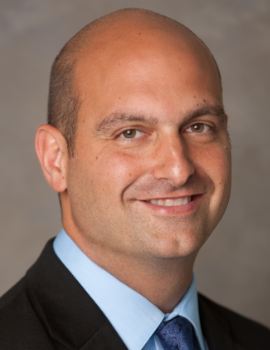
Vitti
To appreciate the significance of what Nikolai Vitti is saying about parental choice, one must first read his resume. He’s a 36-year-old with a Harvard education doctorate who served as chief academic officer to nationally recognized Miami-Dade school superintendent Alberto Carvalho before being chosen in the fall to run the Duval County school district, the 22nd largest in the nation.
So Vitti is, by anyone’s definition, a comer on the national public education scene.
And he says this: “I support choice because I think parents need options, especially those that do not have the financial means to go to a private school.”
And this: “I just don’t believe that anyone should tell a parent where they should send their child to school. I’m vehemently opposed to limiting options, especially to parents whose children are in lower performing schools or parents who don’t have the financial means to have the same flexibility that a parent would have of means. And that’s historically what’s happened with our public education system.”
These statements, in an enlightening podcast posted to this blog on Monday, are all the more impressive given that the school district he now commands has an uneasy history with private school choice. The pressure on him to continue to wage high-profile war is certainly great. But Vitti comes from a place, and perhaps a generation, where choice is not a dirty word. He openly praises charter operators such as KIPP, even borrowing from some of their practices while in Miami, and asserts that competition is making school districts up their game. In one of his first meetings on the new job, he recommended, and the school board approved, 12 new charter schools.
Vitti, then, is owed more than a pat on the back. He is also trying to break through the political divide to encourage open-minded debate on how to make choice actually work. Toward that end, he brings legitimate concerns to the table and needs to be heard. (more…)
Public education is implemented by private entities - textbook publishers, teachers, building contractors, software developers, teachers unions, parents - with private concerns. Privatization occurs when government allows these private concerns to usurp the public good.
Republicans often blame teachers unions for privatization, but these criticisms are unfair. For more than 15 years, I was a teachers union leader responsible for helping negotiate teacher employment contracts with school boards. In these negotiations, I was legally obligated to represent the private interests of teachers. Albert Shanker, a long-time national teacher union leader, was often criticized for stating his job was to represent teachers and not students or the public, but he was simply asserting a legal fact. Teachers unions sell memberships to teachers and in exchange are legally required to represent them. School boards are responsible for representing the public. If a school board signs a union contract that promotes privatization by allowing the private interests of teachers to trump the public good, that’s the school board’s fault.
Democrats, on the other hand, like to blame for-profit corporations for privatizing public education, but these criticisms are also off target. For-profit corporations have the same legal obligation as teachers unions to advocate on behalf of their stakeholders. If a school board negotiates a contract that puts the interests of a for-profit corporation above the public good, again, that’s the school board’s fault.
School boards also further privatization when they respond to parental choice by acting like private corporations more concerned with protecting their business interests than the public’s interest.
In Indiana last week, The Journal Gazette in Fort Wayne reported that its local school board discussed how it could more successfully compete for students against charter and private schools. Board members were unhappy about potential losses in market share “because losing students means losing funds.” Board member Steve Corona worried about competition from charter and private schools putting district-owned schools “out of business,” and board President Mark GiaQuinta said the district needed to do a better job making the case against charter schools.
Here in Florida, the Florida Times-Union reported last week that school board members in Duval County rejected two charter school applications because they feared losing additional market share in district-owned schools that were already losing enrollment.
Similar discussions are occurring at school board meetings around the country. (more…)
Two sitting school board members in Florida are among the latest batch of applicants vying to be state education commissioner.
 Rick Roach (at left), now serving his fourth term on the Orange County School Board, is perhaps best known outside of the Orlando area for his criticism of the Florida Comprehensive Assessment Test, the state's main standardized test. Roach revealed on The Answer Sheet blog in December that he did poorly on the math and reading portions of the 10th grade FCAT when he took it last fall. On her blog last month, Diane Ravitch called him a hero. The Orlando Sentinel has more on his bid to be commissioner here.
 Andy Tuck (at right) is a school board member in rural Highlands County. In his application, he wrote that Florida's education system "needs to be looked at from a more objective and business approach" and should put more "attention and accountability" on leadership positions. Interestingly, the Highlands school board was among those that did not join a popular resolution last summer critical of Florida's testing regimen. "I don't necessarily agree with high-stakes testing," Tuck told Highlands Today in June, "but I believe until we have a better solution on how we should evaluate learning gains, I don't think we should be passing any resolution."
Roach and Tuck are among 18 people whose applications came in after the Florida Board of Education voted last week to extend the commissioner search through early December. So far, 34 people have applied. As with the first batch, there are no obvious "rock stars" in the mix, which includes a number of school principals and small-district superintendents. One name that stands out: Dane Linn, executive director for state policy at The College Board.
You can see the first 16 applications in this earlier post here. Attached below are the most recent 18. (more…)

