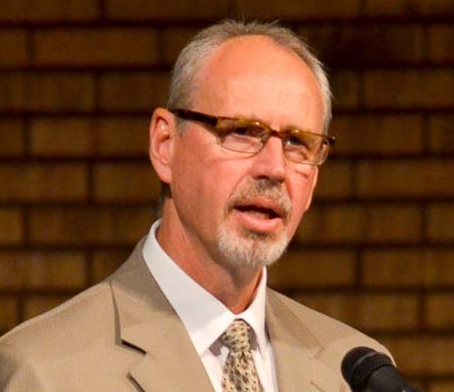
Rob Staley
Rob Staley founded his private school a decade ago, with eight students he expelled himself from public school. The former public school principal wanted the “toughest of the toughest” – the gangbangers, the dropouts, the pregnant. He wanted to give them another chance at education – and life – with a school that combines faith-based therapy, career training and a never-give-up attitude.
The result? The Crossing, based in Elkhart, Ind., has now enrolled more than 6,000 students since its founding. It operates on 15 campuses and partners with 35 public school districts across Indiana. It’s yet another example of the kinds of schools that are possible when the artificial lines between public and private education fade away, and the focus instead is put on creating options that better meet kids’ needs.
“I believe in public schools … they are run by good people,” Staley said in a phone interview with redefinED. “But the truth is, public schools can’t serve every student.”
The state-accredited religious school focuses on helping “students begin and continue their journey with God.” Its mission: to save students, not merely in a spiritual sense, but from a life of poverty or crime. Its focus: academics, job training and mentoring.
Staley worked in Indiana public schools for 25 years. He saw the extraordinary efforts teachers and principals make to encourage students to succeed – and how sometimes they still fell short.
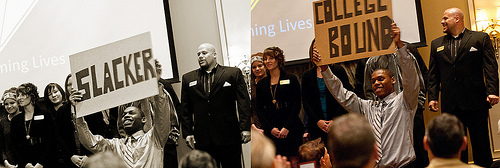
Graduation Day
Many students sent to The Crossing failed to succeed in district-run alternative schools. After founding his first campus in Goshen in 2003, Staley turned to his friends in the local district and asked them to send the kids that had dropped out or been expelled.
Staley raised private funds to educate these students but the need outstripped public generosity. Within a few years, he had convinced public schools in Elkhart, then Middlebury and South Bend, to support his school with public tax dollars. Although these districts operated their own alternative schools, they were encouraged by Staley’s willingness to try something different.
In South Bend, about half of the eligible seniors at The Crossing campus graduated with a high school diploma last year. “Those were 19 graduates that won’t be counted as dropouts,” Staley said.
Since the school doesn’t have a traditional freshman cohort – students typically arrive as juniors or seniors – the school cannot calculate a graduation rate that allows for comparison with district-run schools. Staley says his schools have an 87 percent retention rate.
(Update: A representative of The Crossings says Amanda - in the featured video above - is now attending Ross Medical Education Center)
Charter schools: A troubled Lee County charter school withdraws its application for a local campus, a month after Collier County board members ordered the closure of the company’s Immokalee campus due to widespread mismanagement. Naples Daily News. The fate of a charter school at MacDill Air Force Base will be decided next week. The Tampa Tribune. MacDill's proposal gets a preliminary No from the district due to concerns with the local governing board. Tampa Bay Times.
 Private schools: Students from Seacrest Country Day Academy in Naples channel Secretariats owner during history lessons. Naples Daily News.
Career academy: A Pasco County district high school will launch a gaming technology career academy in the fall. Tampa Bay Times.
Cambridge: Cambridge college prep programs and exams are being introduced in several Orange County public schools. Orlando Sentinel.
Honors classes: Incoming freshmen in Pinellas County could find that their honor courses are worth a little less toward their grade-point averages than college-level courses offered at the high schools. Tampa Bay Times.
Teacher pay: Palm Beach County school and union officials continue working to hash out a salary plan before winter break. Palm Beach Post. Pinellas County Schools and its teachers union reach an agreement to pay teachers up to $29 an hour to work with students before and after school next year. Tampa Bay Times.
Athletic transfers: Suggesting the Lee school district is doing a disservice to student athletes if it fails to adopt stricter policies on athletic transfers implies that students shouldn’t pursue their dreams, that competition is a bad thing and that students should settle for what the system deals them — without question, writes Michael Smith for the Fort Myers News-Press. (more…)
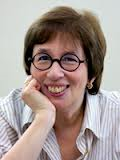
Linda Greenhouse
Arguments supporting parental school choice can crop up in unexpected places. Even in a left-leaning take on a particularly controversial piece of Obamacare.
In her Nov. 28 column, Linda Greenhouse, the esteemed former New York Times reporter who covered the U.S. Supreme Court for 30 years, discussed two current Supreme Court cases focused on whether corporations can be required to provide health benefits that are inconsistent with their religious beliefs. The cases are part of a flood of litigation challenging whether the government can force employers, including churches, to provide employee benefits such as birth control.
Greenhouse concludes her column by suggesting that forcing employers to provide a prescribed set of health benefits does not violate their religious beliefs since the employees are choosing how to use these benefits, not the employer. She cites parents using publicly funded school vouchers to pay private school tuition to bolster her argument:
“By paying employees as the law requires, neither a corporation nor its owner is endorsing the employees’ choice of what to spend their money on – no more than a local government endorses a parent’s choice to use a taxpayer-funded voucher for religious-school tuition. The Supreme Court for decades has embraced the notion that an intervening private choice of this sort, even when a government program is clearly designed to channel public money to religious institutions, avoids what would otherwise be a violation of the First Amendment’s Establishment Clause.”
Greenhouse isn’t just any legal observer. She won a Pulitzer Prize covering the Supreme Court. She now teaches at Yale Law School. As a longtime Greenhouse reader, I feel comfortable describing her as a left-of-center progressive Democrat. For someone of her stature and political persuasion to acknowledge the constitutionality of parents using school vouchers to attend faith-based K-12 schools – an argument more often advanced by the political right – is another small but significant milestone in the redefinition of public education. (more…)
Charter schools: Pinellas County's University Prep organizes a local board and moves forward in the search for a new principal. Tampa Bay Times. A proposal for a charter school on MacDill Air Force Base in Tampa still awaits a recommendation from Hillsborough district staff. Tampa Bay Times.
Private schools: Florida Air Academy in Brevard County has done away with text books and moved to iPad-only classes. Florida Today.
Virtual school: The exponential growth Florida Virtual School and online learning have experienced will continue as we transform education worldwide, writes Julie Young for the Tallahassee Democrat.
Special needs: Special needs students in Hillsborough County are treated to music lessons. Tampa Bay Times.
Hydroponics 101: A Cape Coral high school's aquaculture and hydroponics class draws students from around Florida and even outside the state. Fort Myers News-Press.
Lawsuit: The Hillsborough County School Board will vote next week on a decision to pay more than $500,000 to the family of a special-needs child who drowned behind her Riverview middle school. Tampa Bay Times. More from The Tampa Tribune.
Quality teachers: The Community Foundation for Northeast Florida launches a fundraising campaign to raise $50 million to pay for more high-quality public school teachers in high-demand areas like math and science. Florida Trend. (more…)
Charter schools: N.E.W. Generation Preparatory High School of Performing Arts in Broward County has until March to find a secure space to house its 200 students or close down. Sun Sentinel. The Schools of McKeel Academy will likely begin searching for a new leader after the first of the year. The Ledger.
Private schools: English students at Holy Trinity Episcopal Academy in Brevard County take their Shakespeare discussion online with Twitter. Florida Today.
Common Core: Common standards are the best way to measure how well our students are ready to graduate and enter college, the military or the workforce, writes Tony Buntyn, a colonel in the U.S. Air Force Reserve, for The Tampa Tribune. Florida won't participate in PARCC's field testing of its assessments come springtime. Tampa Bay Times. Yes, the Common Core State Standards are demanding, and they should be, writes Zachary Champagne for the Florida Times-Union. Florida is already headed in the right direction, but Common Core State Standards will continue to lead us to be the top academic state in the nation, writes Lucy Gosselin for Sunshine State News. Smarter Balanced Assessment Consortium (SBAC) and the Partnership for Assessment of Readiness for College and Careers (PARCC) remain contenders for state testing. Sunshine State News.
Start times: Some of Florida's superintendents are worried about the potential effects of a proposal that high schools statewide be prohibited from starting earlier than 8 a.m. Tampa Bay Times.
Teacher pay: Gov. Rick Scott again urges school districts to come through with the contract deals to make the raises reality. The Buzz. Twenty eight school districts have finalized teacher pay hikes, while another 15 have reached tentative agreements still awaiting a vote by school boards. Miami Herald.
PISA: Florida 15-year-olds who took international tests in math, reading and science last year did worse than other teens in the United States overall and far worse than teenagers in the world's top-performing education systems in Asia, scores released this morning showed. Orlando Sentinel. More from the Florida Times-Union. Locally, the results on the Program for International Student Assessment show the average Florida student scored about the same as the average U.S. student in science and reading. StateImpact Florida. (more…)
Some Florida private schools face an unexpected dilemma this school year: Find extra dollars to pay for state college courses their high school students want to take – or deny them the option.
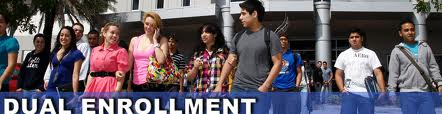
The problem stems from a new law requiring public school districts and individual private schools to cover tuition for students enrolled in the state’s popular dual enrollment program.
Though it’s unclear how many private school schools and students are affected, the change has left some schools curbing participation and others anxious about what they’ll do if local colleges, prompted by the new law, end up hiking charges.
The change “caught everybody off guard,’’ said Howard Burke of the Florida Association of Christian Colleges and Schools, and immediate past president of Florida Association of Academic Nonpublic Schools (FAANS). “This is a hardship for parents already paying taxes for public schools and paying for private school.’’
His association represents about 140 schools with an average of $4,000 to $5,200 in tuition. Burke said some of those schools are telling parents they now will owe an additional fee for dual enrollment to help schools with the unexpected costs.
“I think it’s obscene,’’ Burke said. “This should not be happening.’’
Dual enrollment lets students knock out college-level credits for free while they’re still in high school so they can earn college degrees faster and save their families – and the state - thousands of dollars.
Currently, there are about 65,000 high school students participating, up 20 percent since 2010-11. Before the change, districts and colleges received additional state funding for the program costs (excluding books and other materials). Private schools, meanwhile, had separate agreements with colleges that allowed their students the same access.
In recent years, however, state colleges lobbied for more money because they said they were losing an estimated $43 million to $58 million a year in tuition. Lawmakers approved a bill last spring that allows the colleges to charge districts a standard fee of $71.98 per credit. The law went into effect in July. (more…)
Homeschooling: A Florida woman who has been homeschooling her children is ordered by a judge to put them in public school after a guardian ad litem says she believes they would benefit from the socialization. Tampa Bay Times.
Charter schools: A Palm Beach County senator wants to narrow the mission of charter schools with a bill that would require charters meet “a specific instructional need or a need for additional educational facilities.” The Florida Current. Charter school administrators are now required to post the school’s annual budget and fiscal audit, the state grade and names of governing board members on their websites. Daytona Beach News-Journal. At Immokalee Community School, every parent has signed a contract to speak Spanish with their kids for at least 30 minutes a day, most days of the week. StateImpact Florida.
Magnet schools: With the opening of a new aviation academy, students at Clearwater High School soon will be able to graduate with a pilot's license - and a jump into the growing field of aviation and aerospace. Tampa Bay Times.
Private schools: Academy Prep Center of St. Petersburg is looking for a new leader after an announcement that its head of school is stepping down. Tampa Bay Times.
College credit: Duval County's strongest advanced high school programs may "seed" smaller accelerated or career courses at other district schools. Florida Times-Union.
Achievement gap: Escambia County School District officials will soon be forming a new task force to help close the achievement gap among the district’s students. Pensacola News-Journal. (more…)
Private schools: A Miami-Dade family operated private school hires its first non-family school leader. Miami Herald. A Orlando private school threatens to expel a student if she doesn't cut and shape her hair. The Atlanta Journal-Constitution.
Charter schools: Lake Wales charter students spend their vacation delivering hot meals to shut-ins, giving out free car washes to passers-by and taking holiday food boxes to those in need. The Ledger.
Grad standards: Sen. Education Committee Chairman John Legg sees graduation standards as the panel's top priority. The Florida Current.
Single gender: Two Miami-Dade lawmakers have filed legislation that would encourage Florida school districts to try gender-specific classrooms. The Buzz.
Teachers: Pasco County School District officials consider a transfer window to help get quality teachers into the system. Tampa Bay Times.
Bus service: Broward's school transportation department is finally on the road to improvement after being blasted for disastrous service and bloated overtime payments. Sun Sentinel.
First-graders: Escambia County school officials work on first-grade retention. Pensacola News-Journal. (more…)
 Forty-six years ago a plaintiff named John Serrano sued the State of California, asserting that the capacity of school districts to raise money was grossly unequal, hence unconstitutional. The quality of education in property-poor districts was said to be diminished by the resulting disparities in spending per pupil. Students had a right to a more rational and fair distribution of money.
As in most litigation the claimants had to prove some real injury. The disparities in spending were colossal, ranging, at the extremes, from a few hundred dollars per pupil in property-poor districts, to several thousand in freakishly wealthy industrial centers and top-rank suburbs. The injury seemed self-evident.
But it wasn’t. By whichever measure of outcome - graduation, test scores, reputation - there was no pattern linking spending to actual quality. In addition, surprisingly, there was little or no evidence that children from poor families were systematically getting less spent on their schools. The lawyers for Serrano et al. could not credibly assert that money was the key to quality education or indeed, that it affected the success of schools in any way - except one. It was obviously true that the richer districts could buy more stuff. They could hire more teachers, administrators and superintendents, at higher salaries, build fancier buildings and secure the most up-to-date supplies, books and equipment. The trial judge decided this was injury enough. His judgment for the plaintiffs was affirmed by the California Supreme Court. As yet, however, 40 years later, no one has succeeded in establishing a clear link between spending per-pupil and the benefit for the child.
Nevertheless, spending has skyrocketed in succeeding generations across the nation for reasons political - principally the monopoly power of public-service unions. But the apparent disconnect between spending and quality of education remains. This reality has conflicting implications for the school choice movement. It reduces the political significance of the consistent discrimination in spending against today’s charter schools; we are not at all clear that it really affects outcome. On the other hand, it is plain to anyone who knows the facts that, whatever it is that does make a school successful, it can be had without exploding the cost. In short, if school choice supporters are willing to accept and even exploit politically the cheaper regimes now in place, they have a more powerful case. (more…)
Kevin Rodriguez
by Perry Athanason
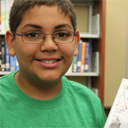
At 13, Kevin Rodriguez is an old soul. He does not talk much, but listens intently. He loves science, math and history, and hopes to be an architect one day. His interest in science, including figuring out how things work and how things change in different environments, sets an interesting parallel against Kevin’s educational experience.
“I’m interested in how houses and buildings are constructed and want to learn more about different designs,” said Kevin.
Growing up, Kevin was a quiet child always keeping to himself and spent a lot of time reading. Kevin attended his neighborhood elementary school and did OK mostly due to his slightly reclusive, yet inquisitive personality, his mom said. As he reached the higher-grade levels, Kevin started witnessing bullying and insolent activities such as vandalism and destruction of school property.
This was something Kevin’s mother, Sylvia Febus, feared because her older son had a similar experience when he was younger. At that time, Sylvia pulled her older son out of the school and enrolled him in a magnet school from which he graduated. But when Kevin had a similar experience, she could not find an easy solution for him.
“His entire demeanor changed,” said Sylvia. “He became even more reclusive than usual. He would not get out of bed in the morning. He started dreading the idea of going to school, and he lost an interest in learning about new things. This was alarming to me because Kevin had always been more of the bookworm in our family.”
Sylvia knew she would have to become her child’s strongest advocate. She needed to make sure Kevin remained interested in school and decided to seek out every available opportunity, even if it appeared to be financially out of reach. (more…)

