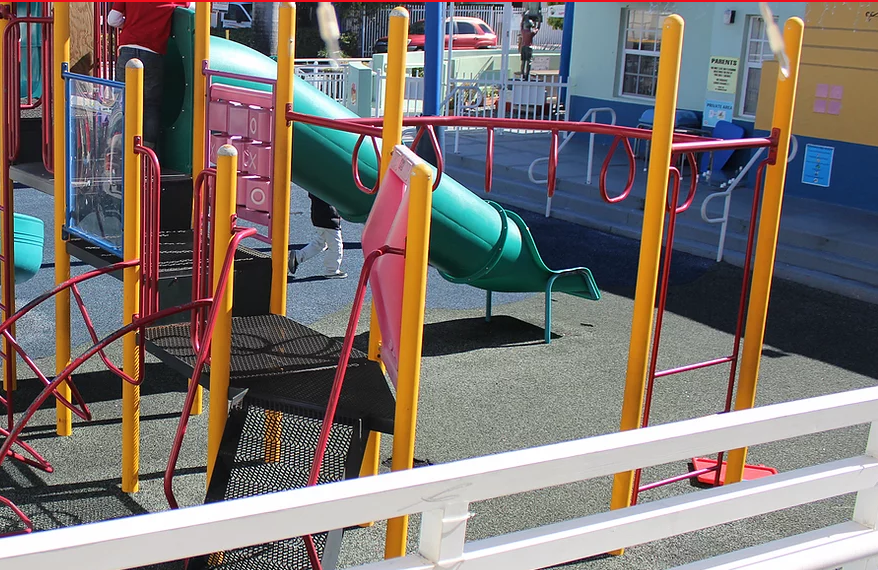
Happy Kids Childcare & School is one of dozens of options for Miami Beach families in search of preschool programs for their children. A new program aims to make such programs possible for more kids.
Known as paradise for the uber rich, Miami Beach has become the first city in Florida to provide enhanced pre-kindergarten services to its youngest residents.
City commissioners during the summer quietly approved a $250,000 yearlong pilot program that would provide scholarships to supplement the state-funded voluntary pre-kindergarten program for Miami Beach residents. The program is set to begin in August 2021.
"I'm really proud when I think about how we were the first city in Florida to offer this kind of program," said Miami Beach City Commissioner Steven Meiner, who championed the proposal along with commissioners Rickey Arriola and Mark Samuelian. "We pride ourselves on taking the lead."
The new program represents a partnership between the city and Teach Florida, a statewide education choice advocacy group for Jewish schools. Participation, however, is open to any student who lives in the city limits of Miami Beach regardless of religion or family income. Education providers outside the city limits also can participate by accepting scholarship funds that follow eligible families.
Scholarships are valued at up to $2,700 per child, and the extension is not allowed to overlap the three hours of VPK funded by the state. All providers must by certified by the Florida Department of Children and Families.
Teach Florida executive director Daniel Aqua said the program was a response to repeated studies showing the benefits of early childhood education and the role it plays in long-term educational success. The state program pays for only three hours of learning per day, creating hardships for families who can’t afford wrap-around care. The scholarship will pay for a 2.5-hour daily extension for each participating child.
“One operator with whom we spoke said that some families must pick their children up at noon when VPK ends,” Aqua said. “That simply doesn’t work for parents.”
Aqua said Teach Florida chose Miami Beach as the pilot site because of its extremely high cost of living, which has pushed out many young families, and because it has a history of support for education. The city already funds arts and sciences programming and recently paid to add mental health counselors in public schools.
According to the cost calculator Expatistan.com, it costs $5,111 per month for a family of four to live in Miami, where the cost of living is 74% higher than other U.S. cities.
“Friends are moving out of Miami Beach,” said Meiner, who with his wife is raising a 13-year-old son and an 8-year-old daughter. “This is a good way to incentivize living in Miami Beach.”
The one-year pilot is being funded through the city’s $327.6 million general fund budget. If city leaders choose to extend it, long-term funding could come from the Miami Beach Convention Center Hotel, expected to open by 2023 and which will earmark a portion of tax revenues for education.
Providers have been opting into the program and parents will be able to apply starting this month, with scholarships awarded to eligible students by lottery. With a program cap of $250,000, there is funding for about 92 scholarships, since the program funds a maximum of 2.5 hours per day for 180 school days at $6 per hour, Aqua said.
The scholarship program drew praise from area Catholic education leaders.
“The early years are the influential years and provide the building blocks for learning in elementary and secondary school,” said Kim Pryzbylski, superintendent of schools for the Archdiocese of Miami in a joint statement with Doreen Roberts, principal at Holy Family Catholic School in North Miami. The statement emphasized the importance of the amount of quality time pre-k students receive and said the program’s additional funding would enable teachers to focus more on language, social and readiness skills vital to success in kindergarten and beyond.
The program puts Miami Beach in elite company across the nation. Cities like Denver and New York City have offered universal pre-kindergarten for several years. The Denver program has proven so popular that voters voted to extend it. Both of those cities began with 4-year-olds and have since been expanded to include 3-year-olds.
“Ideally, this program will continue and expand, especially as the Convention Center funding comes online,” Aqua said.
School is cool: The Community Foundation of Broward County and other donors launch a School is Cool initiative for middle-schoolers to boost high school graduation rates and competitiveness. Sun Sentinel.
Welcome back: Broward County students are back in class. Sun Sentinel. The re-designed Galaxy Elementary in Boynton Beach opens its "green" doors to 580 students for the first day of school, boasting hallways equipped with interactive white boards, classrooms with sliding glass doors and an auditorium with hands-on kinetic experiments in every corner. Sun Sentinel. More than 179,000 students in the nation’s 11th-largest school district return to school to meet nearly 13,000 Palm Beach County School District teachers. Palm Beach Post.  Orange County schools welcome back about 185,000 students and Lake County greets about 4,000. Orlando Sentinel. Miami-Dade County sees more than 600,000 students return to school. Miami Herald. About 85,000 students return to Polk County schools. The Ledger. In Collier County, 45,000 students return. Fort Myers News-Press. More from Naples Daily News. About 65,000 students head to class in Escambia and Santa Rosa counties. Pensacola News-Journal. Pinellas schools see about 100,000 students return. The Tampa Tribune. Hillsborough County sees about 200,000 students return. Tampa Bay Times. The district reported 64,116 children showed up Monday for classes, up 993 from the first day a year ago. Tampa Bay Times. The Hernando County school district expects to enroll 21,672 students. Tampa Bay Times.
Common Core: StateImpact Florida takes another look at the new education standards. "Like every government reform project, Common Core will have its glitches, its shortcomings, its setbacks. But The DaVinci Code of the ABCs it is not,'' writes Tampa Bay Times columnist Daniel Ruth.
Pre-K: Duval County schools Superintendent Nikolai Vitti starts the school year with increased pre-K classrooms to better prepare children for kindergarten, narrow the achievement gap and expose low-income students to technology at a younger age. Florida Times-Union.
Charter schools: Florida Intercultural Academy charter school welcomes back students, but sends them to a temporary location while the permanent facility undergoes construction. Miami Herald. (more…)
I am more politically incorrect than your average guy, so when I heard President Obama call for universal pre-K for 4-year olds in the State of the Union, I cringed. With all the raucous enthusiasm ringing around this issue since the speech, adapting Warren Buffet’s investment approach to public policy might be wise: when everyone is bold, it’s time to be cautious.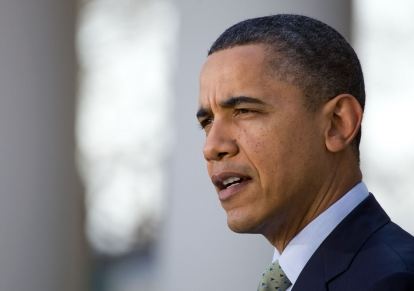
In 2006, when I was with California Parents for Educational Choice, we were part of a coalition of organizations that defeated Rob Reiner’s ballot initiative to bring universal pre-K to the state. It was introduced to widespread public approval, but by Election Day garnered only 39 percent of the vote. The electorate came to understand three major elements they did not like:
* Expanding pre-K to everyone, including middle class and upper income families, is hugely expensive and precious little, if any evidence, supports much educational value added for the middle class and wealthy.
* The initiative vastly expanded the existing public school monopoly, which hardly has a resounding record of educational success, especially with poor and minority students. It also mandated collective bargaining, swelling the ranks and economic power of the California Teachers Association, an organization that systematically stands in the way of innovation and reform.
* The academic outcomes were questionable. A Reason Foundation analysis found from 1965 to 2005, 4-year old participation in preschool programs had grown nationwide from 16 percent to 66 percent, but we had virtually no evidence of increased student learning on the National Assessment of Educational Progress (NAEP) by fourth grade. Oklahoma, with a universal program since 1998, finished dead last on the 2005 NAEP, actually losing four points.
But that was close to seven years ago and admittedly, I haven’t followed the pre-K issue regularly. So I spent the last few days reviewing some studies and data. The key word in the Obama proposal is quality.
We likely can justify a highly targeted effort on kids in failed families or families that simply have no resources - financial, social, emotional, or cultural - to allow their children to mature and develop normally. But when Obama declares, “We know this works,” he overstates and simplifies our experience. (more…)

Colburn
David Colburn is a respected former University of Florida provost and progressive academic who should have done more homework before he blithely characterized those who support private school options as salesmen and hucksters. His recent commentary in the state’s largest newspaper, the Tampa Bay Times, rather pointedly ignored important evidence in his own backyard.
Dr. Colburn is good thinker on education issues, but somehow managed to treat all school vouchers as though they are inherently unaccountable. “There is something basically wrong when public funds are earmarked for these private schools,” he wrote, “and the state fails to insist on accountability measures for student achievement outcomes.”
That assumption is demonstrably false, and he need look no farther than his own state. The state’s first voucher program, which was declared unconstitutional in 2006, required students to take the state test. The current pre-K voucher that served 145,551 4-year-olds last year requires pre- and post-academic evaluations that are used to rate providers.
Lincoln Tamayo, who runs the highly successful Academy Prep Centers of Tampa and St. Petersburg that serve underprivileged middle school students, was also quick to note in a letter to the editor that the Florida Tax Credit Scholarship serving 49,000 low-income students has required nationally norm-referenced tests since 2006. The test scores for Tamayo’s students, who are treated to an intensive six-day-a-week, 11-months-a-year program, reveal both year-to-year academic gains and 8th grade reading and math scores in the 70th and 76th percentile range.
There is ample room for principled debate over whether the current testing approach for these private options is sufficient to assure that students are making academic progress. For example, there are certainly challenges in trying to compare the test results of low-income students in private schools with their low-income colleagues remaining in public schools, in part because the scholarship students tend to be much poorer.
But Dr. Colburn instead seemed content to assert that vouchers “court disaster,” as though every one of these programs is flying blind. His lack of intellectual rigor was, needless to say, disappointing.
 Editor's note: This op-ed appeared in today's Tampa Bay Times.
Few public issues are as absorbing as the balance between religion and government, so a ballot initiative that aims to change the boundary is worthy of rigorous debate. Instead, Florida's Amendment 8 is being treated to a proxy campaign on school vouchers.
A new radio ad by the Florida Education Association: "Amendment 8 allows the government to give our tax dollars to any group claiming to be a religious organization, so any religious group or sect can use our money to fund their own religious schools."
FEA president Andy Ford: "This is designed to open the state treasury to voucher schools."
Alachua School Board member Eileen Roy: "It's the very death of public schools. That's not overstating it, in my opinion."
These are provocative arguments, to be sure, but they are basically irrelevant. The amendment was placed on the ballot by two legislators — Sen. Thad Altman, R-Viera, and Rep. Scott Plakon, R-Longwood — who have said repeatedly they want to protect religiously based social services. Their interest was piqued by a lawsuit, Council for Secular Humanism vs. McNeil, that challenges a prison ministries program, and by the fact that the New York-based council has called it "a springboard to mounting other challenges."
In turn, the pro-Amendment 8 campaign is being led by a coalition of community-service providers and religious leaders who have raised less than $100,000 to date. They believe that if the secular humanists will sue over prison ministries, they might one day challenge the Catholic Charities or Catholic hospitals or the YMCA. After all, the current constitutional language is explicit: "No revenue of the state or any political subdivision or agency thereof shall ever be taken from the public treasury directly or indirectly in aid of any church, sect, or religious denomination or in aid of any sectarian institution."
Now it is certainly true that voucher advocates have previously pushed to alter the no-aid clause. But it is just as clear that they played no role in getting this amendment on the ballot and, most telling, have raised not a penny for the campaign. Their reasons are pragmatic, not philosophical: Federal and state court decisions in recent years have rendered the no-aid clause all but moot as it relates to school choice. Read full editorial here.
 Hi everybody. My name is Ron Matus. I’m the new assistant director of policy and public affairs at Step Up for Students, a nonprofit in Tampa, Florida that oversees a tax credit scholarship for 38,000 low-income students. Among other responsibilities, I’ll be editing redefinED, which means I have the unenviable task of replacing the irreplaceable Adam Emerson, who put this forum on the map and is now the school choice czar at the Fordham Institute. I have mountains of homework to do before I can approach the depth and breadth of knowledge that Adam brought to redefinED. But I am pumped about keeping the blog’s spirit alive and finding ways to bring more people into the conversation. I think redefinED stands out for its tone and view. I appreciate its humility. And I know it is absolutely on point in 1) trying to reshape what is meant by “public education” and 2) accentuating the common ground between so many of us who have somehow been segregated into warring camps.
I’m sure I’ll be sharing more about myself in future posts, but for now I think two things are worth noting.
I was a newspaper reporter for 25 years. (more…)

