This is the latest post in our series on the progressive roots of school choice.
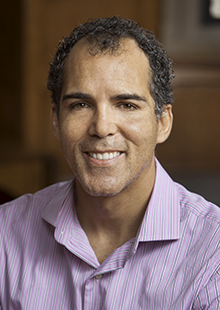
James Forman Jr.
Credit James Forman Jr. with the best account yet of the center-left roots of the school choice movement. Credit his stint as a public defender for being the spark.
 Forman, now a Yale law professor, said the district “alternative” schools serving his juvenile clients in Washington D.C. 20 years ago were giving them the least and worst when they needed the most and best. He began exploring options like charter schools, only to be told by some folks that school choice couldn’t be trusted because of its segregationist past.
Forman knew about the “segregation academies” some white communities formed to evade Brown v. Board of Education. But he knew that wasn’t the whole story. Among other reasons, he was the son of James Forman, a leader of the Student Nonviolent Coordinating Committee, the group whose courageous members became known as the “shock troops” of the civil rights movement.
Wait, he thought, recalling stories his parents told him about Mississippi Freedom Schools. Wasn’t that school choice?
“It seemed impossible to me to think that over all of those years, African-Americans had never organized themselves to try to create better (educational) opportunities outside what the state was providing them,” Forman told redefinED in the podcast interview below. “So that was my idea. My thesis was there had to be an alternative history, there had to be a history of African Americans who were not relying on the government and were trying to organize themselves to create schools to educate their children.”
The result of Forman’s research is “The Secret History of School Choice: How Progressives Got There First.”
The 2005 paper traces the progressive movement for educational freedom from Reconstruction, to the civil rights movement, to the “free schools” and “community control” movements of the 1960s and ‘70s. A century before many activists were using the term “school choice,” it notes, black churches were making it happen. Decades before conservative Gov. Jeb Bush was pushing America’s first statewide voucher program, liberal intellectuals were promoting the notion in The New York Times Magazine.
A decade later, “The Secret History of School Choice” remains a must-read for anyone who wants a fuller, richer picture of choice’s beginnings. But Forman, who co-founded a charter school named for Maya Angelou, hopes progressives in particular see the light.
They ignore the history of school choice, and their role in shaping it, at their own peril, he said. Believing, wrongly, that it’s right-wing can result in it becoming just that. If progressives aren’t at the table, he suggested, they can’t bring their values to bear in shaping policy. In his view, it’d be good if they did. (more…)
This is the third post in our series on the Voucher Left.
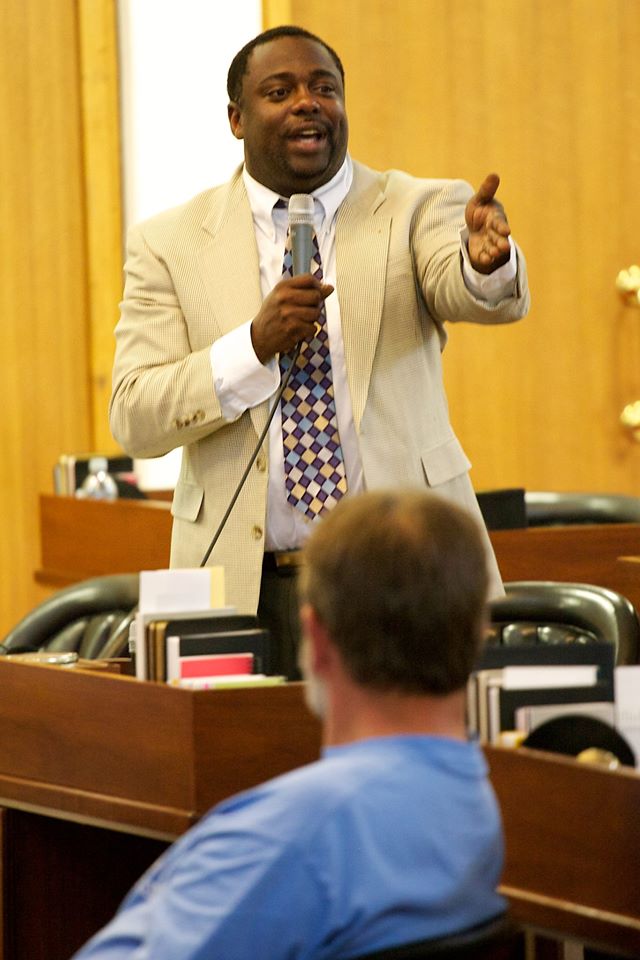
Marcus Brandon’s resume starts off like a progressive’s dream. National finance director, Dennis Kucinich for president. Staffer, Progressive Majority. Deputy director, Equality Virginia. But once it rolls into Brandon’s education accomplishments, some fellow progressives get whiplash. During two terms in the North Carolina House of Representatives, Brandon was a leading force behind bills that created vouchers for disabled and low-income students, and removed the state’s cap on charter schools.
Inconsistency? Not for Brandon, a rising political star whose family’s civil rights bona fides are unquestioned.
“I tell people that my views on education are the most progressive stance that I have,” Brandon told redefinED. “Progressives have to take a real hard look at the way they view education because I’ve always been brought up, in the civil rights movement and all of that, (to) fight for equal opportunity and equal access for everybody.”
Brandon, who now directs the Carolina CAN education advocacy group, isn’t an anomaly. A growing list of influential liberals, progressives and Democrats are increasingly supportive of school choice. In the process, they’re wrenching the left back into alignment with its own forgotten history – a history that is especially rich in the African-American experience. Milton Friedman would merit a few paragraphs in a book on this subject. But there’d be whole chapters devoted to the educational endeavors of freed slaves and black churches. To Mississippi freedom schools and Marva Collins. To the connections between Brown v. Board of Education and Zelman v. Simmons-Harris. (more…)
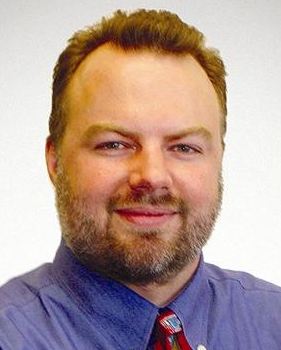
Matthew Ladner
Note: This is part of a three-part series of podcasts on Nevada's new education savings account program. See our conversation with Seth Rau of Nevada Succeeds here. In Part 3, we will talk with Howard Fuller.
Nevada's first-of-its-kind education savings account program has highlighted a philosophical difference among some within the school choice movement, which has previously aired on this blog and elsewhere.
Should private school programs be open to all students, or should eligibility be limited to the disadvantaged — such those with lower incomes, or those with special needs?
In a recent piece published by the Thomas B. Fordham Institute, Howard Fuller, long a leading champion of the movement, said he did not want to join the parade celebrating Nevada's program, which will be open to nearly all students, including the wealthy.
Other school choice backers favor universal programs, and responded that they prefer other mechanisms, like weighted funding, to meet the needs of disadvantaged students.
Some of the most detailed responses came from Matthew Ladner, a senior adviser to the Foundation for Excellence in Education.
In this podcast, we dig a little deeper into areas where he and Fuller have common ground, where they differ, and the potential of education savings accounts to create new possibilities for students and educators. 
Ladner says it can make sense to means-test some programs, like tax credit scholarships that have caps on the amount of funding available, to ensure their limited resources serve the students with the greatest needs.
Nevada's program is different, he says, because there is no limit on the number of students it can serve. Any student can participate, as long as they've been enrolled in public schools for more than 100 days.
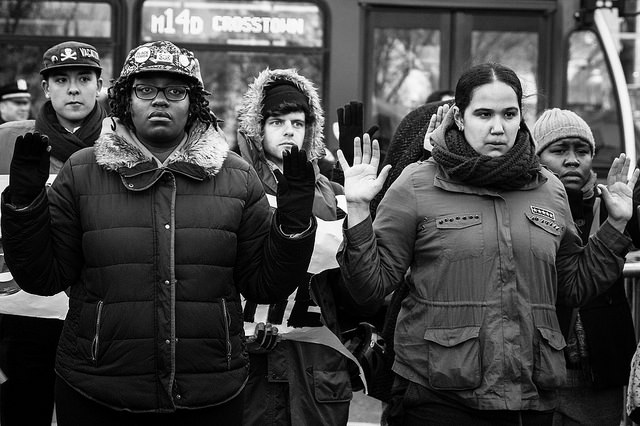
Photo via Graeme Stoker.
The tragedies that drew thousands of people into the streets in cities around the country this past weekend have also prompted soul-searching in the education reform movement.
If our goal is to respond to the educational needs of disadvantaged communities, can we ignore the other injustices in their lives? How can we help transform the institutions that failed Eric Garner, long before he died at the hands of New York City Police?
Derrell Bradford, executive director of the New York Campaign for Achievement Now, wrote this reaction to the non-indictment of the officers responsible for Garner's death, which is worth reading in full:
These children, overwhelmingly black and brown, are financial assets of the highest order. Despite this, they graduate from high school with limited economic possibilities and, very likely, broken souls. And like many other young black men whose God-given potential has been squandered in schools with long histories of underperformance, they act out in a manner that ultimately becomes criminal. Here we find Garner, who despite being described by his minister as a “gentle giant,” was arrested almost 30 times during his life-cut-short, and more than once for selling loose cigarettes. And while he spent nights in local precincts, and other men like him spent nights in prisons, they again gave the city and the state the right to tax on their behalf. This time, however, it was not for his or their own freedom or safety, but for the ostensible freedom and safety of others. According to Pew, in 2010 black men were six times as likely to be incarcerated as white men. In New York City it costs $167,000 a year to keep a person jailed. The average corrections officer with 10 years on the job makes $60,000 annually.
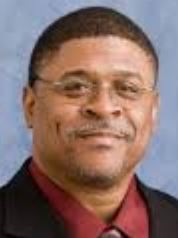
Rev. Sykes
If there's one thing Republicans have right, it's about the power of competition to shake up unresponsive bureaucracies, including those that oversee public school systems.
So says prominent African-American pastor Manuel Sykes, who had Tampa Bay political circles buzzing last week amid an announcement that he would be moving to the Republican Party. The move may have been precipitated by local issues like local Democrats' efforts to stifle his run for Congress, but it's also another indicator of political crosswinds that have buffeted left-leaning school choice supporters for years.
Sykes, the longtime pastor at Bethel Community Baptist Church in St. Petersburg, has long been a school choice supporter - and, until recently, an active Democrat. His church runs a school that caters to low-income students on scholarship programs, many of whom struggled in the schools they left behind.
"If the Democrats take a stand against vouchers, to me, that's too one-sided," Sykes says during a podcast with redefinED. "It shows a lack of analysis, because we have children that have been failing in school since I arrived on the scene back in 1993."
Back then, he says, he was working with a group of religious leaders who were trying to bring programs developed by the National Institute of Direct Instruction into public schools. After being rebuffed by school district officials, he saw the potential benefits of giving people options outside the traditional school system.
"Many times a bureaucracy has its own internal self-preservation instinct," he said, adding: "One thing that I truly believe that Gov. (Rick) Scott got right is that competition makes people do better. When they know that they're not the only show in town, they tend to do better if they want to stay in business."
But that doesn't mean he's all-in for unfettered free markets. He says people still need to be protected, and that he's going to continue to support social programs like Medicaid that can help improve life for poor people and help them transition into jobs. Drawing a contrast with fellow Republicans, he says, "When you are helping corporations to thrive, you also have to help people to survive."
Our interview also touches on his decision not to endorse Scott for governor, his dispute with the state NAACP, and the "sense of betrayal" in some quarters when news of his party change began to make the rounds. To understand some of his comments on political maneuvers related to his scuttled run for Florida's thirteenth congressional district, see more background here.
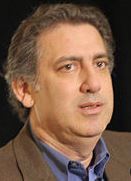
Trippi
Some people grow up on the wrong side of the tracks. Joe Trippi, the legendary Democratic consultant, grew up on the wrong side of the school zone. On one side of the arbitrary, invisible line that ran down his street in L.A.: safe schools, high school grads, kids who went on to college and careers. On the other side: gangs, dropouts, a dead end.
Trippi got across the line, thanks to a tenacious mom. But, he told redefinED in a recent phone interview, he’s haunted by what happened to the kids who didn’t. And 50 years later, he’s aghast that the same “crazy way to shuffle kids around,” as he put it, remains largely intact.
“It’s just unfathomable to me,” Trippi said in the podcast attached below. “I think about all of those years, and that system is still in place today, everywhere. Most places anyway. Too many places.”
Trippi is yet another high-profile Democrat who supports school choice, including publicly funded private options like vouchers and tax credit scholarships. His personal experience informs that position. So does something more urgent and practical: a belief that with so many kids falling through the cracks, it makes sense to put all options on the table. “I think we should try them all,” he said. “The current status quo, it may be working for some kids, maybe even many." But for too many, it isn't.
Democrats and school choice have a long, tangled relationship. Few know better than Trippi. He’s been deep inside Democratic politics since the 1970s, and his firm, Trippi & Associates, has advised National School Choice Week since its inception in 2010. So what’s he seeing on the ground now? A lot of Democrats coming around on school choice, especially at the local level, especially in inner cities.
Even more will come around, Trippi said, if both sides cut the nastiness, and if school choice supporters continue to stress bipartisanship. To that end, the Republican push to emphasize school choice in the run-up to the 2014 elections carries some risk, he said. “I’m not begrudging them for their efforts. I know they care about it,” Trippi said. But making school choice partisan potentially sustains “the polarization and the demonization on both sides.”
 Perhaps the most far-reaching education legislation in Florida this year isn’t getting much attention, overshadowed by bills like the parent trigger. But buzz or no, the quietly cruising “course choice” proposal is on the leading edge of a revolution in online learning.
It takes school choice and “puts it on steroids,” said Michael Horn, a leading thinker on digital education, in the redefinED podcast below.
The course choice bills in Florida are sponsored by Sen. Jeff Brandes, R-St. Petersburg, and Rep. Matt Gaetz, R-Fort Walton Beach. They would allow providers from virtually anywhere to create state-approved courses in K-12 and higher ed, and students from virtually anywhere in Florida to take them.
Together with other online learning advances, the bills will have repercussions on how, when and where students learn; how they’re tested and funded; and how school districts fare against growing competition from charter and private schools. Things like course choice and MOOCs, Horn said, “just blow up the geographic … scheme we’ve had for where someone goes to school.”
“So actually, wherever you are, you can get the best class for you. And there will always be that for you. Because you may love the MIT course. I may love the one that has a couple Sal Khan videos … But why shouldn’t we have that best experience for us?”
This doesn’t spell the end for school districts, Horn said. In fact, it could give them a boost. (more…)

Campbell
Elected black Democrats who support vouchers and charter schools are slowly but surely finding themselves less isolated. And for that, they can thank relentless parents, said Kenneth Campbell, president of the Black Alliance for Educational Options.
The tide is changing because of “this constant drumbeat that they’re hearing from parents about how much their kids are struggling,” Campbell told redefinED in the podcast interview attached below. “More and more people are just coming to this realization that even if I don’t necessarily like the people that are proposing this, we don’t have any other options. And we’ve heard that time and time again, as we’ve gone out and worked with elected officials - that we can’t ignore the pleas of our parents anymore.”
Campbell offered his comments on the eve of BAEO’s annual symposium, which is being held today through Saturday in Orlando. The largest gathering of black school choice supporters in the country will draw 650 people this year, including 50 current and former elected officials. It comes amidst head-spinning ferment on the choice front, with states as disparate as Louisiana, Washington and New Hampshire passing historic measures in the past year alone.
“There are a lot of people in our community who are rightfully concerned and skeptical about motives, and about is this the right thing to do,” Campbell said. “But I think increasingly, we have reached the point where there’s no excuse for not acting with urgency in giving kids and parents options.”
BAEO has been a leading voice for parental school choice since it formed in 2000. Its ranks include a number of leading reformers, including Howard Fuller, Kevin Chavous and T. Willard Fair, who co-founded the first charter school in Florida and served as chair of the state Board of Education.
Florida is an apt place for the group to meet. (more…)
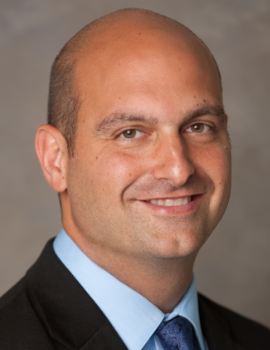
Vitti
The sprawling, 125,000-student school district in Duval County, Fla., has a reputation for being particularly cold territory for vouchers and charter schools. But last month, its new superintendent recommended the school board approve a dozen new charter schools and, in doing so, sounded this refrain: We have to compete.
In an interview with redefinED, Nikolai Vitti said the competition injected into public education through expanded choice will improve schools in Duval, which has struggled with low-income students more than other big districts in Florida. He said he “vehemently opposed” limiting options for low-income parents. He spoke admiringly of the mission and innovative practices of the KIPP charter schools.
“The reality is, the market – meaning the structure of choice – forces me to compete, even if I don’t want to. And if I don’t compete, parents will continue to leave the school district,” Vitti said. “And so my role as superintendent is to improve our product.”
But Vitti, who previously served as chief academic officer in the Broad-Prize-winning Miami-Dade district, also offered a number of caveats. State rules tilt the playing field towards charter schools, he said. And in his view, the debate over them has been driven by perceptions of quality, not data.
“There are charter schools that have a track record of success, and particular charter schools that have failed, and failed in multiple areas,” he said. “Let’s not have an ideological conversation. Let’s have one based on data where we look at individual charter schools, individual traditional public schools, and ask the question: Who’s successful? Who’s not? And what’s the best situation for parents based on how they’re looking at it, and how the district as informed educators are looking at it?”
Vitti also offered a surprising take on who should authorize charter schools. In Florida, only school boards can do so – a situation that charter school opponents prefer, and one that may be tough to change because of restrictive language in the state constitution. But Vitti said unless changes are made to the charter application process – something that forces better dialogue between charters and districts – he’d rather have the state do the authorizing.
“I do believe there’s a way to create a balance between simply approving charter schools at the district level based on a boilerplate application process … and instead allow and require the charter school to be more strategic with the district,” he said. But “if we’re not going to create some kind of balance between that, then simply place the onus of the application process on the state. Because essentially that’s what’s happening already.”
Chartrand
Florida is a national leader in expanding school choice. And the state's new top education official doesn’t see the momentum slowing, especially with low-income children.
“The train has left the station on school choice,” Gary Chartrand, 58, told redefinED by phone this week - his first media interview since being elected chair of the Florida Board of Education on Friday.
“I often say that freedom is abundant in America but it’s not universal. When you’re stuck in a broken system, and you’re poor, and you’re full of despair, and you only have one choice, and that choice happens to be an F school, that’s not freedom. And so I think the school choice movement is bringing more freedom, especially to the most under served children in the state of Florida.”
Chartrand, a Jacksonville businessman, takes a leadership role at an especially sensitive time. Funding, already low compared to other states, has been stagnant. Common Core standards are around the corner. Teacher evaluations are in flux. Criticism of the state’s accountability system is as loud as it’s ever been (which, after the Jeb Bush years, is saying a lot.) And now the board is looking for its fifth education commissioner in eight years.
At the same time, Florida has been a pace setter in academic gains for most of the past decade. Those shaping state ed policy have no plans to ease up on the gas.
Chartrand touched on a number of issues in the interview, which is attached below. Some highlights:
On his priorities as chair: “I am not proud of the fact that America is 17th in reading, 25th in math and 30th in science in the world. We used to be No. 1. And I believe that if this continues, we’ll undoubtedly lower our standard of living … And so I just have one goal: and that’s a quality education for all. We can do better. We must do better. We got to prepare our kids for a very rapidly changing world.”
On the best way to raise standards: “We’ve got to raise standards incrementally. I get a little concerned at times, and I always use the analogy of, if you can jump on a high bar six feet, you don’t raise it to seven feet and try to get over it. Because you’re not going to get over it. You raise it from 6 to 6-1, to 6-2, 6-3, and that’s how you incrementally improve, to continue to excel. And I think that’s what we need to do at the Department of Education.” (more…)

