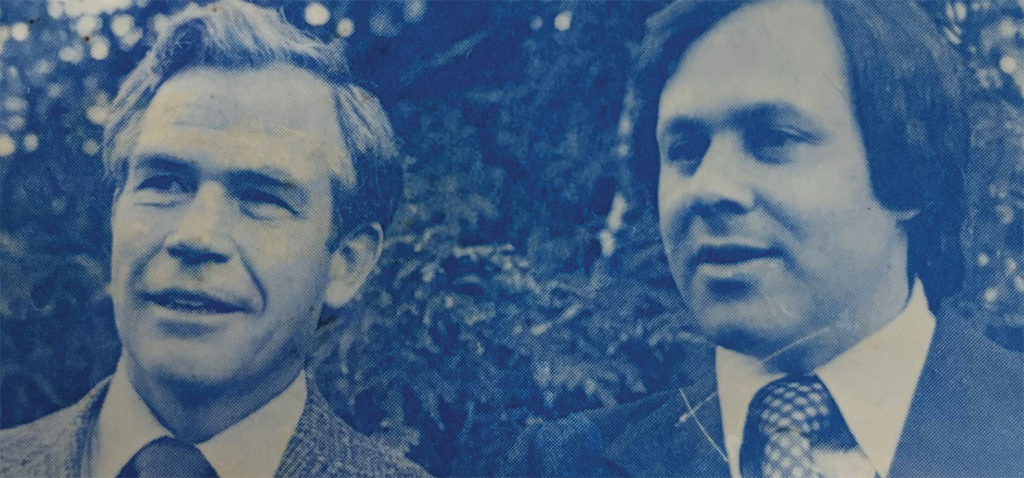
Berkeley law professors Jack Coons (left) and Stephen Sugarman described what we now call education savings accounts - and a system of à la carte learning - in their 1978 book, “Education by Choice.”
John E. Coons was ahead of his time.
Decades before the term “education savings account” became an integral part of the education choice movement, the law professor at the
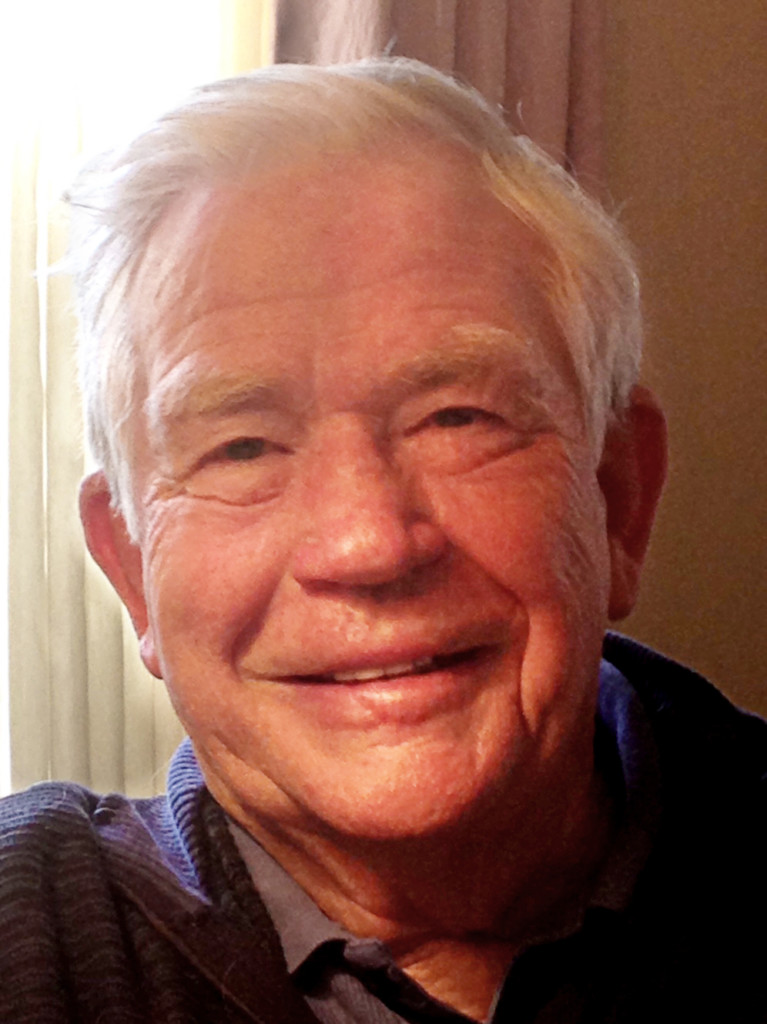
Jack Coons, pictured here, co-authored "Education by Choice" in 1978 with fellow Berkeley law professor Stephen Sugarman.
University of California, Berkeley, and his former student, Stephen Sugarman, were talking about the concept. In their 1978 book, “Education by Choice: The Case for Family Control,” the two civil rights icons envisioned a model drastically different from the traditional one-size-fits-all, ZIP code-based school system inspired by the industrial revolution:
“To us, a more attractive idea is matching up a child and a series of individual instructors who operate independently from one another. Studying reading in the morning at Ms. Kay’s house, spending two afternoons a week learning a foreign language in Mr. Buxbaum’s electronic laboratory, and going on nature walks and playing tennis the other afternoons under the direction of Mr. Phillips could be a rich package for a ten-year-old. Aside from the educational broker or clearing house which, for a small fee (payable out of the grant to the family), would link these teachers and children, Kay, Buxbaum, and Phillips need have no organizational ties with one another. Nor would all children studying with Kay need to spend time with Buxbaum and Phillips; instead, some would do math with Mr. Feller or animal care with Mr. Vetter.”
Coons and Sugarman also predicted charter schools, microschools, learning pods and education navigators, although they called them by different names.
Fast forward to Florida today, where the Personalized Education Program, or PEP, allows parents to direct education savings accounts of about $8,000 per student to customize their children’s learning. Parents can use the funds for part-time public or private school tuition, curriculum, a la carte providers, and other approved educational expenses. PEP, which the legislature passed in 2023 as part of House Bill 1, is the state’s second education savings account program; the first was the Gardiner Scholarship, now called the Florida Family Empowerment Scholarship for students with Unique Abilities, which was passed in 2014.
Coons, who turned 96 on Aug. 23, has been a regular contributor to Step Up For Students' policy blogs over the years. Shortly after the release of his 2021 book, “School Choice and Human Good,” he was featured in a podcastED interview hosted by Doug Tuthill, chief vision officer and past president of Step Up For Students.
 “It is wrong to fight against (choice) on the grounds that it is a right-wing conspiracy,” said Coons, a lifelong Catholic whom some education observers describe as “voucher left.” “It’s a conspiracy to help ordinary poor people to live their lives with respect.”
In 2018, Coons marked the 40th anniversary of “Education by Choice” by reflecting on it and his other writings for NextSteps blog.
He said he hopes his work will “broaden the conversation” about the nature and meaning of the authority of all parents to direct their children’s education, regardless of income.
“Steve (Sugarman) and I recognized all parents – not just the rich – as manifestly the most humane and efficient locus of power,” he wrote. “The state has long chosen to respect that reality for those who can afford to choose for their child. ‘Education by Choice’ provided practical models for recognizing that hallowed principle in practice for the education of all children. It has, I think, been a useful instrument for widening and informing the audience and the gladiators in the coming seasons of political combat.”
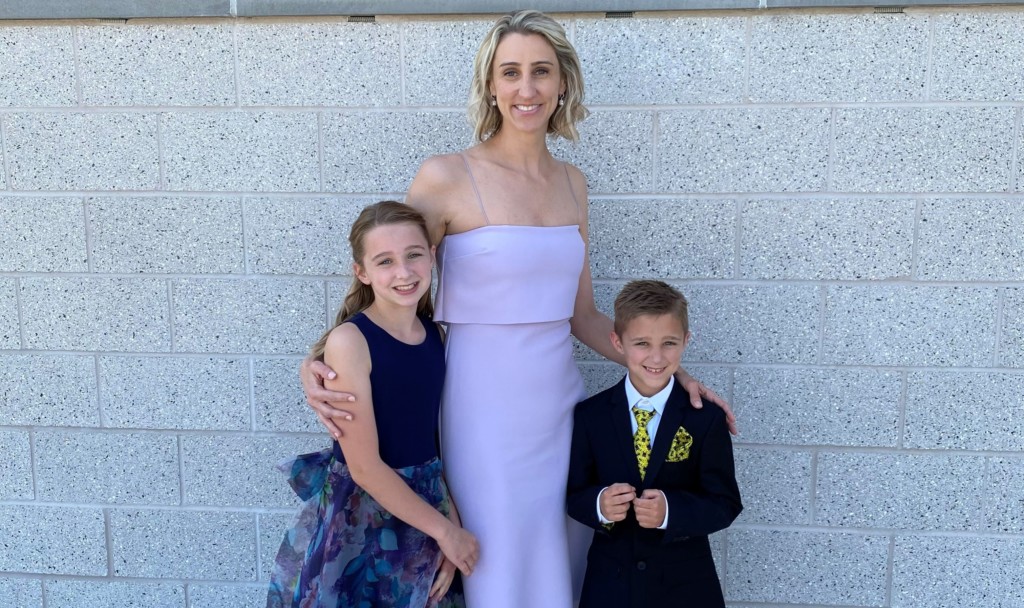
On this episode, reimaginED senior writer Lisa Buie talks with Shannon Bloodworth, a parent and education choice advocate from Archer, a small community 15 miles southwest of Gainesville, Florida. Her daughter, Ella, 11, and son, Holton, 7, receive the Family Empowerment Scholarship for students with Unique Abilities.
Bloodworth discusses her daughter’s medical condition and the challenge it created for her at her district school. She recounts the difficulties she had getting the school district to work with her on creating an individualized education plan, or IEP, eventually forcing her to consult a disability rights attorney. Once Bloodworth secured the IEP, she applied for and was awarded a McKay Scholarship, which at the time was the only state scholarship option for students with dyslexia.
“It’s made me very passionate and a warrior for other parents. You don’t know what you don’t know, and it’s a very lonely road.”
EPISODE DETAILS:

The first year of a groundbreaking scholarship program foreshadowing the future of public education is in the books in Florida.
The Reading Scholarship Account is the nation’s first educational savings account for public school students. Every third-, fourth- and fifth-grade student in the Sunshine State scoring below a 3 on the English Language Arts portion of the Florida Standards Assessment qualifies for the $500 allowance, which can be spent on qualified tutoring, afterschool and summer programs and related reading materials.
 Legislative funding for the program in the 2018-19 school year was capped at just over 19,000 students.
On this episode of podcastED, we examine the first year of the scholarship from three different vantage points.
Step Up For Students’ president Doug Tuthill, chief of staff Jen Canning and Reading Scholarship Account program manager Meredith McKay Hinchey discuss Year 1 of program implementation and management and talk about improvement opportunities for Year 2 and beyond.
We talk with Wendy Finlay and Diana Greenier, school leaders from Pasco County’s Dayspring Academy about utilizing the Reading Scholarship as part of their sprawling afterschool ENCORE program.
Finally, we speak with Central Florida Urban League president and CEO Glen Gilzean about Top of the Class, a collaboration between the Urban League and Orange County Public Schools to connect as many eligible students with the scholarship as possible.
You can hear this podcast below, or on the Apple Podcasts app. Thank you for listening.
Sen. Jeff Brandes (R- St. Petersburg)
If you ask Florida Sen. Jeff Brandes (R-St. Petersburg) what he thinks the education world will look like in the year 2040, he’ll tell you it will be going back to the past.
“I see us moving back to the one-room schoolhouse where we have students of different capabilities working with each other to help everyone rise,” Brandes says.
The Pinellas County lawmaker pushes innovative education policies every year in the Florida Legislature, but new leadership more focused on education choice appear to be giving his ideas more traction.
His signature education bill this session, SB 226, would expand a mastery-based education pilot program from the three Florida counties currently testing the concept to any district in the state that wishes to participate. The bill wasn’t heard in committee last session but is on track to pass this year with wide bipartisan support. A similar bill is currently awaiting passage in the House.
Brandes firmly believes that the flexibility of mastery-based education and the wide array of options it provides will expand opportunities for students.
“Our goalposts cannot simply be you got an education or degree,” Brandes said. “A job is the goalpost. How do we focus everything that we're doing to line up to professions that are out there for people who complete their education?”
SB 226 is not a mandate. Districts would have to opt in to participate, and there are unanswered questions about implementation, funding and state-mandated testing. But testing certainly would change under a mastery-based education system.
Brandes says this is a good thing.
“The upside is that we get to take the temperature of each individual student in real time … Why do we need to take the temperature once a year if we’re taking it every day?”
Listen to the full interview below or on iTunes.
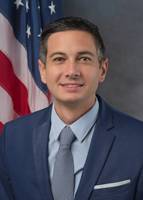
Rep. Vance Aloupis (R-Miami)
Rep. Vance Aloupis, R-Miami, narrowly beat his Democratic opponent in 2018 to represent Florida’s 115th District, a seat held by former Education Committee Chair Michael Bileca. One of many freshman members serving this year on House education committees, Aloupis wants to become a legislative leader in early childhood development. (more…)
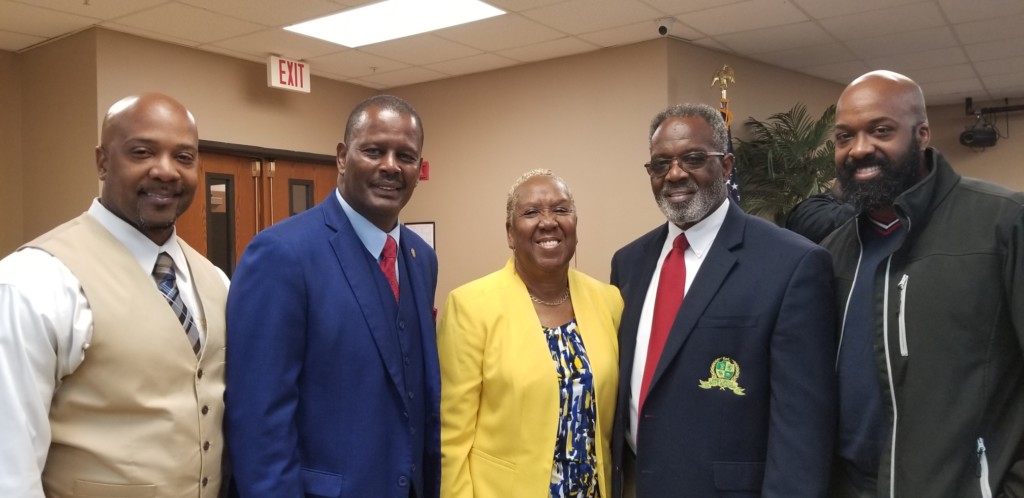
On MLK Day, Rep. Bush attended a special event with Gov. Ron DeSantis at Piney Grove Boys Academy, an all-male, predominantly black private school in Lauderdale Lakes where all 85 students are recipients of state-supported educational choice scholarships. From left is Piney Grove Principal Alton Bolden, Rep. Bush, Frances Bolden, Bobby Bolden, and Tellis Bolden
OPA-LOCKA, Fla. – If you want to know why Florida state Rep. James Bush III supports educational choice, take a ride with him.
Just a few blocks from his legislative office, District 109 – which Bush called “one of the largest and poorest and most violent and neglected districts in the state” – is more Mad Max than Miami, a hodge-podge of industrial zoning and bars-over-windows residential. On a recent Sunday, Bush bumped a rented Mustang down a moonscape of graded road, lined with teetering chain-link fence and littered with cast-offs: a flat-screen TV, a jet ski, a crushed camper top. Around the corner, a line of salvage yards emerged like fortresses, stacks of crunched cars rising over walls topped with barbed wire.
 Then, right next to them, a public housing complex …
Bush braked. The contrast panned into view. Satellite dishes poking out of lavender stucco … a woman pushing a stroller … kids riding bikes …
“Now what is right five steps from this (junk yard)?” Bush said. “Look at all this stuff the kids are breathing. I don’t want it to sound like I’m painting a real negative picture of our city but … this should be our focus.”
“Those are the kinds of concerns I have when it comes down to doing what I’m supposed to be doing as a rep in Tallahassee,” he said minutes later. “Not getting caught up in who can control who, and doing the most politically correct things, and not putting the children of this state first ... ”
Say hi to Florida’s newest school choice Democrat.
Bush, 63, served four terms as state representative in the 1990s. He was elected for a term in 2008. He was elected again in August.
His Democratic roots run deep. Bush retired after 30 years as a public school teacher (and teachers union member). He served as acting president of the Southern Christian Leadership Conference. He earned his bachelor’s from Bethune-Cookman, the private-school-turned-college founded by Mary McLeod Bethune. Bush doesn’t just know the history of black churches, education and liberation. He’s lived it.

Listen on iTunes (or below)
His support for choice is, on the one hand, practical. His district includes thriving faith-based schools. His district has far more pressing needs than what schools parents choose. As a lawmaker, he said he’s going to fight for more funding for the Miami-Dade school district (and everything else his district desperately needs) at the same time he supports the options his constituents desperately want.
On the other hand, Bush’s support is grounded in a belief. When parents are empowered to determine the educational destinies of their children, he said, that confidence in the power to make change spills over into the rest of their lives.
“Because the parent now would say, ‘Well I feel now better because I got my child where I think it’s best for them,’ as opposed to going through just a normal traditional way of educating,” Bush said. “It gives them a sense of belonging and a sense of ownership and a sense of having some input.”
“It propels them to another level of getting involved in other things that affect their child,” he continued. “It’s a plus in the long run.”
HD 109 is 20 minutes, but a world away, from the condo towers gleaming along Biscayne Bay. It’s split between blacks and Hispanics. It’s shaped like a gun.
Liberty City sits where the grip is. The neighborhood of Brownsville, once dubbed Miami’s most blighted, is where the barrel begins. The city of Opa-Locka is where the sight would be. By some measures, it’s one of the most dangerous cities in America.
As night fell, Bush turned towards Ali Baba Avenue, once a notorious drug hole. He stopped between a zippy mart with a Lotto sign and a tiny apartment complex with plywood-covered windows. A woman emerged from the shadows, a man on a plastic sheet – asleep? – on the ground behind her.
“My friend,” Bush said through the car window. “This Bush.”
“Hey!” the woman chirped. “How are you sweetie?”
The two clasped hands. Turns out, the woman worked on Bush’s campaign. He thanked her for the help, then asked about the man on the ground. She assured him the man was okay.
HD 109 is full of good people doing good things, Bush said over and over. But that guy on the ground?
“I got spots,” he said, “where a lot of that takes place.”
Bush riffed on his district’s challenges. Better roads, better jobs, better housing … safer, cleaner neighborhoods “so our children can have a different perspective on life.” He kept repeating: The people in HD 109 “have a lot of needs … need assistance … just need our share … ”
Same with schools. The Miami-Dade district is on the rise, arguably one of the best urban districts in America. At the same time, half its low-income students aren’t reading at grade level.
Given its depth of poverty, Bush said it’s no surprise HD 109 has among the highest concentrations of school choice scholarship students in the state. Some 2,330 use the Florida Tax Credit Scholarship, for lower-income students, to attend 28 private schools. Bush said the students in his district “benefit immensely from … not only the public schools but schools of choice.”
He said he supports them. All of them.
It remains to be seen how many other elected Democrats do.
Democrats in the Florida Legislature strongly back the Gardiner Scholarship, an education savings account for students with special needs. But Democratic support has waxed and waned for the FTC scholarship, where 75 percent of the roughly 100,000 recipients are non-white and average family income is $25,756 a year. Both programs have waiting lists.
Bush said he had a choice about choice. Take the “politically correct position (and) do what others want me to do.” Or take a stand for his constituents.
With HD 109 rolling past, he made it sound like an easy call.
Listen below:
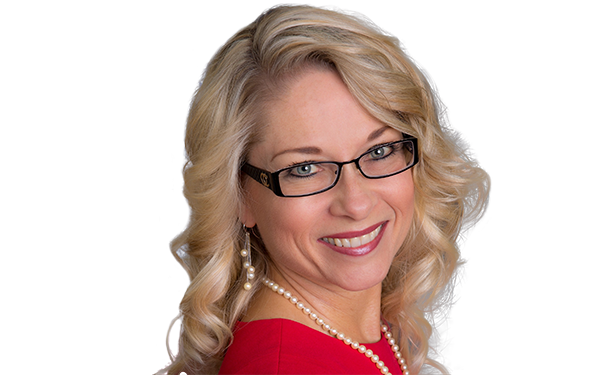
Rebecca Friedrichs is the author of 'Standing Up To Goalith' and joins us for an interview on the latest episode of podcastED.
Rebecca Friedrichs is the fearless California public school teacher best known for being lead plaintiff in Friedrichs v. California Teachers Association, the high-profile lawsuit that – until the unexpected death of U.S. Supreme Court Justice Antonin Scalia in 2016 – was destined to end the union practice of forcibly collecting “agency fees” from non-union members. (Subsequently, last June, Janus v. AFSCME did end the practice.)
But what people may not know about Friedrichs is how much her support for educational choice fueled that crusade.
In her just-released autobiography, “Standing Up To Goliath,” Friedrichs details her rise from rank-and-file teacher to anti-union activist, including the role that choice played. In an interview with redefinED, she offers more insight into the teachers-and-choice piece, including why more teachers aren’t clamoring to expand options that, she says, would benefit them as much as students and parents.
“We will see widespread school choice when we can educate teachers on the truth,” Friedrichs said in the interview. Once teachers see “that these choice schools really are not bad, that charter schools really do have to close down within a few years if they don’t get the job done, that public schools go on and on and on and on for years even though they’re failing … once teachers know the truth, they’ll be on our side.”
Friedrichs describes herself as conservative. But “school choice” isn’t conservative, she said, no matter how often it’s often portrayed that way by critics and the press.
“That’s just another lie promoted by the unions,” she said. “I don’t care if you’re apolitical, you’re a Democrat, you’re a Republican, you’re a libertarian, you don’t vote. Everybody I know, once they understand school choice, and they realize it’s just what’s best for the child, they’re all for school choice.”
Friedrichs’s support is personal. At different points in her life, she said, she needed educational options for each of her sons. For Ben, her youngest, no option materialized, which left Ben in vulnerable situations and Friedrichs, then a single mom, crying all the way to work. For Kyle, an option did come through, just as drugs and other issues had him spiraling down.
Said Friedrichs, “School. Choice. Saved. His. Life.”
Friedrichs shares more details in the podcast, with a bonus for Major League Baseball fans. Kyle, now thriving as a pitcher in the minor leagues (in the Oakland A’s system), recently got a chance to face future Hall of Famer Mike Trout …
You’ll either have to buy Friedrichs' book or listen to the podcast to find out what happened. ????
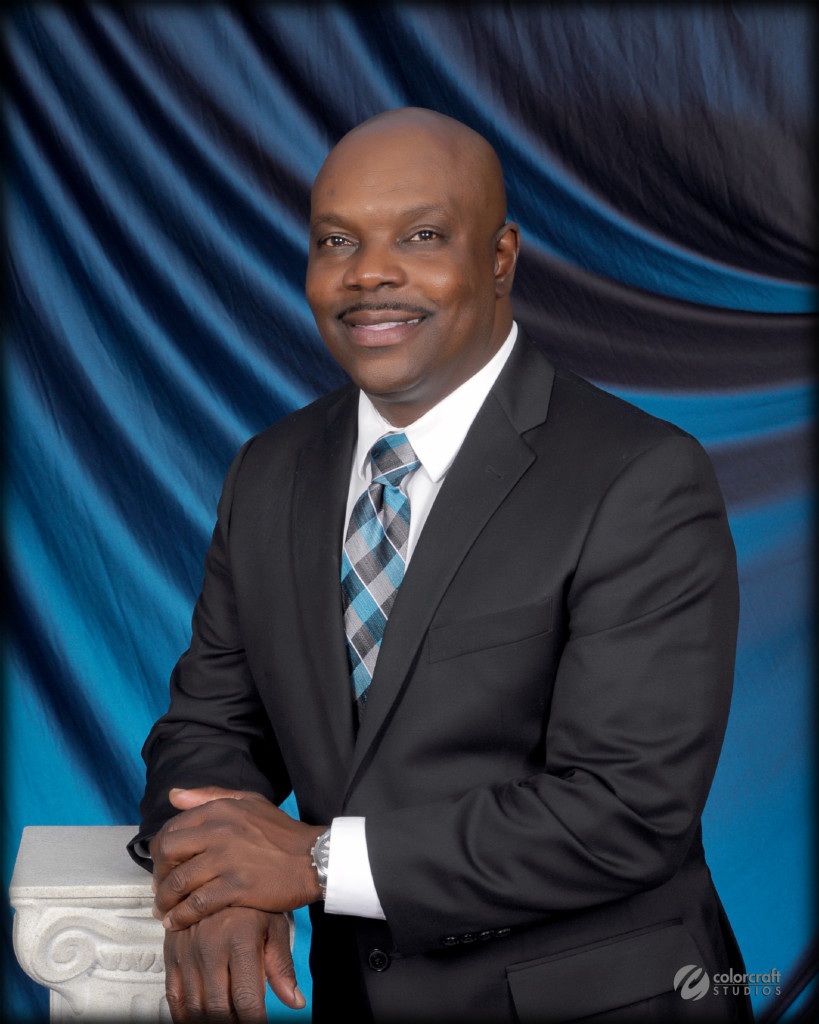
Pastor Robert Ward, founder of Mt. Moriah Christian Fundamental School in south St. Petersburg.
If anybody doubts the passion for educational choice in black communities, come visit Mt. Moriah Christian Fundamental School in predominantly black south St. Petersburg, Fla. and chat with its founder, Pastor Robert Ward.
Ward started the private micro-school for grades 6-8 in 2011 with three students. Now it has 56. And now it’s routinely turning away children because there are waiting lists, both for the school and for the Florida Tax Credit Scholarship for lower-income students, the largest private school choice program in America. (The scholarship is administered by nonprofits such as Step Up For Students, which hosts this blog.)
“Parents are beating on our doors to get in,” Ward said in this redefinED podcast. “We actually have stretched even our level of comfort in terms of capacity, to try to turn away as few parents as possible. But we’re very limited in our capacity.”
Dejected parents cry in the lobby, Ward said, “really with the loss of hope for their child.”
Pastor Ward is representative of a core constituency for choice that is blatantly overlooked by critics and the press. In Florida, where choice has taken root like nowhere else, there are hundreds of community leaders like Ward who represent communities of color and who wholeheartedly embrace choice. Like Ward and south St. Pete, those leaders and communities lean heavily towards the Democratic Party.
All but one of the students at Mt. Moriah school are black. All but three use state-supported choice scholarships, including 39 who use tax credit scholarships. Perhaps it’s no surprise, given that the outcomes in the school district that encompasses St. Petersburg are especially bleak for black students.
Black students in Pinellas County perform far worse on state tests than not just white students in Pinellas, but black students in every urban district in Florida. In 2018, for example, 23.9 percent of black 10th-graders in Pinellas passed the 10th grade reading test – the test they must pass to graduate – compared to a statewide average for black 10th-graders of 34.6 percent. (Statewide, 65.1 percent of white students passed. In Pinellas, 64.3 percent passed.)
The tragic trend lines go back to when schools in St. Pete were more racially integrated then they’d ever been (under a court-ordered desegregation plan), and arguably the best funded they’d even been (before the Great Recession.) They’ve persisted, Ward said, “because there’s not enough focus on what the real need is.”
“It goes back to that one-size-fits-all mentality or approach to the learning process,” Ward said. “Unfortunately, that’s just not reality. One size does not fit all. Students come from different backgrounds, different environments, different problems, different issues, that all have an effect on how we behave, how we learn, how we feel in the learning process. So I think we have to take all of that into consideration. And I think we also have to establish an environment where parents feel there’s hope.”
Also on the podcast with Pastor Ward:
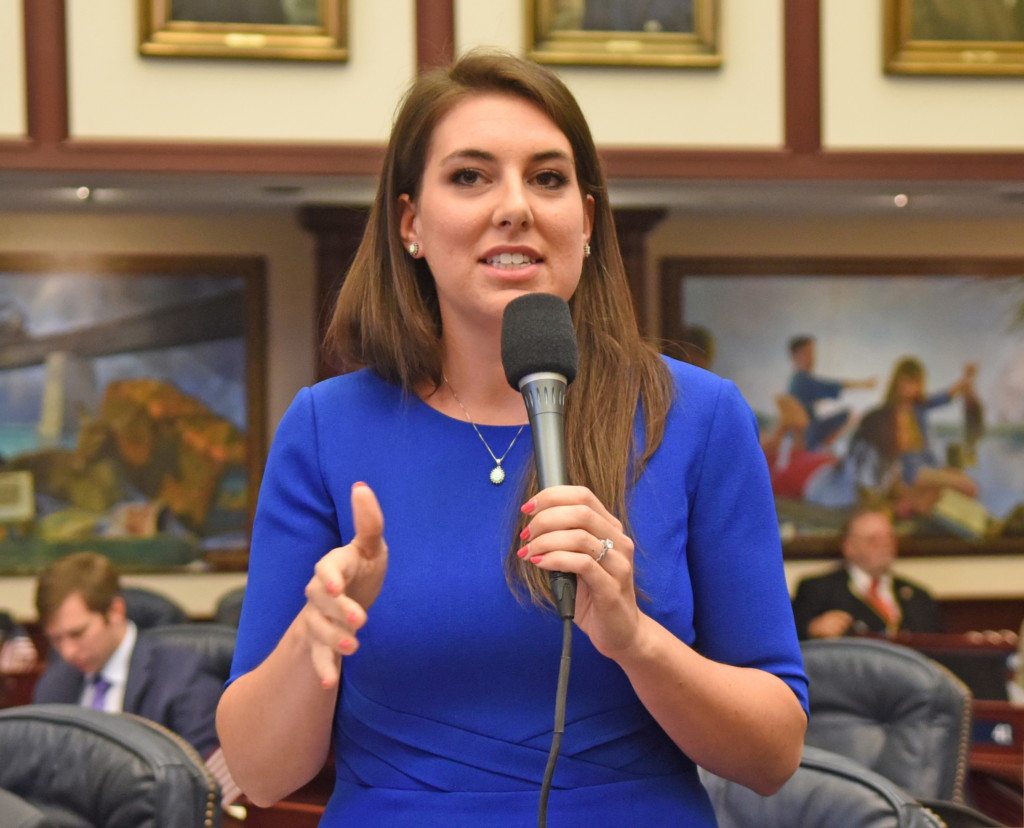
State Rep. Jennifer Sullivan, R-Mt. Dora sits down with redefinED in the returning edition of podcastED.
Arguably no state in America has redefined public education more than Florida. So how fitting that the latest lawmaker to rise to one of the key policy making slots is a former homeschooler.
State Rep. Jennifer Sullivan, R-Mt. Dora, said being homeschooled gives her unique insights into parental choice and personalized learning that will inform her world view as new chair of the House Education Committee.
In this redefinED podcast, she points out she struggled to read as a child. Had she been educated in a Florida public school rather than at home – where her mom had more flexibility to try different approaches – she said she may have fallen short on Florida’s third-grade reading test and been retained.
“As we did life, she read to me a lot. And we would work on it. But not in a way where I even knew we were working on it,” Sullivan said. “So when I was nine, it completely clicked for me. And I haven’t put down a book since.”
Sullivan, a conservative Republican, is all in for ed choice. But it may surprise some, given the caricatures of choice supporters, how much she emphasizes the equity and opportunity arguments – in part because of her own life experience.
Her family, she said, “wouldn’t have had the money to move into the really nice neighborhoods to go to the really nice public schools.” In a similar vein, students assigned to district schools that are not working for them “deserve better.”
Sullivan also makes clear that, in her view, expanding choice and strengthening public schools isn’t either/or. “I’m all for school choice. But I am not against our public schools,” she said. “Public schools are where the significant portion of students go to school. And if that’s where our students are, maybe that’s where the reform needs to take place.”
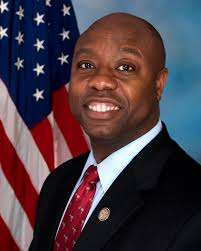
Sen. Tim Scott
His older brother was a command sergeant major in the U.S. Army. His younger brother is a colonel in the Air Force.
Their experiences trying to find schools for their children helped inspire the CHOICE Act. Scott's legislation would create pilot scholarship programs on at least five military bases.
"I know firsthand that a parent doesn't choose the base they go to, and therefore, can only hope and pray that the education is good," the South Carolina Republican tells Denisha Merriweather, a Florida tax credit scholarship alumna, in our latest podcast interview.
April is the month of the military child, and several states are advancing proposals to create new educational options for military families — or help existing school choice programs better meet their needs.
Georgia lawmakers approved a bill creating open enrollment for families on military bases, while Florida is advancing legislation that would allow military parents to apply for tax credit scholarships year-round. (more…)