Virtual schools. Lawmakers open online learning to more providers, including private interests, reports the Miami Herald. StateImpact Florida and the Florida Center for Investigative Reporting obtain internal emails and a recording of a K12 Inc. company meeting that they say shed light on questionable company practices involving teachers who are not properly certified.
 Struggling schools. The Broward school district will overhaul five struggling schools by closing some and revamping others, reports the South Florida Sun Sentinel. Principals are key to turning around five struggling Pinellas schools, reports the Tampa Bay Times.
Tutors. The Tampa Bay Times looks at the last-minute legislative scrap over whether to continue state-mandated tutoring for low-income kids.
Private schools. Voters in Palmetto Bay will get to vote on whether a local Montessori can expand. Miami Herald.
Rick Scott. Teacher pay raise tour comes to an end, reports the Tampa Bay Times. Will it get him any votes? asks the Palm Beach Post. (more…)
Virtual schools. The state investigation of K12 Inc. in Florida - which turned up three inadequately certified teachers - anchors a critical story in Maine by the Portland Press Herald. Education Week writes it up.
 Parent trigger. Sen. David Simmons is proposing another compromise for parent trigger. Gradebook.
Common Core. StateImpact Florida talks to one activist mom who doesn't like it.
Education funding. AP reporter Gary Fineout looks at the behind-the-scenes battle on The Fine Print blog.
Paddling. A step backwards for Marion, editorializes the Ocala Star Banner.
School spending. Orange will still have $3 billion worth of work left to do when the district's half-penny sales tax runs out in 2015, reports the Orlando Sentinel. The possibility of school closures is surfacing as Manatee's budget woes continue, reports the Bradenton Herald. (more…)
Rallies tend to be choreographed political endeavors, but the video above is worth your four minutes if for no other reason than the glimpses of the parents who participated.
This school choice rally was held at the Florida Capitol on April 3, and it represents something you don't see every day. It brought more than 1,000 students, parents and activists together to celebrate the full spectrum of school choice – from magnet schools to career academies to charter schools to online courses to tax credit scholarships for low-income students and vouchers for students with learning disabilities.
Forget the attendance numbers, which incidentally were stronger than any of the PTA-type parent rallies in recent years, and look instead at the faces. They are remarkably diverse, racially and economically, and some of them traveled all night and missed work to be there. They brought with them their passion and their belief that the school they chose is working for their children. And they are hardly alone. In Florida last year, 1.5 million of the students in PreK-12 – or 43 percent – attended something other than their assigned neighborhood school, and this kind of event is a reminder that parents are choosing their schools in ways that also change the politics of public education.
No one should read too much into a political rally, but, at a time when the more traditional parent associations continue to fight many of the learning options these parents consider essential to their children’s future, there is something poignant here. Many of these parents have felt disenfranchised in the past, and their magnet choice or charter school or scholarship has given them a sense of educational ownership. To see them fight to keep these school choice options is uplifting, and not because it reflects one political ideology or another. It means they believe in their child's education, and that has to accrue to their child's benefit.
Parent trigger. The parent trigger bill is amended in the Senate so school boards have the final say. Coverage from redefinED, Associated Press, SchoolZone, The Buzz. StateImpact Florida talks to Sen. Bill Montford, D-Tallahassee, about why he's opposed to parent trigger. The Orlando Sentinel highlights the amendment sponsor, Sen. David Simmons. Palm Beach Post columnist Frank Cerabino sees the specter of mass privatization: "The parental trigger bill is designed to lead to the widespread conversion of traditional public schools in Florida to charter schools."
 Online education. The bills being considered by this year's Legislature, including Sen. Jeff Brandes' course choice bill, are about profits and privatization, not choice and competition, editorializes the Tampa Bay Times.
Data. Lawmakers are dealing with data issues related to teacher evaluations and access to researchers, the latter being complicated by critics raising fears of privatization, reports the Tampa Bay Times. A group called Liberty in Action protests the access bill outside the office of bill sponsor Sen. Bill Galvano, reports the Bradenton Herald.
Remediation. The Senate approves a bill that would end a requirement that college students take remedial courses for no credit. StateImpact Florida.
School spending. The Seminole school is scrambling to explain why it decided to spend $100,000 to send 176 teachers and school administrators to a teacher training program when a cheaper alternative was available. Orlando Sentinel.
Employee conduct. Three staffers at a Collier County school are under investigation for some kind of impropriety with FCAT testing. Naples Daily News.
Washington: The new Charter School Commission is attracting candidates from across the state and beyond, including Liz Finne, a lawyer and director of the Center for Education Reform at the Washington Policy Center. The governor and other leaders expect to choose nine volunteers by March 6 (Associated Press). A coalition of educators and community groups filed a legal challenge that questions the constitutionality of Washington's new charter schools law (Associated Press). More from Education Week.
Colorado: With more than 80,000 students enrolled in 190 charter schools, charter leaders try to clear up misconceptions about the school choice option (Reporter-Herald). Douglas County's Choice Scholarship Program does not violate the state Constitution, rules an appeals court. The outcome could have wide-ranging implications for whether vouchers can be used statewide (Associated Press).
 Alabama: Legislators approve tax credit scholarships for students attending failing public schools (Associated Press). More about the "legislative bombshell'' that Republicans called historic and Democrats said was a sleazy "bait and switch,'' at AL.com. And the site offers a primer on the Alabama Accountability Act.
Idaho: Khan Academy will provide math, physics and history classes in 47 public, private and charter schools this fall, making Idaho the nation's first proving ground for statewide implementation of the free online educational content and teaching model (Associated Press).
Michigan: A report measuring charter school performance statewide calls the Eastern Michigan University-authorized schools the second worst system in the state. EMU says the report doesn't take into account that the schools serve some of the state's toughest communities (Ann Arbor.com)
Montana: House Republicans endorse three school choice bills - one to authorize charter schools, another to create a modest tax credit scholarship program and a third to create an education savings account program for students with disabilities (Independent Record). A day later, several defect on the charter school bill and it goes down - though maybe not permanently - on a 50-49 vote (Billings Gazette). The tax credit scholarship bill clears the Senate (The Missoulian).
Florida. U.S. Sen. Marco Rubio, R-Fla., introduces legislation to create a national tax credit scholarship program (redefinED). A parent trigger bill that was defeated last year in a dramatic tie vote is back this year (redefinED).
 Colorado: Two bills to expand private school choice through tax credits go down to defeat (Ed News Colorado). A student is in limbo after his mother withdraws him from a charter school to send him back to his zoned district school but the district says it's too late (9News.com).
Arizona: Charter schools would have to follow state purchasing laws and those that use management companies would have to post salary information under a bill filed in the wake of a newspaper investigation (Arizona Republic). Lawmakers nix a bill that would have required mailers be sent to parents informing them of school choice programs (Arizona Daily Sun).
New Mexico: Public schools, including charter schools, would be barred from contracting with private entities under a bill supported by critics who fear "a Trojan horse-type assault on the state to divert public education funds" (Santa Fe New Mexican).
Idaho: Lawmakers consider equitable funding for charter schools (Idaho Reporter).
Washington: The state public schools superintendent asks legislators to put charters under his watch, a move that conflicts with the new law voters recently approved that calls for a separate supervisory panel (King5).
California: The San Francisco school district triples the rent for charter schools, after charging less than other districts for years, prompting an outcry from some charters (San Francisco Chronicle). (more…)
Ladner
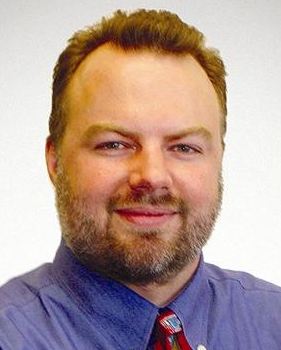
Call them Vouchers 2.0. In the age of customization, researcher Matthew Ladner sees education savings accounts as the tool for the times. Unlike vouchers or tax credit scholarships, ESAs would allow parents to use state funds to pay for a blend of K-12 educational options – schools, tutors, online programs, etc., in whatever combo works - and perhaps squirrel away some of those funds for college.
“We we like to say that ESAs are sort of school choice and parental control over education down to the last penny,” Ladner said in a podcast interview with redefinED. “What we really want to do is allow parents to customize the education for their child. Education shouldn’t be necessarily an all or nothing proposition - you’re either attending this school or that school. In fact, the whole definition of what a school is is being fairly rapidly changed by technology.”
Ladner is senior advisor of policy and research at the Foundation for Excellence in Education. He’s one of the creators of the ESA concept and its most diligent Johnny Appleseed. In October, the Friedman Foundation for Educational Choice published a report he authored about ESAs called, “The Way of the Future.” Ladner also was instrumental in creating the ESA program in Arizona, which to date is the only one in the country but was recently expanded.
A key feature of ESAs, Ladner said, is that it requires parents to make choices based on quality and price. That in turn will spur innovation and, at the same time, reign in costs that have risen steeply for decades with little improvement in academic outcomes. “If you want to reverse that, you have to do something that’s going to seem a little radical at first,” Ladner said. “But by giving parents complete control over the money and requiring them to consider possible alternative uses for that money, it really sets them up to be discriminating consumers.“
Florida lawmakers flirted with ESAs in 2011, with critics panning the idea as “universal vouchers” and “vouchers for all.” But Ladner said even if a state went “whole hog” with the idea, the vast majority of kids would remain in public schools, as the Florida experience has shown with McKay vouchers and tax credit scholarships. In his view, ESAs should also be designed for equity - with greater funding for students with greater needs.
Are people ready for ESAs? Maybe not just yet, Ladner said. But it took a while for people to catch on to Palm Pilots, too. “As a movement we always need to be taking a strong interest in the development of our product. And our product in this case is our methods to increasing the freedom and the effectiveness of parents the parents within the schooling system,” Ladner said. “I think there is work to be done. But I do think that when this work is done we will have a product that is clearly superior to the ones we have today.”
Mississippi: State lawmakers are expected to try again this year to pass charter school legislation, but some suburban Republicans continue to have concerns (Desoto Times Tribune). Lt. Gov. Tate Reeves says there's bipartisan support for charter schools (Associated Press). More from the Memphis Commercial Appeal. At least one lawmaker is talking about the possibility of tax credit scholarships (GulfLive.com)
 Florida: Jonathan Hage, CEO of Charter Schools USA, is named Florida Trend magazine's Floridian of the Year for 2012. A new state lawmaker works in public schools as an assistant principal, but supports publicly funded private school choice options (redefinED).
Arizona: The state's education savings accounts program expands to include students from the lowest-performing public schools (Arizona Republic.)
Oregon: The founders of a charter school chain are accused of racketeering and money laundering and charged with scamming $17 million from the state (The Oregonian).
Washington D.C.: Charter schools in the district expel students at far higher rates than traditional public schools (Washington Post).
Indiana: Lawmakers will look at expanding the state's voucher program during the upcoming legislative session (Associated Press).
Louisiana: The legal challenge against the state's voucher program heads to the state supreme court (New Orleans Times Picayune). (more…)
School choice battle. The Palm Beach Post sees one unfolding in the coming legislative session.
Charter school closing. Global Outreach Academy, citing financial problems, tells Flagler school district officials on New Year's Day that it's shutting down immediately, reports FlaglerLive.com. Another charter school closes mid-year in Lee County, reports the Fort Myers News Press.
2012: Year of pushback. Gradebook.
2013: Year of ... Common Core and parent trigger make the Fort Myers News Press list. Testing and Tony Bennett make the Gainesville Sun’s.
 Algebra Nation. A new project from UF’s Lastinger Center for Learning offers an online resource to help students, teachers and parents with the Algebra I end of course exam. Gainesville Sun.
More school security. After Newtown, several mayors want metal detectors and guards at all Palm Beach County public schools. Palm Beach Post.
Financial boot camp. High school students learn to manage money through a partnership program with the business community. Miami Herald.
In a recent post, I argued that because customized teaching and learning have so blurred the lines between public, private and homeschooling, it is now most practical to define public education as education which satisfies each state’s mandatory school attendance law. We require students to be educated to achieve a public purpose; education that satisfies this purpose should be considered public education, regardless of how that education is funded, delivered or governed.
I was careful in my post not to assume public education and public schools are synonymous. Most states define public schools as those schools owned and managed by school districts; they also define charter schools as public even though charters are privately owned and managed. Public schools are a subset of public education, but not all of public education.
The accomplished University of South Florida professor, Dr. Sherman Dorn, disagreed with my position in an excellent response to my post, and I’d like to address some of his counterarguments.
Professor Dorn argued that public education refers to education that is “publicly-funded, publicly-controlled, publicly accountable, publicly-accessible, and for public purposes,” but these criteria are so broad and ambiguous they will lead to endless and unproductive debates about what constitutes public education in today’s context of customization. For example, home-schooling at times does and does not fit Dr. Dorn’s criteria. My younger son spent a semester as a homeschooled student taking a full course load at St. Petersburg College. According to Dr. Dorn’s criteria, he was in public education while being homeschooled. But what if he’d only taken two St. Petersburg College courses that term, a third course from the privately-owned Connections Academy through the Florida Virtual School, and two free online course from Stanford University? I guess he would have been 60 percent of a public education student, but that percentage would have fluctuated throughout the day as he worked on various courses.
We run into this same complexity when applying Dr. Dorn’s framework to students enrolled in private schools. Many private school students receive public funding to pay for part or all of their daily instruction. Those portions of their day paid for by public funds seem to fit Dr. Dorn’s criteria, while those portions that are privately funded do not. Again, using Dr. Dorn’s framework, we have students moving in and out of public education on a minute-by-minute basis, and that strikes me as impractical.
Complexities also arise when we drill down into each of Dr. Dorn’s standards. (more…)

