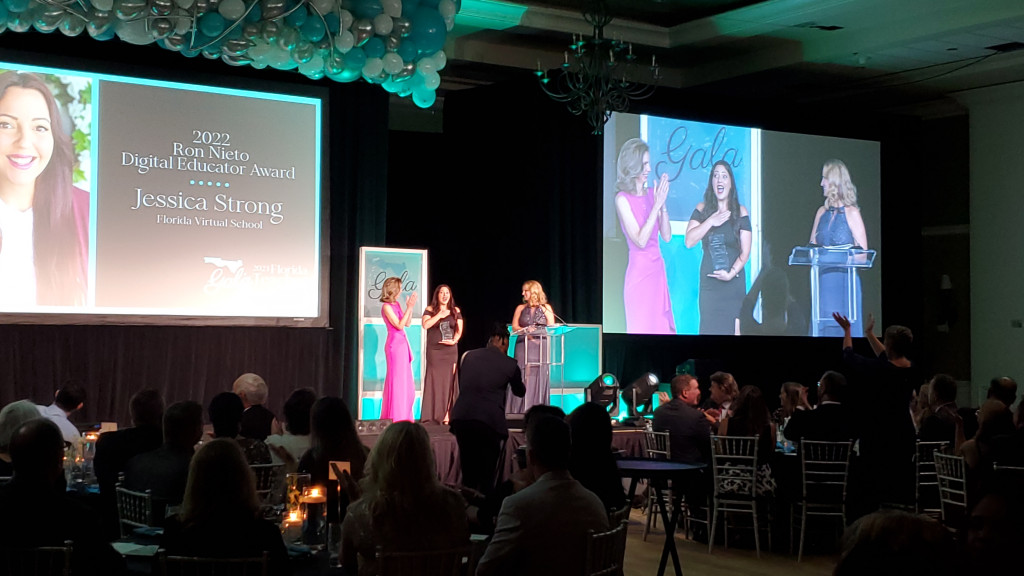
Jessica Strong, a sixth-grade teacher at Florida Virtual School and the first person in her family to graduate from high school and college, received the 2022 Ron Nieto Digital Educator Award.
On this episode, ReimaginED Senior Writer Lisa Buie talks with Jessica Strong, a sixth-grade English language arts teacher at Florida Virtual School, who recently received the Ron Nieto Digital Educator of the Year Award for 2022. Named in memory of Nieto, who served as Florida’s first deputy commissioner of innovation, it is given to a Florida educator who excels at using technology in the classroom to positively impact student outcomes.
https://nextstepsblog.org/wp-content/uploads/2022/08/Reimagined.jessstrong_mixdown-final.mp3
As the only child of a single mom whose struggles had forced her to leave school in seventh grade, Mrs. Strong never imagined she would go to college, much less become an educator. But not only has she become a teacher, but also one of the best digital educators in a state that pioneered high quality virtual education.
“My internship was with FLVS, and it was a unique experience, and I fell in love. I saw how innovative and interesting things can be done with a student who isn’t right in front of you…Students are tech natives, so their natural inclination is to learn and find out things on the computer, so putting education on computers is such a fascinating concept and with a little ingenuity, there’s nothing I can’t do.”
EPISIDE DETAILS:
RELEVANT LINKS
https://blog.flvs.net/inspiring-the-next-generation-2021-22-team-members-of-the-year/
https://store.classroomauthors.com/product/mnv-v6xn
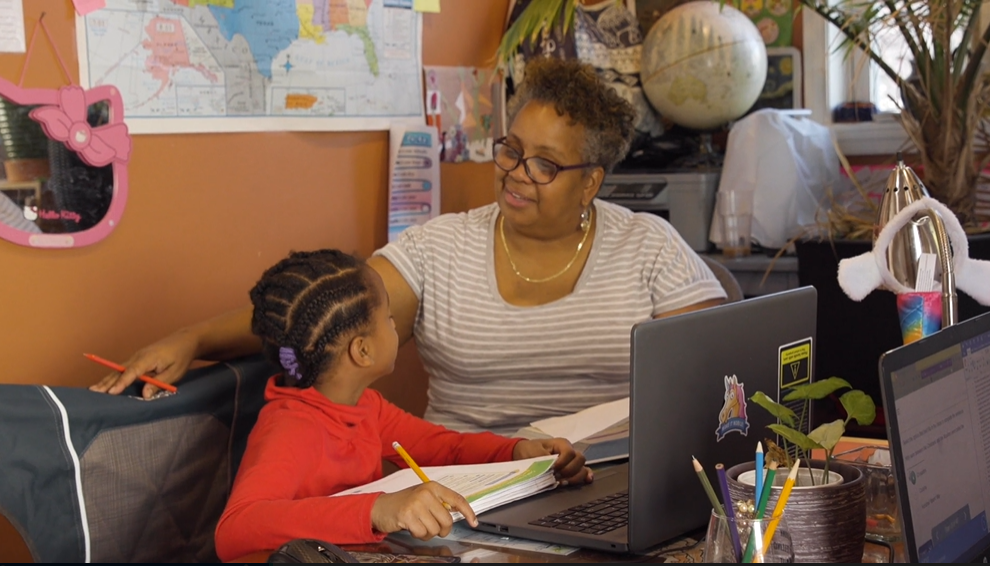
Stride, Inc., which has been operating in the K-12 online education arena since 2000, offers a personalized learning approach tailored to each family’s unique needs. The West Virginia Virtual Academy has contracted with Stride Inc. to serve up to 2,500 students.
Editor’s note: This commentary from educator Garris Stroud, author and education choice advocate from rural Western Kentucky, points out that school choice, historically seen as an urban issue, has clear benefits for more rural areas as demonstrated by West Virginia’s authorization of two virtual charter schools, which will expand options for students statewide.
School choice and rural communities are a lot like oil and water: historically, they haven’t mixed. Efforts to expand educational options for families have instead been more focused on America’s cities, where access to these options abound. But now, thanks to West Virginia, states may have a model for expanding school choice for families living outside major urban areas.
Until recently, West Virginia was a part of the bloc of rural states like Nebraska, Vermont, and the Dakotas that prohibited the authorization of charter schools. That changed in 2019 when the government enacted a law allowing charters to receive financial support from the state education system, and this year, West Virginia made history by approving three brick-and-mortar charters alongside two virtual academies.
While the brick-and-mortar schools will serve the more populated Morgantown and Eastern Panhandle areas, the virtual charters will be open to students statewide. The West Virginia Virtual Academy, which will be run by Stride, Inc., will have a career-technical education focus and will enroll up to 2,500 K-12 students. The second, Virtual Preparatory Academy, will be run by Accel and will enroll up to 2,000.
To continue reading, click here.
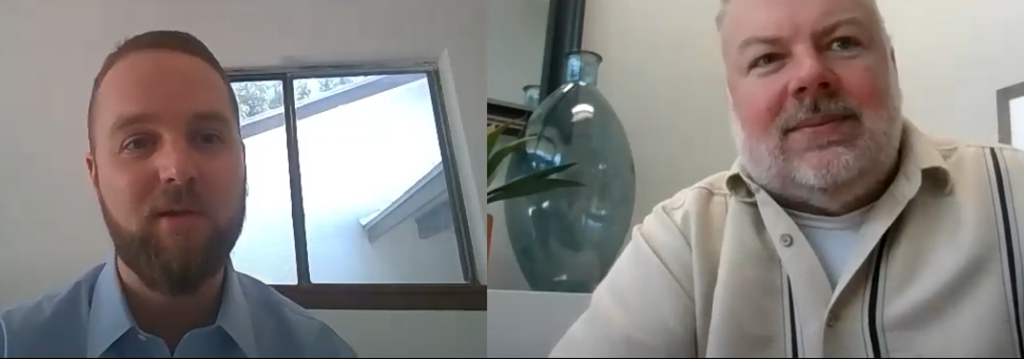 On this episode, redefinED’s executive editor speaks to a leader in the charter school organization about the exploding demand for its classical liberal arts education. Currently serving more than 20,000 students in brick-and-mortar classrooms in Arizona and Texas, Great Hearts Online launched in August because of the COVID-19 pandemic and currently serves approximately 1,000 students across both states.
The two discuss the perils of emergency online learning, which Indorf refers to as potentially “lonely, procedural, and uninspiring.” They also discuss how Great Hearts works directly with its families early in the school design process to create a learning environment that best fits their needs, and Great Hearts’ upcoming plans for pods and micro-schools.
“There's been a lot of work to create virtual and in-person community and to teach students how to build healthy relationships in each ... That's an important part of becoming literate and healthy in our technology-enhanced world."
EPISODE DETAILS:
· Great Hearts’ commitment to fostering robust online and in-person communities for its families
· The pivot from temporarily online schooling to a robust full-time program for families who want it
· How families are involved in the development of Great Hearts’ programs
· Plans for expansion beyond Arizona and Texas and pods and micro-schools supported by Great Hearts Online
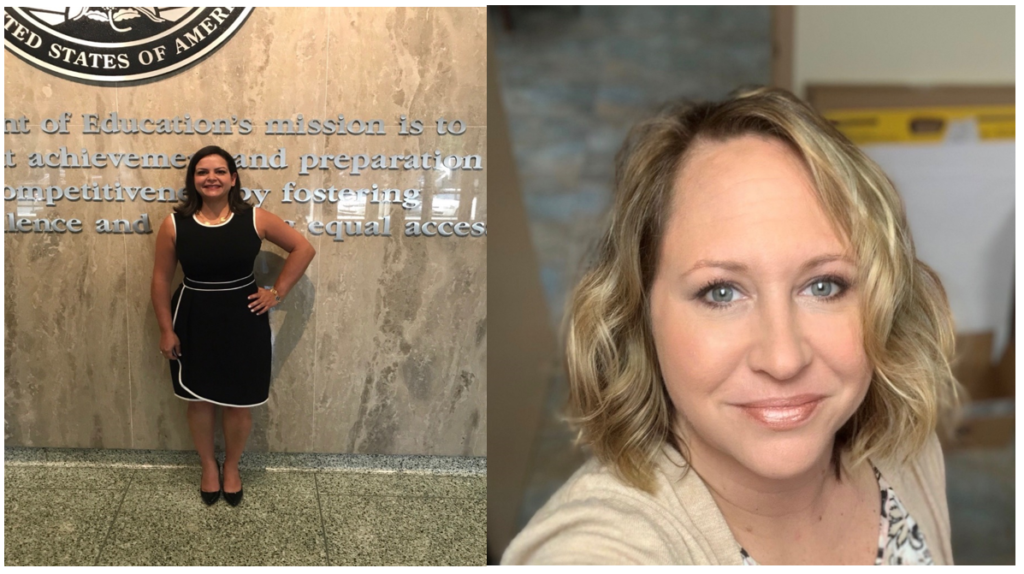 On this episode, Tuthill talks with Archdiocese of Miami Catholic Virtual School principal Rebeca Bautista, left, and coordinator of special programs Marcey Ayers. The online school is the only Catholic virtual school in the country run by an Archdiocese – a Catholic version of the well-known Florida Virtual School, which provides a robust curriculum to public, private, charter and homeschool families and school districts nationwide.
The three discuss why the school was created and how it enhances existing curriculum options for Catholic families nationwide –as far flung as Alaska. While Bautista and Ayers say flexibility has been the key driver of their success, they agree more flexibility is needed, perhaps through an expansion of education scholarship accounts that would allow families greater customization of their children’s education.
"Before (the pandemic) there was a misconception of what virtual education was, that it was easier or not legitimate ... Now parents and schools are realizing virtual education can help students and schools grow .... It’s going to bring virtual to the forefront."
EPISODE DETAILS:
How “partner schools” can augment their existing offerings with Archdiocese of Miami Catholic Virtual School’s platform and curriculum
How teaching in a competency-based system has allowed the school to better meet student needs
Catholic schools on the creative forefront of “unbundling” education
Legislation changes necessary to bring more customization and flexibility to families
LINKS MENTIONED:
RedefinED: Catholic Virtual School Offers Options to Families Seeking Online Faith-Based Education
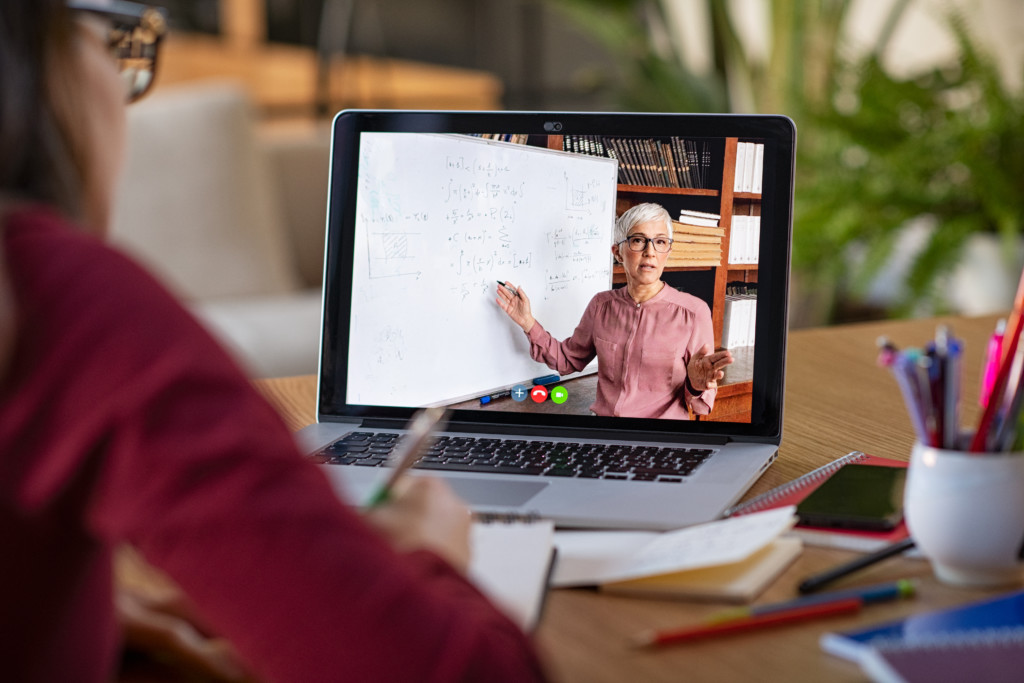 Online learning providers nationwide are enjoying unprecedented enrollment increases as families seek more education choice for their children amid the coronavirus pandemic, according to a story published today in Education Week.
Virtual school providers cite a variety of reasons for the success they experienced even before COVID-19: comprehensive learning management systems, experienced teachers, and an emphasis on live teaching.
An additional reason for their success at this particular time, according to EdWeek, is longevity. The article points to Florida Virtual School, the nation’s first statewide online public school, as an example. Founded in 1997, FLVS’ enrollment is up 54% year over year for its individual online course offerings and 64% for full-time programs.
The creative vision of founding president Julie Young and her team, who grew FLVS from an Internet high school with 77 enrollments, has grown into a diversified, worldwide organization serving more than 2 million students in 50 states and more than 100 countries worldwide. Today, FLVS offers more than 190 courses, from core subjects such as English and algebra to electives such as guitar and photography. Available to both full- and part-time students, FLVS welcomes students from public, private, charter and homeschool backgrounds.
Like other virtual providers, FLVS ramped up to meet expected demand, hiring 320 new instructors and upgrading its servers over the summer. The expansion was made possible following Florida Board of Education approval in April of FLVS’ request to spend $4.3 million to boost capacity.
You can read the full Education Week story here.
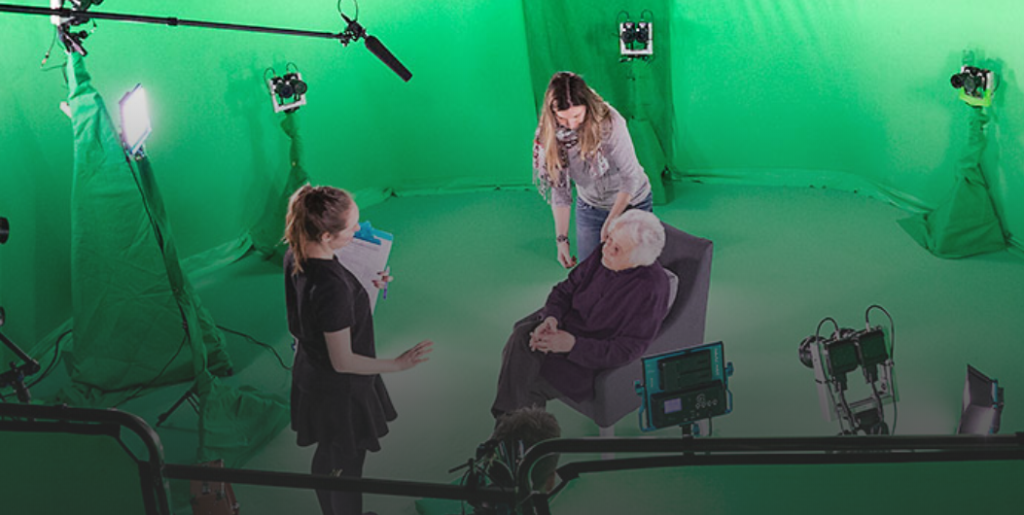
USC Shoah Foundation’s Dimensions in Testimony enables people to ask questions that prompt real-time responses from pre-recorded video interviews with Holocaust survivors and other witnesses to genocide.
Never again.
It’s the vow from Holocaust survivors not to allow the world to forget their past, lest genocide be repeated in the future.
Today, an innovative, high-tech method of delivering that message to the current generation holds promise for distance education opportunities on the horizon.
The USC Shoah Foundation, a Holocaust history organization founded in 1994 by director Steven Spielberg at the University of Southern California, is taking the practice of recording the oral histories of survivors to an entirely different level. It has created 3-D interactive holograms of survivors who not only recount their chilling experiences in Nazi concentration camps and ghettos during World War II; they can respond to a viewer’s questions in real time.
Forever.
Called Dimensions in Testimony, the program (which debuted in 2017) uses advanced filming techniques – green screen, dozens of cameras arranged in 360 degrees – to create a three-dimensional digital image of the subject. Over the course of several days, the survivor is interviewed about his or her story, and then answers more than 1,000 questions that would be anticipated from an audience (“What was life like before the war?” “Do you feel hope for the future?”).
Viewers receive more than a narrative. They can have a virtual conversation with a survivor who not only isn’t physically present but who is no longer alive.
Fewer than 100,000 Jews who were in camps, ghettos and in hiding under Nazi occupation are still alive today, according to the Conference on Jewish Material Claims Against Germany. The youngest are in their mid-70s. Time is running out.
Aaron Elster, one of 20 interviewees listed on Shoah’s Dimensions in Testimony website, died in 2018 at age 85 after recording his testimony in 2015. Nevertheless, Elster has been immortalized in a medium that allows him to interact with individuals in ways that create personal connections that run deeper than what the printed word or traditional audiovisual presentations can provide.
The viewer can personalize the experience by taking the virtual discussion in almost any way he or she chooses. The only limitation is the inability to shake a survivor’s hand or give him or her a hug.
Shoah currently has made the Dimensions in Testimony available to seven other Holocaust museums in the United States, with more access on the way. Some of the interviews are conducted in languages other than English, such as German and Hebrew, opening them to wider audiences around the globe. And of course the technology can be expanded to any number of oral histories, such as survivors describing the nuclear bombings of Japan – and to other areas of education.
The COVID-19 pandemic has exposed scores of students to distance learning for the first time, and with wildly uneven results. Many school districts were forced to migrate lessons to rudimentary online platforms on impossibly short notice, causing endless frustration and dissatisfaction from students, teachers and parents. Most agree that group instruction on Zoom is insufficient. Florida Virtual School, which way back in 1997 became the nation’s first statewide K-12 virtual public school, has more experience – and a proven track record -- in providing a more robust distance learning environment.
Dimensions in Testimony takes the concept to a different level. It’s like something from a Ray Bradbury story, only it’s science fact, not fiction.
It’s superior to videoconferencing because it’s not dependent on time. Holographic lessons can occur whenever they’re convenient while still remaining interactive. And they are customizable – they are as flexible as the artificial intelligence can take them. As the Shoah Foundation states, they enable students “to be agents in their own learning.”
Obviously, 3-D holograms aren’t an immediate solution to how to improve remote learning when (if?) schools re-open this fall. Still, the technology is beyond the concept stage and already in limited use. (For reference, the fictional communicators of “Star Trek” in the late 1960s were realized as actual flip phones a mere 30 years later.)
For Dimensions in Testimony, a project created to keep the past alive, the future is now, paving the way for other education innovators to follow.
Florida students now have a tool that allows them to shop around for different courses.
Legislation passed last year broke down several barriers in virtual education. It allowed students enrolled in one school district to take virtual courses offered in another. It also laid the groundwork for a course choice program that's slated to come online during the 2015-16 school year, and it required the state Department of Education to create a directory to help students the navigate new options.
The online course catalog is now public, as Education Pam Stewart announced Friday in a memo to school districts, and can be found here.
"As Florida continues to lead the nation in school choice, we are excited for students to access the informational catalog and choose courses that will benefit their educational experience," Stewart wrote in her memo.
Last year's law change means a student enrolled in Osceola County can sign up for virtual courses offered in Orange or Okaloosa Counties, in addition to the statewide offerings of Florida Virtual School. The catalog combines the course offerings of Florida Virtual School, district virtual instruction programs and other digital courses developed by districts. If the Florida Approved Courses and Tests Initiative launches as expected, those new offerings will also be available in the catalog, saving students the need to navigate dozens of different provider websites.
So far, most of the courses districts have added to the catalog are either built around the Florida Virtual School curriculum or offered by state-approved virtual education providers like K12 and Edgenuity.
Most districts have yet to add their courses to the catalog, but they have a financial incentive to do so. If students successfully complete a virtual education course, the district that offered the course can receive the associated funding, regardless of where students are enrolled for their remaining courses. So if the Osceola County student takes six courses at a traditional campus and completes a seventh through Orange's virtual program, the two districts would split the funding proportionally.
The catalog also includes a feedback system that allows students to rate their courses with up to five stars, giving districts and other providers another way to compete for students and the funding that can follow them into online courses.
Company officials are questioning the state's accountability framework for virtual providers.
Florida’s public school accountability system could be on the verge of snaring one of the nation’s largest online education providers.
K12 Inc. is expected to get an initial “incomplete” when letter grades for Florida public school are released this month. But it’s still possible the final grade, whenever it is released, could be unflattering – with serious consequences for K12’s operation in Florida.
The state awarded K12 a D last year, and the company’s appeal was stymied in part because of data conflicts with school districts. If the company receives a D or an F in the next three years, it could be forced to sever its ties with nearly 50 school districts, its five virtual charter schools, and new virtual charters expected to open next year.
That would be the first time a digital learning provider faces that penalty since lawmakers first created a new system of "approved providers" and district-managed virtual instruction programs.
Representatives for K12 and the schools it helps manage in Florida say it's hard to predict what its grade will be, or whether it will receive one for the current school year. The main reason, the company says, is that it has struggled to obtain student information from the districts where it operates virtual instruction programs.
But company officials are also questioning the state's accountability framework for virtual providers, which grades those providers based on combined results for independently run virtual charter schools and school district programs, over which they have less control.
The state Department of Education has indicated it would give the company a grade of incomplete, at least for now, while officials try to sort out issues with data reported by 17 districts that have contracted with K12. It is not clear when a final grade may be out.
To understand K12’s situation, a little history is in order.
Florida’s virtual education system took a turn in 2008, when a new law required school districts to create new virtual instruction programs. The revised law allowed districts to supplement local virtual programs by hiring outside providers like K12, which currently contracts with 48 districts. It also required districts to offer at least three different options, which often included locally run franchises of Florida Virtual School, the state’s publicly run provider.
In 2011, Florida law authorized virtual charter schools. Their boards can hire companies like K12, or other state-approved providers, to manage their schools.
Under the current grading system, the state can issue grades to virtual charters. It also issues grades to providers, which for grading purposes combine their virtual charters and district instruction programs together. (more…)
Report cards: Palm Beach County second-graders won't see traditional A-F grades on report cards this year as the district moves toward a standard-based system. Sun Sentinel.
 Charter schools: There are already 40 charter schools in Palm Beach County, serving 12,000 students, with another 11 set to open this fall. Palm Beach Post.
More magnets: Palm Beach County school board members want more arts high school and middle school magnet programs. Palm Beach Post.
Tony Bennett: Indiana school officials continue to investigate school grading manipulation that could result in changes to that state's system created by Tony Bennett. Associated Press.
Back to school: One of Central Florida's largest back-to-school events, which has drawn 30,000 people, will be held this year at the Citrus Bowl. Orlando Sentinel.
FCAT: "Don't, don't, don't focus on the FCAT," Pasco County schools Superintendent Kurt Browning tells the staff at Lacoochee Elementary, a D school tapped by the state for a turnaround. "I don't care about FCAT. I don't." Tampa Bay Times.
Teacher conduct: A special-education specialist fired for her role in a high-profile scandal is reinstated by the Miami-Dade School Board. Miami Herald. Another Manatee County school administrator is placed on paid leave during an ongoing investigation into a former football coach accused of groping students. The Tampa Tribune. More from the Bradenton Herald.
Library cuts: The Miami-Dade School Board may open some of the district’s libraries after hours to offset the closure of some 14 facilities. Miami Herald. (more…)
The muscular growth of Florida Virtual School, the nation’s largest provider of online classes, has suddenly become anemic. And the culprit seems to be legislative changes made this spring to the state’s funding formula for education.
 Over the last five years, the highly regarded FLVS has seen a 24 percent annual growth in the number of course requests approved by guidance counselors at the end of the school year, according to FLVS figures.
Last year, the number grew at a robust 34 percent, from 150,578 approvals to 201,066. Course approvals are still up this year, but by only 1 percent.
FLVS officials are predicting at least a $34 million hit because of the legislative change, which may have unintentionally pitted the provider against school districts still reeling from the Great Recession. But the bigger problem may be that thousands of students are not getting classes that work best for them.
Evidence continues to surface that districts are denying students access to FLVS courses and/or pushing them toward other providers. A published report suggested a similar effort was underway at a leading charter school network.
“Denied choice is not just about the dollars,’’ said FLVS spokeswoman Tania Clow. “Ultimately, the one who suffers is the student.’’
In response to the sagging numbers, FLVS has instituted a hiring freeze, except in critical areas. And Julie Young, Florida Virtual’s president and CEO, is set to meet with Education Commissioner Tony Bennett next week to talk about the fallout. (more…)

