by Marcus R. McCoy Jr.
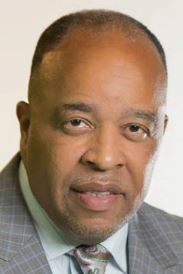
Bishop McLaughlin
Florida faith and community leaders took to the airways again this week to condemn a lawsuit that seeks to end the nation’s largest school choice program. And this time, they called out one of the groups backing it: the NAACP.
Bishop Vaughn McLaughlin, one of Florida’s most prominent pastors, dedicated both of his weekly radio broadcasts in Jacksonville on Tuesday to rally support for the state’s tax credit scholarship program, which was sued in August by the Florida teachers union, Florida School Boards Association, Florida NAACP and other groups. The program is administered by nonprofits such as Step Up For Students, which co-hosts this blog, and serves nearly 70,000 low-income students this year.
McLaughlin said he is “surprised and highly disappointed” by the NAACP’s position. More than two-thirds of scholarship recipients are black and Hispanic. Their average household income is 5 percent above poverty. And data shows that while they tended to be the students who struggled the most in public schools, they are now making solid gains in their new schools.
“I am adamant about this because our kids in Duval County are doing worse than almost all of the kids in every big district in the state of Florida,” McLaughlin said. “When you break the 10thgrade reading scores down into different demographic groups, what you’ll find is that while 67 percent of white students in Duval passed the 10th grade reading test, only 30 percent of black students did.”
“Now, I don’t think I need to explain to anybody what it means for our community, and our city and our society, when less than a third of our black students are able to pass a 10th grade reading test,” McLaughin continued. “I think you know what the implications are.”
The latest “radio rally” by Florida faith leaders is another sign that the political coalition supporting the school choice scholarship program is broader than media reports often suggest, and will continue to cause tensions within the Democratic Party. Like a similar event hosted by Miami Bishop Victor Curry in November, McLaughlin’s rally was joined by parents, educators and other faith leaders.
“When one cannot find a job because they did not receive the proper education, they resort to crime in the street,” said Garland Scott, pastor of Embassy Fellowship. “If you eliminate this choice for our children, you are making the choice for them to go to jail.”
“It’s critical that we reiterate who is doing this; it’s the school boards, it’s the NAACP,” said Kyle Harrison, pastor of Harvest Christian Fellowship.
The Jacksonville event was held a day after both sides in the lawsuit squared off at a key hearing in Tallahassee. Citing rulings by the U.S. Supreme Court and two state supreme courts, lawyers for the state and the scholarship parents contend the plaintiffs have no standing to sue because the program is funded with corporate contributions donated in return for tax credits, not state funds. Leon County Circuit Judge George Reynolds asked both sides to submit draft orders within 10 days.
McLaughlin and his wife Narlene founded a private school, The Potter’s House Christian Academy, which serves students who rely on scholarships to cover tuition. Blenda Salter, the school’s administrator, said she has witnessed major improvements in the children who attend.
“When I look at these kids, I see myself because I grew up in a public school and came from a low-income family, so I know what it’s like not to have,” she said. “I see these children learning in an environment where they are thriving and don’t understand why these groups like the NAACP are trying the hinder our children.”
McLaughlin said his intent was not to speak ill of public education but to stress the importance, value and need for school choice, especially for those who cannot afford it.
“We need to be heard,” he said. “The tax credit scholarship is a benefit to our community, the indigent and the low-income. And we are going to fight for our children.”
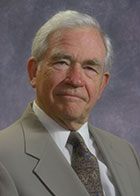
Coons
Editor's note: This is the first in a series of posts we're running this week to commemorate the 50th anniversary of Dr. King's "I Have a Dream" speech.
I grew up in a Minnesota city of 100,000 with - in my time - one black family. My introduction to the reality of public school segregation came in 1962 as - now at Northwestern in Chicago - I agreed to probe the public schools of the district on behalf of the U.S. Commissioner of Education. The racial separation was there as expected, but there was one big surprise; I was astonished to find enormous disparities, not only in taxable local wealth - hence spending - among the hundreds of Illinois districts, but even in individual school-by-school spending within the Chicago district itself. I wrote about both problems, sprinkling research with “action” including marches and demonstration both in Chicago and in Selma (prior to the main event there).
My interest in deseg politics had already provoked a law review article on the risks of anti-trust liability for King et al. who were planning boycotts of private discriminators. On the strength of that essay, Jack Greenberg, then director of the NAACP Inc. Fund, invited me to meet with King and his lieutenants at dinner in Chicago to discuss the question. We spoke at length - mostly about boycotts but also about schools. By that time I was already into the prospects for increasing desegregation in Chicago, partly through well-designed school choice.
I won’t pretend that I recall the details of that evening. What I can say is King’s mind was at very least open to and interested in subsidies for the exercise of parental authority - which clearly he valued as a primary religious instrument. I took my older boys next evening to hear him at a South Side church and, possibly, to follow up on our conversation, but he had to cancel. We heard sermons from his colleagues, some to become and remain famous. I did not meet King again.
King’s “Dream” speech does not engage specific public policy issues - on schools or anything else. Essentially a sermon, it is a condemnation of the sins of segregation and an appeal to the believer to hear scripture, with its call for indiscriminate love of neighbor, as the life-task of all who recognize the reality of divine love for us - his image and likeness. It is purely and simply a religious appeal that declares the good society to be one that rests upon benign principles that we humans did not invent but which bind us. I don’t know King’s specific understanding of or attitude toward non-believers, but this document clearly rests the realization of the good society upon its recognition of our divine source and its implication of the full equality of all persons.
Given that premise and the Supreme Court’s insistence upon the “wall of segregation” in the public schools, plus - on the other hand - the right of parents to choose a private religious education, the logic is rather plain.
Private schools live on tuition, and many American families couldn’t afford to enroll then or now. If low-income families were to exercise this basic human right and parental responsibility enjoyed by the rest of us, government would have to restructure schooling to insure access to an education grounded upon, and suffused with, an authority higher than the state. Given the economic plight of so many black parents, the only question would be how to design the system to secure parental choice without racial segregation by private educators.
And that possibility was to be the principal crutch of “civil rights” organizations in hesitating about subsidized choice. (more…)
Rev. Matthews
The Rev. H.K. Matthews, 84, was beaten by white police in Selma, jailed more than 35 times and blacklisted from jobs for not backing down. So when he says expanding school choice and civil rights go hand in hand, his words carry the weight of someone who's been there. The west Florida icon sees no inconsistency in an agenda that puts support for vouchers, tax credit scholarships and charter schools on the same list as protesting police brutality, integrating lunch counters and ensuring equal opportunity in the work place.
“It has always been my contention that if a parent felt that his or her or their child was not being adequately educated in one school in the public school system, that they should have the opportunity or the choice of moving that child to a school where it would be more beneficial,” Matthews said in the redefinED podcast attached below. “If you’re being forced to keep your child in a school where he or she is not learning, that is doing nothing but crippling that child.”
As the nation pauses today to celebrate Martin Luther King Jr., we thought redefinED readers and listeners should hear from Matthews. Now living in Alabama, he is a diehard for Florida’s tax credit scholarship program and Step Up For Students, which administers the program and co-hosts this blog. In 2010, when more than 5,000 students and parents marched in Tallahassee for an expansion of the program, Matthews was in the front row.
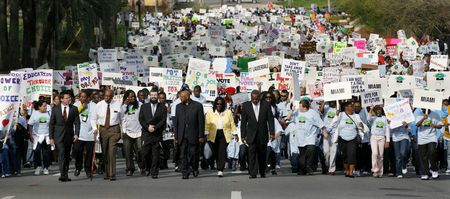
Rev. Matthews was among more than 5,000 people who rallied in Tallahassee in 2010 to support school choice. He's in the front row on the left, walking with a cane.
He remains an activist for other causes, too. Last month, he participated in a "rally for justice" stemming from the controversial arrest of a 27-year-old mom in a Wal-Mart. And in 2011, members of the Occupy movement asked him for advice. They gathered around him as he offered this nugget: “They said I was an agitator. But if you look at a washing machine, it’s the agitator in the middle that gets all the dirt out.”
Here are some highlights from the podcast:
On what Dr. King might think of school choice: “Knowing him as I knew him, and knowing his desire and his fire for people having a right to choose, my feeling is he would support school choice. Because he was always for the rights of individuals. Not barring any particular race, not barring any particular origin or religion. But he just felt that people should have a right, I think, to be free, to express themselves, and to go where they wanted to go. And to go to places that would be more beneficial to them.” (more…)
Editor's note: For those new to redefinED, "blog stars" is our occasional compilation of good stuff from other ed blogs (with a newspaper op-ed thrown in now and then, too).
 Huffington Post: In search of the elusive, reform-minded school board member
What most people don't understand is that managing failure is just as hard as managing success. And this is, I believe, part of the reason school boards don't improve schools. Stability and coherence are watchwords in both the high-achieving and low-achieving systems. Administrators want to keep their staff happy and their board at arm's length. In both successful and failing districts, "micromanaging" by the school board is considered a no-no. I recall a woman addressing our board not along ago. "We're not supposed to rock the boat," she said. "But the trouble is that the boat has tipped over and we're lashed to our seats." Rocking the boat is exactly what must be done to effect change -- change, one hopes, that leads to better student outcomes.
I spent most of the last 10 years, on and off the board, pushing for a rigorous curriculum, stopping the disproportionate disciplining of African-American students, and complaining about the over-identification of special ed students (almost a quarter of our student body). But, for the most part, no matter what I proposed -- a new bus route, a paint job for the flag pole, or a curriculum -- I was mostly ignored. In order to get a pile of old lumber and rusty nails removed from the edge of a playground I had to threaten to dump it in the superintendent's driveway! Full post here.
Dropout Nation: The NAACP should listen to Romney (and Obama) on school choice
By embracing an education traditionalist thinking and Zip Code Education, the NAACP is aiding and abetting the damage to black children that it is supposed to defend. By taking money from NEA and AFT affiliates (including the $16,200 picked up by its New York branch from the AFT’s Big Apple unit during the union’s 2010-2011 fiscal year), the association is also betraying its obligations as a civil rights group to oppose policies that promote the same denials of equal educational opportunities against which it supposedly fights. In the process, the NAACP refuses to be a much-needed public policy voice and activist on behalf of transforming a failed system, alienating the very school reformers and black families (especially in urban communities) who are looking to build schools that black children (and all kids) deserve. And by adhering to the thinking of aging members who have a vested interest in maintaining failed ideas about how schools should serve black children, the NAACP has also lost opportunities to gain support from a new generation of African-Americans who realize that education is the most-important key to achieving social and economic equality.
When both Romney and Obama share common cause on systemic reform and on expanding choice, it is clear that the NAACP is on the wrong side of history. Now it is time for it to do the right thing. Full post here. (more…)
Beyond the boos for his vow to undo President Obama's health care overhaul, Republican president Mitt Romney stressed school choice in his speech to the NAACP today, talking up charter schools and suggesting Obama’s ties to teachers unions hampered his efforts to help disadvantaged kids.
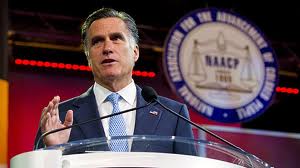 “If equal opportunity in America were an accomplished fact, black families could send their sons and daughters to public schools that truly offer the hope of a better life,” he said, according to his prepared remarks. “Instead, for generations, the African-American community has been waiting and waiting for that promise to be kept. Today, black children are 17 percent of students nationwide – but they are 42 percent of the students in our worst-performing schools.”
“Our society,” he continued, “sends them into mediocre schools and expects them to perform with excellence, and that is not fair. Frederick Douglass observed that, “It is easier to build strong children than to repair broken men.” Yet, instead of preparing these children for life, too many schools set them up for failure. Everyone in this room knows that we owe them better than that.”
Media coverage of today's event in Houston is focusing heavily on the negative reaction Romney received for his plans to scuttle "Obamacare." The Republican candidate got a more polite response to his education positions.
Romney noted his support for charter schools as governor of Massachusetts, despite opposition from teachers unions and Democratic lawmakers.He also pitched his plan to allow federal education funding to follow the student to the school of the parents’ choosing, including private schools “where permitted.”
The dig at Obama's education agenda came without mentioning the president’s name. (more…)
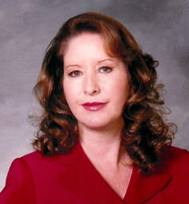
Romero
by Gloria Romero
Diane Ravitch, are you listening?
This is former state Sen. Gloria Romero calling.
I am the author of California’s first Parent Trigger law, the first parent trigger law in the nation. Since I first wrote that law, some 15 other states have seen some version of the law introduced in their states.
I wanted to reach out to you since we have never met, and I look forward to meeting you so we can one day talk directly with each other. Woman to woman.
In one of your recent blog posts on Education Week, you wrote that the parent trigger came from the American Legislative Exchange Council (ALEC). On the blogosphere, I now read many claims that ALEC wrote the law. This is completely false, and I ask you to correct this.
Please, stop saying that some organization I had never met until just this year gave me the idea and somehow, miraculously, turned it into law without me not knowing about it. ALEC happens to like the law and encourages other states to write similar laws. That is true. But that does not mean it developed either the idea or the law. That’s preposterous! Quite frankly, it’s also a bit sexist and ethnocentric to assert my work actually came from someone else - that somehow the Latina senator from East Los Angeles couldn’t think on my own, or figure out how to write a bill and turn it into law.
To be fair, you are not alone in failing to acknowledge my role, or the role of other strong individuals (mostly women of color) in getting the bill passed. I always recognize Ben Austin from Parent Revolution for suggesting the idea. Unfortunately, the materials Parent Revolution distributes make it sound as if parents cascaded on the state Capitol and forced this into law. It seldom concedes in its materials that someone actually had to write a bill and argue and negotiate for its enactment. While it sounds romantic to say parents demanded this and descended on the Capitol to force this into law, that is too much Hollywood. In fact, we did have parents in Sacramento. But many of them were from organizations that were not affiliated with Parent Revolution, and they are seldom acknowledged.
One day I will write the full story of how the Parent Empowerment Act (its official title) became law. In the meantime, let it suffice to say that both you and Parent Revolution and anyone else who writes about the law should know that once the idea was discussed with me, I chose to expand and develop it in a bill. I developed a strategy. I worked with my legislative staff to write language. I assembled a “rag tag” army of civil rights activists who understood that this was our moment to enact the change in which I so strongly believed. And I never saw an ALEC representative. (more…)
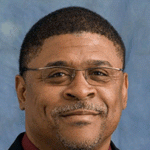 Rev. Manuel Sykes is a long-respected church and community leader in St. Petersburg, Florida, an increasingly diverse city at the mouth of Tampa Bay. That he also is now the president of an NAACP chapter that helped change the face of Pinellas public schools is all the more reason his commentary today in the Tampa Bay Times speaks volumes about educational change.
Sykes reacted to an editorial in the Times that branded tax credit scholarships for low-income students as a Republican plot to “starve” public schools “to death.” He in turn called the newspaper “stubbornly out of touch with modern reality.”
The backdrop here is relevant. The Times is Florida’s largest newspaper and is nationally acclaimed in journalism circles. It also has a proud liberal tradition editorially. It has never endorsed a Republican candidate for governor or president and was a bulwark in the 1970s and 1980s against politicians who would dare to turn their backs on the court-ordered school desegregation order the NAACP lawsuit produced (Disclosure: I wrote some of those editorials during my years on the editorial board there).
So for Sykes and the newspaper to be at odds on scholarships for poor children mostly of color is indeed striking. When the court order was lifted about a decade ago, many black community leaders such as Rev. Sykes turned their focus directly to the achievement of black students. The Times itself played a crucial role by reporting in-depth on a startling and persistent achievement gap between black and whites in county schools.
This disconnect is not unique to St. Petersburg, certainly. But white liberals who find themselves at odds with powerful figures in the African-American community would be wise to reflect on the sense of urgency that bonded them with black children in the divisive desegregation wars following Brown v. Board of Education. That call to justice is precisely what motivates Rev. Sykes and others like him today. They counsel everyday to black children whose lives are headed in the wrong direction, and they’re not looking for lectures on school governance or fond recollections of neighborhood schools. They see children who need help now, and they want every option on the table. That's something we white liberals should get.
by Kenya Woodard
I made it a priority to join my college’s NAACP branch when I enrolled in the fall of 1997. But just a year later, I let my membership lapse. While I’m sure part of my disassociation was due to my participation in other activities, I do remember feeling disconnected from the 102-year-old civil rights organization.
I was reminded of that split after reading about the NAACP’s controversial lawsuit against New York City as well as the accusation from the group's New York President, Hazel Dukes, that persons of color who support the decision to co-locate traditional and charter schools in the same building – essentially, expanding school choice – are “doing the business of slave masters.” Luckily, as the public affairs officer of a nonprofit organization that strives to provide school choice options to low-income students, and who also happens to be black, I didn’t take Dukes’ raw language personally.
By Tuesday, Dukes somewhat softened her tone in an interview with NY1, telling a reporter that she wasn’t against charter schools and that “parents have a right for choice.” The motive for the NAACP’s lawsuit, she said, is the pursuit of “justice and equality.”
But the lawsuit and Dukes’ initial remarks have cast the organization as out of touch and divisive. New York Daily News columnist Stanley Crouch captured it best when he wrote in his June 6 column:
The suit is proof of how low a great civil rights organization has fallen since its days of advocating for racial equality in the face of tremendous hatred.
... The NAACP significantly shifted the American racial consciousness in 1954 when it won the Brown vs. Board of Education decision before the Supreme Court. This began a systematic dismantling of Southern segregation once and for all.
So what has happened since? Not knowing when to hold or when to fold, the NAACP refuses to look at public education with any kind of nuance. If it did, it would understand that the UFT and its allies are only hurting the push for fair schools that began with the Brown victory more than a half-century earlier.
As a columnist for my college paper, I penned a piece expressing my frustration at the lack of baton-passing from Dukes’ generation to mine, asking the question, “Are there any black leaders emerging from my generation?”
In the years since that column was published, I’ve surmised that maybe it’s not prudent for my peers to look to the older generation for a tap on the shoulder. Dukes’ lashing out and the NAACP’s lawsuit reaffirmed that belief.
In a Wall Street Journal column today on the controversy surrounding the NAACP joining the New York City teachers union in an anti-charter school lawsuit, William McGurn writes:
For those who understand that our big city public school systems have become jobs programs for teachers and administrators, the NAACP's response makes perfect sense. That's because there are many African-American teachers in these systems, many of whom presumably belong to the NAACP … The NAACP is doing in New York what the United Federation of Teachers is doing, and for the same reason: protecting the interests of its members.
In an entry on redefinED last fall I discussed why middle-class African Americans feel such loyalty toward school districts and why this loyalty is fraying in Florida. Thanks to a variety of parental empowerment programs in Florida, African-American educators and local community activists are increasingly opening up financially-viable schools, and as these publicly funded private schools provide more middle-class teaching jobs, the middle class African-American community -- which includes African-American politicians -- is embracing them.
If the NAACP and New York City teachers union were more enlightened, they would understand that a centralized, command-and-control public education system is not in the best interests of teachers, parents, students or taxpayers. A public education system that empowers educators and local communities to create their own schools and empowers parents to match their children with the schools that best meet their needs is the best path to equal educational opportunity. Unfortunately both the NAACP and New York City teachers union are on the wrong side of history.
Kevin P. Chavous, a former Washington, D.C., councilman and board chairman of the Black Alliance for Educational Options, reflects on the NAACP's fight against school closures and charter school expansions in New York City, in light of a Harlem rally of parents urging the civil rights group to drop its opposition. Writing in The Washington Post, Chavous asks how we got to the point "that the country's foremost civil rights organization is the target of a protest by the people it was created to serve?"
Elegantly, Chavous adds:
As an African American growing up in the ’60s, I revered the NAACP. I will never forget when my mother took me to a NAACP-League of Women Voters rally at Butler University in Indianapolis, my hometown. My mother was active in both groups, which, at that time, were protesting the presence of Alabama Gov. George Wallace on Butler’s campus. Wallace was an avowed segregationist who famously stood in the doorway of the University of Alabama to block the entrance of its first black students, Vivian Malone and James Hood. Only 7 at the time, I distinctly remember carrying a sign that I pointed in Wallace’s face. I don’t recall what the sign said, but I knew he didn’t want boys like me to get an education. As the police pushed me aside, my mother and her fellow protesters praised me for marching like a man for equal rights. Later, when my parents sat me down to give me my own NAACP membership card, I was proud beyond words.
I reflected on that time when I saw a photo of young black students at the Harlem march against the NAACP. I could see myself in one of those photos — a boy standing with his mom, holding a sign and making a statement in support of his future. I couldn’t help but see the irony: me marching with the NAACP against Wallace, and today’s children marching against the NAACP. It just shows that black parents will fight for the progress and quality education that their kids deserve — no matter who is standing in the way.

