A Florida House panel gave bipartisan approval to a wide-ranging education bill after a contentious debate.
Much of the discussion centered on a proposal that would allow school boards to create autonomous, charter-like school networks within their districts, managed by star principals and overseen by independent governing boards.
Education Committee Chairman Mike Bileca, R-Miami, said over eight years in the Legislature, he's heard charter school critics call for more of the regulations that apply to district schools. He said he would rather go in the opposite direction, giving more charter-like freedoms to district schools. (more…)
by Livi Stanford and Travis Pillow
A trio of lawsuits taking aim at last year’s major education law could pose tricky questions for lawmakers — if they succeed.
One Friday, a Leon County judge rebuffed one school district’s attempt to halt implementation the law, which is set to steer more than $91 million in local property tax revenue to charter schools on Feb. 1.
However, the underlying case is still proceeding, along with two others. That means a hard-won new funding source for charter schools is still in question.
Several key lawmakers who backed the new law, known as HB 7069, say they’re confident the state will eventually win the cases. But if it doesn’t, they said, it should try to make charter schools whole.
Right now, the state is providing approximately 544 charter schools with their share of $50 million in state funding. That’s down from $75 million the year before. But that's before factoring in the new law, which provides charters with an additional $91.2 million from school districts, according to a memo sent out last week by the state Department of Education.
Without the funding the new law provides, charter schools would absorb a facilities funding cut of about a third, and their lowest per-pupil capital funding since the state created its charter school capital funding system.
Friday's decision by James Shelfer means the lawsuits are less likely to change schools' budgets in the current school year. But it doesn't change the potential implications for charter and district finances in future years.
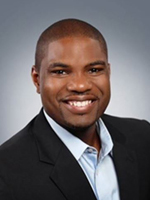
Byron Donalds, R-Naples
The Florida House PreK-12 Appropriations Subcommittee approved a committee bill that would require school districts to split their local property tax revenue with charter schools.
The bill passed with Republican backing and opposition from Democrats. The contentious debate delved into issues such as school choice and equitable funding.
A legislative staff analysis estimates the measure would raise about $147.9 million a year for charter schools, nearly double the $75 million that 556 charter schools currently share from the state budget.
The bill would create a stable funding source for charter schools, which would no longer rely solely on year-to-year appropriations. At the same time, it would avoid cutting into the money districts must set aside to pay off existing debt.
Rep. Manny Diaz, R-Hialeah, who explained the bill, said it would even the playing field so both charter and public school students receive closer to equal funding.
The bill drew concerns from some school districts, whose representatives said their construction budgets are spread thin.
Wendy Dodge, legislative affairs director for Polk County schools, said her district is relatively large, with 29 charter schools. But it has lots of rural areas. After setting aside $17.5 million for debt service, the district has about $27.5 to pay for repairs of its existing buildings. It has hundreds of millions worth of identified needs. (more…)
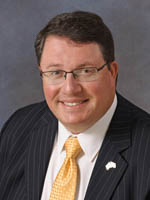
Rep. Randy Fine
Citing a rash of anti-semitic threats, the Florida House PreK-12 Appropriations Subcommittee unanimously approved a measure setting aside $1.5 million to enhance security at all Jewish day schools in Florida.
Rep. Randy Fine, R-Palm Bay, said since the beginning of the year there has been a dramatic rise in anti-Semitism. He said there had been 154 bomb threats reported at Jewish schools around the country, and 17 reported in Florida.
Appropriations documents show the measure, HB 3653, would benefit students in preschool through high school. Florida has 35 Jewish day schools in nine counties.
Fine mentioned there were no such schools in his district, but he felt the issue had statewide importance.
“We have a situation that Jewish students are very afraid and beginning to drop out of the schools,” Fine said. “It would put in security precautions so students and parents will feel safe having students attend these schools.”
Rep. Jennifer Sullivan, R-Mount Dora, asked what security measures would be put in place with the funding. (more…)
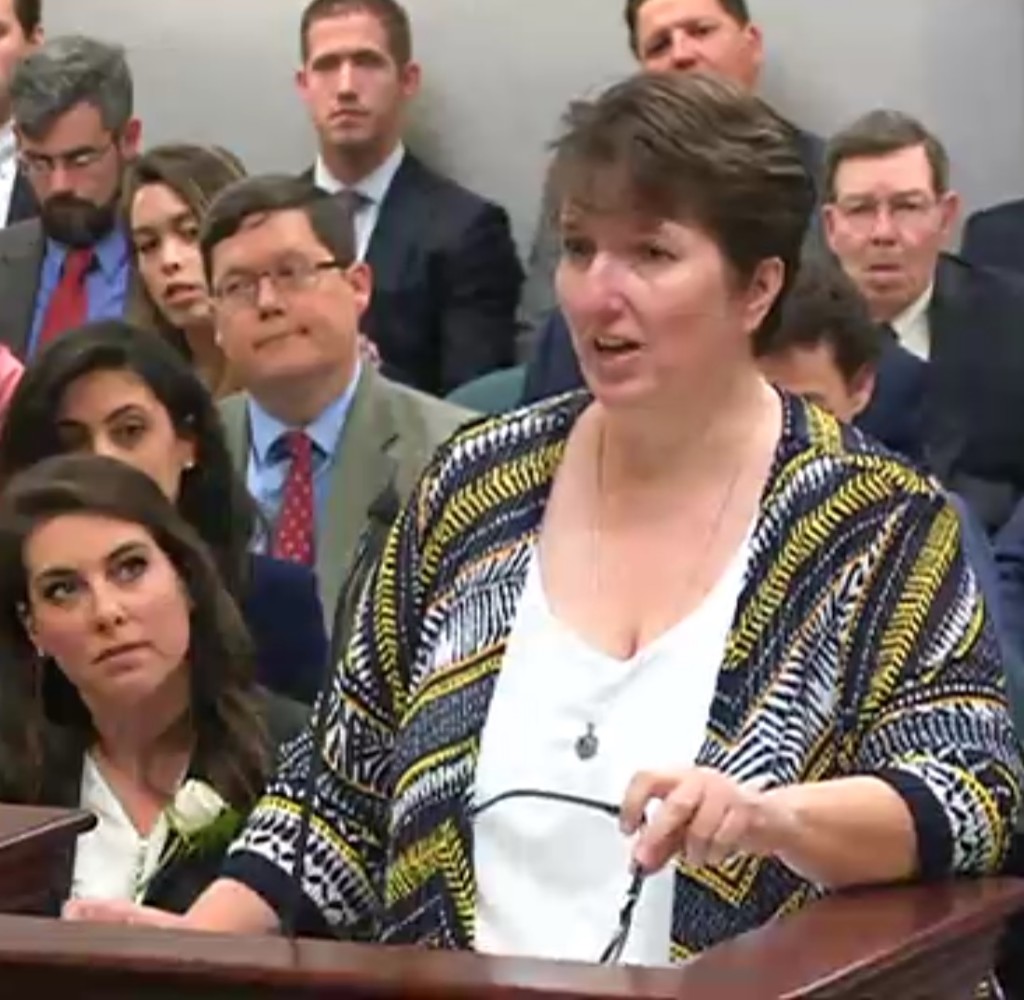
Kathleen Dale, a Gardiner Scholarship parent, testified gbefore the Florida House PreK-12 Innovation committee.
The House K-12 Innovation Subcommittee passed HB 15 on a 12-3 vote.
The measure by Rep. Jennifer Sullivan, R-Mount Dora, would triple the size of Florida's Gardiner Scholarship program, which offers education savings accounts to children with special needs.
It would also broaden eligibility for special needs vouchers, known as McKay scholarships, and increase per-student funding for tax credit scholarships, which help low-income and working-class students pay private school tuition.
Step Up For Students, which publishes this blog and pays my salary, administers the Gardiner and tax credit programs.
The panel heard impassioned testimony from parents like Kathleen Dale. She said complications from throat surgery damaged her son's brain, causing epilepsy, paralysis, aphasia and intellectual disability. He suffered from dozens of seizures a day, she said.
The family first received a Gardiner scholarship in 2014, and used it to pay for curriculum, art supplies, science kits and therapy that enabled them to teach him at home. In early 2016, Dale's son gained access to a drug trial that dramatically reduced his seizures. Since then, she said, he's made three years of progress in a year's time. (more…)
Parents and students want options. And, increasingly, Florida school districts are finding ways to offer them. That was the message officials from two large districts brought to state House panel looking at all the state's forms of school choice.
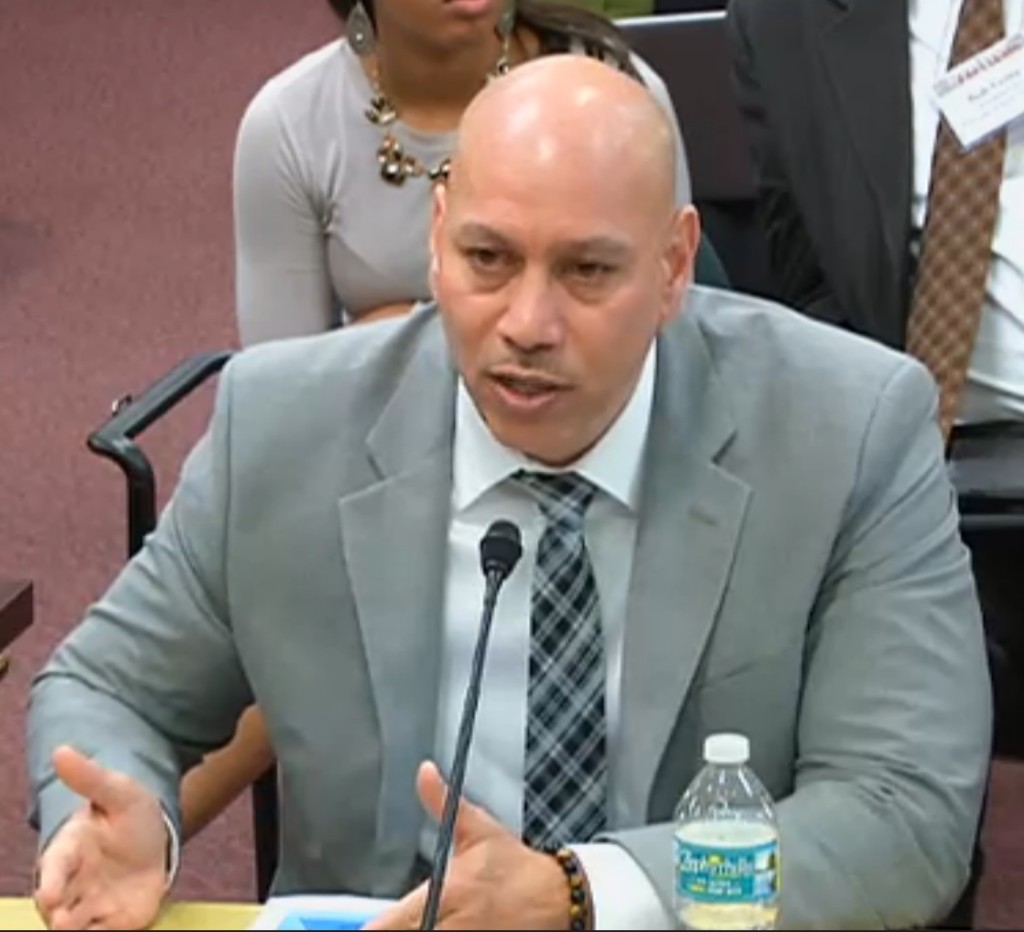
Marc Mora explains Lee County's school choice programs to the Florida House Choice and Innovation Subcommittee.
Marc Mora is chief of staff at the Lee County School district, which has operated an open enrollment program for 20 years. The district is divided into three geographic zones, and assigns families to schools in a lottery. The system is designed to let families choose their schools, and ensure they get an option reasonably close to home. Mora said 82 percent of families get their first choice of school, and 96 percent get one of their top three.
"We know that parents desire a choice of schools, to see a list, to be able to visit during these open-house periods, to meet with the principals, to take a tour, to see what the students and teachers are doing," he said, adding: "We encourage parents to go out to the schools and check them out, because ... every school is unique, and there's a fit for every student."
Since it was first created 20 years ago, Lee County's open enrollment system has helped solve other problems, from helping the district comply with court-ordered desegregation to eliminating the need for endless boundary changes to accommodate constant influxes of new students in fast-growing Southwest Florida.
Open enrollment systems like Lee's are expanding statewide under a new state law that districts are starting to implement. (more…)

