Editor's note: This op-ed by Steve Knellinger, a longtime former public school educator and now private school administrator, ran this week in the Tampa Bay Times. Here's a snippet:
 More than 30 years ago, parents in Pinellas County showed up at meetings to protest a new school choice program. Schools said they couldn't compete with it. Critics raised fears of cherry-picking the academically and athletically talented students. But in the end, the program got a green light. Now it's such a vital piece of the school system, parents would fight to keep it.
The fight back then was over the International Baccalaureate program at St. Petersburg High, the first IB in Florida. It became a bona fide star in the Pinellas school system and helped usher school choice into the district. I bring it up now because of the school choice concerns with Florida's tax credit scholarship program.
Lawmakers want to modestly expand the program, which now serves about 60,000 low-income children in 1,425 private schools across the state. The teachers' unions, the PTA, and the Tampa Bay Times editorial board object. I know there is some controversy, and I know there are some issues like testing where people can respectfully disagree. But I also know the program works for most of the struggling children who choose it, and, like IB and so many other choice schools, is an asset to public education.
I know because I've been an educator for 44 years, 39 of those years in public schools. I know because I witnessed that IB controversy. And I know because I am now the lead administrator at St. Petersburg Christian School, where some of our 450 students in grades K-8 are on scholarship. They represent less than 20 percent of our school population but are involved in 100 percent of the academic and athletic curriculum.
Like the IB program, the tax credit scholarship program is needed because of something we all know: Different children have different needs. We're now comfortable with the IB program at St. Petersburg High because we've accepted the fact that high-performing students need more options to reach their full potential. It's only a matter of time before we fully realize the same is true for the students who struggle. In fact, in all probability, they're the ones who need the most options. Read full op-ed here.
While doing my end-of-the year inbox purge, I came across a few interesting items.
In a Sept. 30 column in Human Events, Jeb Bush offered the nation’s teacher unions a grand bargain: “If unions released their grip on political levers, and parental choice was absolute, many public school reforms would be unnecessary because the desired results would be achieved through market forces.”
Eventually, teachers unions will accept this deal and embrace full parental empowerment in exchange for full teacher empowerment, but only after membership nationally slips below 25 percent. With market share in the low twenties, financial necessity will force unions to expand their business model to include educators working in charter, private and virtual schools. And once they develop successful business relationships with educators in these non-district schools, the unions will be fully supportive of parents using public funds to access these schools. The unions already support students using public funds to attend unionized private colleges and universities, and unionized private pre-K programs.
In a somewhat related event, last September AFL-CIO President Richard L. Trumka convinced fellow labor leaders to invite “millions of non-union workers into the labor movement even if their own workplaces are not unionized.” Trumka called for the AFL-CIO to become a place where progressive organizations and individuals come together to develop and promote a common agenda.
Trumka’s vision provides teacher unions with an excellent rationale for dropping their opposition to full parental choice and forming partnerships with parents and educators in non-district schools. Empowering low-income and working-class parents to access the schools that best meet their children’s needs is a necessary step toward reducing our country’s widening inequality gap, and progressives say reducing inequality is one of their top priorities. Nonetheless, as I previously mentioned, teacher unions will put inequality concerns on the back burner and refuse to find common ground with parents and educators in non-district schools until forced to by internal financial pressures.
There was more evidence from my local school district last month that district school superintendents are increasingly thinking and acting like McDonald’s franchise owners. The Tampa Bay Times reported that Pinellas County Superintendent Mike Grego is “studying the number and location of charter and private schools” in the district to fine tune his strategy for recapturing lost market share. “I believe as a public school system we ought to compete,” he said.
Part of Grego’s strategy includes putting new magnet programs in closed school buildings so he won’t be pressured to sell these buildings to charter school operators. That this will waste tax dollars by creating excess capacity in several neighboring district schools is apparently not a concern.
School districts should not be competing for market share. (more…)

Robinson: Parents care about results. They usually have one concern - is their child learning and thriving? If so, you won’t find many complaints.
Even if the CEO responsible for the curriculum is making a profit.
One of the arguments I hear from people determined to limit school choice options is that private companies shouldn’t be involved in the business of educating our kids. Activists against accountability rail against corporations that administer tests. Charter school opponents argue that for-profit companies are trying to profit from our children. Anti-choice proponents label those of us involved in school choice as conspirators in an effort to privatize public education.
The truth is, numerous companies conduct legitimate and valuable business with our public schools. These entities produce textbooks, assessments, curriculum guides, software, and so much more. Schools could not effectively educate students without these supplemental tools and supplies.
But for the sake of argument, let’s put aside those facts and consider this:
Like thousands of other kids across the country, my own children benefit from the involvement of a huge, international conglomerate, an important player in one of this country’s most popular magnet programs - the International Baccalaureate program.
According to its website, “the IB works with 3,665 schools in 146 countries to offer the four IB programmes to approximately 1,133,000 students.”
How’s that for outside involvement?
My children attend an IB program at Williams Middle School in Tampa, Fla. I’ve been both a member of the school’s PTA and an elected officer for the past three years. As such, I’ve never heard a single parent complain about the fact that a foreign company is operating in Hillsborough County schools, nor have I heard anyone complain about lack of local control. In fact, parents aren’t complaining at all. They are lining up to get their kids into the program. Many don’t even know the background of this Geneva-based organization and even fewer seem to care.
All they know is the program works for their kids.
That's what matters. (more…)
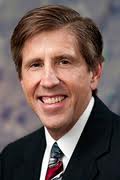
Tuthill
In today's chat, we talked with Doug Tuthill, president of Step Up For Students in Florida.
Readers asked him about everything from Common Core and private schools, to whether the value of tax credit scholarships should be increased, to the right balance between school choice and government regs when it comes to accountability.
Step Up is the largest private school choice program in the country. It’s expected to serve 60,000 students this fall. And as recent news stories have pointed out, it continues to experience strong growth. (Step Up also co-hosts this blog with the American Center for School Choice. As we noted in the advance post, we strive not to be self-promotional but in this case thought it was appropriate to feature Doug.)
Before joining Step Up in 2008, Doug had been a college professor, a classroom teacher, the president of two teachers unions and a driving force behind the creation of Florida's first International Baccalaureate high school.
You can replay the chat here:
Editor’s note: Most discussions of school choice today are focused on newer options – charters, vouchers, tax credit scholarships – that are intended to empower parents without the ability or means to access the right school. But Catherine Robinson, a Tampa mother and assistant director of outreach for the Step Up For Students scholarship program, writes that old-fashioned methods can work as well.

School choice time again with the Robinsons.
I’ve been through this before. Many times.
Searching for the right school for my children has never been easy, but since we all know the importance of education in determining a good future, every few years, I skip some happy hours and dedicate myself to finding the best choice for my twin sons.
Ten years ago, Jacob and Zachary were ready for preschool and over the course of several months, I researched local providers. I consulted trusted friends, official “studies” and interviewed administrators in ways that put Senate confirmation hearings to shame.
I finally decided on a school 45 minutes away from our home. Quite a drive, but my husband deferred to me in this area, as I was a teacher at the time, the way I deferred to him, as the father, when deciding which coaches to ignore at T-ball practice.
Our children did well in preschool and precedent was established.
A few short years later, in preparation for their elementary years, I conducted similar research. I looked at school grades, asked around, and visited facilities at drop off and pick up times before choosing a wonderful public school, this time only a half-hour drive from our home.
The Big Recession threw us some unexpected curve balls and we relocated to Colorado Springs. Where it snows. In May. Within a year, we high-tailed it back to Tampa. This was 2008, the height of the economic crisis, and so we rented a home rather than buy.
I didn’t realize then what a blessing that would be. (more…)
Catholic schools. Yet another Catholic school closes, this one in Palm Beach County, with many students turning to charter schools. South Florida Sun Sentinel.
 Charter schools. One in east Hillsborough will close after multiple issues, reports the Tampa Tribune. Dayspring Academy in Pasco, co-founded by state Sen. John Legg, wants to expand to two more campuses, reports the Tampa Bay Times.
Virtual schools. A struggling teen in Hernando takes 10 online courses in a comeback surge to graduate on time. Tampa Bay Times.
Accountability. Florida has taken steps to prevent gaming of the system. EdFly Blog.
Common Core. The Council of Chief State School Officers opposes delays in accountability requirements as states adjust. StateImpact Florida.
Teacher pay. Pasco Superintendent Kurt Browning says the Leg didn't increase funding enough to give teachers the raises that Gov. Rick Scott envisioned. Gradebook.
Teacher conduct. A Polk teacher who said she and her father were dying was apparently lying so she could skip school. WFTV. (more…)
School technology. StateImpact Florida takes a look at the One Laptop Per Child program.
Accelerated classes. In Pasco, enrollment is climbing fast in AP, IB and dual enrollment. Tampa Bay Times.
FCAT. Gains not as good as they sound, writes Shanker Blog. Three Pinellas elementary schools have among the worst math scores in the state, reports Gradebook.
Parent trigger. A distraction and faddish. Sherman Dorn.
Superintendents. The new Lee super is Naples High Principal Nancy Graham, but it's not clear whether she's temporary, reports the Naples Daily News. Tony Bennett's a fan of Pinellas' Mike Grego, reports Gradebook.
Ed summit. Speaking of Grego, he's among the speakers at the Florida Sterling Council's annual summit. StateImpact Florida.
Gifted students. Pinellas is eliminating programs for gifted students at a few schools in lieu of offering gifted services at all elementary schools. Tampa Bay Times.
School spending. Broward gets no legislative funding help for its technology and building needs, reports the Miami Herald. More from the South Florida Sun Sentinel. Broward wants to charge a developer $3.6 million in impact fees for four students, the Sun Sentinel also reports. (more…)
FCAT. FCAT writing scores up. FCAT reading and math scores flat. Miami Herald. South Florida Sun-Sentinel. Palm Beach Post. Orlando Sentinel. Florida Times Union. StateImpact Florida. Gainesville Sun. Ocala Star Banner. Associated Press. Naples Daily News. Bradenton Herald. Sarasota Herald Tribune. Pensacola News Journal. Tallahassee Democrat. Panama City News Herald. StateImpact has more from Education Commissioner Tony Bennett.
FCAT success. How a Tampa elementary magnet school got traction. Gradebook.
FCAT retakes. Daytona Beach News Journal.
Vals and sals. Backlash is growing to Hernando's decision to ban vals and sals. Gradebook.
Nerds. Spelling bee champ Nupur Lala of Tampa helped make nerdy cool. Associated Press.
Turnaround schools. Hillsborough is proactive about trying to spark them. Tampa Bay Times.
Teacher training. The Hechinger Report uses Florida to base a story about reformers' aims with teacher training and recruitment. (more…)
Editor's note: This op-ed was published on the Raleigh News & Observer website last night.
The debate over a private learning option for poor schoolchildren in North Carolina has a familiar ring to it because Florida faced similar fears a dozen years ago. But a targeted and accountable scholarship can strengthen our commitment to equal educational opportunity by giving more tools to the students who face the greatest odds.
Don’t trust me, a lifelong progressive Democrat and former teacher union president who now leads the nation’s largest scholarship program for low-income students. Look instead at the track record in a state with a scholarship that is similar to the plan being offered by a bipartisan coalition of N.C. House members. The Florida Tax Credit Scholarship can provide at least a few answers:
The scholarship serves the students who struggle the most. Scholarship opponents say that the most disadvantaged students are the most likely to remain in public schools. But the experience in Florida is just the opposite. As the state’s independent researcher noted in the latest report: “Program participants tend to come from lower-performing public schools prior to entering the program. Likewise, as in prior years, they tend to be among the lowest-performing students in their prior school.”
• These same students are making solid academic progress. According to the results of their nationally norm-referenced tests, these students who were losing ground prior to choosing the scholarship are now achieving the same gains in math and reading each year as students of all income levels nationally. “In other words,” said the latest report, “the typical student participating in the program gained a year’s worth of learning in a year’s worth of time.”
• Traditional public schools are not hurt financially. One N.C. community organizer recently wrote: “At their core, vouchers are about taking public money and giving it to private schools.” But in Florida, five different independent agencies over the past decade have reached the same conclusion: The scholarship saves tax money that can help public schools. That’s because the scholarship is substantially less than the cost of public education, and most of its recipients would have otherwise attended public school. The Florida Revenue Estimating Conference pegged the savings this year at $57.9 million. (more…)
Editor's note: This guest post is from Jesse L. Jackson, superintendent of Lake Wales Charter Schools in Lake Wales, Fla.
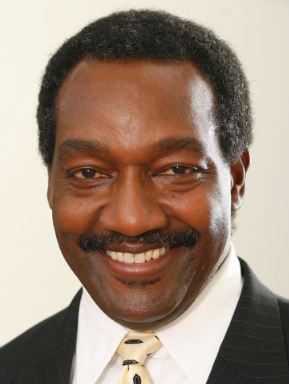
Superintendent Jackson
By early 2000, the once great tradition of outstanding local schools for Lake Wales’ citizens had reached a point of decline. It was at that time when concerned citizens, with the support of the Lake Wales Area Chamber of Commerce education committee, decided to do something to reverse that trend. What emerged was not only an accountability driven charter school system, but, unexpectedly, the town’s biggest employer.
Since 2004, when five Lake Wales’ public schools were converted to public charter schools, and with the addition of Bok Academy charter school and the International Baccalaureate program to Lake Wales High School, a significant reversal has taken place in terms of quality and participation in our local schools. Many families that had previously decided to seek other opportunities to educate their children outside Lake Wales have found favor in our system, which now serves approximately 4,000 students. While the majority live in Lake Wales, many come from surrounding towns. Lake Wales Charter Schools pioneers such as Robin Gibson, Clint Horne, David Ullman and many others could feel quite satisfied when reflecting on the impact of their effort.
However, when the details are analyzed, it becomes quite clear the system offers more than just a great education for this community. The mere shift of the schools’ management from district headquarters in Bartow to Lake Wales has profoundly impacted Lake Wales’ economy.
Our principals are chief executive officers. They have the autonomy and responsibility to make decisions regarding the most effective way to run their schools, including financial matters. With each school’s annual budget ranging from roughly $2.5 million to $6 million, managing the operations of our charter schools is a huge responsibility. The autonomy provides our principals the freedom to make decisions regarding their engagement with businesses. Along with this freedom, they and other members of our leadership team have the responsibility and are compelled to adhere to the strictest finance and accounting principles to ensure our system’s finances are managed properly.
Our success as an effective school system has enabled us to evolve into a locally based multi-million dollar enterprise with an annual budget of more than $30 million. (more…)

