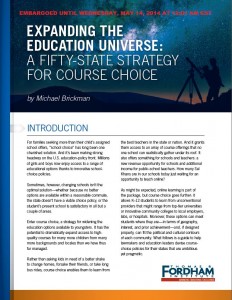
Don’t look now, but a bigger, faster and potentially more far-reaching wave of educational choice is rolling in as we're still grappling with basic questions about vouchers, tax credit scholarships and charter schools. Lucky for us, a new guide from the Fordham Institute offers a heads up on the complications with “course choice” so its promise can be fully realized.
Released today and authored by Michael Brickman, Fordham’s national policy director, “Expanding the Education Universe: A Fifty-State Strategy for Course Choice” arrives as school choice begins to give way to educational choice on a more fundamental level.
“Rather than asking kids in need of a better shake to change homes, forsake their friends, or take long bus rides, course choice enables them to learn from the best teachers in the state or nation,” Brickman writes. “And it grants them access to an array of course offerings that no one school can realistically gather under its roof.”
To some extent, course choice is already happening. Students in many places can take dual enrollment courses. Florida offers a vast course menu through Florida Virtual School. Louisiana adopted a course choice program two years ago. It’s just a matter of time before other states and/or school districts seize the day in a bigger way, and some, like Florida, are already taking a closer look.
The bottom line: students will increasingly be able to choose a course here and a course there, from an exploding number of providers. That will increasingly be true no matter what school they’re in.
That’s the upside. The downside? All kind of prickly questions have to be tangled with, from funding and access to eligibility and accountability. Brickman offers a rundown of five big ones, with potential directions, complications, tensions and tradeoffs. For example:
Who can be a provider: “Parents and kids will naturally want the widest possible range. Districts, however, will tend to favor tighter limits, whether out of concern for quality control or to minimize competition with their own offerings. States will also have to balance the desire to serve more children with the political headache that inevitably comes when ‘controversial’ course providers are included. Or they may leave such decisions to districts or entrust them to third parties.”
Who pays them: “Does the child’s school district pay the cost? Does the state? The parents? Who decides what price is reasonable? How many kids can take how many such courses? Who controls this money? Who generates it?”
Then there’s this fun one: “What if Molly takes all but one or two of her courses from course providers? Is she still a student of Madison High School? Does it still confer her diploma? Is it still the school’s job to determine whether she has truly fulfilled state or district graduation requirements? If not the school, then who?”
And some thought school choice was complicated. 🙂
The debate over whether and how to test students in private school choice programs has been swirling through school choice circles for years, and it’s no idle debate. The prospects for Florida's tax credit scholarship legislation, in fact, may hinge on how lawmakers decide to resolve the issue.
So it’s worth noting a couple of coincidental developments on this front – even if, in the end, they don’t impact the Florida debate.
First: A slight shift in position at the Fordham Institute, which promotes both school choice and common academic standards. In recent policy papers and on this blog, Fordham has made the case for requiring students in school voucher and tax credit scholarship programs to take the same statewide, standardized tests as their public school counterparts.
This morning, however, Fordham leaders Checker Finn and Mike Petrilli wrote in the National Review that they're willing to compromise with school choice advocates who bristle at the same-test requirement. The re-calibration comes as Florida and most other state prepare to test their students for the first time on the Common Core State Standards. Write Finn and Petrilli:
But now that most states are transitioning to the Common Core, the state test will soon be some sort of Common Core test. And that has freaked out some choice supporters, some private-school teachers, and some charter-school teachers, too. (more…)
Editor's note: This post originally appeared on the Fordham Institute's Choice Words blog. It's one of many pieces written in response to Fordham's release of a "school choice toolkit" for lawmakers that called for more regulatory accountability measures for "voucher schools."

Glenn
Policy-making usually involves trade-offs, finding the right balance between competing objectives and even principles. This is especially true in education, where so much is at stake, both for vulnerable children and for the health of society.
One of the principles that should guide educational policy is that "parents have a prior right to choose the kind of education that shall be given to their children" (article 26, 3, Universal Declaration of Human Rights, adopted in San Francisco in 1948). Officially, at least, this right is acknowledged by almost every nation, and in many of their constitutions; it has been settled law in the United States since the Supreme Court’s 1925 ruling in Pierce v. Society of Sisters (268 U.S. 510).
Americans agree, as Terry Moe showed in Schools, Vouchers, and the American Public (Brookings Institution, 2000). This is especially true of parents for whom public school provision is of inadequate quality. “Among public [school] parents, vouchers are supported by 73 percent of those with family incomes below $20,000 a year, compared to 57 percent of those with incomes above $60,000. . . . 75 percent of black parents and 71 percent of Hispanic parents, compared to 63 percent of white parents. . . . 72 percent of parents in the bottom tier of districts favor vouchers, while 59 percent of those in the top tier do” (212).
Moe also found, however, that “enthusiasm for regulation is remarkably uniform and cuts across groups and classes – including private [school] parents, who appear quite willing to see the autonomy of their own schools compromised in the interests of public accountability” (299). This expectation of government oversight is also well-established in international law and practice, and specified in the Pierce decision.
On the other hand, if the regulatory hand of government is too heavy, the right of choice becomes meaningless: what’s to choose among schools forced to be alike? (more…)
Petrilli
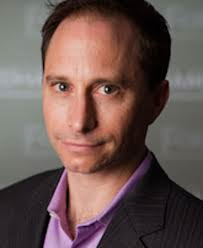
School choice supporters should back more government oversight of private schools that accept vouchers and tax credit scholarships because the choice movement would be better off without schools that are “by any measure awful.”
So argued Michael Petrilli, executive vice president of the Fordham Institute, in a live chat Tuesday with redefinED. Petrilli pointed to the think tank’s work with charter schools in Ohio to ground his position.
“Some parents are choosing schools that are, by any measure, awful,” he wrote during the chat. “ ‘By any measure’ is important. I totally understand that math and reading scores are imperfect gauges of school quality, and I understand that choice schools in particular might be ‘adding value’ in ways that don’t show up on test scores but do show up in terms of other, even more important, outcomes, like high school graduation, college-going, or wages.”
“Still, there are schools out there that might mean well, but where it’s hard to see any kind of learning happening. We would be better off, in the choice movement, without them.”
Petrilli’s comments came a week after Fordham released a legislative tool kit that backed more testing, transparency and regulatory consequences for "voucher schools" – and sparked a flurry of criticism from many corners of the choice community. During the chat, he also politely criticized Florida’s tax credit scholarship program for not including sanctions for persistently low-performing schools. (The program is administered by Step Up For Students, which co-hosts this blog.)
“Florida's got the foundation of a good system in place: A well respected scholarship-granting organization (Step up for Students!) and a requirement that participating students take a standardized test, and the results be released. (As I wrote, I would marginally prefer that they take the state test, but it's not the end of the world that they don't.)”
“The main thing you DON'T do is act on the information from testing. And I do think that's a mistake. I would love to know if there are any extremely low-performing schools in your program (based on value-added). Just imagine how much more effective--and popular--your program could be if you weeded those schools (probably just a handful) out!”
You can read the chat in its entirety here:
Petrilli
Is parental choice alone accountability enough for private schools that accept students with vouchers and tax credit scholarships?
The pro-school-choice Fordham Institute says no. In a policy toolkit released this week, it again made the case for some measure of regulatory accountability – and promptly drew fire from other school choice stalwarts at the Friedman Foundation, the Cato Institute and elsewhere (see here and here).
To continue the debate, Fordham Executive Vice President Mike Petrilli will be our guest next week for a live, hour-long chat.
The chat is like a press conference, only it’s in writing and open to anyone with a good question. To participate, just come back to the blog on Tuesday. We’ll start promptly at 10 a.m. All you have to do is click in to the live chat program, which you’ll find here.
In the meantime, you can send questions in advance. Either leave them here in the comment section, send them to rmatus@sufs.org, tweet them to @redefinEDonline and/or post them on our facebook page. See you next week!
The question of how to hold private schools academically accountable for publicly supported, school voucher students remains contentious and, frankly, unclear. But to oppose tests out of fear the opposition will twist the results is simply untenable.
Bob Smith
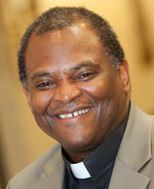
In one of the latest venues where this debate played out, at the American Federation For Children policy summit this week on the banks of the Potomac River, part of the audience broke into applause when Bob Smith, the former president of Messmer Catholic Schools in Milwaukee, pushed back on testing. Smith and Messmer schools are both highly regarded, and he was not coy about his rationale.
“We have some enemies who have sworn they are going to destroy this program, beginning with two presidents of the United States, and a number of secretaries of education,” Smith said. “Until those people stand up, and with the same fervor, deny that they will use that data against private schools, I will not trust them.”
At least two of the panels during the two-day event revealed the ongoing split over how, or even whether, to test students on school vouchers and tax credit scholarships.
Not surprisingly, Robert Enlow, president of the Friedman Foundation For Educational Choice, made an eloquent and principled case for why the marketplace itself is a powerful force for assuring quality. Parents whose students are on scholarships, just like parents whose students are on private tuition, can and do walk away from schools that aren’t serving their needs – in some case putting schools out of business in the process.
Adam Emerson, director of parental choice for the Fordham Institute, made the principled case for why public is different. Public schools are under enormous pressure to produce results on state tests, with sometimes severe consequences for failure. To expect private schools serving publicly supported students to be immune from that system is unrealistic. It also denies elected policymakers who are paying the bill a test that they view as an important report card.
One slice of the divide that was hard to ignore was the contributions of the only current school administrator to serve on either panel. (more…)
 Accountability in public education derives from a combination of government regulations and consumer choice. Historically, because we’ve had so little consumer choice in public education, regulations have been the dominant component of accountability. But now that school choice is becoming more ubiquitous, consumer choice is assuming a more prominent role.
Unfortunately, some of our most important public education policy wonks are devaluing the importance of consumer choice by using the term accountability as a synonym for regulations.
My friend and former colleague here at Step Up For Students, Adam Emerson, in criticizing the lack of required state assessments in Florida’s McKay Scholarship program, recently wrote on his Fordham Institute blog that:
“Virtually no accountability measures, however, exist in most of the nation’s special-education voucher programs, including the largest such program in the United States, Florida’s McKay Scholarship for Students with Disabilities.”
Parents choose to apply for and use a McKay Scholarship. If their needs are not being met at one of the more than 1,100 Florida private schools accepting the McKay Scholarships, they can vote with their feet and go to another school. To suggest this level of consumer choice equates with “virtually no accountability measures” is wrong.
Adam’s gifted colleague at Fordham, Mike Petrilli, made a similar error a few days later. He wrote that “Indiana’s voucher program has accountability in spades,” then ignored consumer choice and equated accountability only with required student testing and school grades. (more…)

Emerson
The Fordham Institute took Florida’s McKay Coalition to task Monday for a survey the institute says "stoked emotions" about state tests at private schools that serve disabled students on state vouchers. In a post by parental choice program director Adam Emerson, the Institute chided the coalition for resisting academic assessment for the McKay Scholarship, which this year serves more than 26,000 students with learning disabilities and physical limitations.
“Virtually no accountability measures … exist in most of the nation’s special-education voucher programs, including the largest such program in the United States, Florida’s McKay Scholarship for Students with Disabilities,” Emerson wrote. “And the coalition of schools that oversees the McKay program appears to want to keep it that way — and it’s wrong to do so.”
Fordham remains a strong national supporter of parental choice, including charter schools, school vouchers and tax credit scholarships. But the institute also has called on the learning options to be held to account for the achievement of their students.
In its recent report, “Red Tape or Red Herring,” Fordham looked at the participation rate of private schools in voucher and tax credit scholarship programs in 11 states and surveys from 241 private schools that do and don’t participate, and found that testing requirements are not a significant deterrent. Only a quarter of the schools ranked state-required testing as a “very” or “extremely” important factor. The response rate among participating schools was 73 percent.
McKay countered with its own yes-or-no survey of Florida private schools participating in the state scholarship for disabled students. Its response rate was 40 percent. (more…)
Editor’s note: This post was submitted by the Coalition of McKay Scholarship Schools.
 In a recent “Florida Roundup” post, redefinED reported that a new study from the Fordham Institute “finds that mandated testing – and even public reporting of test results – isn’t that big a concern for private schools worried about government regs tied to vouchers and tax credit scholarships.”
The Coalition of McKay Scholarship Schools, a volunteer organization of private schools participating in the McKay Scholarship Program, decided to take a survey and determine whether this research finding held true for Florida private schools. The findings in Florida were polar opposite from the Fordham Institute, which did not survey schools in Florida but concentrated on schools in Indiana, Ohio, and Wisconsin.
The Coalition sent a survey to the 1,155 participating McKay Scholarship schools in February. It received 474 responses, representing approximately 40 percent of the McKay schools. Results indicate that 1) nearly all of the schools are conducting norm-referenced assessments of their students; 2) these education professionals do not believe the FCAT is an appropriate measure for their students with disabilities; and 3) 61 percent of the schools responding reported they would no longer participate in the McKay Scholarship Program (a type of school voucher program) if required to give the FCAT to their students.
The McKay Scholarship Program was designed so parents of children with disabilities would be able to identify and participate in programs that would meet the needs of their children. Many parents choose to participate in the McKay program because they do not believe the FCAT and a one-size-fits-all approach to education are in the best interest of their children who have disabilities and do not fit the “norms.” The McKay Scholarship Program has been very successful and popular with parents because it provides them with the ability to choose a school that best meets the unique needs of their children.
Contrary to the findings of the Fordham survey, Florida private schools participating in the McKay Scholarship Program are very concerned with mandated testing and will leave the program if required to do so, thus limiting the access to educational options that parents of children with disabilities now have.
The survey questions and statistics may be found at www.mckaycoalition.com. The following is a summary of the findings: (more…)
A 73-second exchange between Gov. Rick Scott and capital reporters last week has raised the profile of testing in Florida’s scholarship for low-income children, but done little to deepen the debate. The question of testing is a legitimate one, but cannot be separated from the educational context.
Gov. Scott had no time to deal with such complexity. He was fielding rapid-fire questions after a state Cabinet meeting when he was asked whether students on vouchers should take the same test as those in public schools. His first answer: “Look, if you’re going to have state dollars, you’re going to have similar standards.” On followup, he said: “I believe anybody that gets state dollars ought to be under the same standards.”
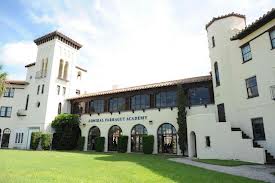
If the state required tax credit scholarship students to take the same tests as their public school counterparts, what might that mean for say, the 21 scholarship students at the highly regarded Admiral Farragut Academy in St. Petersburg? They’re a tiny portion of the 400 students at the school, which accepts the $4,335 scholarship as full payment. Would those students lose out on a remarkable learning environment?
The governor’s instinct is strong, but the statement took on a life of its own, spurring news coverage, editorials and a distinguished post from the Fordham Institute. Not surprisingly, much of the reaction was one-dimensional, focused on apples and oranges and what Ralph Waldo Emerson might have called a “foolish consistency." So allow me, as policy director for Step Up For Students, the nonprofit that oversees the Florida Tax Credit Scholarship for 50,812 low-income students this year in Florida, to try to paint the broad landscape.
Under Florida’s scholarship program, students are required to take nationally norm-referenced tests approved by the state Department of Education. More than two-thirds take the Stanford Achievement Test. Another fifth, which comprises mainly the Catholic schools, take the Iowa Test of Basic Skills. The test-score gains are then reported publicly each year by an independent researcher, respected Northwestern University professor David Figlio. Starting this year, those gains are also reported for every school with at least 30 students who have current- and prior-year test scores. The validity of these testing instruments is not really in dispute, which is why it is more than a little disconcerting that their results have been scarcely mentioned. The state’s leading newspaper managed to write an entire editorial directive, “Holding voucher schools to account is overdue,” without a single reference.
So, for the record, the state so far has issued five years of test reports for the tax credit scholarship, and two findings have been persistent: 1) The students choosing the scholarship were the lowest performers from the traditional public schools they left behind; and 2) On the whole they are achieving almost precisely the same test gains in reading and math as students of all incomes nationally. For the 70 schools that met the disclosure threshold this year, 50 kept pace with the national sample, eight exceeded and 12 fell short.
Not incidentally, these results provide the kind of data that is needed to judge whether students are making academic progress. (more…)

