Editor's note: This story is published in celebration of National Catholic Schools Week, which runs from Jan. 28-Feb. 3.
Visit Guardian Angels Catholic School in Clearwater, and you’ll feel a deep sense of community as soon as you pull up to the entrance. School leaders stand at the curb, waving at parents and greeting each student as they leave their cars. The day starts with a student-run television news show, including announcements about frequent evening social events. Principal Mary Stalzer strolls through each room to ensure everything is running smoothly.
 By mid-morning, the youngest students are running around on the playground. Middle schoolers work in science labs. In another room, students read stories they have written or edit a classmate’s work. Outside, students tend vegetable gardens that are part of the school’s fully certified STREAM program. (STREAM stands for Science, Religion, Technology, Engineering, Arts and Math and is the Catholic school version of a STEAM program.) Teachers link the gardening projects to Jesus’ parable about what can be achieved by having faith the size of a tiny mustard seed.
Where Catholic schools are often tied to a single church, with which they often share a location, Guardian Angels is an inter-parish school, which means it has no specific church. Instead, support is spread across four local parishes. This may help explain why the school's leaders have made building community a priority.
The tree-shrouded campus sits tucked away in a neighborhood of modest homes and apartment complexes, not visible from major highways.
“We are the hidden gem of northern Pinellas County,” said Stalzer, whose career with Catholic schools has spanned a quarter century.
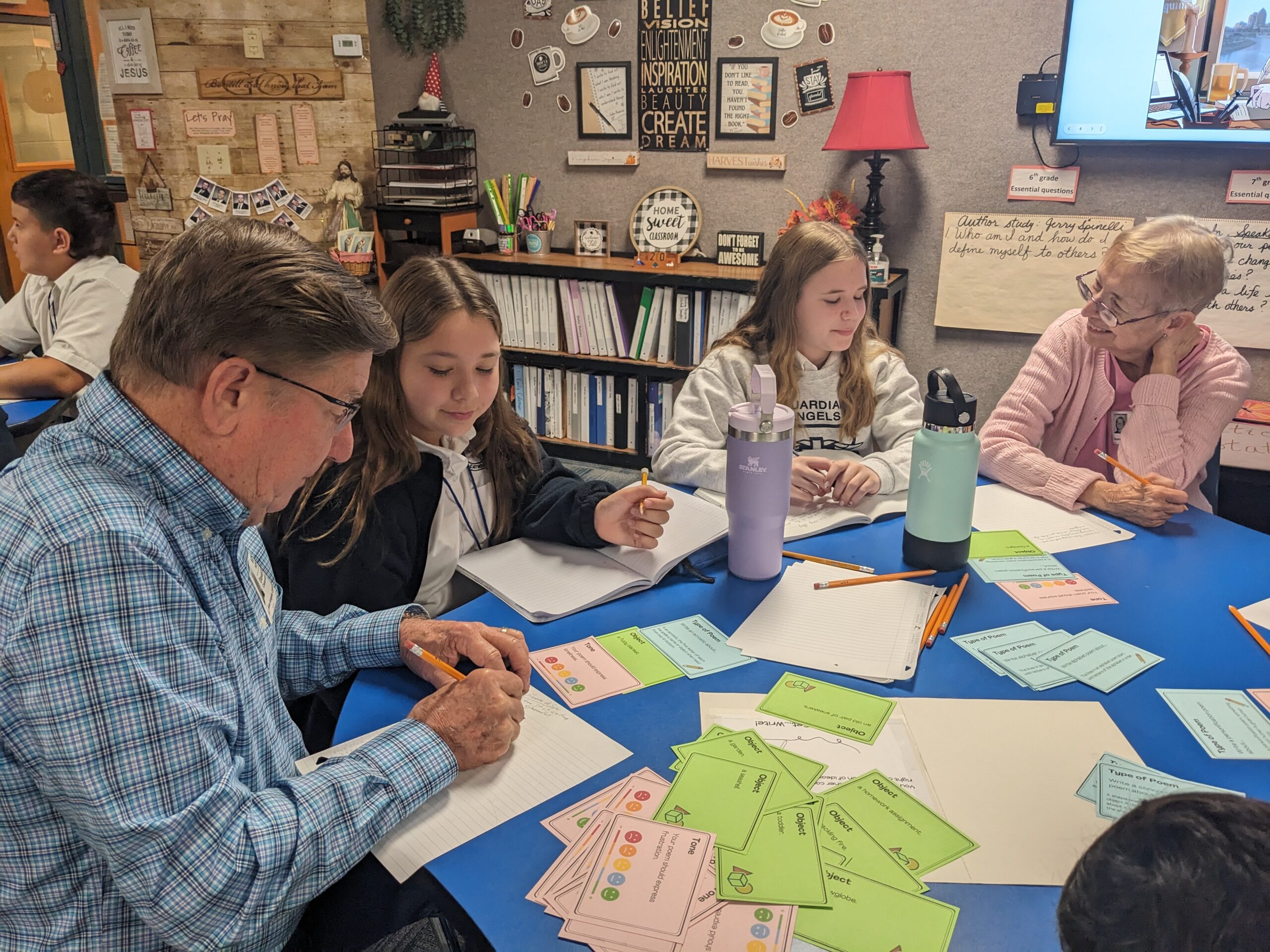
Guardian Angels Catholic School in Clearwater, Florida is known for its deep sense of community, which is fostered by the encouragement of parents and grandparents to be involved in school activities. Photo courtesy of Guardian Angels Catholic School
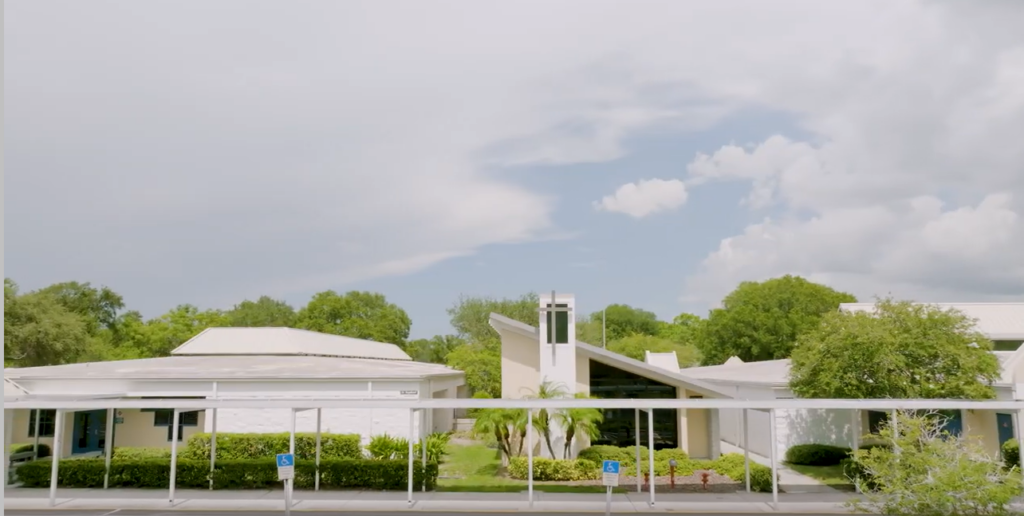
Guardian Angels Catholic School
 Over the years, she has taught elementary school, worked in the library, and served as assistant principal before becoming head of the school. “We are warm and welcoming. We know our students; we know their parents and their grandparents.”
This year, more people have discovered the sparkle of Guardian Angels, where enrollment spiked this school year by 19% after several years of decline due to the pandemic and other nearby schools.
Stalzer attributed the substantial increase to several factors, including a grassroots marketing campaign that included in-person and online meetings, letters, social media posts, and word-of-mouth. However, the primary reason she cited and other school leaders gave for their growth was the Florida Legislature’s passage of House Bill 1, the largest expansion of school choice in United States history.
While this year’s growth at Guardian Angels is sure to turn heads, it’s part of a much broader statewide trend. Recent data from the Florida Conference of Catholic Bishops show Catholic school enrollment grew by 4% across the Sunshine State in the 2023-24 school year. That increase is on top of the 4% growth seen over the past decade highlighted in a special report by Step Up For Students.
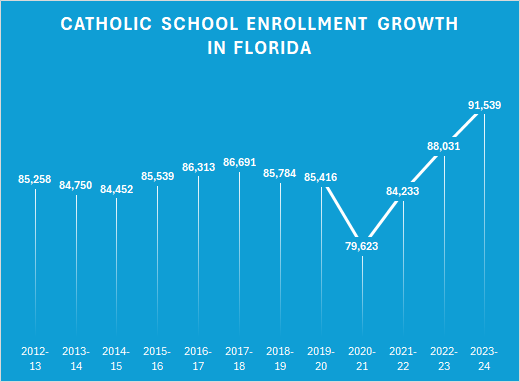
Chart courtesy of Ron Matus
Stalzer and the other Catholic school leaders across the state made every effort to make existing and new families aware of the new law, which extended scholarship eligibility to all Florida students regardless of their family’s income.
“People found it hard to believe that they didn’t have to qualify for it financially,” Stalzer said. “I have heard some families say it’s an answer to their prayers.”
Chris Pastura, superintendent of schools for the Diocese of St. Petersburg, where Guardian Angels is located, said the law helped many families who otherwise would not have been able to afford Catholic schools. The 34 elementary and secondary schools in the diocese, which cover five counties in the greater Tampa Bay area, reported a year-over-year growth rate of 3.8%
“What I found was an immense sense of gratitude from a lot of middle-class families,” Pastura said. Those families might be getting by, he said, but make financial sacrifices to provide their kids with a Catholic education.
“This is a great example of a program helping them at the bottom line,” he said.
With its current enrollment at 191, Guardian Angels still has plenty of room before it reaches what Stalzer called a “comfortable” count of 350 students. Other schools across the state are hitting their maximum capacity, which they attribute to Florida’s rising population and the availability of state school choice scholarships. This year, 78% percent of Florida Catholic school students received them.
“Catholic school enrollment continues to soar in the state of Florida,”’ said Deacon Scott Conway, superintendent of schools for the Diocese of St. Augustine, which reported 4% year over year growth across its 29 schools in 17 northeast Florida counties.
“One of our biggest struggles is not having enough seats for students, which causes us to have to turn many students and families away,” he said. “We are so blessed here in Florida that our legislature has recognized the importance of empowering school choice for families. For most people, there is no choice without the scholarship program.”
One of those schools is Holy Family Catholic in Jacksonville, which serves students in kindergarten through eighth grade. The school recently ramped up its Wildcat D.E.N.S. program to provide personalized tutoring for students struggling in key academic areas and enrichment for students identified as gifted.
This year, for the first time, the school had to start a waitlist for students in kindergarten through fourth grade, assistant principal Amanda Robison said.
Florida’s largest Catholic school region also reported growth of about 4% this year, continuing a trend that began four years ago.
“Enrollment is the largest it has been in over 10 years,” said Jim Rigg, who oversees 64 schools as superintendent of schools for the Archdiocese of Miami, which includes Miami-Dade, Broward and Monroe counties. “Over 50 percent of our schools are filled with waiting lists, and nearly all of the remaining schools are growing.”
Rigg cited the August re-opening of St. Malachy Elementary School in Tamarac, which had closed 14 years earlier due to declining enrollment, along with the addition of a high school to an elementary school in Key West as evidence of rising demand. Cristo Rey Miami High School also opened in 2022, the second Florida location for a national network of high schools that specialize in college preparatory academics and on-the-job work experience for students from financially constrained households.
“Unfortunately, there are now areas of the Archdiocese where we simply do not have open seats in our schools,” he said.
Rigg added that Archdiocese leaders are in “active conversations” about future openings and reopenings to accommodate the demand, which he attributed to Florida’s robust scholarship programs as well as an influx of families from the northern U.S., Latin America and the Caribbean.
“It is important that we do our best to meet the strong and growing demand for Catholic education in South Florida,” he said.
DADE CITY, Fla. – LaTania Scott and Kameeka Shirley were former public school teachers who wanted something different when they opened their own school in January 2023.
Something … authentically Montessori … accessible to families from all walks of life … embedded with the autonomy that’s often missing from traditional schools.
The result is Blazing Stars Montessori, another shining example of what’s possible when teachers have more power to create their own models.
“We wanted our school to be a path to peace for our community,” said Shirley.
Blazing Stars is a private microschool. It has 25 students in grades PreK-3, with plans to grow to 47 in grades PreK-6. It’s also intentionally diverse. And in a semi-rural area.
In many states, that combo would make it an anomaly. In school-choice-rich Florida, it’s another one of 1,000 educational flowers in bloom.
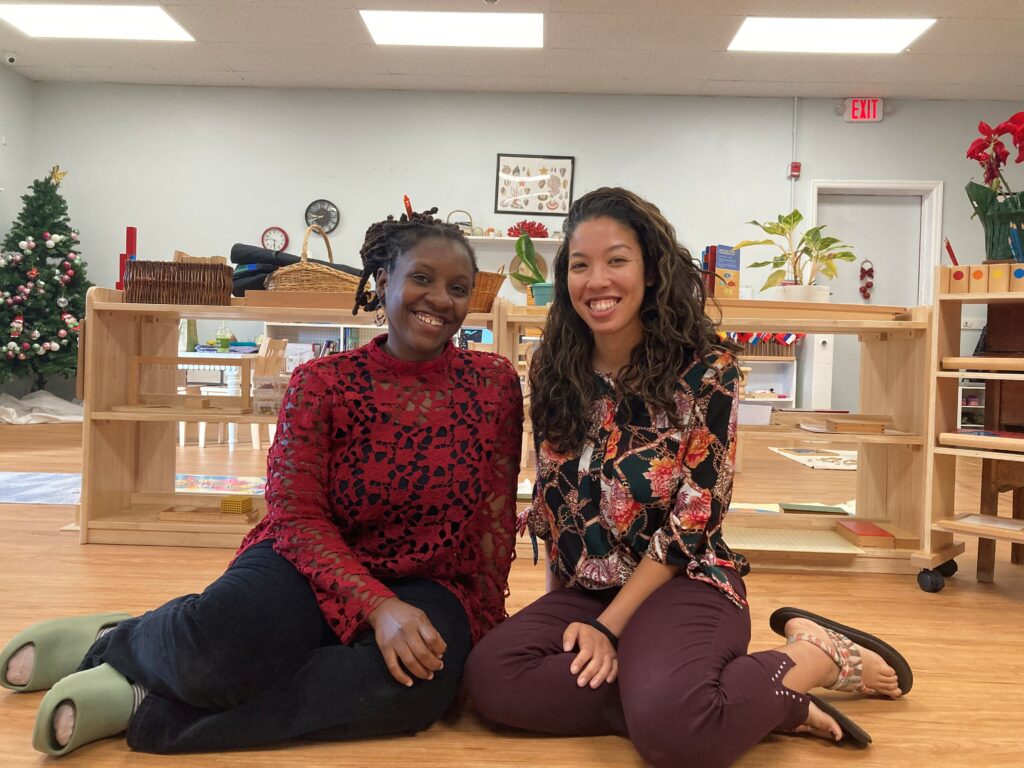
LaTania Scott, left, and Kameeka Shirley, found Blazing Stars Montessori microschool. Photo by Ron Matus
Former public school teachers like Scott and Shirley are behind many of those blooms.
Scott is a 17-year public school veteran. Shirley is a Teach for America alum.
The autonomy they have from creating their own school means they have the power to pivot when their families or students need something different. Or when they do.
“We can’t be our best selves for our children if we’re not taking care of ourselves,” Shirley said. “That was missing from the bigger education space.”
Blazing Stars is affiliated with Wildflower Schools, an acclaimed network of teacher-led Montessori microschools that got its start 10 years ago. Wildflower has since sprouted more than 60 schools nationwide, and expects to hit 200 within five years.
Blazing Stars represents several encouraging story lines that get more pronounced every day.
Teachers of color are a distinctive force among them.
Of the 436 schools in the Black-Owned Schools Directory maintained by Black Minds Matter, 74 are in Florida. A recent survey of those founders by Black Minds Matter and Step Up For Students found 64% are former public school teachers, and one in five created non-traditional models like microschools and hybrid homeschools.
Scott and Shirley said in the wake of the turbulence of the past few years – Scott mentioned COVID-19 and the murder of George Floyd – they wanted a school that would offer a respite for themselves, their children, and like-minded families. That’s the “path to peace” Shirley mentioned.
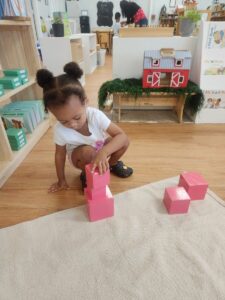
Like other Montessori schools, Blazing Stars let students learn at their own pace. Photo courtesy of Blazing Stars
Blazing Stars’ founders say they want to connect families who are diverse in multiple ways – not just race and income, but politics and ideology – and offer a learning community that builds bridges. “These are families who otherwise might not come together,” Shirley said. But in the end, “we’re all people who love our children and want them to do well in the world.”
The Montessori way is also key to the Blazing Stars vision of peace.
Scott fell in love with Montessori as an undergraduate at Xavier University in Cincinnati, where she immersed herself in the university’s Montessori lab school. She recalls being awestruck watching students in a learning environment where they had more agency over their own learning.
“They were moving around the space like they were gliding. They were so focused on what they were working on. That for me was the magic,” she said. “No yelling, no screaming, no fighting. No chaos. It was like a beautiful piece of art.”
Scott and Shirley purposely set up in Dade City, a town of 7,275 on the edge of metro Tampa. Their demographic analysis showed the fast-growing area had the multi-faceted diversity they wanted. And with choice scholarships, they knew what they offered would be widely accessible.
Making that leap from working in a school to founding one, though, wasn’t a breeze. “We were terrified,” Shirley said.
They’ve had to overcome some of the same hurdles that often dog other education entrepreneurs.
For example, Scott and Shirley obtained a childcare license for their facility in 2022. They needed that to operate a preschool that can accept the state’s preschool scholarships. But the rules for operating a K-12 private school are different, and those rules required the facility to have a sprinkler system.
The first estimate they got for that system was $97,000. “I fell into a ball of tears,” Scott said.
Without the sprinklers, Blazing Stars couldn’t participate in Florida’s K-12 education scholarship programs as planned. Thankfully, the Black Wildflowers Fund, a sister organization to Wildflower Schools that supports Black teacher leaders, helped Scott and Shirley through the delay, along with other organizations. Then they found a contractor who offered a much better deal. Blazing Stars is now on track to accept scholarship students this fall.
In the meantime, having the power to operate a school the way they and the families they serve want, without being constrained by somebody else’s agenda, is proving to be well worth it.
Blazing Stars “is a happy safe place for our kids,” Shirley said. “And for us too.”
PALMETTO BAY – Elijah Williams was in the fifth grade when he set his sights on a career in engineering. The best way to get there, he decided, was with an Ivy League education. So, he set his sights on attending Harvard University.
“I want to learn as much as I can,” he said.
Elijah is an eighth grader at Perrine Seventh-Day Adventist School in Palmetto Bay, a suburban incorporated village in Miami-Dade County. He has attended the K-8 private school since kindergarten with the help of the Florida Tax Credit Scholarship.
“I feel like I'm lucky to be in this school,” Elijah said. “The teachers care. The students care, and I'm just happy to be part of it.”
The Florida Tax Credit Scholarship is made possible by corporate donations to Step Up For Students, which hosts this blog.
His mom, Kerry-Ann Taylor, a nurse, is thrilled to hear Elijah talk about earning an Ivy League education. Like Elijah, Taylor sees it as an attainable goal and not just a dream. Elijah has always been a grade or two ahead of his class and works hard to earn his grades.
He could read when he was 9 months old, according to his grandmother, and was reading at a first-grade level when he was 3. He won the school’s science fair in kindergarten when he made an egg float.
Elijah can figure out math problems in his head without the use of scrap paper, much to the chagrin of his teachers, who want students to display their work. He once reprogrammed a Samsung tablet that was on the fritz.
So, Harvard? Why not?
“It’s very, very challenging,” Taylor said. “But he's fearless. He's eager to learn.”
Elijah recently learned to play pickleball. The sport didn’t come easy to him, but he stuck with it. That’s a trait he displays in school.
“He never gives up,” Taylor said. “If he fails the first time, he tries again, and he’ll knock it out of the park.”
Principal Howard Summerbell said his staff seeks to identify what subjects most interest the students and then encourage them in that direction. For Elijah, it became engineering after the staff saw his interest in robotics class and how well he scored on the MAP Test, which measures a student's knowledge of reading, language usage, and mathematics.
“Elijah is one of those kids that’s academically gifted,” Summerbell said. “He works very hard. He has a unique study pattern that facilitates his intellectual growth and development. He has a supportive (mother and grandmother) who reinforces at home what we do at school. We know he’s going to really go far.”
Unique study pattern?
That’s where Elijah’s grandmother, Millicent Taylor, takes over.
Every day, when Elijah gets home from school, he has a snack and begins working on an assignment from Millicent. Some days, it’s a few pages from a workbook. On other days, he logs on to Mathnasium, an online supplemental math program, which his mother pays for with personal funds.
He does this for an hour or two each afternoon.
When he’s finished, it’s me time, Elijah said. Some days, he spends that time writing poetry.
In addition to his interest in coding and math and the other principles involved in engineering, Elijah is a published poet. His work has been featured in “A Celebration of Poets, Grades 7-9.”
He studies writer/poet Claude McKay, a key figure in the Harlem Renaissance that took place in the 1920s and 1930s.
Elijah’s poems range from civil rights to Black history to the COVID pandemic to the Adventist Christian education he receives at school.
“Poetry just comes naturally to me,” he said. “I want to spread truth. I have something to say, and I think people should listen to what you have to say.”
From his poem on his education:
“The vision and the mission are child-centered
With confidence, effective teachers to mentor
They help students become better people
So that life doesn’t become a burden.”
Elijah has his sights set on a future that will not be a burden. He wants to become an engineer so he can provide a comfortable life for his family and so he can help others.
Elijah will attend Greater Miami Adventist Academy for high school. And then … Harvard.
“Yes,” he said, “if I work hard.”
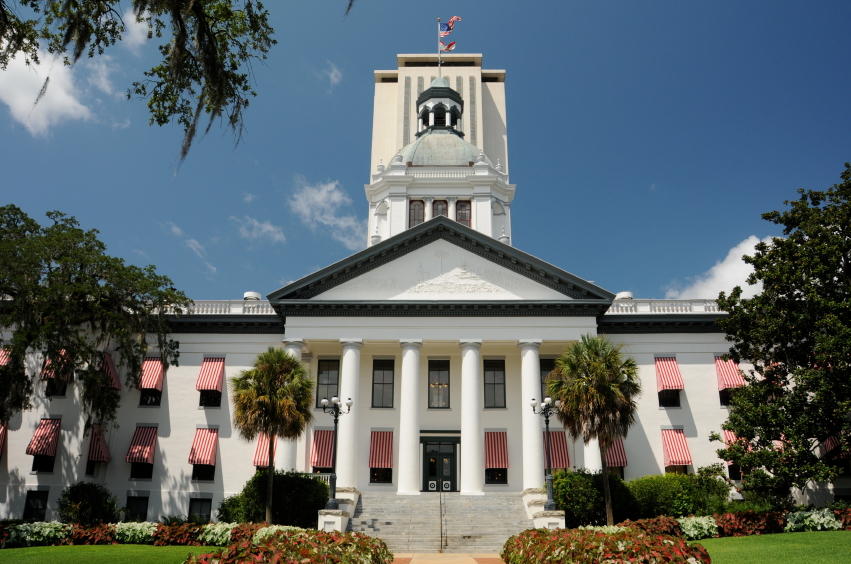
By News Service of Florida
TALLAHASSEE, Fla. — Florida lawmakers are gearing up to provide additional funding to a part of the state's school-voucher program that serves students with special needs, as some proponents of the scholarships say demand has outpaced supply.
The state Legislature is gathering for a special session starting Nov. 6 to address a range of issues. A joint proclamation from Senate President Kathleen Passidomo, R-Naples, and House Speaker Paul Renner, R-Palm Coast, said the session will include an effort to provide “a mechanism to increase the number of students served under the Family Empowerment Scholarship for students with disabilities.”
Passidomo sent a memo to senators on Oct. 20 saying the special session will deal in part with “additional funding for students with unique abilities.” Lawmakers will “address demand” for the program, Passidomo’s brief description of the plan said.
The session will kick off roughly seven months after the Legislature and Gov. Ron DeSantis approved a massive expansion of the state’s voucher programs. And while school-choice advocates have heralded the development as ushering in “universal school choice” in Florida, some are calling for an elimination of a cap on participation in the scholarship for students with special needs.
Steve Hicks, president of the Florida Coalition of Scholarship Schools, is among those who maintain the program should be expanded.
“It’s a cap that limits the number of kids in the program. It’s not that the providers don’t have any space. It’s a very different conversation. The providers are saying we’ve got space. But the state has said, we put a limit on how much money we’re willing to spend,” said Hicks, who also is chief operating officer of Center Academy Schools.

Steve Hicks
In a recent interview with The News Service of Florida, Hicks recounted working in the school-choice space in Florida for 25 years. The current scholarship program for students with special needs — called the “Family Empowerment Scholarship for Students with Unique Abilities” — is the product of lawmakers combining what formerly were the McKay and Gardiner scholarship programs.
“When the McKay scholarship was operational, for over 20 years, there was no limitation on the number of students who could get in the program. This is a salient point here, this is at the heart of this whole issue,” Hicks said.
The 2021 law that established the Unique Abilities scholarship also set a cap on participation in the program, which is 40,000 students this school year. The law allows the cap to grow each year by 3 percent "of the state’s total exceptional student education full-time equivalent student enrollment," according to a fact sheet on the state Department of Education’s website.
To be eligible for the Unique Abilities scholarship, the law requires that students be eligible to enroll in a Florida public school and have what’s known as an Individualized Education Plan, or IEP, or have a diagnosis of a disability from a licensed physician or psychologist.
Students who receive those vouchers face a participation cap that the broader population of students do not, Hicks told the News Service.
“It doesn't make sense to me that the kids with the greatest need, who could be helped the most, are standing on the sideline waiting for an opportunity while all the other students have been given the opportunity with no limitations,” Hicks said.
“The two major issues are the cap, and the funding dates. That’s very important,” Preston, owner and director of Diverse Abilities Center for Learning and Therapy, said in a recent interview.
Preston said payments that were due Sept. 1 weren’t received until Sept. 26 by her South Florida school and other operators. Preston said that as of Saturday, the school still had not received the full amount for the vouchers, only getting what she described as partial payment.
Several families are waiting to get approval for a voucher that could be used at Preston’s school, she said. While her school has available spots, the lack of scholarships is preventing the potential students from enrolling, Preston added.
“I have six people waiting right now, for FES-UA (the Unique Abilities scholarship). They want to get into my school and they can’t afford it. And their kids are not getting full services in public school. And the parents are really upset because they have to wait,” Preston said.
Preston argued that the cap on participation should be eliminated.
“Completely gone. It should have never been there in the first place. It’s discrimination against kids with unique abilities,” she said.
It’s not uncommon for states that have vastly expanded voucher programs to see an influx of demand — which one expert told the News Service is “notoriously difficult to estimate.”
Shaka Mitchell, an expert on school-choice programs who works with the American Federation for Children, said interest in the vouchers is unlikely to wane. The option to “customize” education for a student with special needs often is attractive to families, he said.
“For those students especially, the local-zone school is less able to adapt to a student’s unique needs than it is a typical learner. You’re seeing high demand with typical learners, so you would expect to see even more where there are unique needs,” Mitchell said.
Florida, which Mitchell said has been at the “forefront of school choice for years,” would not be alone in making efforts to further expand its voucher programs to make space for demand. Legislators throughout the country in states with school-choice programs have had to come back to the table to draw up plans to expand them, according to Mitchell.
“The way that I would characterize it, these laws pass and then lawmakers realize that there’s so much demand that frankly the lawmakers have to be responsive to the parents who are still raising their hands and saying ‘Hey, we want to participate too,’” Mitchell said.
ORLANDO — Joining forces to form a powerful movement was the theme as the Florida Charter School Conference and School Choice Summit kicked off Wednesday.
For the first time, the annual conference that brings together the state’s charter school leaders included private schools as part of a strategy to unite the Sunshine State’s education choice movement.
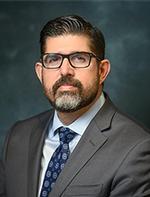
Florida Education Commissioner Manny Diaz Jr.
“After the passage of HB 1, it is one movement,” Florida Education Commissioner Manny Diaz Jr. said during his opening remarks at the conference, which was previously focused exclusively on charter schools.
This year’s event, held in Orlando, logged the highest participation rate ever with 853 attendees. Of those, more than 140 represented private schools.
Diaz said that while organizing this year’s conference, state education leaders had conversations about the importance of unifying the school choice movement, which historically had been more siloed.
“In Florida, we’re capitalizing on this historic school choice and charter school movement. We’re giving parents the ability to choose the best path for their students, regardless of background, regardless of income,” he said.
Florida enacted its charter school law in 1996 and launched its first private school choice program in 1999. Now, the state has more than 380,000 students attending more than 700 charter schools, and almost as many students enrolled in the nation’s largest suite of education choice scholarship programs. Together, those programs account for nearly a quarter of all the students in the state—a powerful political constituency if they joined forces.
Diaz called HB 1, which offered universal eligibility for education choice scholarships to all students regardless of family income and converted all traditional scholarships to education savings accounts, a “gamechanger” and urged members of the charter school and private school worlds to work together.
“The reason we have everybody together is it’s not two separate groups,” he said. “There’s so much collaboration that could go on between our charter schools and our private schools.”
In less than 30 years, Florida has come a long way from the days when parents had to lie about their addresses and risk criminal charges to gain access to the most desirable schools. Still, Diaz warned against complacency.
He wrapped up the opening session of the conference, which runs through Friday, with an admonition for everyone in the unified movement to keep innovating and creating new and better learning opportunities for students.
“Don’t make that mistake of becoming so mainstream that you become the status quo,” he said.
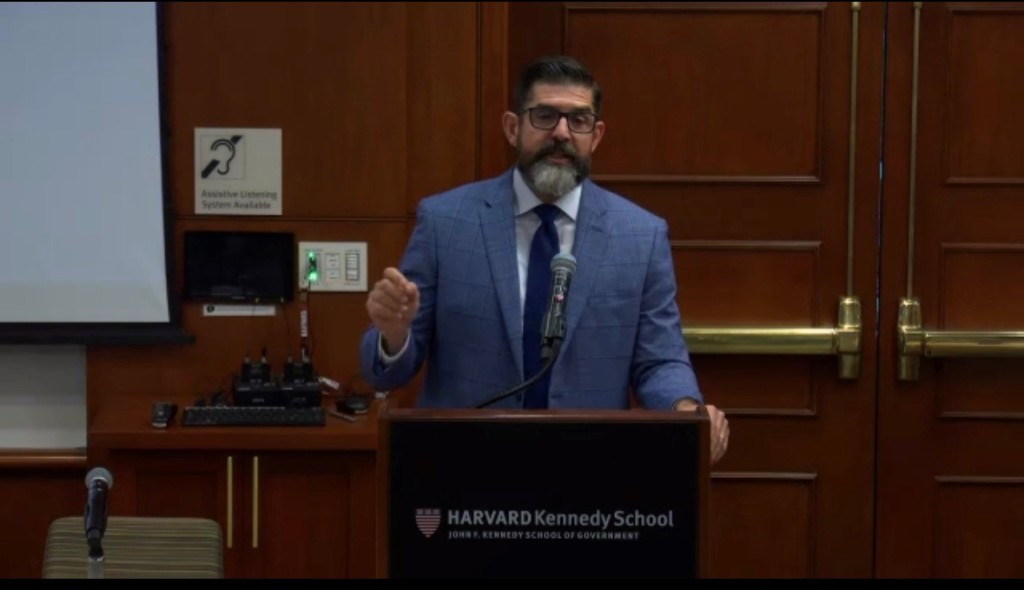
When it comes to education, a rising tide lifts all boats, Florida’s education commissioner told a national audience of school choice supporters and education entrepreneurs.
Look at Miami-Dade County, where leaders saw the tsunami coming and grabbed their surfboards.
“The district figured out that movement in South Florida was coming so fast and becoming so popular that the only way they could survive was to improve their services, (and) to improve their offerings,” Manny Diaz Jr. told those attending a conference sponsored by Harvard University called “Emerging School Models: Moving from Alternative to Mainstream.”
Despite the dire warnings that opponents have repeatedly issued since Gov. Jeb Bush and Florida lawmakers first began stirring up that school choice wave in 1999, none of the predicted devastation has come true, Diaz said.
Now, 70% of students in Miami-Dade attend a school of choice in the nation’s third-largest public school district. Those include charters, magnets, public schools with open enrollment policies and specialty academies, as well as the nation’s largest education choice scholarship programs.
Such a win-win situation didn’t stop the teachers unions and other school choice opponents from sounding the same alarms when he sponsored education choice legislation as a state senator.
“When we passed House Bill 1, they said the sky was going to fall,” Diaz said. “They were completely wrong.”
Over more than two decades, the legislation has created new options, including multiple scholarships with different funding sources that serve students with a variety of needs.
HB 1 was the latest advance. Signed by Gov. Ron DeSantis in 2023, it granted scholarship eligibility to all families regardless of income and converted all traditional private school scholarship programs to education savings accounts. The change allows parents the flexibility to spend their student’s allocation on tuition and fees, curriculum, part-time tutoring, and other approved expenses.
Diaz said the key to Florida’s success is its continuous quest for improvement, which at times has involved the passage of new expansions each year.
“It is a relentless chase of continuing to push,” he said. “The best defense is to be continually on offense.”
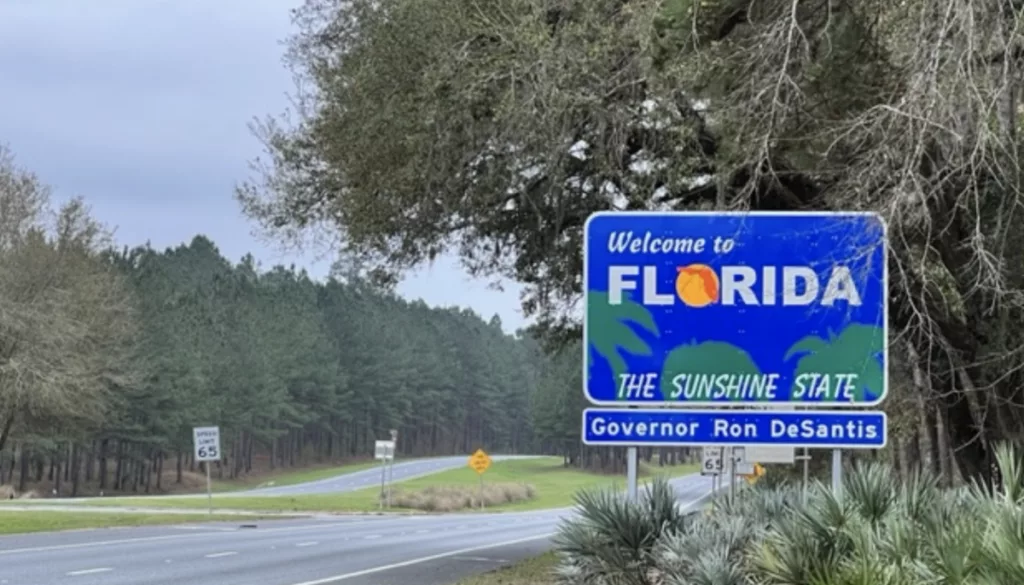
The Teach Coalition Office of Jewish Education Policy and Research released a study last week on enrollment in New York Jewish Day Schools. Enrollment growth has slowed, and after exploring multiple potential causes, they concluded that a primary driver has been Florida attracting young families:
"We therefore conclude that slowing enrollment growth in New York is likely because Jewish families are moving to other states…We cannot definitively answer why Jewish families appear to be leaving New York. However, since 2015 we have observed the highest Jewish kindergarten enrollment growth in states with a combination of lower cost of living, lower tuition costs, and/or government sponsored K-12 scholarships. It therefore seems likely that the high costs of living and Jewish education is driving young families out of New York…Indeed, California – which like New York has cost of living and tuition rates considerably higher than the national average – also saw a decline in Jewish kindergarten enrollment since 2015."
I suspect this trend is just getting warmed up. I’m aware of reports of families moving to Arizona from California and elsewhere in part to participate in K-12 choice programs. Governors have competed fiercely for companies for decades, but now that competition has trended to include a competition for residents and taxpayers.
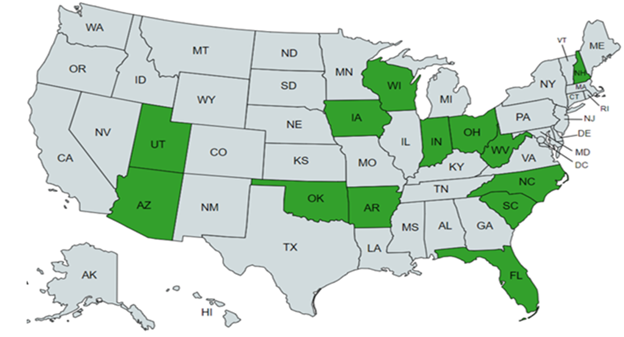
The governors of Alabama and Texas have announced their support for taking their states green on the above unofficial “rubusto choice” map. If you are the parent of young children, and you find yourself in a gray state, a readily available solution would be to move to a state that is willing to put you in the education driver’s seat. Life is short; best to take control of it.
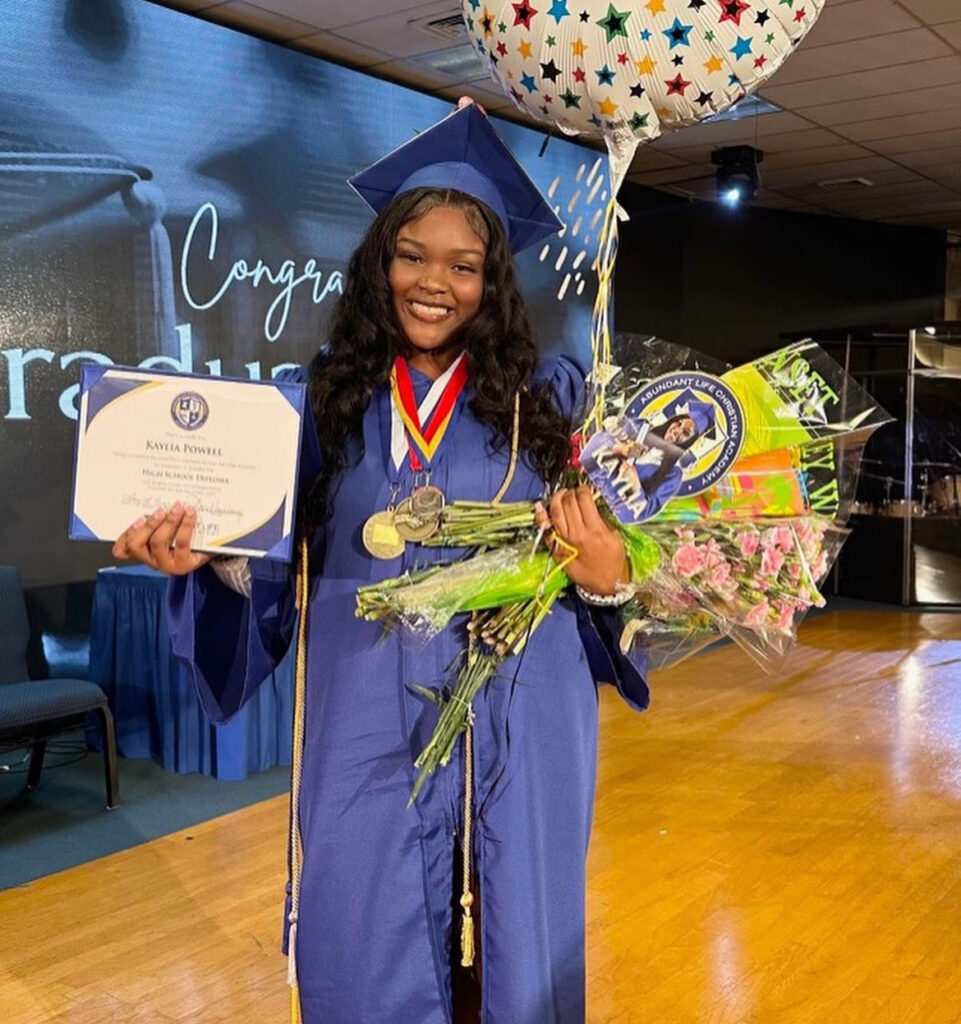
Kaylia Powell graduated first in her class in May from Abundant Life Christian Academy.
MARGATE, Florida – Kaylia Powell’s home life is in a constant state of flux.
At times, she has lived apart from her mom and separated from her brothers and sisters. She has lived with friends and, for a few months this year, at the home of a teacher. She has lived with her grandmother. She has lived in a motel.
When asked recently about her hopes and dreams, she replied with one word: “Stability.”
The chaos used to leave her angry at her assigned school, sulking in class because she didn’t have the things her classmates had. Kaylia doesn’t know how close she came to quitting school and becoming a statistic. But she feels she was going down that path.
What changed was the opportunity to attend a private school with the help of a Family Empowerment Scholarship for Educational Options. It is one of several education choice scholarships managed by Step Up For Students,which hosts this blog.
At Abundant Life Christian Academy, a private K-12 faith-based school in Margate, Kaylia found classmates who didn’t judge, teachers who cared, academics that were challenging and enough sports and clubs to keep her nonstop busy.
Kaylia enrolled as a sophomore and called the move “life changing.”
To continue reading, go here.
Christina Sheffield’s son, Graham, was soaring ahead of classmates. She wanted a learning environment that challenged him, so she created one herself.
She pulled him out of a private school and created a customized education plan. Using her know-how as a certified elementary virtual school teacher, she enrolled him in a hybrid homeschool co-op and designed projects to enhance the curriculum his former private school as using.
But there was a missing piece in her son's custom education plan: Their neighborhood public school.
That changed when the Tampa Bay area mom received the results of her son’s test for academic giftedness. Now officially identified, Graham, like other gifted homeschoolers, was able to access services offered by his local school district. He started going to a weekly gifted class at his zoned elementary school.
“It was his favorite day of the week,” Sheffield recalled. “After I picked him up on the first day, he said, ‘Mom, I finally feel like I fit in.’ That made my mom’s heart happy.”
Other students in similar circumstances might not be so lucky. Florida law allows homeschoolers to enroll in dual enrollment classes that lead to college credit, free of charge. Students participating in the state's growing array of educational choice options have access to extracurriculars at their local public schools under the state's "Tim Tebow law." But that same guaranteed access does not extend to math class.
Districts can offer homeschoolers access to career and technical courses, or services for exceptional students, included gifted programming for students like Graham. And a new law allows districts to receive proportional funding for any student who chooses to enroll part-time while participating in other educational options.
But they are not required to offer this opportunity.
A new analysis by the advocacy group yes.everykid. evaluated policies in all 50 states and found that states vary widely in policies that grant students access to their local public schools, regardless of where they live or whether they want to enroll full-time.
Florida's policies place it in the top 10 among states, but it has not yet guaranteed that every student has the right to access public schools on their terms.
Among the findings:
Florida tied with Alaska for ninth place when it came to allowing nonpublic and homeschool students access to public schools. Idaho, which met every criterion used in the rankings, was No. 1, followed by Iowa and Minnesota, which tied for second place.
Though HB 1 codified the option for Florida public school districts to offer part-time enrollment options and receive prorated state funding, it left the decision whether to participate up to the individual districts.
Districts may be reluctant to embrace this new flexibility, and some state policies make this understandable. For example, state class size limits may add to the staffing headaches for districts hoping to accommodate students who enroll part-time.
The new law also creates a process for districts to identify regulatory barriers that are preventing them from responding to the needs of students and families.
For decades, some districts have resisted the oncoming tsunami of new education options. Others have chosen to ride it, and now have new flexibility at their disposal. The question is whether they will capitalize on that flexibility to meet the needs of their students.
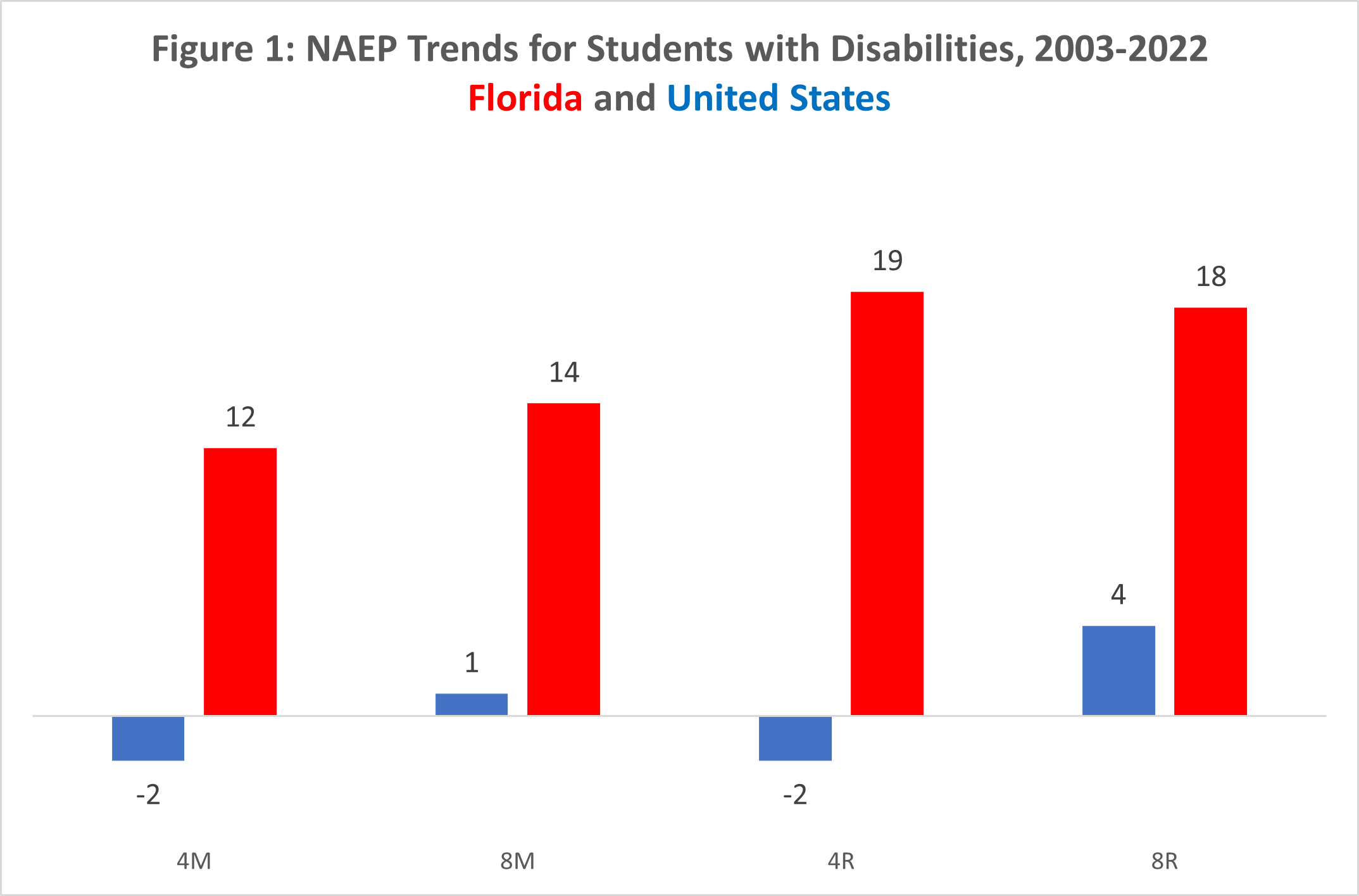
If you take the Nation’s Report Card data back as far as it will go to capture all 50 states (2003) and up until the most recent exams (2022), the trends for students with disabilities look like the chart above. For the United States across four exams you get a net 1-point increase. Let’s call that the midpoint between “spinning your wheels” and “playing in your food” spectrum. Meanwhile Florida made a net 63 points of progress, a grade level or more on each of the exams. A suite of reforms seems to have helped drive this progress.
Florida Gov. Jeb Bush’s reforms started in 1999 and included the creation of the nation’s first private choice program for students with disabilities. You can examine Figure 1 above and ponder whether the continual predictions of doom made by choice opponents seem the
least bit credible. Florida lawmakers created a separate education savings accounts, or ESA program, for students with unique abilities before consolidating the programs. Florida’s students with disabilities have had more choice access for a longer period of time than students in any other state.
Florida’s policies with a plausible connection to academic progress for students with unique abilities don’t end with choice. Florida pioneered the grading of schools A-F. Crucially, the Florida formula double weights the academic gains of the bottom 25% of students on the previous year’s state standardized exams.

