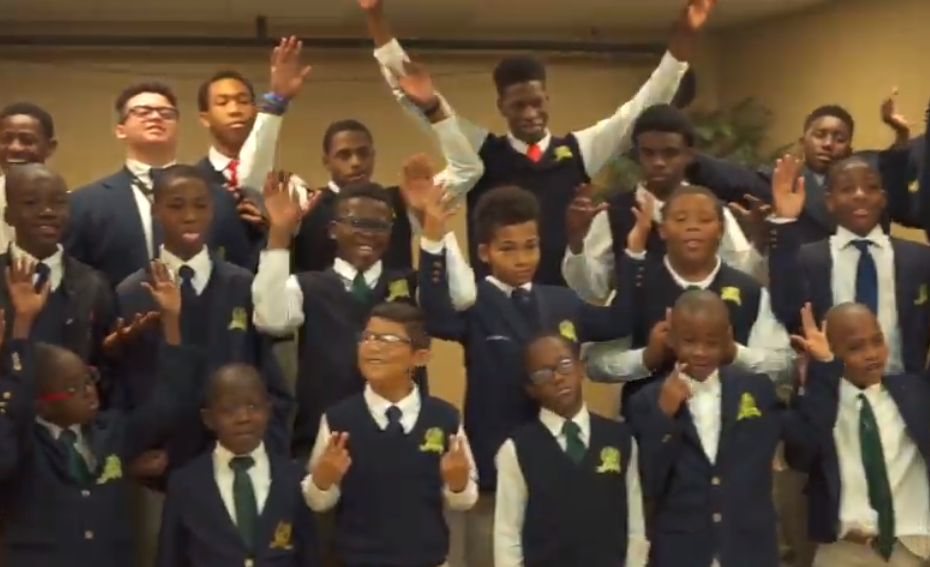
Launched in 2013, Piney Grove Boys Academy in Fort Lauderdale is one of more than 2,000 private schools that participate in Florida's array of choice scholarship programs, including the Florida Tax Credit Scholarship.
In its sixth annual audit of Step Up For Students, the state’s largest nonprofit scholarship funding organization, the Florida Auditor General has issued what amounts to a clean bill of health.
The report included only one finding on data procedures, which have been or are currently being addressed by the organization, while more broadly concluding: “Our Reading Scholarship Accounts audit procedures and tests of selected Step Up records and accounts found that Step Up generally complied with the applicable provisions of State law.”
The audit covered Step Up’s administration of four state-authorized scholarships in 2019-2020: the Florida Tax Credit Scholarship for K-12 students from low-income and working-class households; the Gardiner Scholarship for students with special needs; the Hope Scholarship for students who have been bullied in public schools; and Reading Scholarship Accounts that provide help for elementary public school students who are struggling in reading.
Collectively, the programs awarded scholarships to 143,320 students that year.
The report found that all reimbursements for student expenses in the Gardiner Scholarship program, which operates as an education savings account program, were in full compliance with the law.
“Our tests of Step Up records found that the Gardiner scholarship payments selected for audit were eligible program disbursements,” the report said. The report also found no compliance issues with the other four scholarship programs.
The only finding, auditors noted, related to Social Security numbers and whether Step Up was sufficiently restricting internal computer access to such numbers. It recommended that Step Up evaluate staff members’ access privileges to the database to ensure such access was necessary to perform their job duties and to document periodic evaluations of the necessity for access.
It also recommended that a system be established to remove access for staff members whose jobs no longer required it and grant temporary access to those who needed access only occasionally.
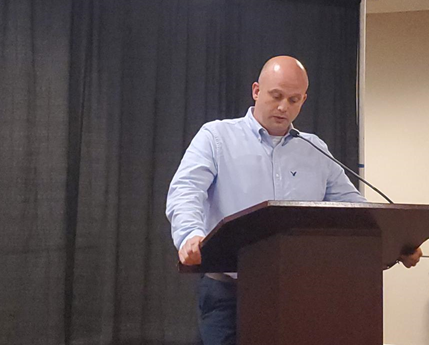 Among parent and educator advocates speaking Thursday before the Senate Appropriations Committee in favor of legislation that would streamline scholarship programs for Florida’s schoolchildren was Jerold Maynard. The firefighter and father of two spoke in favor of SB 48, which would eliminate the requirement that students applying for a Family Empowerment Scholarship or a McKay Scholarship must have attended a public school during the previous year.
Here are Maynard’s remarks:
Hello, I’m Jerold Maynard. I'm from Apopka and live with my wife and daughters in Senator Bracy’s district.
My wife, Jessica, and I are firm believers that every child deserves a champion, an adult who will never give up on them, and that is why I am here today.
We have made great sacrifices, including taking second jobs, to send our daughters to Trinity Christian, a school we felt was best for them.
But the pandemic created financial difficulties that made it impossible for us to afford the tuition.
Our daughters were heartbroken when we had to withdraw them from a school family they loved so much.
I'm not sure if any of you are parents, but I can tell you that predictability is a stabilizing force for children, and in a time when depression rates for our youth are at an all-time high, commitment to this is critical.
Ironically, now that the girls are in public school, they meet the prior-year requirement for the Family Empowerment Scholarship. But no family should have to pull their kids out of a school that works for them.
I’m glad Senator Diaz’s bill eliminates the prior-year public rule. Please pass this bill so future parents do not have to go through the struggles my family experienced trying to give our daughters the best education we could afford.
Thank you.
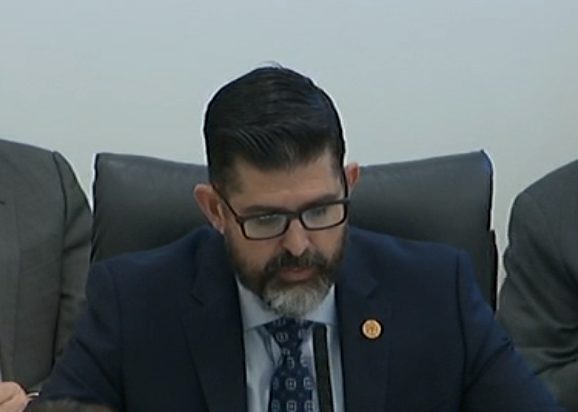
Sen. Manny Diaz Jr., R-Hialeah, lays out the parameters of SB 48 for his colleagues at today’s Senate Appropriations Committee meeting.
A bill that would simplify Florida’s education choice programs by merging five scholarships into two and add a flexible spending option is headed to a vote on the Senate floor after clearing the Senate Appropriations Committee today.
By a vote of 11 to 8 along party lines, with Sen. Aaron Beane absent, members approved SB48, which would transfer students receiving the Florida Tax Credit Scholarship Program to the Family Empowerment Scholarship and sunset the 20-year-old FTC.
“Parents are the best advocates for their children, and now more than ever, parents are seeking freedom from a one-size-fits-all system to look for resources and tools to uniquely tailor learning for their child’s individual needs,” said the bill’s sponsor, Sen. Manny Diaz Jr, R-Hialeah. Diaz added that the legislation will offer more options to more families by using money already dedicated for education.
The bill is among the top priorities of Senate President Wilton Simpson, R-Trilby, who praised Diaz for shepherding the legislation.
“School choice is here to stay,” Simpson said. “In recent months, the ongoing pandemic has even further highlighted the important responsibility of every parent to choose the best learning environment for their child, and with well over 100,000 students currently utilizing the variety of scholarship programs we have available, I’m glad we are streamlining eligibility and funding so that parents have a better idea of their full range of options.”
The bill also would merge the McKay Scholarship Program for students with disabilities and the Gardiner Scholarship Program, creating a new program for students with unique abilities called the McKay-Gardiner Scholarship Program. That program would allow families in all state scholarship programs to have flexible spending accounts, also known as education savings accounts, or ESAs. Currently, only students enrolled in the Gardiner program have such flexibility.
The accounts allow families to spend their money on pre-approved services and equipment in addition to private school tuition. Approved expenditures include electronic devices, curriculum, part-time tutoring programs, educational supplies, equipment, and therapies that insurance programs do not cover. The bill would expand eligible services for McKay-Gardiner students to include music, art, and theater programs, as well as summer education programs.
The scholarship programs are also available to homeschool students and those enrolled in eligible private schools. In addition, victims of bullying at district schools who transfer to private schools as part of the Hope Scholarship Program would also be served by the Family Empowerment Scholarship Program and receive the same spending flexibility.
Under the bill, donors would still be allowed to contribute to the tax-credit program through a newly created state trust fund. However, donations would go to serve K-12 education generally in the state, rather than pay for scholarships. Both the FTC and the FES are income based and serve students whose families meet financial eligibility rules.
The bill does not materially change the eligibility criteria for any of the scholarship programs and reduces the currently allowable statutory growth in some of the programs.
During the nearly two-hour debate, numerous individuals spoke in favor of the bill, including families who have benefited from school choice scholarships and others whose children have been denied scholarships because of a requirement that students applying for Family Empowerment Scholarships and McKay Scholarships must have attended a public school during the previous year.
SB 48 would eliminate that requirement.
“We have made great sacrifices, including taking second jobs, to send our daughters to Trinity Christian, a school we felt was best for them,” said Jerold Maynard, a firefighter from Apopka whose finances were hard hit by the coronavirus pandemic.
When the family applied for income-based scholarships, they were rejected because of the prior-public rule. Maynard said his daughters were heartbroken when they had to withdraw and attend a district school. He supports the bill because he wants to spare other parents from going through the same struggle his family endured.
“Ironically, now that the girls are in public school, they meet the prior-year requirement for the Family Empowerment Scholarship,” Maynard said. “But no family should have to pull their kids out of a school that works for them.”
Rasheda Alexander of Pensacola, whose two daughters receive scholarships to attend private school, said the program allows her children to enjoy a learning environment where “they don’t get lost in the mix.” Choking with emotion, she described how her older daughter was bullied at her prior district school because of a learning disability.
“I’m glad that Sen. Diaz’s bill would give parents even more options on how to spend their children’s education dollars,” she said. “This scholarship has truly been a blessing to our family. Without it, it would not be possible for me to put my children in the learning environment that is best for them.”
Support was not limited to parents. Mike Juhas, superintendent of Catholic schools for the Diocese of Pensacola/Tallahassee, recounted how the scholarship program came to the aid of a student with a heart defect by allowing her to afford tuition even as she and her mother lived paycheck to paycheck. Now a high school senior and honor student, the girl has been accepted to three colleges.
“I have seen firsthand how these scholarships change students’ lives,” he said.
Critics of the bill questioned how, with parents controlling the money, the program would ensure accountability.
Diaz responded that guardrails created eight years ago for the Gardiner Scholarship Program would apply to all educational spending accounts. An online purchasing platform includes only pre-approved items. If parents submit receipts for items not approved in the system, they run the risk of paying for the item or services on their own if approval is denied.
“This is not new to us,” Diaz said.
SB 48 was approved earlier this month by the Senate Education Committee and cleared the Senate Appropriations Subcommittee on Education two weeks later.
For more information about what the bill includes, click here.)
A companion bill is expected in the House.
The bill has received endorsements from several groups including the Central Florida Urban League. The Libre Initiative – Florida and Americans For Prosperity are sponsoring a joint campaign to promote the bill.
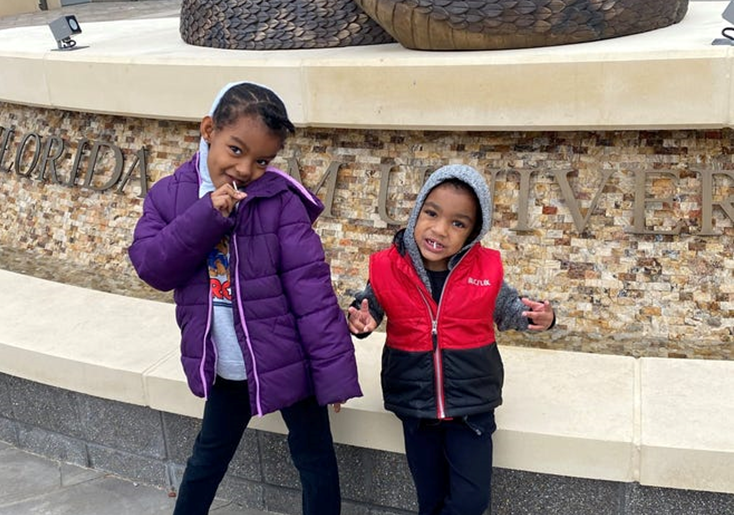
Derrick Standifer’s two children, ages 6 and 4, have benefited from the education choices he makes for them.
Editor’s note: This commentary from Derrick Standifer, a full-time single father of two and a Ph.D. student at Florida A&M University, appeared this morning in the Tallahassee Democrat.
I am a single father of two children, ages 6 and 4, who are exceptionally gifted. Traditional public schools simply don’t have the infrastructure to accommodate them, which is why I am grateful Florida provides learning options for families like mine.
It was so frustrating sending my daughter to kindergarten in public school. At 5, she could read on a third-grade level, was multiplying two-digit numbers and playing chess. The school’s kindergarten curriculum was to teach the children the letter sounds and how to count. My daughter was not being served.
But thanks to a school choice scholarship, she is afforded the opportunity to attend a private school that provides her with a curriculum that challenges her.
I wanted to share this because of a myth being perpetuated by people who are trying to stop SB 48, a bill that would give Florida families more choice and flexibility. Most recently floated by the Florida League of Women Voters, it suggests parents don’t know if their children are learning, can’t tell whether one school is better than another, and will be duped by “hucksters who promise miracles with computers systems and magical thinking.”
This is blasphemous. Increasing the educational options for parents allows them to place their children in the best environment that best meet their academic needs. And parents do know what’s best.
To continue reading, click here.
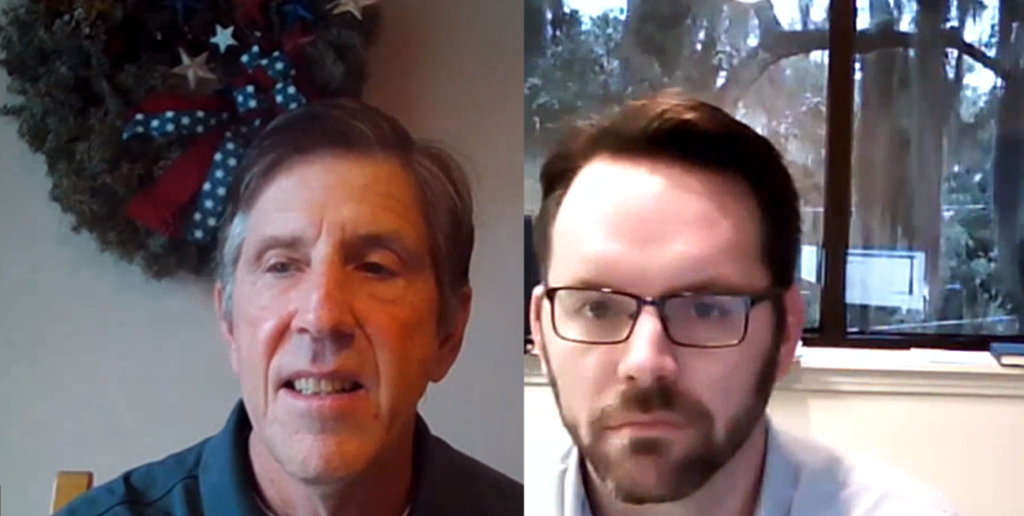 On this episode, Tuthill speaks with the Conference’s associate for education about the history of Catholic education and the tension between Catholic schools maintaining an open, welcoming environment for all students while adhering to the practices and beliefs of their religious identity.
With nearly 30,000 of Florida’s roughly 80,000 Catholic students receiving some type of state scholarship, education choice plays a significant role in Florida’s Catholic schools. Tuthill and Barrett discuss Senate Bill 48, the landmark choice bill proposed by the Florida Senate that will be discussed during this year’s legislative session, and opportunities the Catholic community has to better serve families should the bill become law.
"We are not trying to discriminate against anybody. We're trying to maintain (schools) where we can build and teach and provide an environment that is based on the fundamental aspects of the Catholic faith.”
EPISODE DETAILS:
· The history of Catholic education in America stemming from Protestant discrimination in the first modern public schools
· How education choice provides vibrancy to Catholic schools in Florida even as enrollment declines in other states
· Issues of religious freedom and non-discrimination language that governments are codifying into law
· How Catholic schools handle identity issues on a school-by-school, per-family basis rather than adhering to blanket policies
· Senate Bill 48 and how its potential to help Catholic schools serve more students in better ways
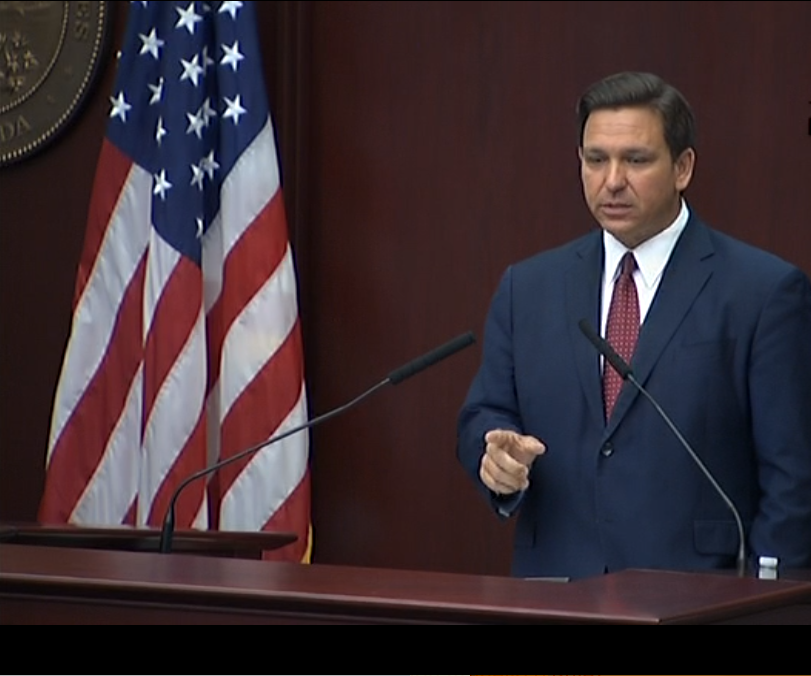 While other states were mandating lockdowns during the coronavirus pandemic, Florida was right to keep the state open, including its brick-and-mortar schools, Gov. Ron DeSantis said in his annual state of the state address today.
“Florida schools are open, and we are only a handful of states in which every parent has a right to send their child to school in person,” DeSantis told House and Senate members who gathered for the opening of the 176th legislative session. “We will not let anybody close your schools; we will not let anybody close your businesses, and we will not let anybody take your jobs.”
The governor also premiered a video that included scenes of happy, masked schoolchildren walking single file down the hall while being led by a happy, masked teacher. He thanked school administrators for their role in making sure campuses opened for the 2020-21 school year safely and smoothly.
In states that closed campuses, DeSantis said, the consequences will be “catastrophic and long lasting.”
Continuing the subject of education, DeSantis added that he hopes to build on last year’s priorities, which included a $500 million boost to raise district schoolteachers’ starting salaries to $47,500, putting Florida in the nation’s top five for teacher pay. He also cited education choice as a priority and congratulated the state for rising to No. 2 nationally in the percentage of graduating seniors passing Advanced Placement exams.
“Florida is leading in education, and we must continue to do so,” he said.
DeSantis’ remarks followed speeches from top legislative leaders delivered from their respective chambers earlier in the day.
State Senate President Wilton Simpson, R-Trilby, spoke specifically about Senate Bill 48, sponsored by Sen. Manny Diaz Jr., R-Hialeah. The bill would streamline the education choice system by combining five scholarship programs into two. It also would convert traditional scholarships to flexible spending accounts to give parents more control over their children’s education.
Simpson said the pandemic amplified the importance of parents’ ability to choose the best learning environment for their children. The scholarship programs, a patchwork system developed over two decades, needs to be simplified and accessible for the more 100,000 families who benefit from the program, which provides equity to lower-income families, he said.
“The fact is, school choice has always existed for wealthy families,” Simpson said. “I believe this option should be available to every family. It is the only way to truly break the cycle of generational poverty.”
You can read more about SB 48 here.
The 2021 legislative session is scheduled to run for 60 days and is expected to take up a number of education issues besides SB 48. These include school funding, dual enrollment affordability for private and homeschool families, career planning and workforce development and early childhood education.
Legislation under consideration includes SB 52, which would allocate $12.5 million to cover the costs of private and homeschooled who participate in dual enrollment programs by taking courses from a partnering college or university. The bill also would allocate $16 million to cover the costs of dual enrollment courses taken during the summer for all Florida students, including those who attend public schools.
The bill and its House companion, HB 281, would fix a glitch that occurred in 2013, when a change in the law shifted the cost of dual enrollment programs from colleges to school districts. Because school districts are state funded, the state picked up the cost. But private schools, which were not allowed pass the cost on to their students, had no alternative but to limit their dual enrollment offerings.
The Florida Conference of Catholic Bishops and the Florida Association of Academic Nonpublic Schools have each endorsed the dual enrollment bills.
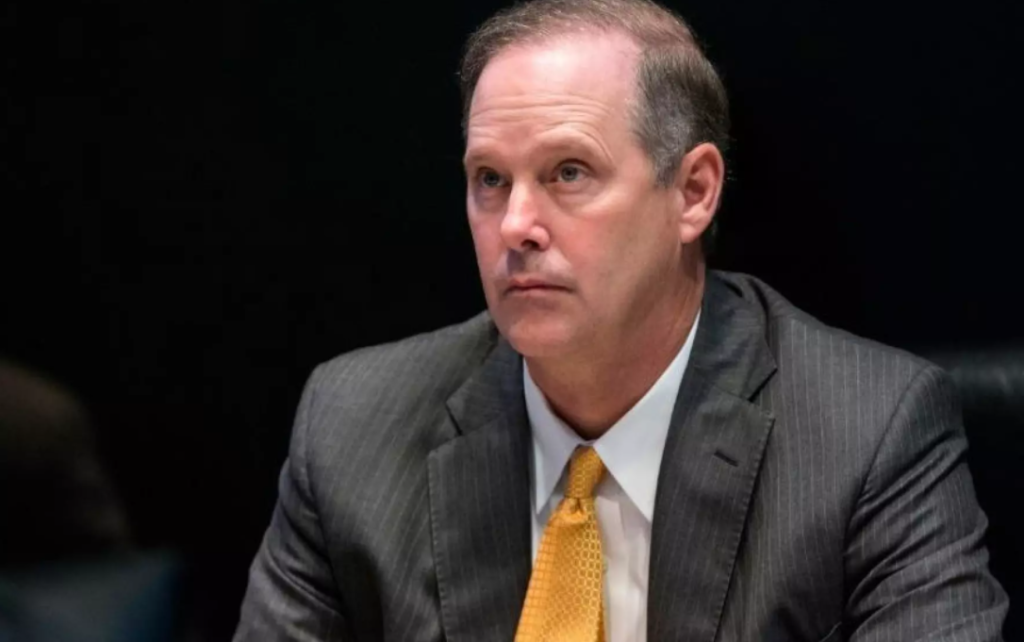 In remarks at the start of the 2021 legislative session earlier today, Senate President Wilton Simpson, R-Trilby, stressed the crucial role of school choice programs and the right of every family to make appropriate educational decisions for their children, regardless of their income level.
Here are Simpson’s remarks:
Most parents across our state are dedicated and hardworking and would do anything to give their children a better life then they had.
That’s why over the last two decades Floridians have embraced school choice programs. The problem is right now we have a pretty confusing system with various eligibility and funding mechanisms. The ongoing pandemic has even further highlighted the important responsibility of every parent to choose the best learning environment for their child.
With well over 100,000 students currently using the variety of scholarship programs we have available, it’s about time we streamlined eligibility and funding so that parents have a clear idea of their options.
The fact is, school choice has always existed for wealthy families. I believe this option should be available to every family. It is the only way to truly break the cycle of generational poverty. I’m pleased to see Senator Diaz leading this effort.
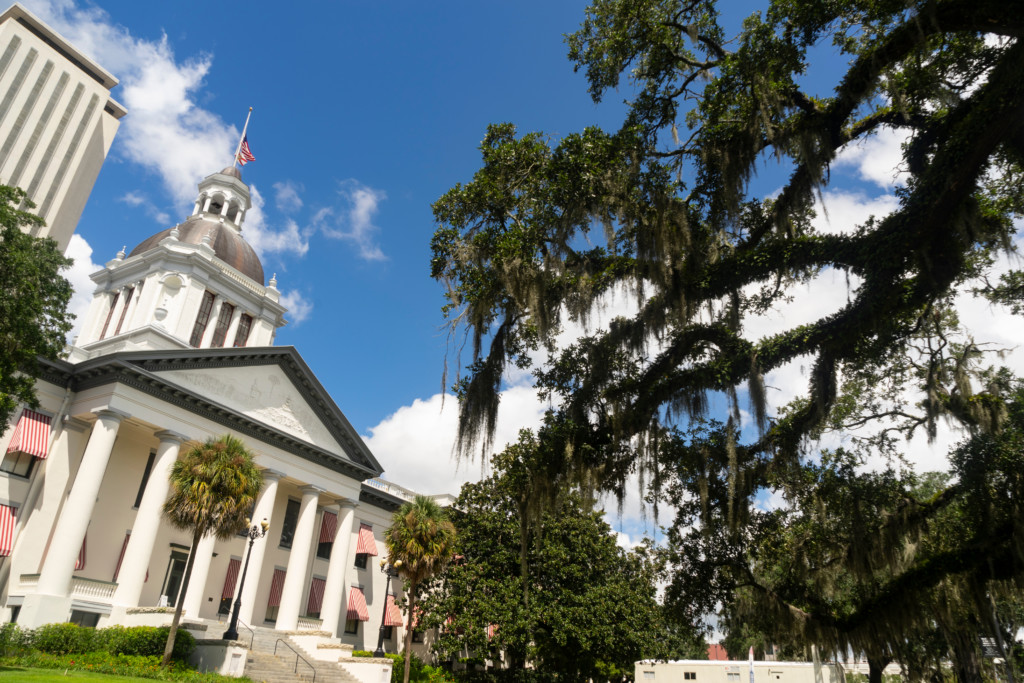 The 175-year-old Florida Legislature, which turns 176 on May 26, reconvenes today for its annual 60-day legislative session. The largest global pandemic since 1918 has played havoc with the state’s budget, so money, as usual, will be the dominant issue.
About 85,000 school district students were no-shows this year. The state held school districts harmless and paid them to educate these missing students, but whether taxpayers can afford continuing to do so will be a contentious issue. If the bulk of these students do not return this fall and state government stops funding nonattending students, school districts will be scrambling to reorganize their staffing models, building utilization plans, and budgets.
The federal government is sending billions in education funding to the states via a succession of Covid-19 stimulus bills, but these are one-time payments that should not be used for ongoing expenses, such as employee salaries and benefits. House Speaker Chris Sprowls recently sent a letter to district superintendents warning them against spending non-reoccurring funds on reoccurring expenses.
If the federal government passes another stimulus bill, state government and school districts may find themselves with millions of federal dollars that cannot be spent on pressing needs because the federal money is non-reoccurring. How best to manage this mix of one-time payments with ongoing financial needs will be another contentious issue for legislators to resolve.
The primary education choice bill this session is Senate Bill 48, sponsored by Sen. Manny Diaz Jr., and a priority of Senate President Wilton Simpson. This bill consolidates five education choice programs into two, provides families with greater spending flexibility by turning all the scholarships into Education Savings Accounts (ESAs), stabilizes the programs’ funding, creates growth caps to control expenses, and cleans up a plethora of technical issues that were making the programs overly cumbersome for families and schools.
You can read more about SB 48 here.
Senate staff spent six months working on various aspects of this bill, and it shows. Some of the more nuanced technical solutions are elegant despite the complex legislative language in which they are embedded.
That SB 48 is a Senate bill is unusual. Traditionally, innovative education choice legislation originates in the Florida House and then must navigate its way through the Senate. For the Senate to step up and propose a landmark education choice bill is a pleasant surprise. Once the House’s improvements are included, this will be a historic bill with significant implications for the education choice movement nationally.
The other important education choice bill this session makes dual enrollment programs more accessible to non-school district students. (See here and here.) Legislative changes a few years ago made dual enrollment far less accessible for private school students. Consequently, private school student participation in dual enrollment has been declining. This bill will hopefully fix that problem.
The House has made career planning and workforce development a top priority this session. The pandemic has driven unemployment rates to historic highs and forced millions of people to change jobs and careers. Aligning Florida’s education and training programs with current and future job openings is a critical need the Legislature will be addressing this session. Kudos to the House for taking the lead on this, and to the House staff for working endless hours crafting this legislation.
The House is also promoting legislation that will deliver developmentally appropriate books to the homes of young readers. This program, in concert with the existing Reading ESA for struggling elementary school readers, should help improve many students’ reading skills and, hopefully, inspire a love of life-long reading.
We have all been impacted by this devastating pandemic, but Floridians are resilient, optimistic, and forward looking. We are already on the road to recovery – a recovery I am confident will be accelerated by the decisions our Florida Legislature and governor make over the next 60 days.
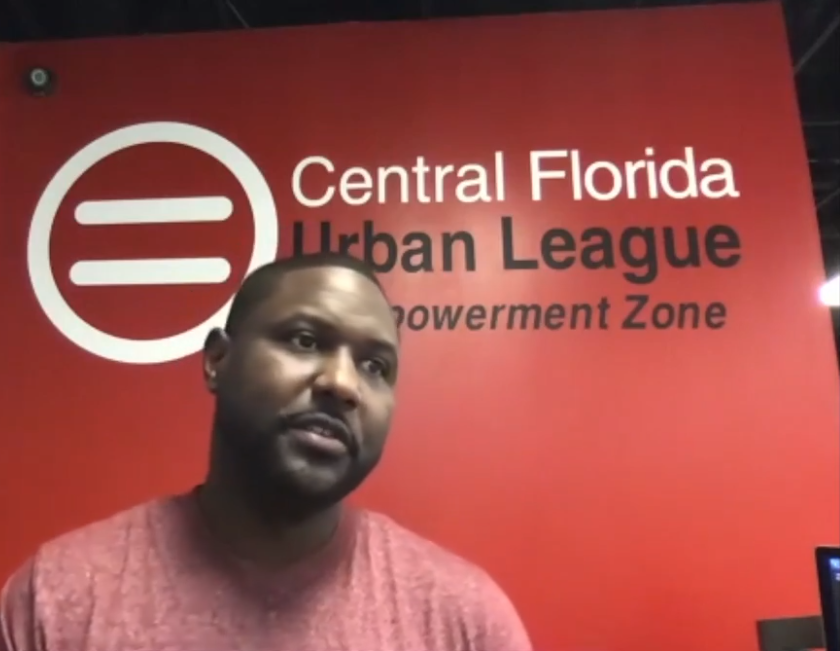
Glenton Gilzean speaking in September on a podcast about his early entrepreneurial experiences. Listen to the full interview at https://www.facebook.com/watch/?v=3417597471621950.
Editor’s note: This commentary from Glenton Gilzean Jr., president and CEO of the Central Florida Urban League and former Pinellas County School Board member and Florida A&M trustee, appeared earlier today in the Orlando Sentinel.
When I became president and CEO of the Central Florida Urban League, it was clear that our community faced some incredible challenges. Yet, I always believed that the path forward began with education.
Generational poverty stems from a vicious cycle that we’re all too familiar with. While our organization has helped upskill thousands to compete for high-paying, high-skilled jobs, this is a Band-Aid solution. If our goal is to end this cycle, our fight must begin with children.
For generations, children in low-income Black communities have endured a sub-par education model and these underperforming schools not only hurt our children, but our entire community.
According to the Orlando Economic Partnership, the average net worth for Black adults in Central Florida is less than $18,000 annually, compared to more than $215,000 for white adults. This overt discrepancy is a direct result of a failing education system. Without innovation, these failures will continue to compound as parents are forced to choose between feeding their families and supplementing their children’s education.
With a lack of support both at home and in school, the interest of our children to engage in their learning wanes. While I believe that every child is born with a thirst for knowledge, those in our community are born into a drought with no end in sight.
We can change this. Imagine a school with only a handful of students, learning in a safe and welcoming environment. With such small numbers, their teacher can work with each student, developing and following a personalized learning plan.
Aptly called micro-schools, this is the reality for those with means. But if the state passes a new education choice bill, this can become a reality for those in underserved communities too. Simply put: the low-income Black children who need them the most.
Senate Bill 48, sponsored by Sen. Manny Diaz Jr. (R-Hialeah Gardens), combines five education scholarship programs into two. The bill also extends the use of education savings accounts (ESAs), currently only available to the Gardiner Scholarship for special-needs students and the Reading Scholarship, to the newly merged income-based scholarships.
These accounts could be used to cover private-school tuition, technology, tutoring, curriculum and other approved items. Families would have the flexibility to spend their education dollars, providing them access to the learning environment that best fits their children’s needs.
This bill puts us on the cusp of providing these youth with a high-quality learning environment that will begin to close both the historical achievement gap, the school-to-prison pipeline, and the growing COVID-19 learning gap.
The past year has demonstrated that, now more than ever, families require educational options. Most children have regressed, struggling to maintain even the most basic curriculum. Throwing these students back into an unsuccessful system will further exacerbate their situation.
While the benefits for our youth are clear, micro-schools also provide economic opportunities. If parents have the freedom to spend their children’s education dollars through ESAs, they will demand providers that meet their needs. Entrepreneurs will invest in our communities and this cannot be understated.
As a result of the pandemic, over 40% of Black-owned businesses have closed, while the Black unemployment rate is hovering around 10%, four points higher than the state average. Networks of micro-schools would not only our lift up our children, but their families too.
My organization knows first-hand the success of ESAs. The Urban League partnered with several Orange County Public Schools to register more than 700 students to receive supplemental tutoring funded by the Florida Reading Scholarship. This was a blessing for parents who were unable to afford tutoring for their children.
We now have the opportunity to take ESAs to the next level and positively impact not hundreds, but thousands of children. I pray that our elected representatives listen to their constituents. Please fund students over systems, put money in the hands of parents who know what’s best for their children, and bring micro-schools to communities that desperately need them.
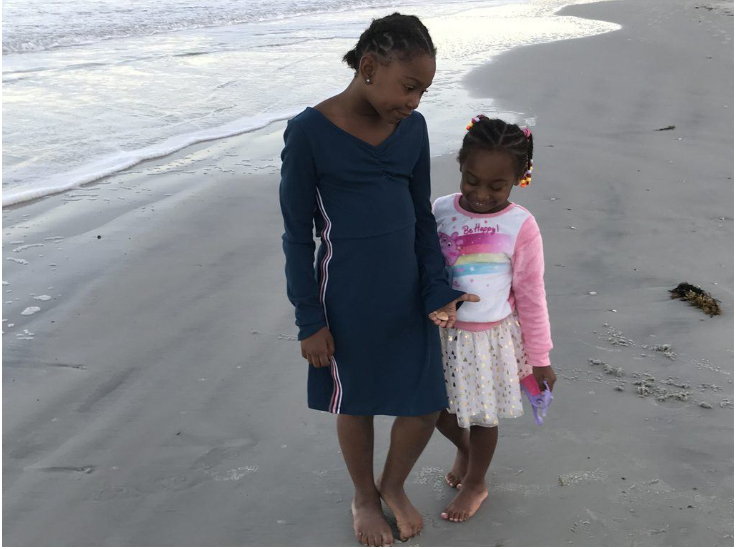
Sharon Strickland's great-granddaughters, Savannah and Karlee, gather shells on Daytona Beach.
Editor’s note: This story about how one family is participating in the Florida Tax Credit Scholarship program first appeared on Step Up For Students’ sister blog.
On a Friday morning in March 2020, a judge granted Sharon Strickland temporary custody of her great-granddaughter, Savannah.
The little girl, 8 at the time, had been living in unsanitary conditions, Strickland said, with an elderly relative who was in failing health. Savannah often went hungry.
According to Sharon, the family dynamic has been complicated and the children’s mother lost parental rights to all four of her daughters.
The youngest great-grandchild, Karlee, was already living with Strickland, having been placed there by the state four months earlier. Karlee arrived at Strickland’s doorstep at 10 p.m. on a Tuesday in early November 2019, carrying all her possessions in a backpack and a trash bag. She was 3.
Savannah came with even less. Just the clothes she wore that day to school – a shirt that was missing a few buttons and tattered pants. No socks.
To continue reading, click here.

