ORLANDO, Fla. — The name of a panel discussion at the State Policy Network’s 34th annual meeting was designed to get attention. But the most intriguing thing on the slide deck was the asterisk beside the huge letters that promised to reveal “Where the Wild Schools Are.”
“There is an asterisk on ‘schools’ for a reason: Virtually all of the programs you will hear about today are not technically schools,” said William Mattox, senior director of the J. Stanley Marshall Center for Education Freedom at the James Madison Institute in Tallahassee. “That is one reason we believe education choice, not just school choice, is so important. ESAs and other flexible scholarship tools make many of these options possible. Many of these programs simply would not exist without flexible scholarship funding.”
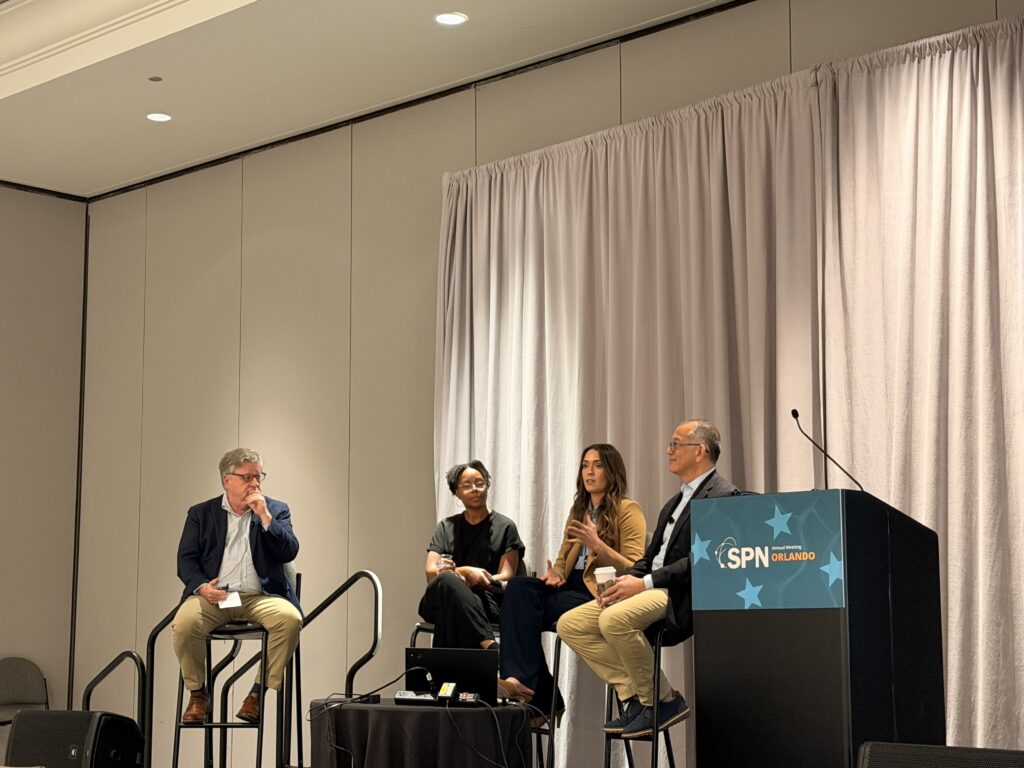
Mattox introduced two providers, one who founded a homeschool hybrid that operates near downtown Tampa, the other for a private school set on a 10-acre farm in Lakeland.
The third panelist, Ron Matus, director of research and special projects at Step Up For Students, also shared stories of programs across the state that he has written about since Florida lawmakers converted all scholarship programs to education savings accounts in 2023. Those include a Panhandle ranch school near the Alabama line, where students dehorn cattle and administer blood tests alongside classes in reading, math, science and social studies, as well as a South Florida couple who teach science with surfing and skateboarding.
“Much of the rest of the country is still trying to understand school choice. In Florida, we are moving from school choice to education choice in a big way,” Matus said.
For example, more than half of Florida students are now in something other than their zoned neighborhood schools. Of those, about 150,000 students are doing “a la carte learning,” receiving state support through scholarships that allow parents to mix and match education options outside of full-time schools, he said.
The point of the discussion was to share the experience of Florida with a national audience of policy researchers to show what is possible when states adopt education choice policies that give families maximum flexibility.
Tiffany Thenor shared her story of how she left her public school teaching job because she wanted the freedom to help students keep their sense of imagination and creativity as they learned core academics. In 2016, she and a friend opened a microschool in Lakeland they named WonderHere.
“The idea is that wonder should not be confined or restricted to the classroom,” said Thenor, whose program won a Yass Prize grant last year. “We created WonderHere as a proof point that we do not have to suffocate joy, wonder, and curiosity out of children in order to get strong academic outcomes.”
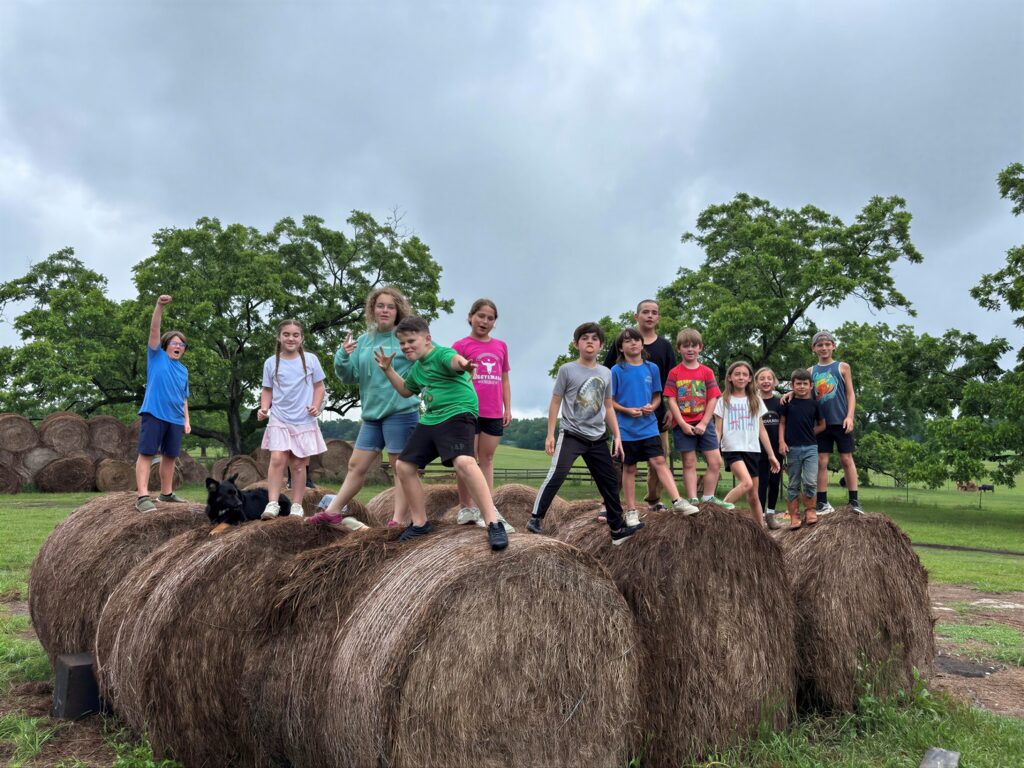
The main campus sits on a farm and serves 140 students. Students start the day with chores and gardening, then move into traditional academics taught in a non-traditional format. They spend at least two hours a day outside in nature and play.
Most of the students receive state education choice scholarships, so they complete required testing at the end of the year. WonderHere has been so successful that it has now expanded to locations in other parts of Florida and in South Carolina.
The county school district where the initial campus is located recently started a pilot project to offer the WonderHere model in the same public school where Thenor formerly taught.
Marissa Hess described her homeschool hybrid model, which also emphasizes learning through play. But unlike WonderHere, which is located near a small city, her Urban Cottage Educational Collaborative is only two miles north of bustling downtown Tampa in a federal opportunity zone.
“That might not seem ideal for a traditional outdoor program, but that was exactly the point,” said Hess, who was homeschooled and taught in U.S. public, private and Montessori schools. While living abroad before moving back to Tampa, she observed forest schools in northern Europe.
She said today’s children go to urbanized playgrounds that have rubberized mulch, shallow slides and no teeter-totters, no opportunities for risk, climbing or physical development.
At the same time, she heard many parents talking about their children’s occupational therapy and sensory processing challenges.
She wondered if children had enough opportunities to build core strength, ride bikes, climb, dig, and move their bodies in natural ways.
In 2015, she created Urban Cottage as a part-time program to help meet those needs. The forest playschool program uses a garden on a main thoroughfare. Hess worked with an occupational therapist and a speech pathologist to create a two-year curriculum focused on language, vocabulary, fine and gross motor development, speech and vocabulary.
In the playschool program, children grow food, compost, and learn through nature and play. There is a constant waitlist.
“Millennials are very aware of outdoor education and want it for their children because they remember part of their own childhood being analog. They want to bring back traditional childhood experiences: playing in dirt, digging holes, building strength, and learning how to grow food.”
Urban Cottage also offers instruction in core subjects, after-school tutoring and summer camps. It employs experienced educators and subject-matter experts, including professionals in science, physics, literature, and research. Classes are small and ability-based, with students often working closely with experts in one-on-one or small group settings. She intentionally caps enrollment to preserve nimbleness, allowing the program to adapt quickly to student and family needs. She also described Urban Cottage as a positive environment for teachers, giving educators freedom to teach in meaningful ways.
Hess is now working on partnerships with art studios, therapy services and other a la carte providers located near Urban Cottage to create an eco-system that offers families access to multiple services in one area.
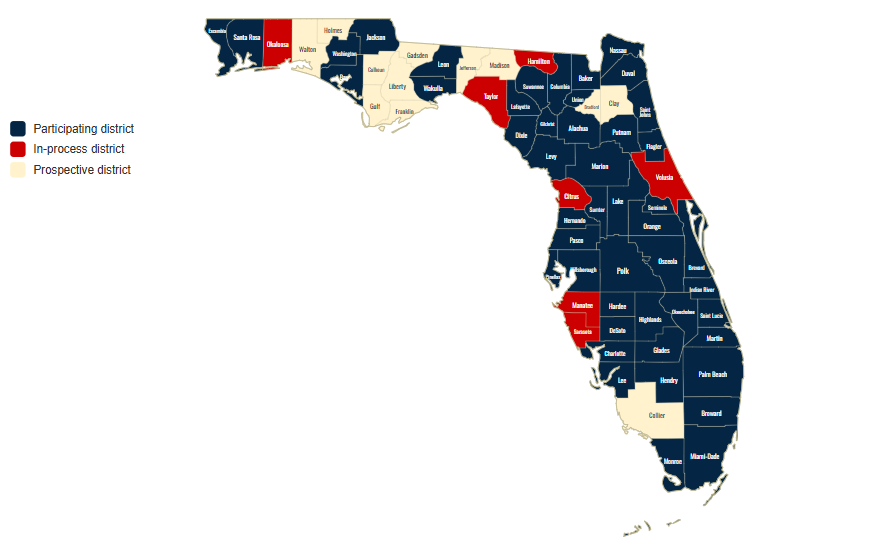
Matus pointed out that private providers aren’t the only ones benefiting from the new era of education freedom. Public schools can participate in the new marketplace rather than stand apart from it. Florida has not mandated that school districts offer a la carte courses, but 55 of 67 districts have signed up to do so with Step Up For Students. Districts can market underused classes, such as advanced courses or specialized labs, to scholarship and homeschool families while generating revenue.
The key takeaways were that education choice is no longer about letting families choose from among existing traditional schools but about making room for new kinds of learning. In Florida, that means programs being built around beaches, barns, gardens, buses, shared public school buildings, and neighborhoods.
For families, the promise is customization. For educators, it is the chance to build around their strengths. For policymakers, it is a reminder that flexible funding and flexible rules can expand supply in ways no single system could plan from the top down.
As Mattox said, Florida’s wildest “schools” may not be schools at all. But they may point to where the future of education choice is headed as other states follow Florida’s lead.
VENICE – He is not afraid.
Lyra Kerr wants to make that clear.
He is not afraid to climb a ladder that rises 29 feet above ground. He’s not afraid to stand on the small platform near the top of that ladder and reach for the bar that will swing him over the safety net.
Lyra is not afraid to hook his knees on the bar and dangle as he swings.
And he’s certainly not afraid to release his grip and spin once, twice, three times before bouncing to a stop in the net.
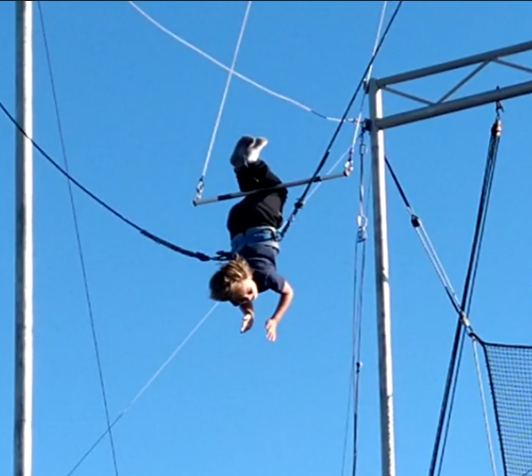
Yes, Lyra wears a harness and is assisted by two trained trapeze artists, but he’s 6, and the climb and the swinging and the spinning could be unnerving for a beginner, let alone one his age.
But, said his mom, McKenna Rodgers, “He’s fearless.”
“It’s not scary,” Lyra said. “It’s super fun.”
In fact, he added, it’s “the most super fun” thing he does.
For 90 minutes two days a week, Lyra is the daring young man on the flying trapeze.
He trains under world-renowned trapeze artist Tito Gaona at Gaona’s trapeze academy in Venice. The fee is reimbursed through his Florida education choice scholarship, managed by Step Up For Students.
Lyra, his stepsister and stepbrother each receive the Personalized Education Program (PEP) scholarship available through the Florida Tax Credit Scholarship Program. PEP provides parents with flexibility in how they spend their scholarship funds.
The scholarship enables McKenna to home-educate all three, who are enrolled in Florida Virtual School. She said her stepchildren, both teenagers, have improved scholastically since receiving the scholarship, especially in reading.
Lyra is just beginning his academic journey. McKenna is curious about where it will lead him and how, with PEP, she can tailor his academic needs and interests.
“I’m really happy to have access to it,” she said.
Lyra makes it look easy. (Video courtesy of McKenna Rodgers.)
The scholarship has paid for extracurricular activities for all three, including circus camp in the summer. Lyra is the only one who returned for training classes.
Tito Gaona said that Lyra can go as far as he wants to in the sport.
“Trapeze is a lot of fun, addicting. Once you get on a piece and you really like it, there's no end, because you fall in love with it because it's fun,” he said.
Venice, known as the “Shark's Tooth Capital of the World” for the tiny finds buried in the sand along its beaches, was once known as the “Winter Home of the Greatest Show on Earth.”
From 1960 to 1992, Ringling Bros. and Barnum & Bailey Circus brought circus performers, workers, and animals to Venice during the offseason.
McKenna, born and raised in Venice, has fond childhood memories of seeing the performers train during the winter, especially the trapeze artists.
Tito Gaona’s Trapeze Academy is located near the municipal airport. When McKenna drove by with Lyra, she would point at the students swinging through the air and tell him she always wanted to do that when she was his age.
One day, Lyra said he wanted to be a trapeze artist, and McKenna decided she was going to make it happen.
“It wasn't a vicarious thing,” she said. “It was just something we had around here that is not common and is unique to the area. The circus had its winter headquarters here, and should keep it alive in a way. Performance art is important.”
And Lyra did have some practice flying. Sort of. They lived for a time on a houseboat, and Lyra often dived into the water.
“I jumped off the boat,” he said. “Off the roof, really.”
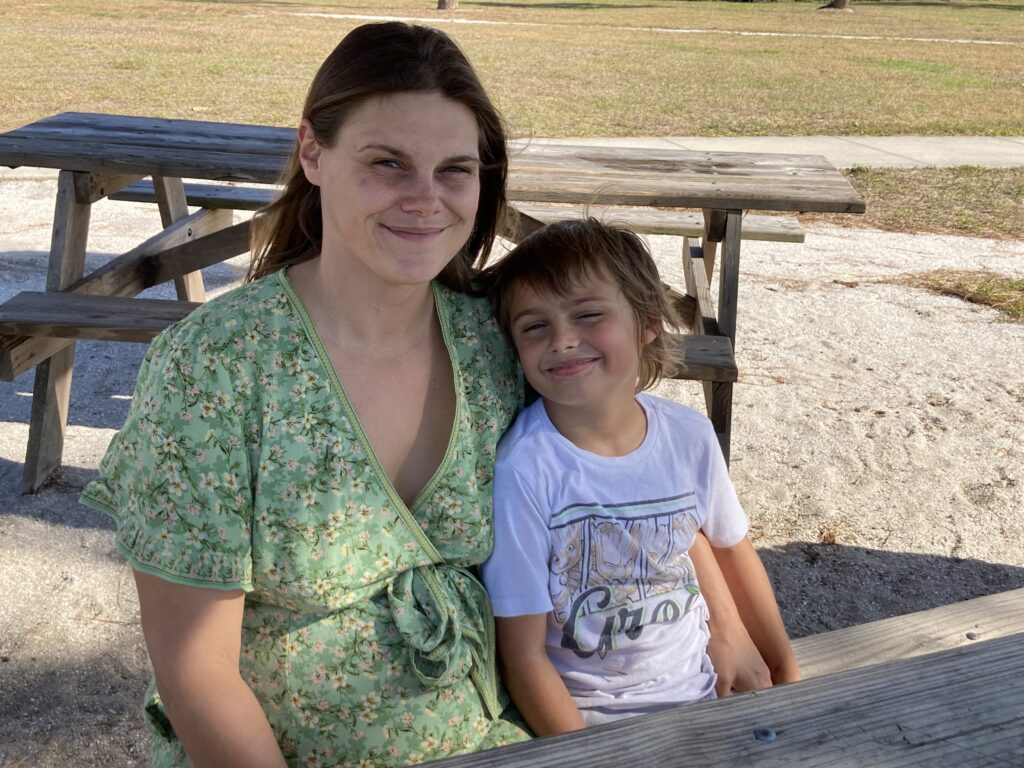
Looking for ways to harness Lyra’s energy, McKenna had already enrolled him in gymnastic classes. Tumbling through the air was a logical next step for a boy who loves to climb trees and dangle from bars in the playground near their Venice home.
Among the many perks of home education is that parents can set the daily schedule. This allows McKenna to keep some mornings free to take Lyra to the beach.
“No one’s there,” she said. “It’s my favorite time.”
Like a typical 6-year-old with boundless energy, Lyra’s interests are all over the place. He loves to swim, fish, play video games, and play with LEGOs. Right now, he is constructing “The Lord of the Rings: Barad-dûr,” the dark tower found in Middle-earth.
He even tried his hand at racquetball.
Nothing, though, beats the thrill of learning the trapeze.
The climbing, dangling, dropping, spinning.
To Lyra, none of it is scary.
It’s the most super fun.
CLEARWATER, Fla. — A check recently arrived in the mail for Landon Green, his compensation for the two hours he spent autographing baseball cards of himself one day last summer.
He signed 2,000 cards and was paid $1 for each signature.
That’s a nice payday for anyone, especially a 17-year-old high school junior who is among the top pitching prospects in the nation, one who is very much on the radar of top collegiate programs and Major League Baseball teams.
The landscape of amateur sports has shifted dramatically over the last few years, allowing athletes to benefit financially from their Name, Image, and Likeness (NIL) without jeopardizing their amateur status.
Likewise, the landscape of K-12 education in Florida has changed significantly with the expansion of education choice scholarship programs.

Landon, who is home-educated, receives a Personalized Education Program (PEP) scholarship available through the Florida Tax Credit Scholarship Program managed by Step Up For Students.
PEP, now in its third year, provides parents flexibility in how they spend their scholarship funds, allowing them to customize their children’s learning to meet their individual needs and interests.
“It allows us to select his academics based on his future, to study what we think will help him in his future,” Landon’s mom, Michele Donton said.
For Landon, that’s finance, business, and leadership – courses that will guide his financial potential. The scholarship also covers the cost of strength, conditioning, and mobility training – sessions that will help him improve athletically. Landon spends two to four hours a day either playing baseball or working on some aspect of his game.
“PEP gives us the flexibility to work around his schedule,” Michele said.
Morning workouts mean afternoon classes and vice versa. Also, Landon can still complete his schoolwork when he travels out of town for a tournament.
“I think (the PEP scholarship) is very beneficial for him, because he's not the typical go to school type of kid,” Landon’s father, Lamon Green, said.
Stacked among the textbooks on a table in the family’s Clearwater home is one published by the financial services firm Morgan Stanley titled “The Modern Athlete's Guide to Life, Money and NIL.”
Yellow sticky notes earmark chapters on “Smart Money Savings,” “The Business of You,” “Investing in Your Future,” and “Philanthropy & Legacy.”
It’s an important resource for someone like Landon, because the check he received for autographing baseball cards will be the first of many. He also has two NIL deals with athletic apparel companies. Opportunities for more deals can increase over the next two years as his career progresses.
“This kind of helps him and guides him through all of this,” Michele said. “It's the NIL bible, to be honest with you. It teaches you everything and anything you need to know.”

The days of teen-age baseball players being scouted during high school games by representatives from college and professional teams ended years ago. Now, top college and pro prospects like Landon attend showcase events around the country that draw scouts and evaluators from all 30 Major League Baseball teams as well as college coaches. Prospects play for travel teams, some of which draw from a nationwide talent pool.
Landon is also a regular at the USA National Baseball Training Complex in Cary, North Carolina. That’s where he autographed those baseball cards, and that’s where he attended financial seminars.
The National Collegiate Athletic Association (NCAA) changed its rules in 2021 by recognizing athletes as a brand and allowing them to profit from their identity. It wasn’t long before that trickled down to high school athletes.
So, not only is Landon a baseball prospect, but he is also a brand.
To that, he shrugged his shoulders.
Landon runs toward the quiet. He’s very businesslike on the pitcher's mound, retiring batters with not much fanfare.
“He’s very humble,” said his mom.
Landon’s answer when asked about his future was this: “Whatever happens, happens.”
Here’s what could happen:
If all goes according to plan, it will include either a scholarship to a Division I-A university with a top-flight baseball program or a contract with a Major League Baseball team after he is selected in the 2027 baseball draft. He has already had a workout with the Chicago Cubs.
Landon is already rated as one of the top pitchers eligible for the 2027 draft, which will be held after he graduates high school. A right-hander, his fastball has been timed at 98 mph, and it is expected to get faster as he adds bulk to his 6-foot-1, 174-pound frame.
The higher he is selected in the draft, the more money he will receive as a signing bonus.
If Landon chooses to play college baseball before turning pro, he stands to increase his NIL deals since he will be pitching for a prominent program. He is being recruited by a number of colleges, including blue bloods like the universities of Florida, Texas, and Miami, and Louisiana State University.
“I was one of his T-ball coaches back in the day. Watching him play on the grass, I would have never thought all this could happen. This is awesome,” said Lamon, who has been a Clearwater police officer for nearly 25 years.
“That’s why I tell him to stay out of trouble, do the right thing. I push him in his education to learn about money. Don’t blow it because you want a necklace. You have a future to think about.”
This is Landon’s third year of home education. Michele said the move was made to better control his learning environment. The fewer distractions made for a better student.
She was thrilled when she learned about the PEP scholarship and how it works. Many families who receive the scholarship are tailoring their children’s education based on their interests and needs, choosing options a la carte style. A growing number of parents are looking to the future when customizing their child’s education.
For Landon, that means his curriculum is evolving.
“We're always listening,” Michele said. “I'm constantly looking for material that can help him, that I think is going to help him in his future, whether it be financial literacy, learning how to invest. I really want him to learn how to invest. That's a big thing we're going to focus on this school year.”
 “History will show that this is the downfall of public education.”
That was Florida Sen. Perry Thurston (D-Fort Lauderdale) last week, responding to legislation that would expand opportunities and provide flexibility for low-income families. Many opponents of school choice share his sentiments. It’s a misconception of choice used to deny equity in education to the country’s most disenfranchised populations – low-income and Black families.
In recognition of Black History Month, we must take a historical approach to analyze the long and hard struggle for equity and equality in public education for Blacks.
The first recorded notion of a free public school was in the 17th century, and it was later proposed to use taxpayer dollars for education long before our country was founded. This was also during a time when the first enslaved Africans were shipped to Virginia in 1619 and threatened with death if they even attempted to become literate. As a Black man, I feel compelled to highlight that this injustice, coupled with over three centuries of systemic oppression, should have been deemed the downfall of public education.
Too often, opponents of education choice deny or ignore the fact that a government-funded public education system was established to exclude enslaved Africans, women and low-income families. In fact, public education originally was established to teach Puritan values and reading the Bible to sons of white, elite families.
This newly created system of public education required an additional 350 years to ensure Blacks could even attend school with their white counterparts, with a government content with “separate but equal.” There was no choice. There were no options for an equitable school experience. Blacks were forced to learn in schools with insufficient financial support and negligible resources. This gave birth to the opportunity gaps we see today.
As a result, Blacks had to use ingenuity and scarce resources to establish schools, including historically Black colleges and universities to address the growing need for knowledge in agriculture. They were created out of necessity, not choice. Prominent Black leaders from these institutions, such as W.E.B. DuBois and Booker T. Washington, had to advocate for equity and equality rights in a public education system that should have been afforded to them.
This is not entirely different from the education choice advocacy we see today. Black and low-income families are advocating to lawmakers for an equal opportunity in education.
The government has had more than 400 years to address the funding equity for predominantly Black and low-income neighborhoods, and the quality of the education has suffered. Conversely, government funding combined with education choice has yielded positive results. A 2019 Urban Institute study found that tax-credit scholarship students are up to 43% more likely than their public-school peers to enroll in four-year colleges, and up to 20% more likely to earn bachelor’s degrees.
In addition, a 2020 study by the National Bureau of Economic Research of the impact of the Florida Tax Credit Scholarship found positive impacts even on public schools – that as the program for students in private schools expanded, students who remained in public schools also benefited: “In particular, higher levels of private school choice exposure are associated with lower rates of suspensions and absences, and with higher standardized test scores in reading and math.”
But opponents ignore this because it demonstrates that when parents have a sense of empowerment, they are more engaged, and their kids have more positive experiences and success in school. Choice provides parents the opportunity to find schools that best match their children’s learning needs.
Florida school districts provide public education to the students within their assigned zones. It’s a right established by the state constitution. But the assumption that traditional public education customizes – or has ever customized – the learning experience for every child it serves is misguided.
In his eloquent response to Sen. Thurston at the Feb. 3 Senate Education Committee hearing, Jon Arguello, a member of the Osceola County School Board, argued that not every public school can meet the unique needs of every child in the district – just as the senator cannot satisfy the needs of every voter in his district. Some students need options and flexibility in their learning experience.
Unfortunately, education choice opponents will have you believe that only traditional public education can ensure that all students are adequately served with resources that are equitably distributed. The unfortunate reality is that the areas where these families reside are not equal, and neither are the resources.
That’s a big reason why 1.5 million students in Florida are exercising some form of choice. Families have explored charter schools, magnet schools, and voucher programs that have provided more options for students.
Our society has such a sordid history of discriminatory practices and systemic racism in education that it’s absurd to decry parental choice as the “downfall of public education.” For many low-income and Black Americans, the system has never had anywhere to go but up. The populations that historically have benefited from public education will continue to be successful, because they already have the means to exercise choice.
We must level the playing field so that every child will have the opportunity to succeed regardless of socio-economic status.
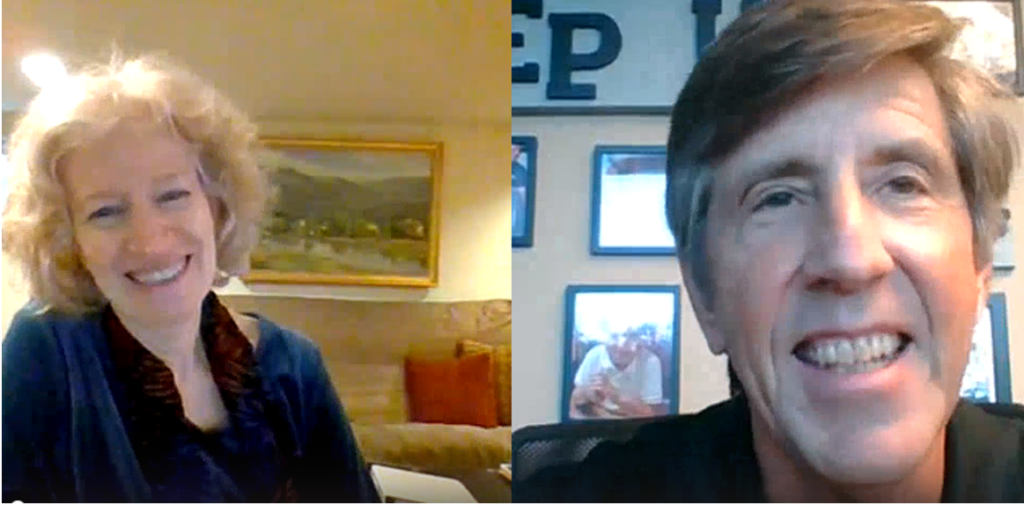 On this episode, Tuthill talks with writer, lawyer and legal historian Wexler, author of The Knowledge Gap: The Hidden Cause of America’s Broken Education System – and How to Fix It. Wexler argues in her book, published in 2019, that the modern “standard” approach to teaching only further increases inequities for students who do not begin their lives with education advantages at home.
The two discuss how schools should operate differently and focus on coherent curriculum that extends through grade levels. Wexler believes all individuals use their “background” knowledge subconsciously to make sense of the world around them, and that many students, through no fault of their own, enter school without that knowledge and continue to fall behind.
"Teachers have told me over and over again that it is the ‘low achievers’ who flourish the most under the content-focused, knowledge-building approach. They are the ones who make the most insightful contributions to class discussion ... What's really striking is the equity (the approach creates).”
EPISODE DETAILS:
· What Wexler’s book has to say about what’s “broken” in the education system
· The theory that skill development driving test scores has the opposite effect
· How Wexler views modern writing instruction and how she thinks it should change
· Wexler’s concern about going too far toward individualized or customized learning

