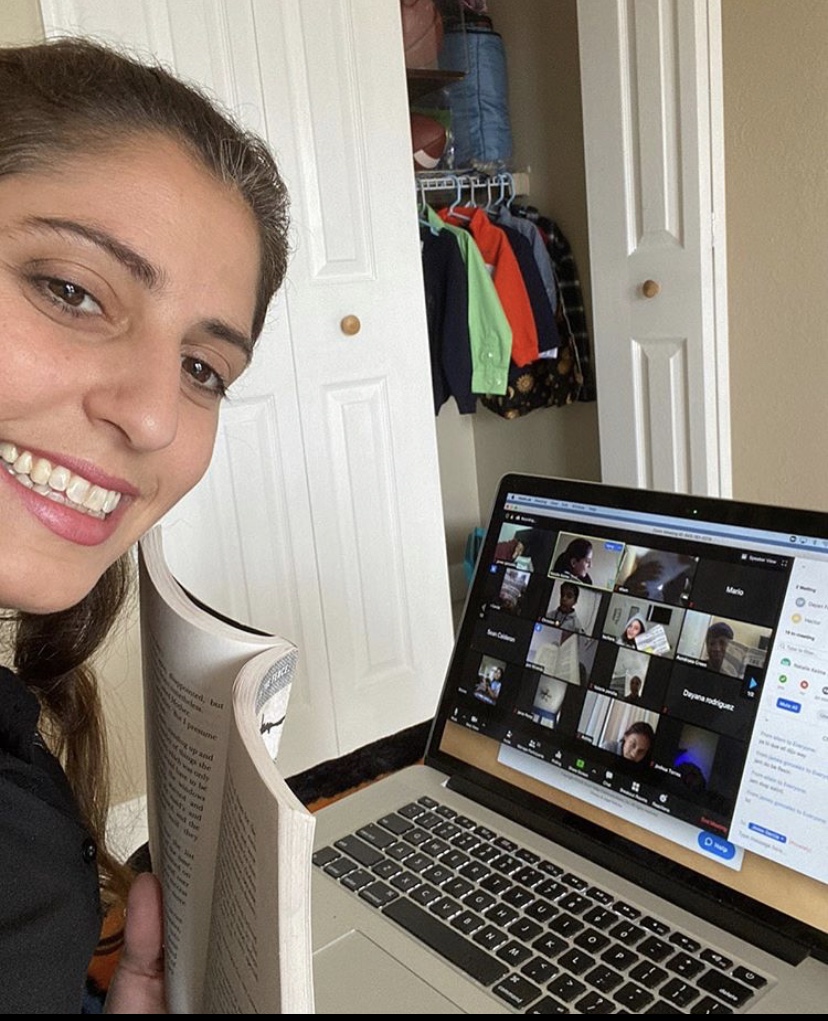
Natalie Keime, ESOL coordinator and sixth-grade intensive reading teacher at Somerset Oaks Academy in Homestead, delivers a virtual lesson to her students from her home.
Editor’s note: During the holiday season, redefinED is reprising the "best of the best" from our 2020 archives. This post originally published March 26.
About a decade ago, Fernando Zulueta was making a presentation to school district officials in Florida about why his charter school support company, Academica, needed to expand into online learning. For one thing, he told them, charter schools serviced by Academica must better serve students who need flexibility because of their talents (say, an elite gymnast) or their challenges (say, homebound because of illness). For another, he said, you never know when a natural disaster – maybe even a pandemic – might necessitate a transition into virtual instruction.
Fast forward to coronavirus 2020.
Academica, now one of the biggest charter support organizations in America, was among the first education outfits in America to shift online as thousands of brick-and-mortar schools were shuttered. The company began planning for potential closures weeks in advance. And when the closure orders were given in Florida, it trained thousands of teachers, distributed thousands of laptops, and acclimated tens of thousands of students to a new normal – in a matter of days.
“I’m not a doomsday prepper,” Zulueta said. “But when you do the work we do, you have the responsibility to be prepared … and to evaluate risks and contingencies in the future.”
On March 13, Florida Gov. Ron DeSantis ordered all public schools in Florida to extend spring break a week so students would not return to school. At the time, the vast majority of Florida districts were about to start their spring break, while a handful of others were ending theirs.
Most of the Academica-supported charter schools in Florida were still a week from break. But by March 16, about 40,000 of their 65,000 students logged into class from home. By week’s end, most of the rest had, too. Within days, Academica’s Florida schools were reporting, based on student logins, nearly normal attendance rates.
“I had a little bit of mixed reaction” when the call came to transition, said Miriam Barrios, a third-grade teacher at Mater Academy of International Studies, an Academica-supported school in Miami. Ninety-nine percent of Mater’s students are students of color; 97 percent are low-income. “A lot of these families don’t have computers. So, it was a little scary.”
“But overall things have gone so well, much better than I expected,” Barrios said.
“It ended up feeling a lot like being in school,” said Claudia Fernandez-Castillo, a parent in Miami whose daughters, ages 11 and 12, attend another Academica-supported school, Pinecrest Cove Academy. “They made the kids feel very comfortable with this massive change in their little lives.”
Academica services 165 charter schools in eight states, including 133 in Florida. Somerset, Mater, Doral and Pinecrest are its main networks. According to the most rigorous and respected research on charter school outcomes, students in all four networks are making modest to large gains over like students in district schools.
It remains to be seen how well schools in any sector respond to what is an unprecedented crisis, and what the impacts will be on academic performance.
School districts are mobilizing quickly. In Florida, most of them still have a few days to prep before the bulk of students return to “school” March 30. To date, there’s been little coverage of how Florida’s 600-plus charter schools are coping (though there’s been a glimpse here and there for charters elsewhere.) Ditto for Florida’s 2,700 private schools. Some are proving nimble and capable. But given the big resource disparities, it’s an open question whether others with large numbers of low-income students have the technology and support they need to turn on a dime.
For Academica, online learning is familiar territory. The organization supports three virtual charters in Florida. It offers online courses for students in its other Florida schools. For a decade, it’s also had an international arm, Academica Virtual Education, that serves thousands of students in Europe who need dual enrollment classes to earn specialized diplomas.
Given the events in China, Zulueta said his team began considering, in January, the possibility of school closures in America. The urgency ramped up in February, when the spread of coronavirus in Italy began affecting Academica students in that country.
In mid-February, Academica-serviced schools in the U.S. sent questionnaires to parents, asking if they needed devices and/or connections for distance learning. They ordered what they needed to fill the gaps. When Gov. DeSantis made what was effectively a closure announcement March 13, Zulueta said, “we were already ready to rock and roll.”
The day after the announcement, Academica used online sessions to do basic training in online instruction for 150 administrators. Over that weekend, it trained 3,000 teachers. Meanwhile, schools distributed several thousand laptops to families, in some cases through drive-through pick-ups. Zulueta said the need ranged from 4 percent at some Academica client schools to 20 percent at others.
Schools also immediately let parents know what was coming Monday.
Zulueta, who has three daughters in Academica-serviced schools, witnessed the new normal at his kitchen table.
“They got up. They logged in. And they went right to class,” he said. His daughters and their classmates wore their usual uniforms. The schools did their best to stick to established bell schedules. “We wanted to keep it as close to what they did at school as possible.”
Like students at Academica-serviced schools throughout Florida, television production students at Doral Academy Preparatory High School have quickly adapted to a virtual learning environment.
Academica uses an online learning platform it created itself. It’s integrated with a number of other tools, including Zoom, the video conferencing software with the “Hollywood Squares” look.
Fernandez-Castillo, the mom at Pinecrest Cove Academy, said she watched over the weekend as friends who are Academica teachers practiced the new online platform with each other. Barrios, the Mater teacher, said she contacted her students’ parents after her training on Friday to tell them she would be testing the platform at 8 that night if they and their children wanted to join. Eight to 10 families did. But she still had some anxiety about Monday morning.
“I thought it was going to be a freak show,” Barrios said. “The computers are going to crash, the kids are not going to log in … “
That’s not what happened. Monday morning was “a little jagged,” she said, because some students experienced technical difficulties and couldn’t log in right on schedule at 8:30. But by 8:50, 90 percent of her students were in. “It was amazing,” she said.
Barrios and other teachers used Monday to get their students familiar with the new set up. Any glitches, like problems with Internet access, were minor, she said. Over the next few days, she and her students quickly cleared little hurdles, like students learning to keep their mics on mute until it was their time to speak, and how to use chat functions to indicate they had a question.
Barrios doesn’t think there’s a long-term substitute for the dynamics of an in-person classroom, where students, in her view, can more easily “bounce ideas off one another.” But as a next best thing, she said what her school is doing is far better than nothing, and not bad at all.
Fernandez-Castillo agreed, and pointed to other upsides. “Everybody’s thrilled with the way this has been done,” she said, referring to other parents. “I think it glued the (school) community together even more.”
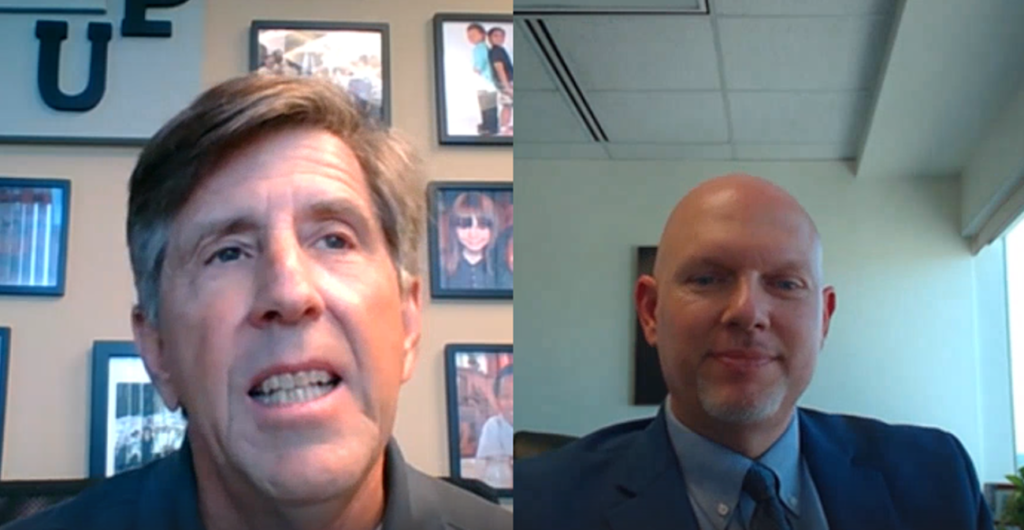 In this episode, Step Up For Students president Doug Tuthill talks with Eric Hall, who joined the Florida Department of Education in February 2019 to deal with some of the state’s most high-profile initiatives, including the expansion of school choice.
A little more than a year into Hall’s tenure as head of innovation, COVID-19 began roiling education, and it looks like those disruptions will continue into the fall. A firm believer in the power of Florida Virtual School, he is convinced the state’s investment in online learning leaves the Sunshine State well-positioned to educate students. He discusses with Tuthill FLVS’ capacity to ramp up to serve nearly 4 million children, how to prevent rising achievement gaps in a distance-learning environment and his belief that great teachers drive technology.
"We have conditions in place that have empowered parents to make the best decisions for their children … we’ve got to double down and hold ourselves accountable as a state.”
EPISODE DETAILS:
· The agility of Florida Virtual School as both a COVID-19 safety net and an expanded resource for a shift to blended learning for families who want it
· How distance learning and blended education extends the classroom beyond the school day while creating greater equity for less resourced families
· How to realign resources to get increased technology to more families
St. Joseph Academy families have launched an effort to save the school, where 78 of 162 K-8 students participated in the Florida Tax Credit Scholarship or Family Empowerment Scholarship programs for lower-income students.
An 82-year-old Catholic school in Florida has abruptly announced its closure, another telling sign that COVID-19 is eroding the financial ground beneath private schools.
At the beginning of the school year, the Catholic Diocese of Orlando had been discussing the possibility of revamping the St. Joseph Academy in Lakeland, Florida, a half-hour east of Tampa. But in a letter to parents Friday, the Very Rev. Timothy LaBo, pastor of St. Joseph Church, said the financial devastation wrought by the pandemic quickly led to a “serious impact on our re-enrollment numbers.”
“What we could not have imagined was the COVID-19 pandemic and its effect upon our world in such a short time,” LaBo wrote in the letter obtained by Lakeland Now.
The closure of the K-8 school shocked St. Joseph parents, who immediately launched an effort to save the school. But it’s not a surprise to those watching private schools across America struggle as parents lose jobs, businesses close and charitable contributions evaporate.
A survey by Step Up For Students, the nonprofit scholarship funding organization that hosts this blog, found 73 percent of Florida private schools said they are experiencing declines in re-enrollment last year, and 58 percent said they’re worried about their viability for the coming school year. The research and advocacy group EdChoice got similar results when it surveyed private schools nationwide last month. More than 20 million Americans lost their jobs in April, including 893,000 in Florida.
The Sunshine State has one of the biggest private school sectors in the country, and some of the nation’s biggest school choice programs. But those programs are primarily for lower-income students and students with special needs. It remains to be seen how much they will help private schools trying to retain working-class and middle-class parents who may be forced, in coming months, to make agonizing decisions about their children’s educations.
Seventy-eight of St. Joseph Academy’s 162 K-8 students used the Florida Tax Credit Scholarship or Family Empowerment Scholarship for lower-income students, while 26 used the Gardiner Scholarship or McKay Scholarship for students with special needs. (The FTC, FES and Gardiner programs are administered by nonprofits like Step Up.)
To date, the most meaningful government relief for private schools has come from the Paycheck Protection Program, which offer a two-month respite for small businesses and nonprofits. Other federal relief streams for education are aimed primarily at public schools, and attempts to steer a more equitable share to private schools has met with relentless pushback.
Other potential remedies, including the possibility of temporary tuition tax credits, have so far generated little debate. Likewise for the potential negative impacts on public schools, which will likely have to absorb former private school students in the face of massive financial and logistical challenges.
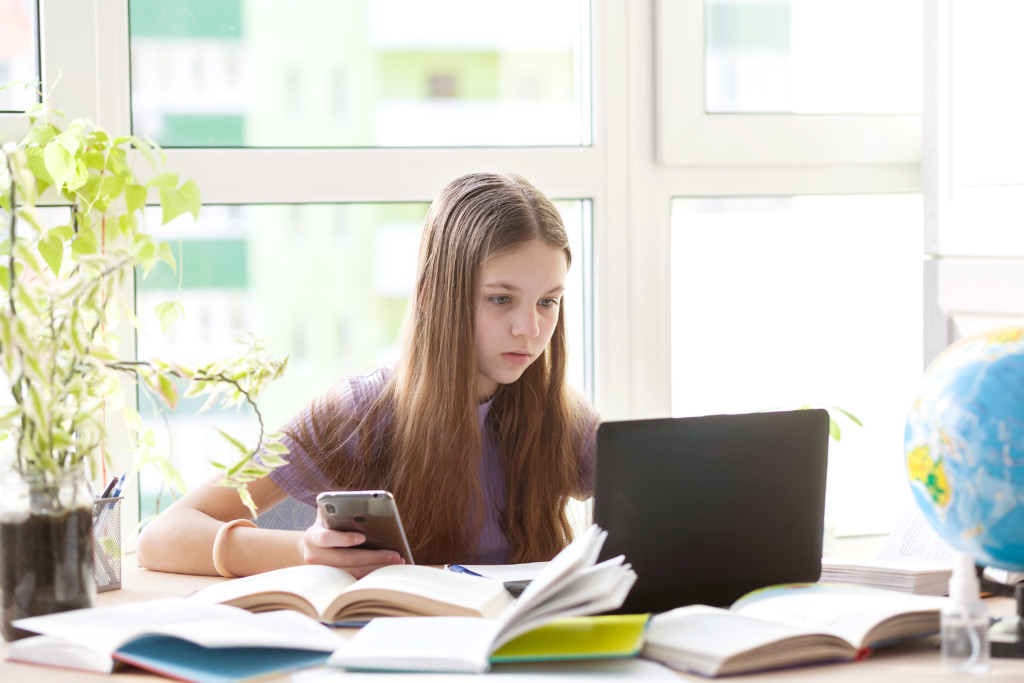 Editor’s note: The Philadelphia Inquirer recently encouraged a debate between a local parent and veteran policy analyst and redefinED guest blogger Jonathan Butcher on the question of whether grading is necessary to keep students on track amid arguments that grades during the pandemic are ambiguous and unfair. Butcher argued in favor of the former. Here is his commentary.
Most of us will spend at least a dozen years in school starting at age 5. For an increasing share of young adults, the education experience lasts 16 years or more, as the percentage of 18- to 24-year-olds enrolling in college has risen from 35 percent to 41 percent since 2000.
Pandemics, mercifully, do not last as long as our school-age years.
Each school year builds on the prior one, so officials must prevent the 2019-20 school year from becoming a lost academic experience for Philadelphia students. Abandoning student grades during the pandemic would put everyone — policymakers, taxpayers, parents, teachers, and students — at a disadvantage next fall.
Thousands of students will return to physical, hybrid, or virtual city classrooms in August. Without some measure of how children finished the year, teachers will not be able to match instruction to each child’s needs.
Continue reading here.
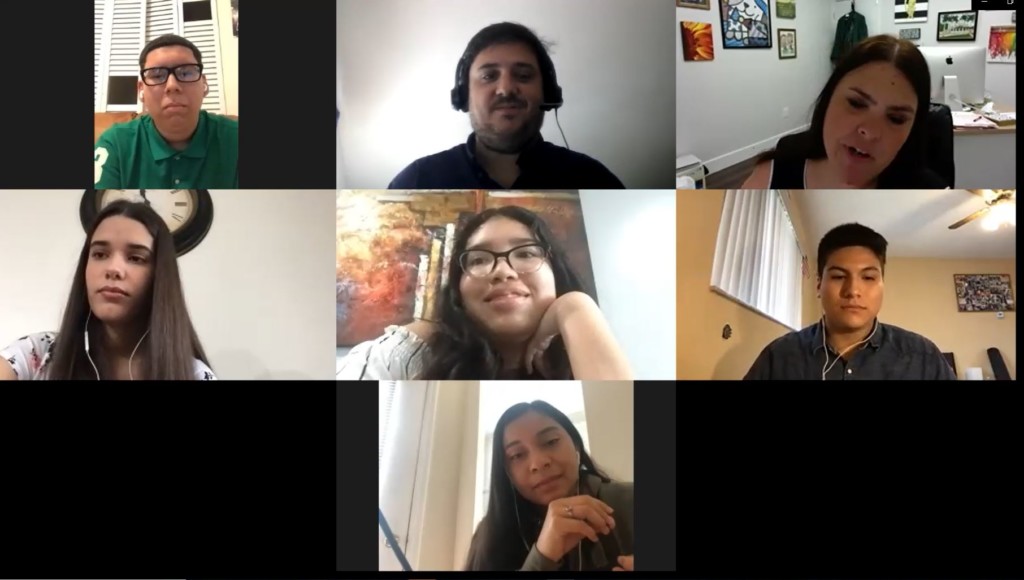 Family. Opportunity. Gratitude.
These are the words on the minds of a handful of South Florida students standing on the threshold of adulthood.
On June 2, the five seniors – Shawn Cuellar, Elisa Hernandez, Katherine Cabrera, Isabel Perez and Ron Mendez – will bid farewell to the school they’ve grown to love, La Progresiva Presbyterian, located in a working-class section of Miami.
Shawn, Elisa and Katherine arrived at La Progresiva as middle-schoolers. Isabel started as a pre-kindergartner. If you ask Ronald, he’ll tell you he’s been at La Progresiva his whole life.
Principal Melissa Rego has watched each of them grow up, deal with challenges, and emerge victorious.
Despite the fact that their world was turned upside down by COVID-19 – no senior trip, no prom, no graduation – these students are anything but resentful. They have some regrets for what has been lost, but their eyes are trained on their futures: becoming a veterinarian, serving in the military, raising a family.
Earlier this week, Rego sat down with the students and encouraged them to talk about where they’ve been and where they’re going. How their reality is different from what they imagined, how the Florida Tax Credit Scholarship that made it possible for them to attend a private school has shaped their lives, and how their lives might have been different without it.
Two members of the redefinED team were fortunate to be part of the conversation. Here is what we witnessed.
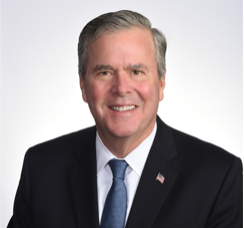
Earlier this week, former Florida Gov. Jeb Bush joined Education Next editor-in-chief Marty West to talk about the lessons he learned dealing with crisis and how those lessons can be applied to the coronavirus pandemic and the challenges it poses for K-12 education.
Among the suggestions Bush offers state and national leaders: Be clear and transparent, connect on a human level, and gather the best possible minds regardless of political persuasion.
“Just as in every disaster or every disruptive time in world history, incredible things happen when you’re forced to do things,” Bush says. “Because you have no other option, generally, you do them.”
Listen to the podcast at https://www.educationnext.org/ednext-podcast-jeb-bush-on-adjusting-to-distance-learning-during-pandemic-covid-19-coronavirus/.

