Editor’s note: America isn’t the only place where school choice raises questions about not only education, but pluralism, citizenship and social integration. Noted school choice expert Charles Glenn, a Boston University professor and American Center for School Choice associate, writes that European countries with far more evolved choice systems continue to wrestle with these issues – but have no reason to fear faith-based schools.
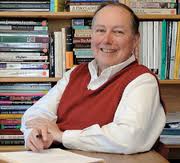 Early in June I was one of the speakers at a conference on educational freedom in The Netherlands and Flanders (the Dutch-speaking part of Belgium). It is no exaggeration to say these are the poster children of “school choice,” the two areas where its implications have been worked out most fully over the past two centuries (see my Contrasting Models of State and School, Continuum, 2011). Today, upwards of two-thirds of pupils in this area of some 23 million inhabitants attend non-government schools with full public funding.
Much of the discussion among the participants was about the details of how schools have been able – or not – to preserve their independence in the face of government regulation. I will not try to summarize that discussion here, except to note that as always the devil is in the details and we can learn a great deal from the experience over many decades of the interaction between schools seeking to maintain a distinctive religious or pedagogical character and government officials seeking to impose common standards. (The updated 2012 edition of Balancing Freedom, Autonomy, and Accountability in Education will include, in four volumes, detailed descriptions of how this relationship plays out in nearly 60 countries, most of them written by leading education law experts from each country, including these two.)
My own contribution at the conference was to raise openly what is beginning to be debated in Belgium and The Netherlands: is educational freedom still relevant, given changing circumstances? Is there still a need for schools not owned and operated by government and promoting worldviews that are in contrast with that of the societal majority? And, is the growing societal pluralism created by immigration an argument for or against such schools? Some, in fact, have claimed that the justification for non-public schools no longer exists because (a) some of them have ceased offering a truly distinctive education as a result of secularization, and (b) to the extent that they actually distinctive, they are a barrier to the social integration required in the face of the growing presence of Muslims in Western Europe.
My paper confronted head-on the widespread fear, among European elites, of strongly-held religious views, and argued that in fact “communities of conviction” make an essential contribution to the health of civil society. I cited research on faith-based schools in the United States to show they have by no means had a divisive effect or made their students unfit for active and positive citizenship. (more…)
At the edge of the campus of the University of California, Berkeley, there is today unfolding a conference that has brought together advocates for school choice of varying ideological stripes. There are some participants who support public school choice among charter academies but who are skeptical of the success of publicly funding private learning options. There are those who back private options for the social justice they bring to disadvantaged families but who have issues with the free-market embrace of universal vouchers.
But City University of New York professor Joseph Viteritti, one of the nation's most legitimate experts on educational administration and one of the most devoted students of school choice as social justice, opened the session with the glue that bound everyone together. It is fundamentally indefensible, Viteritti said, to confine a child to one education option only because our public policies challenge or even prohibit a choice of varied learning opportunities.
The opportunities defining today's discussion, titled "May Superman Pray?", are those that enable a choice among faith-based schools. Viteritti, for one, defined as a moral imperative the chance to choose among religious institutions if it allows a family who could not otherwise afford such an option if it wanted to raise their children according to their value system. Furthermore, Boston University educational historian Charles L. Glenn said, "It is a fundamental right of the citizenry to decide how you're going to educate your child."
This was not a partisan conference, and its participants went to great lengths to illustrate this point. The conference was sponsored by the Berkeley-based American Center for School Choice, which is chaired by law professor John E. Coons, one of the nation's most liberal voices for parental choice -- particularly private choice -- in education. One panel featured both Cato scholar Andrew Coulson and former Democratic California Sen. Gloria Romero. "I believe in public education," said Romero, the California director of Democrats for Education Reform. "But I don't believe only the rich should have school choice."
But can Superman (a play off the documentary "Waiting for Superman") pray? Most of the participants agreed he should, but they're not aligned on how he could. Some would advocate extending school choice to families who want to benefit from the unique identity of a faith-based school. Others, such as Glenn, believe the voucher war is unwinnable and would take the admittedly risky approach of allowing a religious school to become a charter school while still maintaining its religious identity.
The threat of the Blaine Amendments in the states had brooded over the conference like the Holy Ghost. So how do our public policies fulfill the moral imperative of choice even for our most disadvantaged families? Tax credit scholarships may survive a legal threat, some, such as Coulson, said. But not every state has a tax code that could create a viable system of educational choice. The Supreme Court has given us guidance on navigating the Establishment Clause of the U.S. Constitution with its 2002 decision in Zelman vs. Simmons-Harris, but the Blaine threat is much more pervasive for many states considering these options.
These questions aren't new, but the American Center for School Choice is to be commended for drawing the debate away from the margins and toward the center of our discussion over education reform. Whatever divides our approach to the schoolhouse door, it is either misguided or politically calculated to define the discussion as anything other than a moral imperative.

