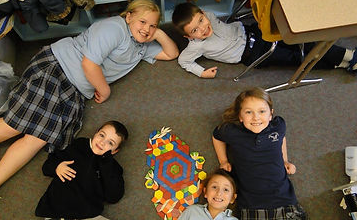
Northern Michigan Christian Academy, one of 878 private schools in the state serving more than 143,000 students, aims to develop God-honoring discipline through academics, attitudes, and actions, encouraging students to master all subject matter necessary for completion of their high school diplomas.
Backers of the Let MI Kids Learn petition drive, launched to establish a program in Michigan that would allow donors to contribute to a private scholarship fund and receive tax credits, say there are more than 520,000 signatures on the document filed Wednesday with the Bureau of Elections.
The group, backed by former U.S. Education Secretary Betsy DeVos, plans to put the initiative before the Republican-led Legislature for approval this year. If certified, the Michigan House and Senate could enact the new scholarship proposal despite Gov. Gretchen Whitmer’s veto of the program last fall.
“This is the day that parents and families have been working for, and I am excited to know that change is on its way,” said Michigan Sen. Lana Theis. “Every child deserves a chance to catch up on the learning they lost, and the public school system isn’t the only place where that can happen.”
Michigan’s scholarships would go to families making no more than twice the level needed to qualify for free and reduced-price meals. For this year, that's $102,676 for a family of four. The program would cap private tuition at 90% of Michigan’s minimum per-pupil funding amount, which is $8,700 this year.
If the initiative becomes law in Michigan, the state would have one of the largest tax credit scholarship programs among states with similar options. Only Florida would have a higher cap at $874 million.
A press release about the petition issued Wednesday by Let MI Kids features a Michigan parent who says the proposal offers hope and puts education choices in reach for every family.
“These educational scholarships, funded with private contributions, have been extremely successful and popular in other states, and we deserve to have these choices for Michigan children, too,” said Tanya Armitage-Edgeworth. “There are families who could never dream of being able to afford to choose a better school for their kids.”
The measure could face a legal challenge in Michigan, where the state constitution bars the use of public dollars to “directly or indirectly aid or maintain” private education. Proponents of the Michigan initiative have argued the petition language is “well-crafted” and would survive any constitutional challenge.
“It is not the government sending money to a religious or faith-based school or any other school,” DeVos told reporters at a recent promotional event. “The reality is these funds are going to families to decide where to best send their children and find the right fit for them.”
Petition campaign spokesman Fred Wszolek said his group is looking forward to the initiative being swiftly canvassed by the Bureau of Elections and promptly certified by the Board of State Canvassers.
“There is plenty of time for the Legislature to enact these proposals into law before the end of the year,” Wszolek said. “Special interest groups fought hard to keep this day from ever happening. But you can’t stop an idea whose time has come.”
The advocacy group plans to file a separate initiative petition for an income tax credit for scholarship fund contributions.
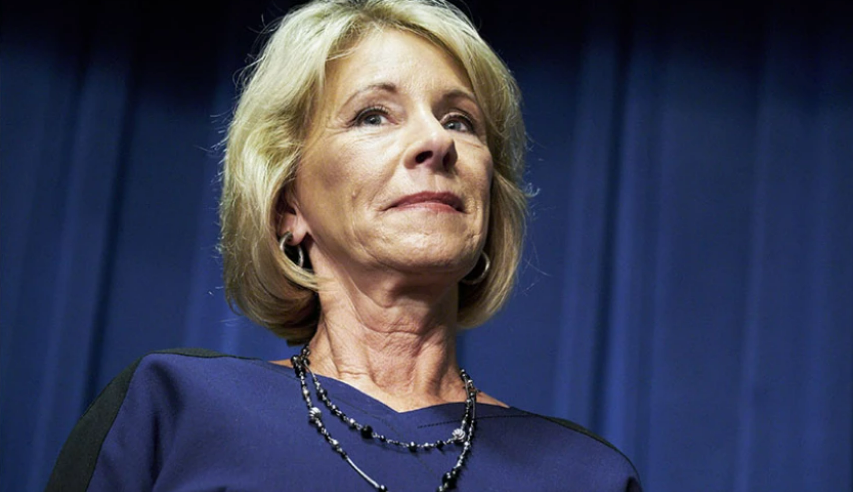 Editor’s note: To read Tuthill’s analysis of DeVos’ book, click here.
On this episode, Tuthill interviews DeVos, encouraging her to talk about her new book, “Hostages No More: The Fight for Education Freedom and the Future of the American Child.”
DeVos discusses how when reflecting on her time in Washington and the three decades she has spent advocating for education choice, she thought of how difficult the last two pandemic years have been for students. For many parents, it was an eye-opening experience to the need to have more choices to find the best education setting for their children.
“We’re at a really important moment where many parents have seen up close, in many personal ways, how the system has not served children well in the last two years. I think there’s a drive, a momentum, like we haven’t seen before to change that dynamic and take that power back and put it where it should be – with the family.”
EPISODE DETAILS:
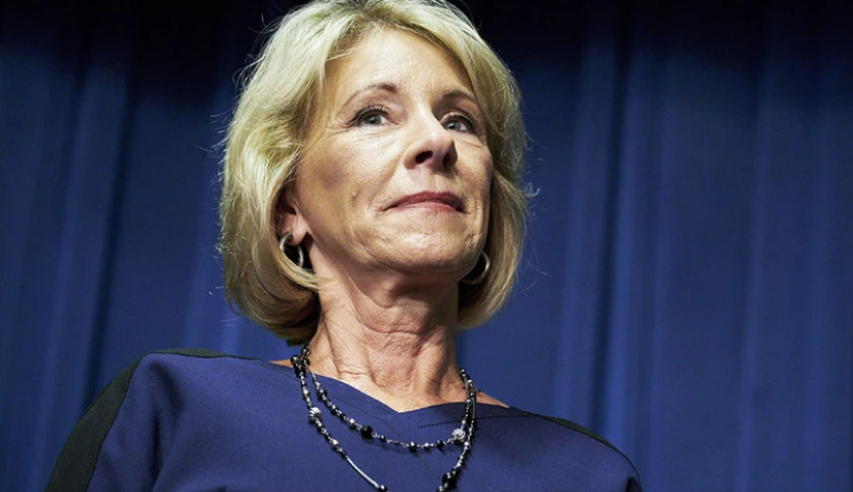
Former U.S. Education Secretary Betsy DeVos has written a new book about the importance of education choice.
Editor’s note: Former U.S. Secretary of Education and longtime education choice champion Betsy DeVos is promoting her new book, “Hostages No More: The Fight for Education Freedom and the Future of the American Child,” which is set to be released on June 21. DeVos recently sat down with her former education department colleague, Denisha Allen. A former state scholarship student, Allen now serves as the director of public relations and content marketing at the American Federation for Children, a national organization that DeVos helped found and chaired before becoming education secretary in 2017. DeVos recalls how she first became interested in the idea of education choice as a young mother of a kindergartener. She also discusses how advocates have approached the issue over the years, how she worked promote education freedom while serving as education secretary, and how the pandemic pushed it to the forefront of parents’ concerns. She also talks about what she hopes readers will learn from the book. Here are some excerpts from the interview.
How DeVos became involved in the education choice movement: My oldest son, Rick, who is now 40 years old, was starting kindergarten. My husband, Dick, and I knew we were going to be able to send our children to whatever school we felt was best for them. So, we were shopping around visiting schools and discovered this amazing little Christian school serving the kids of the neighborhood around there. They had to raise 90 percent of their operating funds every year. Everyone who attended paid what they could. So, I started getting involved in that school, and the more I was there, the more I realized that there were multiple families who would have loved to have their kids in a school like that. So, I started, as we all did…we started trying to make the case to appeal to people through logic or through the lawyerly approaches or the legal side of the case as the reasons for granting education freedom and school choice and quickly realized it was going to take a lot of political muscle as well. And so, those things have developed over the last 30-plus years. But it was solely with a commitment to bringing policy into being in as many states as possible to allow families the kind of freedom they need to find the right fit for their children.
How the pandemic allowed education choice to take center stage: I think the last two years have really laid bare many of the challenges that many of us, if not all of us, have seen during the last number of years in a way people never anticipated. Whether it was lockdowns, mandates, curriculum issues, lack of rigor or a lack of actually learning anything, any number of issues have really brought the whole possibility of education freedom to a whole new level.
Why a book and why now? I didn’t set out to write a book and probably wouldn’t have if not for what unfolded the last couple of years. But again, I think it has really brought attention to the whole issue of education in a way that we couldn’t have anticipated. As you know, all of our focus while we were (in the Department of Education) has been on doing the right thing for students, and all activities were centered around highlighting different schools or different approaches that were bringing unique opportunities to students. The whole notion of rethinking education and the old institutional notion of one-size-fits-all approach, a lot of that work really helped lay the ground in many ways for the discussion we’re having today about bringing broader education freedom to those across the country. So, the book is my way to talk about how we fix education in America, and it brings into it the stories of lives that have been changed and kids who are on a totally different path because of these opportunities, and I hope it helps correct some of the mischaracterizations of my time in Washington and all of us who are involved in offering these types of opportunities through policy to kids in all states.
What is DeVos's main message to readers? I hope that (readers) will take away the notion that education freedom is something we have got to move toward for every student in this country. By education freedom, I should probably give my definition of what that means. I used to talk about school choice, and school choice was and still is a good description of what we’re talking about, but I don’t think it’s broad enough. When we think of school choice, we think of buildings, and I don’t think we have to think of only buildings. We need to think creatively about how kids can experience learning in their K-12 years in ways that we haven’t begun to dream of. And frankly, lots of people have been exploring that during the last two years with all of this COVID reality. So, you have families that have been banding together to in small homeschool consortiums have may become a micro-school. You have individuals who are customizing their education…education freedom, I think provides a new moniker or banner of what school, of what education, could be. I hope people will take away tools they can use to advance this in their own communities and their own state and on behalf of their own children, and I hope it will really encourage policy change to empower families to do just that.
 In 1978, Stephen D. Sugarman and I published our third book on school finance, “Education Choice: the Case for Family Control.” That summer, we designed a constitutional initiative for parental choice to be voted on by California citizens; we announced our hope for support to get it on the 1979 state ballot. Soon we received promising inquiries from could-be supporters in several states.
Milton Friedman called with an invitation to dinner. In the ’60s, he had been a repeat guest on my old Chicago radio show. Like us, he had moved to the Bay Area. We all spent a pleasant evening discussing our proposal to subsidize poor parents, leaving with hope of Milton’s voice in support.
Instead, my big money calls ceased. Milton and friends had filed their own, more pure, free-market style initiative, offering equal subsidy for all levels of family income. Neither his nor our proposal made it to the ballot.
Nevertheless, Friedman-style initiatives began to emerge in various states sponsored by newly organized nonprofits funded principally by wealthier free-market admirers. Many of these organizations survive to this day and remain stumping for Miltonian solutions to this civil plague of ours. Betsy DeVos was (and remains) an important figure among them.
Few have much to show in the way of choice programs focused upon lower-income families; several state systems, notably Florida and Ohio (plus D.C.) are happy exceptions, with very encouraging results as measured by test scores and parental satisfaction.
What the well-intending super-free-market champions of universal and uniform parental subsidies did succeed in producing on a grand scale was the unintended mobilization of the elite of the teacher unions who suddenly recognized the danger to themselves of empowering any parents to chooses, and especially those poor serving in the union’s inner-city empire.
Cannily, these, our society’s champion exploiters of the poor, mobilized to spread the gospel that school choice was by nature a gift to the rich, while the union remained the true and liberal hope of our tired and our poor. It is “liberal” to conscript such people!
In any case, the unions, to this day, continue to exploit the image of both Friedman and DeVos, making them appear as opponents of truly public education. Maybe worse, these sham Democrats are supported by my own chosen president who now slams charter schools while giving abject approval to our historic humiliation of the poor.
With his explicit blessing, the teacher unions maintain their thriving dominion over the lower-income family, meanwhile pretending to be its true political champion against those ever-grasping rich.
With some confidence, I urge Friedman’s intellectual heirs to consider enlarging their focus beyond market theory; the rescue of the poor family – and our own society – may turn out the winning message.
Say it loud and clear.

