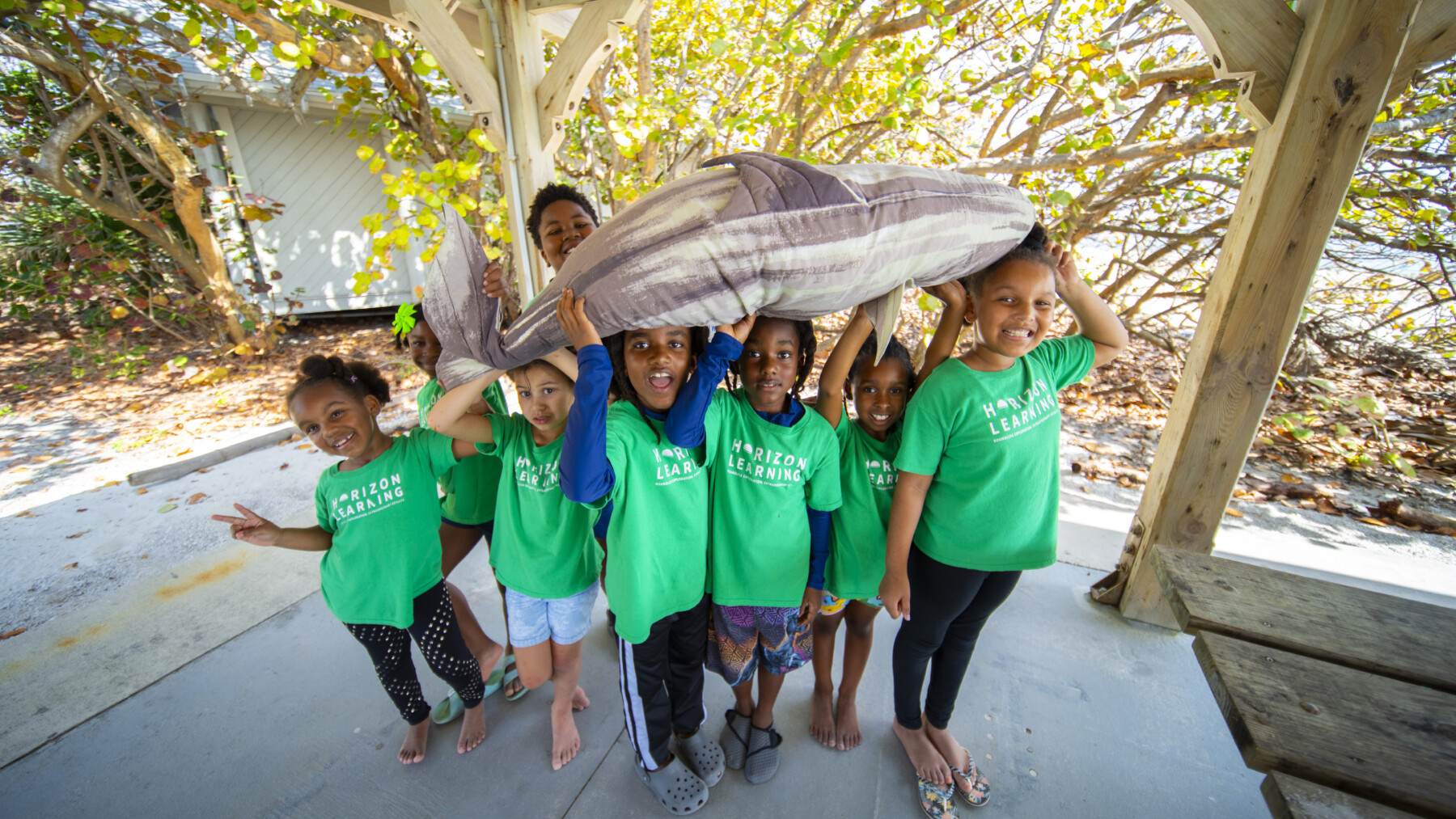
Three decades ago, dozens of Black families in the Liberty City neighborhood of Miami enrolled their children in Florida’s first charter school. They didn’t know it, but they were kickstarting the most dramatic, statewide, educational shift for Black students in America.
Today, 140,000+ Black students in Florida are being educated outside district schools. They’re either in charter schools, in private schools using state choice scholarships, or outside full-time schools entirely using education savings accounts.
More details on this overlooked migration can be found in a new brief co-authored by Black Minds Matter founder Denisha Allen and myself. It’s a quick update to our 2021 report, “Controlling the Narrative: Parental Choice, Black Empowerment & Lessons from Florida.”
Over the past decade, the number of Black students in Florida enrolled in non-district options grew 86%, to 142,384. That’s more than one in five Black students in the state. For context, 31 states have fewer Black students in their public schools than Florida has in these options.
The numbers are a strong rebuttal to those who claim choice is aimed at helping wealthy, white families.
They’re also a good indicator of what’s next.
As choice programs continue to expand across America, look for even more Black families, educators and communities to embrace them.

As we celebrate National School Choice Week, we’re reflecting on educational freedom's profound impact on students, families, and communities. This week, we’re not just celebrating the opportunities that school choice offers, but also the incredible stories of individuals whose lives have been transformed by it.
Ilen Perez-Valdez: Overcoming adversity through choice
Ilen Perez-Valdez’s story is one of resilience and determination. Growing up, Ilen faced numerous challenges; she was born with four chronic medical conditions that required constant treatment and medication. Her mother, a Cuban immigrant, had to flee her home country at a young age and worked multiple jobs to provide for Ilen and her grandmother. As a child, Ilen’s medical needs were often too complex for the local public schools to accommodate.
 However, Ilen’s life took a dramatic turn when she received a Florida Tax Credit Scholarship through Step Up For Students. The scholarship allowed Ilen to attend St. Agatha Catholic School in Miami, where she received the personalized care and support she needed. She went on to attend Immaculata-La Salle High School, where her education was tailored to meet her unique needs. Thanks to the flexibility of school choice, Ilen was able to flourish in a smaller classroom setting, where she not only received the medical support she required but excelled academically.
Today, Ilen attends the University of Miami on a full academic scholarship and is pursuing a degree in neuroscience. She attributes her success to the opportunities she was given through the Florida Tax Credit Scholarship. Ilen now advocates for other children who face similar challenges, sharing her story to help others understand the life-changing impact of school choice.
Caitie Barnes: A story of resilience and opportunity
As a child, Caitie underwent open-heart surgery, which required special care and attention throughout her education. Her family faced significant financial challenges when her father was laid off during the recession, making it difficult to afford private school tuition. But, thanks to private school financial aid and, later, the Florida Tax Credit Scholarship when her family moved from Tennessee to Florida during her junior year, Caitie could continue her education at a school that could meet her academic and medical needs.
 When her family relocated due to her father’s new job at Eglin Air Force Base in Florida, Caitie found a perfect fit at Rocky Bayou Christian School. There, Caitie thrived in a supportive environment, graduating as class valedictorian. Today, Caitie attends Covenant College and is pursuing a psychology degree with a pre-law concentration and a minor in community development. Caitie’s story is a testament to the power of educational choice and the doors it can open for students facing personal challenges.
Why these stories matter
Ilen and Caitie are just two shining examples of the countless lives transformed by the power of school choice. Their stories are a powerful reminder of why it’s crucial to ensure every child has access to a high-quality education regardless of their background, circumstances, or medical needs.
As someone who has experienced this firsthand, I can attest to the life-changing impact of educational choice. My family’s journey was forever transformed by the opportunity to choose the best educational path. This is not just about policy; it's about real families, real futures, and the incredible potential that can be unlocked when students are given the chance to thrive in the environment that works best for them.
As we close out National School Choice Week, let’s remember that our children’s future depends on the opportunities we provide today. Every child deserves the chance to succeed, and with the freedom to choose the education that best fits their needs, we unlock limitless potential. Let’s continue to stand together, celebrate our progress, and fight for even more opportunities so that every student, like Ilen and Caitie, has the chance to thrive.
The power to change a life starts with choice, and that choice is in our hands.
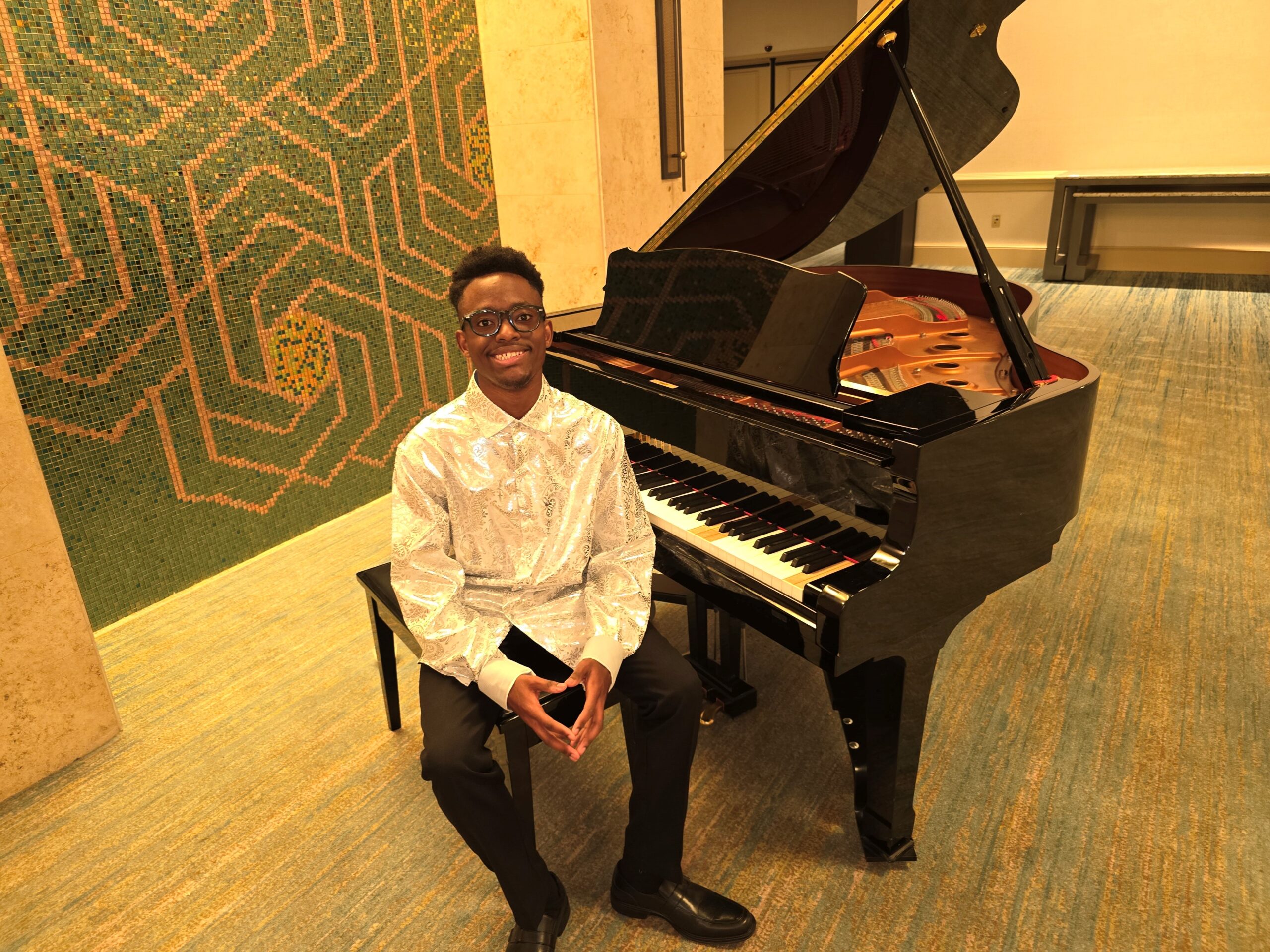
Gabriel is the first PEP alumnus to join the American Federation for Children.
Gabriel Lynch III is new to his role as an education choice advocate. Though in essence, he’s been doing it nearly all his life.
He’s a product of both private and homeschooled education. He’s attended brick-and-mortar schools and studied virtually.
Along the way, Gabriel, 19, has become an ordained minister, a motivational speaker, an accomplished pianist, and a published author.
Those wondering about the benefits of education choice need only listen to Gabriel.
“School choice changed my life to who I am today,” he said.
Today, Gabriel is a college freshman majoring in music at Seminole State College in Lake Mary. His education from kindergarten through high school was supported by scholarships managed by Step Up For Students, from the Florida Tax Credit Scholarship to the Family Empowerment Scholarship for Educational Options to the Personalized Education Program (PEP), which he used to homeschool in 2023-24, his senior year of high school.
“I want kids to have the same experiences I had,” he said.
That’s why Gabriel joined the American Federation for Children (AFC), an organization that strives to bring education choices to families nationwide. Gabriel was recently accepted into AFC’s Future Leader Fellowship, a year-long internship program that will prepare him to meet with lawmakers around the country to promote education choice.
Read about Gabriel's story here.
A number of Step Up For Students alumni advocate for AFC. One of them, Denisha Merriweather Allen, founded Black Minds Matter and serves on Step Up For Students' governance board. Gabriel is the first to have benefited from a PEP scholarship. The scholarship, which began during the 2023-24 school year, is an education savings account (ESA) for students who are not enrolled full-time in a public or private school. This allows parents to tailor their children’s education by allowing them to spend their scholarship funds on various approved, education-related expenses.
Gabriel’s mom, Krystle, used PEP to homeschool Gabriel and his two brothers, Kingston (eighth grade) and Zechariah (sixth grade).
A longtime advocate for education choice, Krystle and her husband, Gabriel Jr., who live in Apopka, want to take control of their children’s education. PEP allowed them to tailor the curriculum for each son.
“They have different learning paths,” she said.
Krystle is ecstatic that her oldest son is following in her advocacy footsteps.
“This has been something that has been on my heart for many years, and to see him carry on the message, that's exactly what I've always dreamed of,” she said.
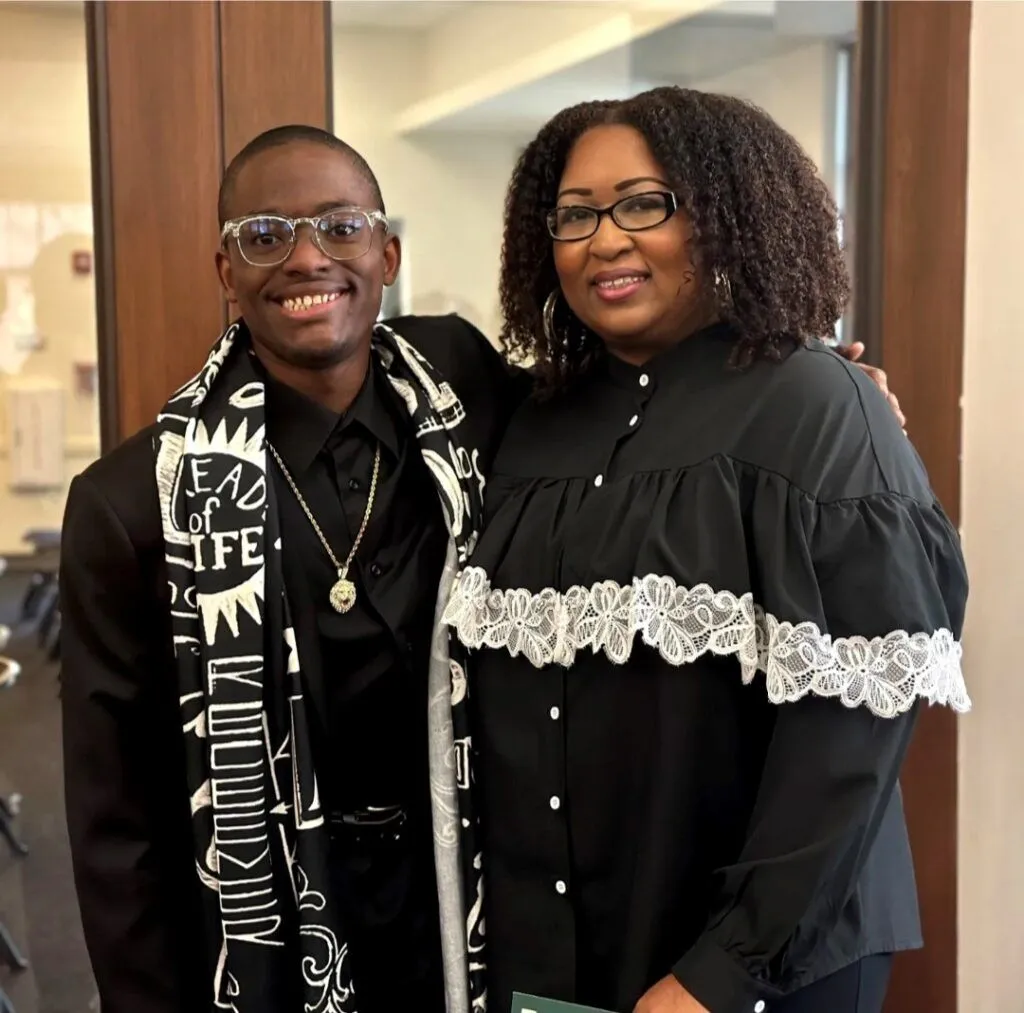
By joining the American Federation for Children, Gabriel is following in Krystle's footsteps as an advocate for education choice.
Gabriel said school choice helped mold him. Attending a faith-based school led him to become an ordained minister and a public speaker. Using the PEP scholarship for piano, guitar, and voice lessons fostered his love of music and helped shape what he hopes to be his career path. He wants to be a composer.
“There are so many things I am right now because of school choice,” Gabriel said. “I think it’s because my parents put me where I fit best because even when I was in private school, I could fit in. I found my group, I found my clique, and that's why I say it really changed my life.”
Gabriel is eager to share his story with lawmakers in states that don’t have education choice. Last year, advocates from the AFC Future Leaders program volunteered on the front lines of the fight to support education choice legislation in Nebraska.
“It’s giving parents options to choose where their kid fits best,” he said. “that’s what I will tell them. I think that would be amazing for those states that don't have school choice options.”
By Shaka Mitchell
After this month’s election, which has resulted in a surprising Republican trifecta, the first action GOP lawmakers should take is to pass and sign the Educational Choice for Children Act (ECCA). This bill aims to provide educational opportunities outside the public school system for millions of students over the next four years alone.
The push for educational choice has been growing across the country, primarily driven by state legislatures, which control most K-12 education legislation. However, states like California, Kentucky, Colorado, New York, and Michigan have faced challenges in advancing such legislation, largely due to Democratic majorities and significant influence from teachers' unions.
The ECCA would create a federal scholarship tax credit program that allows tax-paying individuals to direct up to ten percent of their adjusted gross income to a Scholarship Granting Organization (SGO). SGOs already grant scholarships to students in 22 states, but they are products of state-level legislation and implicate the state tax code. Therefore, these programs are non-starters in states without personal income tax. The ECCA represents a first at the federal level and just this year the bill made significant progress, having passed the House Finance Committee.
Be like water
While subject to change, if the ECCA passes with a $10 billion cap, it would likely benefit more than a million students from low- and middle-income families. Families would apply to an SGO for a scholarship, and upon receiving one, parents could use the funds for a range of educational expenses including tuition at private schools, online courses, special education services, and tutoring. Some families will likely choose to keep their student enrolled in a public school and use scholarship funds to supplement the experience with technology or tutoring – enhancements normally reserved for more wealthy families.
The federal nature of the ECCA presents a new opportunity to deliver educational options for children in states where state legislatures have been resistant to educational freedom.
California serves as a prime example. Despite substantial investment in public education (on average more than $18,000 is spent on K-12 students in the state), student outcomes remain disappointing. Only 3 in 10 students in 8th grade are proficient in reading, according to the 2022 National Assessment of Educational Progress (NAEP).
Earlier this year, and at the behest of the California Teachers Association, the state legislature defeated a proposal that would have created an $8,000 voucher program. Like water flowing around a stubborn obstacle, the ECCA would give donors and parents another option in their quest for an educational best fit.
While not a cure-all, this bill would significantly improve educational outcomes for all children.
Elections matter
Finally, the ECCA allows Republicans to fulfill the responsibilities entrusted to them by voters, ensuring a prosperous future for all children, regardless of their state's political leaning.
Famously, or infamously depending on your point of view, President Jimmy Carter established the Department of Education as a way to further endear himself to the National Education Association (NEA), the country’s largest teachers union. The Department’s creation was the fulfillment of his 1976 campaign promise, and he was further rewarded in 1980 by receiving the union’s endorsement.
In a similar fashion, candidate Trump and many other Republican candidates including Tim Sheehy (MT), Bernie Moreno (OH), Dave McCormick (PA), and Gov. Jim Justice (WV), expressed their desire to support American families through education choice. President Trump was rewarded on election night in large part thanks to increased support among Black and Latino voters.
On election night, NBC News chief political analyst Chuck Todd noted that “Latino voters align more closely to the conservative party [on] school choice.” Many of these voters live in states with little hope of state-initiated school choice legislation.
The ECCA could deepen the bonds between Republicans and Latino voters and bring much-needed opportunities to students who need them most.
— Shaka Mitchell is a senior fellow at the American Federation for Children.
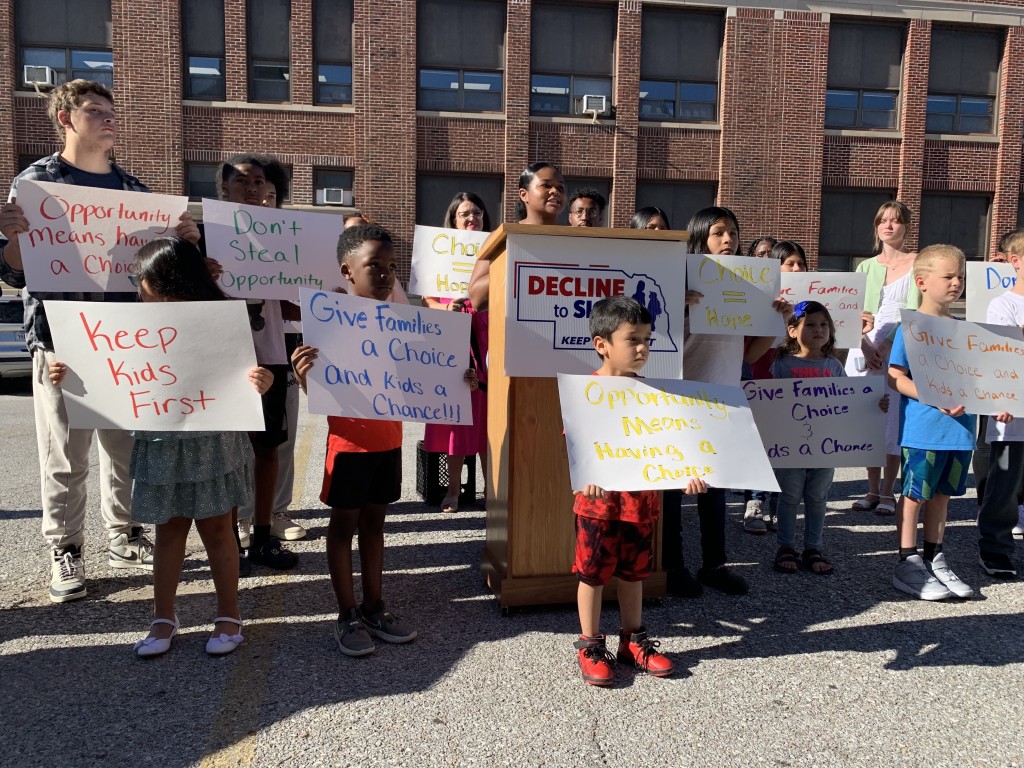
Jayleesha Cooper, center, a school choice beneficiary and member of the American Federation for Children Future Leaders Fellowship program, will return next year to fight for the future of school choice in Nebraska.
The big story: Opponents of Nebraska’s first K-12 school choice scholarship program that would allow the state’s neediest families access to the school that best fits their child’s needs say they have collected 117,000 petition signatures, enough to put the measure on the 2024 ballot.
Yes, but: Despite claims of victory from the teachers union-backed Support Our Schools, the petition campaign fell short of reaching the threshold needed to suspend the program. That means the program can get up and running for the 2023-24 school year.
How it works: The law creates a dollar-for-dollar state tax credit for individual and corporate donors to scholarships that state lawmakers prioritized for low-income families, similar to the program that has existed in Florida for more than two decades. The state has capped the program at $25 million a year for three years. For context, the state spends $1 billion per year on district schools.
Heat advisory: Opponents will be trying to repeal the program on the November ballot, just months after the first scholarship families reap the benefits of school choice. The timing could create more intense exchanges as both sides try to sway voters. Last year, Keep Kids First Nebraska, a group formed to support the law, accused SOS of spreading misinformation about the program. In a statement released Wednesday on X, formerly Twitter, the group pledged to keep up its campaign.
They’ll be back: A group of now battle-tested young advocates who benefited from school choice scholarship programs themselves pledged a return to the Cornhusker State next year to help save the new program despite being taunted by opponents and tailed by police while volunteering as signature blockers over the summer.
“I don’t believe we should just give up on Nebraska’s families,” said Jayleesha Cooper, a student at the University of Chicago and a member of the American Federation for Children’s Future Leaders Program.
Originally from Nebraska, Cooper used a privately funded scholarship fund to attend Catholic schools and become the first in her family to attend college. “Many people who signed the petition weren’t fully aware of what they were doing, so I believe it is a matter of continuing to educate people so they can make an informed vote.”
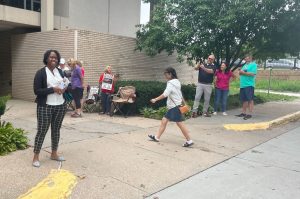
Sherlean Roberts, left, and other American Federation for Children Future Leaders fellows, volunteered this summer to help block school choice opponents' petition campaign against Nebraska's new school choice law.
Myles Slade-Bowers and Sherlean Roberts, Black college students who left a jazz concert after noticing a group of police officers standing behind them, said they won’t be silenced despite the harassment they experienced during the petition drive. For them, school choice is a matter of conscience.
“I’ll be willing to do anything and everything because Nebraska needs it,” said Roberts, who attended charter schools in Wisconsin and is now a student at Marquette University. She acknowledged the possibility of “difficult conversations” with SOS supporters, whose paid petitioners were overheard telling voters that the program benefited the wealthy.
“Any time you are involved in social justice, there are going to be those types of situations, and now that I’ve dealt with it, I won’t be too worried about it.”
Student volunteers from the American Federation for Children's Future Leaders Fellowship program rally to defend the Nebraska's newly approved school choice program from opponents gathering petition signatures to put the law up for a referendum next year.
Sherlean Roberts felt a surge of adrenaline as she noticed the uniforms.
At a summer jazz concert at a city park in Omaha, Nebraska, she first noticed a security guard staring at her and fellow volunteer, Myles Slade-Bowers. The two Black college students walked to another area to diffuse the situation. Less than a minute later, several police officers stood closely behind them.
“As a Black girl, I don’t want to be in any type of situation with the potential to break off and someone has to explain this to my family” Roberts said.
Fortunately, the situation didn’t escalate. The officers didn’t approach them, and the students chose to leave the event.
But the scene illustrates the flaring tensions around the Cornhusker State's first school choice law, and the frantic petition drive attempting to stop it from taking effect.
Teachers union supporters and paid petition gatherers, operating under the banner of Support Our Schools, have encountered an unexpected form of resistance: Young people like Roberts and Slade-Bowers, who have personally benefitted from education options, showing up at events like the Omaha jazz concert, and urging voters not to sign.
Many of these young volunteers have put their summer plans on hold to travel from out of state to join what they see as a fight to ensure other students benefit from the kinds of opportunities that helped change their lives.
Sherlean Roberts is a member of the American Federation for Children's Future Leaders Fellowship program. She and other young school choice beneficiaries from across the country have spent part of the summer defending Nebraska's first school choice program from a teachers union-led petition campaign to stop the law from taking effect.
They have faced harassment and had personal information posted on social media. They’ve been tailed by law enforcement. But they aren’t backing down.
“I am angry to see how far the education establishment is willing to go to stop other students from having the chance I had,” said Jayleesha Cooper, a 19-year-old junior at the University of Chicago who is originally from Nebraska. She was able to attend a Catholic school through scholarships from private donors. She credits school choice with helping her to become the first in her family to avoid teen pregnancy and attend college.
“As a student, I know that stepping into a public policy fight is scary enough,” she said. "To see my fellow students of color face intimidation, harassment, and calls to law enforcement lying about their behavior is tremendously disappointing.”
Slade-Bowers' devotion to the cause prompted him to abandon plans to become a doctor and instead pursue a career in public policy. He took a year off at High Point University in North Carolina to assist with policy research at the University of Arkansas. He says the most fulfilling thing is “to look a child in the eye and say, ‘I’m fighting for you.’”
About five years ago, the success stories of school choice alumni caught the attention of the American Federation for Children and other national advocacy groups like the National Alliance for Public Charter Schools. Leaders of these national groups see school choice beneficiaries as future torchbearers for the modern movement, which began more than three decades ago.
Since the American Federation for Children began its Future Leaders Fellowship program in 2019, members have impressed lawmakers with their knowledge of policy and inspired them with their stories of how school choice changed their lives. They also write letters to editor and speak at rallies.
In Nebraska, which until this year was the last U.S. state without a charter school or private scholarship law, the new leaders are taking to the front lines. Opponents are pushing to gather approximately 61,000 signatures by Aug. 30 to block the program and force a statewide referendum on the future of the law during next year’s general election.
“I think that even if this measure ends up on the ballot, our fellows have done an amazing job at countering misinformation and that it will have an impact on Nebraska voters,” said Ashley Elliott, a young school choice alum from Florida and a member of the inaugural 2019 cohort who now coordinates the fellowship program. “They have been very effective, and I can honestly say that in my time here they are the most effective grassroots advocates I have seen.”
The prospect of a new generation of alumni who personally benefitted from education options assuming the leadership of the national movement warms the heart of Derrell Bradford, an education choice pioneer who attended high school on a privately funded scholarship before state-funded scholarships were widely available and now is president of the nationwide advocacy group 50CAN.
“It’s exciting to know not only that a generation of kids that don’t have hangups of older folks and who have had the chance to experience a world where school choice is increasingly becoming the norm are taking the reins now and fighting for themselves and their peers,” Bradford said.
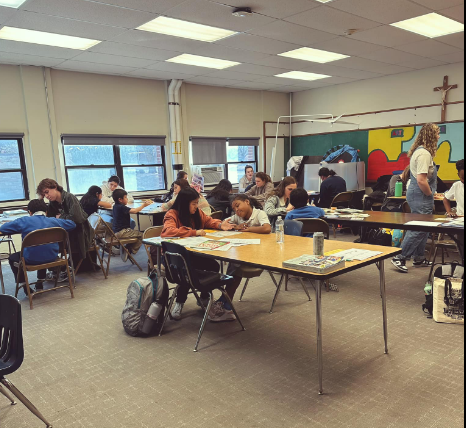
Holy Name School in Omaha, Nebraska, is one of 222 private schools in the state serving more than 41,600 students. Holy Name provides a learning environment of faith, knowledge and service by promoting Christian values, individualized opportunities, and community engagement.
Editor’s note: This commentary from Jayleesha Cooper and Brandon Villanueva Sanchez, members of the American Federation for Children’s 2023 Future Leaders Fellowship cohort, describes the life-changing possibilities of education choice and advocates for Nebraska’s Opportunity Scholarships Act.
Our stories are unique, but we have many things in common. We were born to parents who loved us but could not afford what many take for granted — a good education.
We both grew up surrounded by peers full of potential and big dreams, whose parents also loved them and worked hard, but who had less opportunities and therefore took very different paths. We were zoned to schools that have been underperforming for decades, so our parents worked multiple jobs, struggled, and sacrificed so that we could attend private schools.
That’s an opportunity that is denied to thousands of children each year.
Recently, opponents of giving families more educational options wrote a misleading piece on the Opportunity Scholarships Act (LB 753). The authors represented Westside Community Schools, which many students who are zoned for Omaha Public Schools attend thanks to option enrollment.
While the authors would support that form of parental choice, they oppose an even more equitable form of choice: the Opportunity Scholarships Act.
This bill would provide opportunities for children from lower-income families to attend non-public schools. We were both blessed with that opportunity. But every year, children with similar backgrounds are turned away because existing scholarships cannot meet the need or demand by families.
Except for the lucky few, true options are limited to families who can afford to move or pay tuition. More students in Nebraska deserve the chance we had.
Everything we have today can be attributed to school choice and the sacrifices our parents made for our education. But parents should not have to sacrifice time with their children, working multiple jobs simply to provide them with the education that best fits their needs.
We have been the fortunate ones, but we shouldn’t be anomalies. Any child living in Omaha can be as successful as one in Westside, Millard, or Elkhorn. The Opportunity Scholarship Act means more children, regardless of family income or zip code, can grow up to be neuroscientists, lawyers, or anything else they dream.
Nebraska: it is time that we take a stand for all children and support Opportunity Scholarships.
Jayleesha’s story
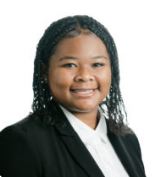
Jayleesha Cooper
Jayleesha attended Omaha Public Schools until second grade. It worked for her — until it didn’t.
Her mother knew Jayleesha was smart but not being challenged, often helping other kids with their homework instead of learning something new herself. Jayleesha’s mother searched for ways to afford private school and finally got the children enrolled in Holy Name in North Omaha.
To afford tuition, Jayleesha’s mother worked multiple jobs, while in school herself, on top of receiving aid from Omaha’s Children Scholarship Fund. It wasn’t easy, but attending private school was life changing. Jayleesha skipped a grade, got involved with sports and extracurricular activities, came out of her shell, and made all As.
She went on to receive another private scholarship to attend Duchesne Academy and is now a sophomore at the University of Chicago on a full-ride scholarship. Despite being born into a low-income family to a teen mom and a dad who was in and out of jail, she has interned for congressmen, testified multiple times at the Nebraska Legislature, and even introduced notable figures like Malala. Her life was changed because of a good education.
Brandon’s story

Brandon Villanueva Sanchez
Brandon’s story is similar. His parents always stressed the importance of a quality education, having grown up in rough conditions that forced them to drop out in middle school to find work to help support their families. They wanted better for Brandon and his siblings.
They worked multiple jobs to afford private schools, a sacrifice they say they “would do all over again.” Because of their hard work and sacrifice, Brandon and his siblings attended private schools in South Omaha and received a quality education, something that changed their lives and the trajectory of the family forever.
In these schools, class sizes were smaller, there were teachers who cared about students outside of the classroom, and students had mentors and tutors who guided them. Most importantly, there was a community of students and faculty who were supportive and pushed each other to be more.
Brandon graduated with honors as the class president and enrolled at the University of Nebraska. He is currently studying neuroscience with minors in chemistry and computer science and has an internship at Johns Hopkins University, exposing him to the highest level of scientific research.
Last spring, he was awarded the Barry Goldwater Scholarship, which has been identified as the most prestigious scholarship for undergraduate students pursuing a career in STEM and has highlighted him as a future leader in scientific research.
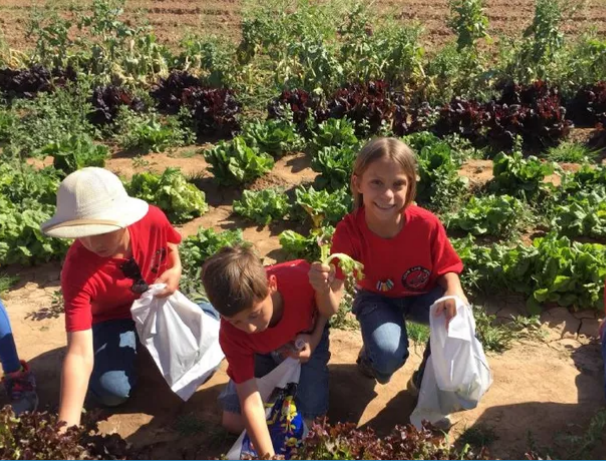
Faith Christian School in Mesa, Arizona, one of 447 private schools in the state serving more than 66,000 students, is committed to challenging children to grow as Christian servant-leaders so they can take their place as responsible members of the Kingdom of God.
Editor’s note: This article appeared Monday on dailycaller.com.
Newly-elected Democratic Arizona Gov. Katie Hobbs’ plan to undo the nation’s most expansive school choice program could affect thousands of students and families who are already utilizing the state’s voucher program, school choice advocates told the Daily Caller News Foundation.
Hobbs’ executive budget, released Jan. 13, asked state legislators to reverse the state’s expansion of its school choice program which currently allows all Arizona students in grades K-12 to receive taxpayer-funded vouchers if they choose to leave or are already outside of the public education system.
The proposal would have a severe negative impact on Arizona families already utilizing the school voucher program to pursue other educational opportunities, school choice advocates told the Daily Caller News Foundation.
“It’s an assault on the families and the parents,” Steve Smith, Arizona State Director of American Federation for Children, a group working toward school choice, told the DCNF. “Especially now when education options are needed more than ever in the wake of COVID-19. You must let these families flourish. These programs have been a lifesaver to so many and to take that away or even threaten to take it away, it’s just flat out wrong.”
In July, former Republican Arizona Gov. Doug Ducey signed a law creating the largest school voucher program in the country, making more than 1.1 million Arizona students in public and charter schools eligible to receive up to $7,000 in order to transfer schools. Under the previous program, disabled children, students living on American Indian reservations and students attending low-performing public schools were eligible for the taxpayer-funded vouchers.
As of Jan 9., more than 45,000 students have enrolled in the state’s school choice program, according to Faith Prep Arizona, a group that advises families using the school choice program. Originally just one-third of Arizona students were eligible for the program, with about 11,800 students enrolled, according to the AZ Mirror.
To continue reading, click here.
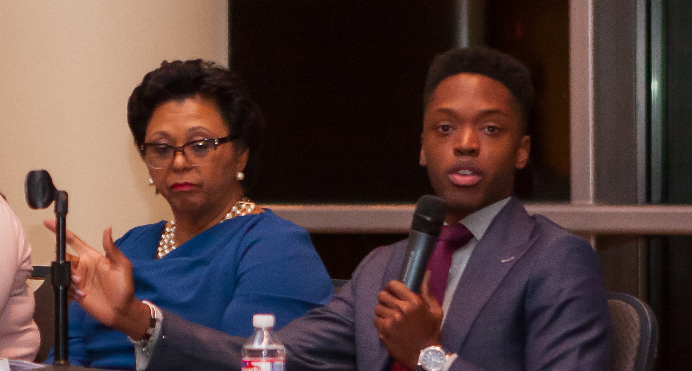
Walter Blanks, right, press secretary for the American Federation for Children, has been honing his education choice advocacy skills for several years after participating as a member of the federation’s first Future Leaders Fellowship Program.
Isabella Paez has always embraced advocacy. The whip-smart Florida 15-year-old is proud of her Cuban-American heritage and is active in school clubs that promote business ethics and social justice.
A lover of literature, her favorite book is “The Hate U Give,” the 2017 New York Times bestseller by Angie Thomas inspired by the Black Lives Matter movement.
“It offers a really cool perspective on life outside my own community and my own heritage,” said Paez, who lives in the Miami area and attends Mater Academy, a Title I college prep charter school for middle and high school students in Hialeah Gardens.
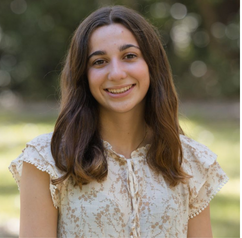
Isabella Paez
Paez, who has wanted to become an international human rights lawyer since she was in third grade, also loves studying history.
“I really enjoy learning about the past and what we learn moving forward,” she said.
Her interests and accomplishments made the Mater Academy sophomore a perfect fit for membership in the National Alliance of Public Charter Schools inaugural Rising Leaders program. The first cohort includes 10 students from across the Unites States who were chosen from among more than 100 applicants.
The charter school advocacy group founded the program to develop students’ leadership and advocacy skills with training from policy professionals. It is one of several youth advocacy groups that have been formed as national education choice groups see the value of using students to promote their message of letting families choose the best educational fit for their children.
(Step Up For Students, which hosts this blog, has an alumni network that is open to scholarship recipients who want to advocate for the program after completing high school.)
“These 10 young leaders represent our country’s future,” said Nina Rees, CEO and president of the National Alliance for Public Charter Schools. “Education by its very nature is quintessentially a student’s experience. It is only fitting that students should be the voice of education advocacy. We are grateful to be able to connect with them, teach them, and learn from them, and we can’t wait to see the change they will create in the decades to come.”
Each cohort will serve actively for one year and then mentor its successors. Students will have the opportunity to apply what they’ve learned by launching advocacy clubs in their schools to help address education issues in their communities, speaking on panels and at events to promote student voices and participating in education policy discourse.
The Rising Leaders curriculum includes training in civics, advocacy, and leadership. Guest lecturers include former U.S. Rep. Carlos Curbelo, who served two terms representing District 26 in South Florida; recipients of the 30 under 30 Changemakers Award; and senior leadership at the National Alliance for Public Charter Schools.
Membership in a student group teaches students to share their personal stories to raise awareness among families and makes a powerful case for education choice to public policy shapers.
“The whole idea at the core of the movement was to benefit students, and there weren’t any spaces for young people to talk about their experience,” said Walter Blanks Jr., press secretary for the American Federation for Children and a member of the first cohort in its Future Leaders Fellowship Program.
The alumni group began in 2018 to identify and train college students who benefited from education choice scholarships as advocates. The federation plans to start a similar group for high school scholarship students in 2023.
“AFC thought there were no better people to advocate and speak on this issue than the ones who have directly benefited from what I call ‘school choice policy boot camp,’” said Blanks, whose participation helped launch his career as an education choice advocate.
The training involves teaching members how to share their stories and how to engage with lawmakers so they can be “put in a room with the people making these policies,” Blanks said.
Members also travel and meet with national leaders such as former U.S. Education Secretary Betsy DeVos and former U.S. Secretary of State Condoleezza Rice. Blanks said hearing directly from students is a powerful weapon against opponents of education choice, who almost always are adults.
Blanks knows first-hand that this is true. He shared his personal story as a bill was under consideration before a legislative committee in his native Ohio. The next speaker, a teachers’ union representative, argued against the bill, saying education choice doesn’t work.
“The chairman said, ‘How can you say it doesn’t work after hearing Walter’s story?’” Blanks recalled.
In addition to providing powerful advocacy, the program also helps groups with succession planning by adding young voices to the mix.
“You look at the education reform space and it’s mostly made up of analysts and data wonks, but these people have been in the movement a long time,” Blanks said, noting that the first education choice program, which began in Milwaukee, is now three decades old.
Leaders at the National Alliance of Public Charter School agree.
“For the future of public education to be strengthened in a way that is sustainable and meaningful for students, it’s important to have student voices be part of future policy,” said Sindy Pierre-Noel, director of programs for the alliance.
“We have a politically and socially engaged generation that has great ideas for the future. We need these student leaders to continue their work into their adult life and continue to grow and improve the public education sector, especially charter schools, with a perspective from their lived experience.”
Paez, the Miami-area teen who recently underwent media training with the group, can’t wait to get started.
“I realize education does impact every single student, and having that choice and opportunity is super important, and that really is why I’m really excited about this program.”
She is scheduled to speak at her first gala in a few weeks.
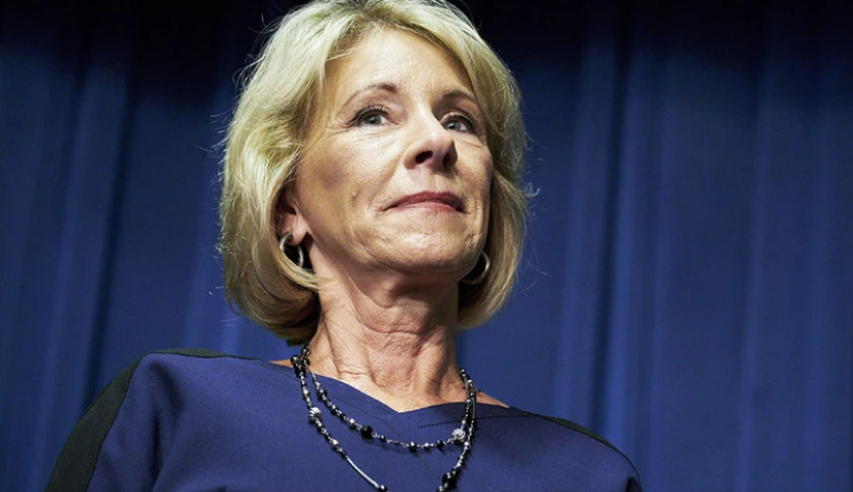
Former U.S. Education Secretary Betsy DeVos has written a new book about the importance of education choice.
Editor’s note: Former U.S. Secretary of Education and longtime education choice champion Betsy DeVos is promoting her new book, “Hostages No More: The Fight for Education Freedom and the Future of the American Child,” which is set to be released on June 21. DeVos recently sat down with her former education department colleague, Denisha Allen. A former state scholarship student, Allen now serves as the director of public relations and content marketing at the American Federation for Children, a national organization that DeVos helped found and chaired before becoming education secretary in 2017. DeVos recalls how she first became interested in the idea of education choice as a young mother of a kindergartener. She also discusses how advocates have approached the issue over the years, how she worked promote education freedom while serving as education secretary, and how the pandemic pushed it to the forefront of parents’ concerns. She also talks about what she hopes readers will learn from the book. Here are some excerpts from the interview.
How DeVos became involved in the education choice movement: My oldest son, Rick, who is now 40 years old, was starting kindergarten. My husband, Dick, and I knew we were going to be able to send our children to whatever school we felt was best for them. So, we were shopping around visiting schools and discovered this amazing little Christian school serving the kids of the neighborhood around there. They had to raise 90 percent of their operating funds every year. Everyone who attended paid what they could. So, I started getting involved in that school, and the more I was there, the more I realized that there were multiple families who would have loved to have their kids in a school like that. So, I started, as we all did…we started trying to make the case to appeal to people through logic or through the lawyerly approaches or the legal side of the case as the reasons for granting education freedom and school choice and quickly realized it was going to take a lot of political muscle as well. And so, those things have developed over the last 30-plus years. But it was solely with a commitment to bringing policy into being in as many states as possible to allow families the kind of freedom they need to find the right fit for their children.
How the pandemic allowed education choice to take center stage: I think the last two years have really laid bare many of the challenges that many of us, if not all of us, have seen during the last number of years in a way people never anticipated. Whether it was lockdowns, mandates, curriculum issues, lack of rigor or a lack of actually learning anything, any number of issues have really brought the whole possibility of education freedom to a whole new level.
Why a book and why now? I didn’t set out to write a book and probably wouldn’t have if not for what unfolded the last couple of years. But again, I think it has really brought attention to the whole issue of education in a way that we couldn’t have anticipated. As you know, all of our focus while we were (in the Department of Education) has been on doing the right thing for students, and all activities were centered around highlighting different schools or different approaches that were bringing unique opportunities to students. The whole notion of rethinking education and the old institutional notion of one-size-fits-all approach, a lot of that work really helped lay the ground in many ways for the discussion we’re having today about bringing broader education freedom to those across the country. So, the book is my way to talk about how we fix education in America, and it brings into it the stories of lives that have been changed and kids who are on a totally different path because of these opportunities, and I hope it helps correct some of the mischaracterizations of my time in Washington and all of us who are involved in offering these types of opportunities through policy to kids in all states.
What is DeVos's main message to readers? I hope that (readers) will take away the notion that education freedom is something we have got to move toward for every student in this country. By education freedom, I should probably give my definition of what that means. I used to talk about school choice, and school choice was and still is a good description of what we’re talking about, but I don’t think it’s broad enough. When we think of school choice, we think of buildings, and I don’t think we have to think of only buildings. We need to think creatively about how kids can experience learning in their K-12 years in ways that we haven’t begun to dream of. And frankly, lots of people have been exploring that during the last two years with all of this COVID reality. So, you have families that have been banding together to in small homeschool consortiums have may become a micro-school. You have individuals who are customizing their education…education freedom, I think provides a new moniker or banner of what school, of what education, could be. I hope people will take away tools they can use to advance this in their own communities and their own state and on behalf of their own children, and I hope it will really encourage policy change to empower families to do just that.

