Editor's note: We're going to try another something new on redefinED today - a brief, occasional and maybe even daily roundup of some of the latest education stories in Florida. We're based in Florida; many of our readers are in Florida; and so much is going on down here education-wise - so, we think it makes sense to compile and circulate the latest goings-on to our readers. We'll focus a lot on school choice coverage, but not exclusively. We might make a quick comment or add a complementary link, but often we'll just be logging in what the papers and blogs are reporting. So, here goes ...
 More trouble for an Imagine charter school. School board members in Pinellas County are running out of patience with the Imagine charter school in St. Petersburg, which has earned a string of D and F grades from the state, the Tampa Bay Times reports. We wrote about this Imagine school a couple months ago, after parents successfully pleaded with the school board to give the school one more chance.
Columnist skewers charter schools. Orlando Sentinel columnist Scott Maxwell takes charter schools to task because they "fail and close at an alarming rate."
Palm Beach County parents line up for choice. Thousands of parents and students in Palm Beach County flocked last night to a showcase for public school choice options, including magnet and charter schools, the Palm Beach Post reports. Said one parent: "I just hope I can get my kid in.”
Brevard schools see enrollment dip. The state's 10th biggest school district unexpectedly saw enrollment decline by 760 students this year, according to Florida Today. For what it's worth, according to our data, the number of students on tax-credit scholarships in Brevard climbed from 1,056 last year to 1,452 this year.
Sarasota County gets its 10th charter school. Story from the Sarasata Herald-Tribune here.
 Flap festers over achievement gaps goals. Both Gov. Rick Scott and Gary Chartrand, chair of the Florida Board of Education, issued statements yesterday in response to the board's decision last week to set different academic achievement targets for black, white, Hispanic and other subgroups. The targets incorporated steeper rates of improvement for groups with lower proficiency rates. Scott statement here. Chartrand statement here. Orlando Sentinel coverage here. Tallahassee Democrat story here.
 Florida’s next education commissioner will inherit a job that makes juggling chainsaws look easy. He or she must get under the hood of a complicated accountability system, ride herd on a historic shake-up of public education, dodge slings and arrows while walking a political tight rope and leap tall buildings in a single bound.
And yet, the job remains so compelling. Florida is the nation’s most promising bridge to an education system that can more fully give teachers and parents real power to help kids live out their dreams. In the last 10 to 15 years, no state has focused more on the low-income and minority students who are now a majority in Florida public schools. Simultaneously, no state has opened the door more to alternative learning options – options that have both empowered parents and multiplied the potential for educators to innovate. The result has been both dramatic and nowhere near enough. The next commissioner must find ways to continue the momentum.
To that end, we hope he or she can nimbly rotate hats long enough to also assume the role of explainer-in-chief. We know this won’t be easy; education reformers in Florida operate in an environment that is particularly tense and, in the past couple of years, has become downright ugly. But we can’t help but think that maybe, just maybe, the temperature will drop a few degrees if fair-minded people can be persuaded that not every education idea and not every education reform is a zero-sum proposition. Sometimes, they really can work in harmony with the other parts.
This is especially true with school choice. The sincere goal here isn’t “privatization,” it’s personalization. It’s about expanding options so more kids can be matched with settings that maximize their potential, and yes that includes private and faith-based options.
There’s no reason, and so far in Florida no demonstration, that these options have to come at the expense of traditional schools. It’s entirely possible – and many of us think it’s absolutely necessary – to support traditional public schools at the same time we push for additional options that, for individual students, may work better. (more…)
A recent report from Harvard researchers offers more compelling reasons why expanded learning options are so needed for struggling students. Based on data from four urban school districts, the Strategic Data Project at Harvard's Center for Education Policy Research found lower-performing students are placed with brand-new teachers far more often than their higher-performing peers.
Given high turnover in high poverty schools, and the reluctance of school boards to address it, you’d expect more of these match-ups there. But the researchers found them across all schools. And given what we know about the effectiveness of rookie teachers, the tragic impact is obvious: “The systematic placement of novice teachers with lower-performing students can be expected to compound these students’ academic difficulties and exacerbate achievements,” the researchers wrote. They termed it a “double whammy.”
That’s putting it mildly. There is no justification for saddling students with the greatest need with teachers who are often the least effective. It’s a clear case of public schools perpetuating a vicious cycle that they can, within their power, do much to help mitigate.
The practice isn’t good for teachers either. The researchers ask, “Is it the best strategy to develop and retain highly effective teachers by placing them in challenging situations when they are at a critical stage in their development as teachers?”
The report suggests potential remedies, including paying teachers more to work in tough schools. Maybe, someday, school districts will get around to doing that in a meaningful way. In the meantime, how can anyone deny parents the chance to find better odds in an alternative setting?
 It does sound nefarious: The people who back accountability for Florida public schools, the argument goes, are really out to mine huge sums of money from their degradation and demise. In a weekend op-ed for the Orlando Sentinel, Florida teachers union president Andy Ford (pictured here) mashed the privatization button hard in panning the state’s “flawed and punitive” ed reforms. The accountability system, he wrote, has been “endlessly promoted by legislators who favor for-profit schools, and the Florida Chamber of Commerce.” The state’s standardized test has been “abused by politicians and those wanting to make a profit off public schools and students.” The job of state education commissioner has “devolved into one solely focused on implementing the marching orders of Jeb Bush and the corporate community.”
Yikes! But if all of those folks really were out to make public schools look awful (so profiteers could swoop to the rescue with charter schools and vouchers) they’ve done a miserable job. As we’ve noted before, one key indicator after another and one credible, independent report after another has found Florida’s public school students – especially its poor and minority students – have, over the past 10 to 15 years, improved as fast as students in just about any other state. Matthew Ladner, a researcher at the Foundation for Excellence in Education, has more on this point today at Jay P. Greene’s Blog:
Notice that the “good ole days” in Florida (pre-reform) were a disaster for low-income children. A whopping 37% of Florida’s low-income 4th graders had learned to read according to NAEP’s standards in 1998. A lack of transparency and accountability may have suited the FEA fine, but it was nothing less than catastrophic for Florida’s low-income children. Thirteen years into the “flawed” system, that figure was up to 62 percent. The goal of Florida policymakers should clearly be to accelerate this impressive progress rather than to go back to the failed practices of the past.
Put another way, if Mr. Ford considers this system “flawed” then Florida lawmakers should quickly implement something that he would judge to be “catastrophically flawed.”
 This will surprise no one, but the 2012 Democratic Party platform, released yesterday, includes charter schools in the one sentence that offers a nod to school choice but does not include private learning options: "We will continue to strengthen all our schools and work to expand public school options for low-income youth, including magnet schools, charter schools, teacher-led schools, and career academies." Here's the education portion of the platform (by contrast, see the 2012 Republican platform on education here):
An Economy that Out-Educates the World and Offers Greater Access to Higher Education and Technical Training.
Democrats believe that getting an education is the surest path to the middle class, giving all students the opportunity to fulfill their dreams and contribute to our economy and democracy. Public education is one of our critical democratic institutions. We are committed to ensuring that every child in America has access to a world-class public education so we can out-educate the world and make sure America has the world’s highest proportion of college graduates by 2020. This requires excellence at every level of our education system, from early learning through post-secondary education. It means we must close the achievement gap in America’s schools and ensure that in every neighborhood in the country, children can benefit from high-quality educational opportunities.
This is why we have helped states and territories develop comprehensive plans to raise standards and improve instruction in their early learning programs and invested in expanding and reforming Head Start.
President Obama and the Democrats are committed to working with states and communities so they have the flexibility and resources they need to improve elementary and secondary education in a way that works best for students. To that end, the President challenged and encouraged states to raise their standards so students graduate ready for college or career and can succeed in a dynamic global economy. Forty-six states responded, leading groundbreaking reforms that will deliver better education to millions of American students. Too many students, particularly students of color and disadvantaged students, drop out of our schools, and Democrats know we must address the dropout crisis with the urgency it deserves. The Democratic Party understands the importance of turning around struggling public schools. We will continue to strengthen all our schools and work to expand public school options for low-income youth, including magnet schools, charter schools, teacher-led schools, and career academies. (more…)
 The public release of test scores for low-income students on Florida Tax Credit Scholarships received remarkably little attention in the news media this year, leaving bloggers the freedom to interpret serious academic analysis with what amounted mostly to potshots.
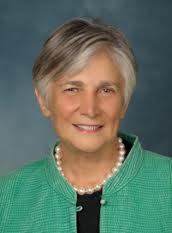
Not surprisingly, Diane Ravitch weighed in to wag her finger at the straw men who have touted vouchers as “a panacea.” But at least she didn’t challenge the credentials of the state-contracted researcher, whose national reputation for thorough independent-minded critical analysis didn’t prevent two lesser-known Florida bloggers from doing so. She also didn’t snipe at a respected education writer for the state’s largest newspaper, branding her reporting on the test results as “propaganda,” as several online commenters did.
This kind of noise is usually best regulated by shutting the door, but those who have genuine concerns about whether a private learning option can help struggling, underprivileged schoolchildren deserve straight answers. I certainly cannot be viewed as an unbiased observer, but my work for the nonprofit that oversees the scholarship at least makes me an informed one.
So let’s start with Dr. Ravitch, who to her credit recited three direct paragraphs from the 41-page report. She also said that “students in voucher schools made academic gains similar to their peers in public schools,” which is a generally correct statement. But rather than read more deeply, she tried to minimize the significance through unsupported and unimportant claims that Florida tax credit scholarship supporters promised miracles.
The test scores and associated research do not speak to academic miracles, but they are encouraging. To repeat some portions of our previous post, two findings are critical for context.
First: For five consecutive years, the state researcher has determined that students who choose the scholarship are among the lowest performers in the public schools they leave behind. (more…)
Here is a transcript of Jeb Bush's speech at the RNC tonight, according to prepared remarks. (He deviated from the script at the beginning to address this issue.)
Jeb Bush: Welcome to Florida! Bienvenido a Florida!
This election is about the future of this nation. We can shape that future with what we do here, with what we do November 6.
We can restore America's greatness.
That starts with a strong economy, a smart energy policy, lower deficits, and a president who puts America's workers and job-creators first.
But to have a great future - a secure future - a future that is equal to our potential as a nation, we need to do something else.
We must make sure that our children and grandchildren are ready for the world we are shaping today.
It starts in our homes, in our communities, and especially in our schools.
As a candidate and Governor, I visited over 400 schools. I saw children read their first sentences. Solve their first long-division problems. Explore the miracles of chemistry and physics.
That's the essence of education - students getting a chance at a future.
There are many reasons to believe America's future is bright, but also reasons to worry.
Of 34 advanced nations in the world, American students rank 17th in science, 25th in math.
Only one-fourth of high school graduates are ready for their next steps.
China and India produce eight times more engineering students each year than the United States.
There is a moral cost to our failing schools.
We say that every child in America has an equal opportunity. Tell that to a kid in whose classroom learning isn't respected.
Tell that to a parent stuck in a school where there is no leadership. Tell that to a young, talented teacher who just got laid off because she didn't have tenure.
The sad truth is that equality of opportunity doesn't exist in many of our schools. We give some kids a chance, but not all.
That failure is the great moral and economic issue of our time. And it's hurting all of America.
I believe we can meet this challenge. (more…)
After more than a decade working in education reform I learned long ago that if I stopped to kick every snapping dog along the pathway, I would never arrive where I needed to go. But every now and then I read something, such as Diane Ravitch’s latest op-ed on CNN.com, and have to take a breath and ask “Really?” One of my earliest resources as I was starting in education reform back around 2000 was her book, “Left Back: A Century of Failed School Reforms.” But now it appears she’s utterly abandoned that historical analysis in favor of status quo incrementalism and apologies for failure.
Let’s just think about Dr. Ravitch’s assertions:
The NAEP test scores of American students are at their highest point in history: for black students, white students, Hispanic students, and Asian students.
They are at their highest point in history in fourth grade and in eighth grade, in reading and math.
I tend to agree with Dr. Ravitch that the National Assessment of Educational Progress (NAEP) test is the most valid measure of academic performance. But why is that? Primarily, as my American Center for School Choice colleague, Alan Bonsteel, recently reminded us, it is because most states have catered to their own self-interest, aligning examinations to weak standards to give the appearance of academic achievement rather than actually increasing the amount of learning necessary for student success in this century. So for most of the last 10 years, under No Child Left Behind, we permitted widespread creation of dysfunctional and often meaningless standards aligned to dysfunctional and meaningless tests. Logically, this history does not make for a persuasive indictment of the value of legitimate standards and assessment tools.
But beyond that, let’s look at Dr. Ravitch’s assertion:
The “highest point in history” while true, is relative to what?

With the exception of the Asian/Pacific Islander group, I doubt anyone is throwing a parade for the educational system’s accomplishments over the last 20 years. Are 7-point gains over 20 years for African-Americans and Hispanics and a 9-point gain for white students really the kind of progress we expect after multiple billions of real increased educational spending? Yet this seems to be what Dr. Ravitch finds acceptable performance. (more…)
Black students who won private school vouchers through a lottery in New York City were much more likely to later enroll in college than other low-income students who applied but did not win, according to a study released this morning.
The study of a privately funded New York voucher program for elementary school students showed no significant impacts for students overall, including Hispanic students. But the story was different for black students: 34 percent who attended private schools with vouchers were enrolled full-time in college three years after graduation from high school, compared to 26 percent for the non-voucher group – a rate 31 percent higher. For black students enrolled in college either full- or part-time, the voucher boost was 24 percent. The researchers called those differences large and statistically significant.
The study is the first to use a “randomized trial” – considered the gold standard for researchers - to determine effects on private school vouchers on college enrollment. It was conducted by Matthew M. Chingos, research director of the Brown Center on Education Policy at the Brookings Institution, and Paul E. Peterson, who directs the Program on Education Policy and Governance at Harvard.
The students participated in the New York School Choice Scholarships Foundation Program, which, in 1997, offered three-year, private school scholarships worth up to $1,400 annually for up to 1,000 low-income kids. Recipients could attend any private school in the city. At the time, the total per pupil cost in the city’s Catholic schools was $2,400.
The researchers offered words of caution about interpreting the results, given statistical estimates they described as “fairly noisy.” But they also said further discussion was warranted given the apparent differences in outcomes for black and Hispanic students. (more…)
Editor’s note: Washington state is one of only nine states that don’t have charter schools. But voters can change that in November if they approve Initiative 1240, which will allow up to 40 charters statewide over five years. Chris Eide, who heads a Seattle-based ed reform group called Teachers United, tells redefinED in this emailed Q&A that it’s the students who struggle the most who will benefit if voters say yes.
 This is the fourth time Washington voters will go to the polls to vote on charter schools. They said no the first three times. Why will this time be different?
The last time voters looked at the option of charter schools in our state was eight years ago. Over that time, we have been unable to significantly address the needs of our struggling students. Moreover, the families of those students are often without high-quality options that can adapt to and address the needs of their children. Additionally, over the past eight years, high-performing charter schools across the country have demonstrated success for struggling students. Families in 41 other states have this option now, and Washington voters are faced with an easy decision to help struggling students.
Why does Washington state need charter schools?
Like other states, Washington has had a difficult time addressing the needs of struggling students. In some schools, nearly 40 percent of students are dropping out and far too many who do graduate are not prepared for college or their career. Public charter schools would be an option that will allow those students and families to attend a school that might better address their needs. If we hope to have more of our students graduating high school prepared for life after K-12, we are going to need all of the high-quality options that we can get.
You pointed out in a recent Seattle Times column that Initiative 1240 will only allow high-performing charters. How is that defined? And why did you stress that distinction? (more…)

