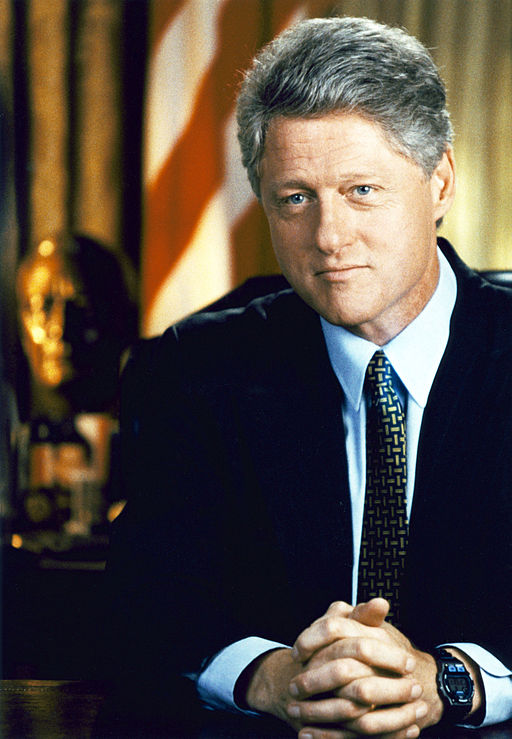
Before he became president, Bill Clinton wrote Wisconsin state Rep. Polly Williams, calling her a "visionary" for leading the charge on Milwaukee's school voucher program.
Not long before he ran for president, Bill Clinton saluted a school choice pioneer.
In 1990, as the governor of Arkansas, he wrote a letter to Wisconsin Rep. Annette “Polly” Williams, the African-American lawmaker who authored the bill that created America’s first major, modern school voucher program. (Thanks to the Center for Education Reform for the link.) He told Williams he was “fascinated” by the voucher plan in Milwaukee and “concerned that the traditional Democratic Party establishment has not given you more encouragement.”
 “The visionary is rarely embraced by status quo,” Clinton continued.
Polly Williams, the “mother of school choice,” died a year ago today. Her voucher story is well known. Bill Clinton’s, though, remains overlooked. Given how much school choice continues to divide the Democratic Party, that’s a bit odd, and a resurfacing now would seem to be timely. Who knows? Maybe Bill Clinton’s twists and turns on choice could shed a little more light on the education policy positions of Democratic front runner Hillary Clinton.
Not long after Gov. Clinton wrote the letter, candidate Clinton became a voucher opponent. He told the National Education Association vouchers would undermine public schools, and ran on a Democratic Party platform that was, after years of being pro-school choice, suddenly and stridently anti-voucher. President Clinton continued opposition: He vetoed creation of the federal voucher program in Washington D.C. (eventually signed into law by President Bush); publicly opposed the voucher ballot initiative in California in 1993; and suggested vouchers undermined school accountability.
But Clinton’s opposition includes a number of caveats, and even a surficial look suggests the Democratic Party’s internal tensions at play.
For example, President Clinton also praised the Children’s Scholarship Fund, the amazing organization that raises private funds for private school scholarships for low-income students. And he did by so by echoing a common refrain from choice supporters on the left, saying CSF was helping to “widen the circle of educational opportunity.” (Florida’s tax credit scholarship program, administered by nonprofits such as Step Up For Students, which hosts this blog, has its roots in the CSF. And Clinton’s former press secretary, Mike McCurry, now chairs the CSF board and is among the most articulate advocates for building a centrist school choice coalition.)
As president, Clinton also supported privately operated charter schools (though not always as strongly as he could have), and has been a bigger fan since. In 2012, he told a KIPP gathering in Orlando he wished there were 30,000 charter schools instead of 6,000.
Despite the boilerplate about choice being “conservative,” a who’s who of top Democrats long backed public support for private school options. It’s not a stretch to think Clinton would naturally be in that mix. He came of age when vouchers had as much of a “progressive” stamp as a “conservative” one, and support would seem to mesh with his particularly strong relationship with the black community, where many surveys suggest backing for vouchers is deep.
Who knows where the real Bill Clinton stands on vouchers. And who knows whether Hillary Clinton’s oscillations on choice are a product of the same environment. But either way, it’s worth noting, again, that the political left’s ties to school choice are far more textured than the deep hostility choice critics keep suggesting it is, or that the press too often repeats without question.
Bill Clinton may not be a Voucher Left guy. But his take on vouchers certainly defies the narrative about school choice being a vast right-wing conspiracy.

