
States with recent education choice lawsuits involving EdChoice Legal Advocates and the Institute for Justice.
As education choice options expand for families across the nation, opponents are stepping up their fight to preserve the status quo.
Observers say these conflicts are examples of growing pains that come when a society undergoes transformational change.
 “It’s just part of the cost of doing business,” said Michael Q. McShane, director of national research at EdChoice, a national nonprofit think tank. “Educators are not alone in challenging policies they don’t like. New laws get passed; people who can’t do things democratically try to do things through the courts.”
Michael B. Horn used a famous quote (often misattributed to Mohandas Gandhi) to describe the spate of lawsuits: “First they ignore you, then they laugh at you, then they fight you, then you win.”
“I think we’ve entered the fight stage,” said Horn, the co-founder, distinguished fellow, and chairman of the Clayton Christensen Institute and an author of several books on disruptive innovation. “Education choice has gotten big enough that the entrenched interests dedicated to preserving the status quo are starting to see it as a threat.”
Legal fights over education choice began in the 1800s when Catholic families opposed the Protestantism taught in public schools. In 1925, the U.S. Supreme Court ruled in Pierce v. Society of Sisters that parents had the right to put their children in private schools. In 2002, the high court issued another landmark decision, Zelman v. Simmons-Harris, which upheld an Ohio scholarship that allowed parents to spend the money on religious schools. The high court found that when the parent controls the expenditure, the state has no role in determining whether the parent will choose to use funding at a religious or secular school.
With the Zelman ruling settling that question, choice opponents began trying to insert race-based arguments using the language of state constitutions. Michael Bindas, a senior attorney at the Institute for Justice who argued the landmark case Carson v. Makin before the U.S. Supreme Court, outlined that shift in a paper published in the Syracuse Law Review. According to Bindas, common arguments center on education clauses requiring states to maintain uniform or common public school systems. Education choice opponents, he said, take that a step further and claim that private scholarship programs could upset racial balances that state constitutions require state governments to maintain. They also argue that the requirements that states maintain public school systems bar them from establishing concurrent private education choice programs. Lower court judges in Ohio and Utah recently cited this argument in striking down choice programs. Ohio plaintiffs also raised the issue of racial balance argument, which the judge rejected.
McShane and Horn say the spate of lawsuits won’t stop education choice programs from becoming the norm in public education. However, they will delay the transition.
“Yes, these cases are a headache and can delay implementation, but school choice has a good track record,” McShane said. “It will take numbers and time, and it’s going to tip over into a different mindset.”
Where things stand
Montana: Families are waiting on a judge to rule on a lawsuit brought by opponents of a 2024 education savings account program for students with special needs. Plaintiffs argue that the law allowing reimbursements for $6,800 per child violates several provisions of the state constitution and redirects tax dollars to private institutions at the expense of students with special needs who remain in public schools. The judge denied the plaintiff’s motion for a temporary halt to the program, allowing families to continue using their ESAs while the case is pending.
Ohio: The state has appealed a lower court’s ruling that declared the state’s $700 million Educational Choice Scholarship Program (EdChoice) unconstitutional. In siding with the coalition of school districts and other choice opponents, the judge said that the program was not a subsidy program, as the state argued, but a separate system of schools in violation of the state constitution. However, the judge rejected the plaintiffs’ argument that the program violated the state constitution’s education clause by creating racial imbalances in the district schools. The 10th District Court of Appeal is expected to hear the case in 2026.
Utah: Families are continuing to receive funds from the Utah Fits All scholarship program while a district court ruling in favor of a teachers union-backed lawsuit is under appeal to the state Supreme Court. A district judge ruled that the state constitution prevents lawmakers from using tax revenue to fund education programs other than public education, higher education, and services for people with disabilities. The judge rejected the state’s argument that it had met its funding obligations to public education and that nothing in the law prohibited it from funding a separate program to support families choosing private or home education.
Wyoming: Families seeking to use Steamboat Legacy Scholarship ESAs had to find other options for the 2025-26 school year after a trial judge blocked the state from distributing funds in July at the request of the Wyoming Education Association and other plaintiffs until the judge rules on their lawsuit against the program. The judge recently denied a motion by state officials and attorneys for two families to dismiss the lawsuit based on their argument that the plaintiffs lacked legal standing.
Missouri: Education choice advocates scored a win last month when a judge denied the teachers union’s request to freeze payments to the MOScholars K-12 scholarship program as their lawsuit continues. MOScholars began in 2021 as a tax credit program supported by private donors. Earlier this year, the state allocated $51 million to the program, prompting the Missouri Education Association to file the complaint, which contends that the allocation unconstitutionally diverts taxpayer funds to private schools.
Arkansas: The state’s Education Freedom Account program is being fought on two fronts. In June 2024, opponents sued in state court, arguing that the program illegally diverted tax dollars from the public school system to benefit private schools. The judge denied the state’s motion to dismiss the complaint, so state attorneys are appealing to the state Supreme Court.
The same plaintiffs filed another lawsuit a year later in U.S. District Court. It argues that the program violates the Establishment Clause of the First Amendment because “it aids in the establishment of religion” by providing state funding to private schools operated by religious organizations. The state refutes that by arguing that the money can go to schools representing a wide variety of faiths, as well as secular schools.
They also argue that the program violates the Equal Protection clause of the 14th Amendment because it discriminates against low-income families, families in rural areas where there are fewer private schools and students with disabilities, because private schools are exempt from the federal Individuals with Disabilities Education Act. The program is also discriminatory, according to the complaint, because private schools are not held to the same standards as public schools. The state attorney general has filed a motion to dismiss the case, arguing that the plaintiffs lack standing.
Kentucky: The Kentucky Supreme Court heard arguments on Sept. 11 about whether the state’s charter school funding law violates the state’s constitution. Charter schools have been legal in the Bluegrass State since 2017, but there was no state funding mechanism. Lawmakers passed House Bill 9, which allocated money to charter schools, which are publicly funded but independently managed. A trial court judge ruled in 2023 that the law violated the state constitutional ban on the use of tax dollars to support non-public education and the constitutional requirement for “an efficient system of common schools.”

Sugarman: "contrary to today’s conventional wisdom, allowing religious schools to become charter schools is not clearly a violation of the 'establishment clause.' "
The connection between charter schools and religion continues to generate the occasional headline, with the most recent coming last week when the New York Times carried a Texas Tribune story about Texas charter schools leasing space from churches. Some of those interviewed objected to the entanglement of the schools with the churches and the “benefits” that churches were gaining from these arrangements.
I think these concerns are misguided, given the state of charter facilities funding and the facts on the ground about most of these relationships. At the same time, I think the legal door is open in some states for the possibility of faith-based charter schools, which would be a step forward for school choice and education reform. Let me explain.
1. The Present
At the moment, in all states that permit charter schools as part of their public school system, charter schools may not be religious schools. Put simply, this means that religion may be no more a part of these schools than it is in other (traditional) public schools. School prayer is prohibited. Students and teachers may not be selected on the basis of their or their family’s religious beliefs. The curriculum must be secular.
Finding a suitable place to locate charter schools is a widespread problem. Those who run charter schools have to pay for their facilities from the same funds that also pay for all the academic and other financial obligations, whereas public school facilities are financed separately, usually through general obligation bonds, paid by property owners in the school district until the facility is fully paid for. Many charter schools are in leased premises, unlike traditional public schools. This generally puts charter schools at a substantial financial disadvantage compared to their other public school counterparts.
In some places, as here in California, the local school district is supposed to offer suitable facilities to charter school operators, but in practice that often is a hollow requirement as the place or places offered are locations that are actually quite unsuitable. Sometimes school district leaders have nothing better to offer; other times, it seems they deliberately offer what they know will be rejected because they are hostile to charter schools taking away “their” pupils. Many instances of protracted litigation have occurred before charter schools have been able to secure facility agreements from school districts.
As a result, it is natural that charter school operators frequently turn to churches as potential landlords. (more…)
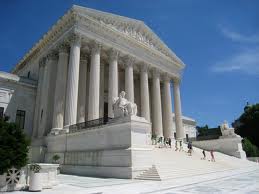 The Orlando Sentinel recently published a blog entry about a new website that opposes students using publicly-funded vouchers to attend private schools that teach creationism. The site asserts, “Teaching creationism with public money is unconstitutional. It violates the First Amendment of the U.S. Constitution which lays out a clear separation of church and state.”
I’m fine with citizens opposing the teaching of creationism. I would not send my child to a school that taught creationism in lieu of evolution, but the assertion that it’s unconstitutional is false.
In the 1925 Pierce v. Society of Sisters decision, the U.S. Supreme Court ruled parents are responsible for determining how and what their children are taught. And in the 2002 Zelman v. Simmons-Harris decision, the court ruled parents may use public money to pay for tuition at faith-based schools provided their choice is genuinely independent, and the funds go first to the parents and then to the school.
Florida’s school voucher programs all adhere to the Zelman requirement that funds go first to the parent and then the school, which is why using publicly-funded vouchers to attend faith-based schools is an exercise of the First Amendment’s freedom of religion clause, and not a violation of the Establishment Clause. (By the way, the term “separation of church and state” does not appear in the U.S. Constitution. That phrase was used by President Thomas Jefferson in a January 1, 1802 letter he wrote to the Danbury Baptist Association of Connecticut, reassuring them that he opposed the government interfering with their religious practices.)
The Sentinel wrote that some state officials think tax credit scholarships are more constitutional than vouchers because tax credit funds never touch the state treasury, but, again, the key to the Zelman decision is the path the funds travel to arrive at a faith-based school. Once public funds are given to the parents, they become less public and more private, which is why their expenditure is an exercise of religious freedom and not government-supported religion. (more…)

