 Editor's note: Another year, another legislative session, another stack of school-choice bills in Florida. Here's a roundup of choice legislation that lawmakers will consider in the annual session that begins today.
Career Academies:
SB 1076 by Sen. John Legg, R-Lutz. Expands the "Career and Professional Education Act (CAPE)," revising requirements for high school graduation and accelerated high school graduation, and allowing students to earn and substitute certain industry certifications for certain course credits. Also requires districts to make digital materials available to students and to use the Postsecondary Industry Certification Funding List in determining annual performance funding distributions to school districts and Florida College System institutions, etc.
Charter Schools:
HB 373 by Rep. Joe Saunders, D-Orlando. Provides that a contract for a charter school employee or service provider may not extend beyond the school’s charter contract, and that the employee or service provider is not entitled to compensation after the school’s closure. (Identical to SB 780 by Sen. Geraldine Thompson, D-Orlando.)
HB 453 by Rep. Victor Torres, D-Orlando. Requires the compensation and salary schedules for charter school employees to be based on school district schedules. (Identical to SB 784- Charter Schools by Sen. Geraldine Thompson, D-Orlando.)
SB 744 by Sen. David Simmons, R-Altamonte Springs. Requires charter school applications to demonstrate the applicant is financially qualified to open and maintain a high-quality charter school, requires the charter to set forth detailed reporting of the financial operations of the school to ensure employees are not paid unreasonable compensation, and requires that the term of the charter must provide for cancellation of the charter if the school becomes insolvent, fails to provide a quality education, or does not comply with applicable law. The bill also clarifies that a charter school system shall be designated a LEA solely for the purpose of receiving federal funds if certain criteria are met.
SB 828 by Sen. Rene Garcia, R-Hialeah. Grants school districts the ad valorem tax exemption given to charter schools, and restricts the use of capital outlay funds for property improvements if the property is exempt from ad valorem taxes. It restricts charter schools or technical career centers having financial problems from certain activities, and grants flexibility to high-performing school choice districts.
HB 1001 by Rep. Karen Castor Dentel, D-Maitland. Prohibits charter schools from requiring, soliciting, or accepting certain student information before student's enrollment or attendance. Also requires charter schools to submit attendance plans to the school district for students enrolled in school; provide funding to the school district in event of student transfers; and report to the school district certain student enrollment and wait-list information.
SB 1092 by Sen. Geraldine Thompson, D-Orlando. Requires charter school to submit attendance information for each student to the school district, and requires the charter school to provide a prorated portion of per-student funding to the school district if a student transfers to another public school in the school district before the last day of the school year.
SB 1164 by Sen. Kelli Stargel, R-Lakeland. Revises the eligibility criteria for extracurricular activities to include students in charter schools, and revises the criteria for bylaws, policies, or guidelines adopted by the Florida High School Athletic Association. (Compare to HB 1279 by Rep. Larry Metz, R-Groveland.) (more…)

Manatee County middle school students participated in the annual Technology Student Association competition last month, showing off skills that included engineering and design. Photo provided by Manatee schools.
Career and technical education is attracting a lot of attention from Florida lawmakers this year, and an effort to expand it in the upcoming session appears to have bipartisan support.
CTE is the centerpiece of proposed legislation that builds on the state’s Career and Professional Education Act, which created industry-certification programs at the high school level.
Senate Bill 1076, filed last week by Sen. John Legg, R-Lutz, would add more partnerships with business and community leaders to develop similar initiatives in middle and elementary schools. It also would elevate industry certifications to a level that can satisfy certain high school requirements.
Senate President Don Gaetz, a Republican from Destin, told redefinED this week that passage of the legislation would result in historic changes that, ultimately, would make education in the Sunshine State more relevant. He said lawmakers should be able to back it no matter their party affiliations.
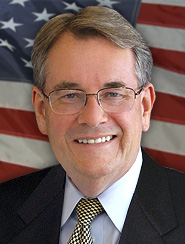
Sen. Don Gaetz
“All of us … want our graduates to walk across the stage and get a degree in their hands that results in a job,’’ Gaetz said. “It’s a sea change in educational delivery.''
Sen. Bill Montford, a ranking Democrat from Tallahassee, said he endorses the bill and the sentiment behind it.
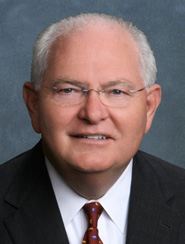
Sen. Bill Montford
“We need a different pathway for a lot of our students,” said the former Leon County schools superintendent, who heads the state superintendents association. “This is not a dumbing down of our curriculum. It’s not a retreat. This is what is best for our children in these schools.’’
Freshman lawmaker Shevrin Jones agreed. The Democratic representative from West Park has co-sponsored a bill that calls for more focus on career education.

Rep. Shevrin Jones
“Not everyone is going to college,’’ said the former high school educator, who taught Advanced Placement Biology until his election to the House last year. “What this will do is allow us to make sure that our students are prepared to go into the workforce.’’
But expanding career education doesn’t shut the door on a college degree, Montford said. “Most college students work,” he said. “This is a good fit.’’
Legg’s bill is at the forefront of this overhaul, serving as the cornerstone of another bill the lawmaker filed last month that ties education to economic development.
The so-call STEM zone bill would create hubs that invite colleges and universities - as well as K-12 district schools, private schools and charters - to help develop a pipeline of highly-skilled workers for careers in science, technology, engineering and math fields.
Florida industry leaders like what they’re hearing.
“It’s very difficult to connect skilled workers to jobs,’’ Ron Avery, chairman of the St. Augustine-based Ronco Group, which includes industrial, engineering and manufacturing businesses, told lawmakers at a committee hearing last month. “There are 4,000 manufacturing jobs open in Florida. We need to figure out today how to fill these.’’ (more…)

Sen. Legg
Florida state Sen. John Legg has a slogan ready for a bill he plans to file next week: “It’s not your daddy’s vo-tech.’’
The bill will focus on “high-end, high-skilled industry certifications at the high school level,’’ with one plank calling for some certifications to fulfill certain high school graduation requirements, said Legg, R-New Port Richey, who chairs the Senate Education Committee.
The certifications won’t replace any requirements, but serve as substitutions, he said. The idea is to put students on the fast-track for high-tech jobs that help grow the economy.
“Career education has changed since 1982,’’ Legg said. “It’s evolved. We’re trying to get the jobs back that we had in 2003, but we have failed. They’re not coming back, so we’ve got to train for jobs in 2023.’’
The bill, which is still being drafted, is part of a “very large package concerning career and technical education that will become a high priority for the senate,’’ he said.
It complements another bill Legg filed last month that would create “STEM zones” in counties with state universities that have high levels of research activity. Legg is looking primarily at the University of South Florida in Tampa.
Senate Bill 192 calls for partnerships between the Department of Education and Workforce Florida to build a gateway to science, technology, and engineering or mathematics careers.
The zones would create education hubs, not only looking to higher education facilities to train adults, but inviting traditional K-12 schools - as well as charters and private schools - to develop innovative curriculum for students and a pipeline of highly-skilled workers. In return, the schools would receive incentives, such as tax credits, expedited permits or grants, Legg said. (more…)

