 Long-time Democratic education activist Jack Jennings, in a recent Huffington Post column, argued that Republican support for private school choice is a somewhat recent (i.e., the last 45 years) phenomenon, driven by a political desire to appeal to segregationists and weaken teacher unions. Jennings writes, “The Republicans' talk about giving parents the right to choose is a politically expedient strategy ... Just beneath the surface of the education rhetoric are political motivations to thwart integration, weaken the Democratic coalition, and cripple the teachers' unions.”
Jennings is being disingenuous by not acknowledging that Democrats have also changed their position on public funding for private school choice over the years. Democrats George McGovern and Hubert Humphrey both ran for president on platforms supporting tuition tax credits for private schools, and Senator Daniel Patrick Moynihan, D-N.Y., was the U.S. Senate’s leading advocate for giving parents public funding to attend private schools. The Democratic Party reversed its support of public funding for private school choice in the late 1970s - as a political payback to the National Education Association for giving Jimmy Carter its first ever presidential endorsement.
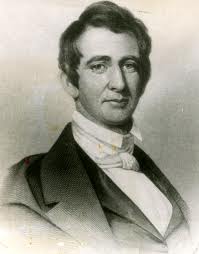
Jennings’ assertion that Republican support for publicly-funded private school choice didn’t exist prior to the 1960s would be news to the founders of the Republican Party, most notably William Henry Seward. Seward (pictured here) helped create the Republican Party and was one of Abraham Lincoln’s primary rivals for the Republican presidential nomination in 1860. After losing, Seward served as Lincoln’s Secretary of State during the Civil War.
Prior to seeking the presidency, Seward was elected governor of New York in 1838 as a member of the Whig Party. According to Doris Kearns Goodwin’s book, Team of Rivals, in his 1839 New Year’s Day inaugural address, Seward attempted to broaden his party’s political base by reaching out to “the Irish and German Catholic immigrants who formed the backbone of the state Democratic Party” (p. 82). As part of what Goodwin describes as Seward’s “progressive policies on education and immigration,” Seward “proposed to reform the school system, where the virulently anti-Catholic curriculum frightened immigrants away, dooming vast numbers to illiteracy, poverty, and vice. To get these children off the streets and provide them with opportunities to advance, Seward hoped to divert some part of the public school funds to support parochial schools where children could receive instruction from members of their own faith” (p. 83).
Seward’s attempts to give Catholic children access to more appropriate learning options drew a sharp rebuke from anti-Catholic Protestants. They accused him of tearing down the wall between church and state. At this time in U.S. history, the word “church” in the phrase separation of church and state meant the Catholic Church. (more…)

