The resistance to a proposed requirement that state-approved nonprofits provide scholarships to students attending any eligible private school has taken on an unusual fervor in Georgia. Some highly respected national education reformers recently described it as both a “threat to a growing and successful type of educational choice” and “contrary to our nation’s founding ideals.” One even called it “the nuclear option.”
In Florida, we welcome it as part of the law.
Florida’s Tax Credit Scholarship, now in its 14th year, stipulates that scholarship organizations “must allow an eligible student to attend any eligible private school and must allow a parent to transfer a scholarship during a school year to any other eligible private school of the parent’s choice.” The intent is obvious. It gives low-income parents an easier shopping experience among the 1,600 participating schools and a smoother path to the one that best meets their children’s needs. After all, one of the program’s core principles is to empower parents.
This is not to argue that the serve-all-schools approach is the only possibility, but the Florida experience certainly belies the apocalyptic claims of opponents in Georgia. The scholarship this year serves 78,154 students with tax-credited contributions totaling $447.3 million. As such, it’s nearly 10 times the size of the Georgia scholarship and is often viewed as a national model. No nuclear fallout so far. (more…)
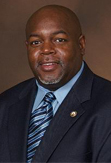
Georgia state Rep. Mike Glanton
Last week, at a gathering of school choice supporters in New Orleans, a pair of Georgia state lawmakers talked about the importance of educational choice, and their efforts to gain support for it among fellow Democrats.
State Reps. Valencia Stovall and Mike Glanton both represent parts of Clayton County, south of Atlanta, and have supported charter schools and other school choice legislation.
Glanton, who also chairs the board of a Clayton County charter school, said he could not understand why some groups that have historically championed civil rights in the school system have not also supported school choice. This transcript of his comments are slightly edited for length and clarity.
I spoke to the the Clayton County Education Association, which is a local union, last week, and they wanted to know why I voted for the [Opportunity School District].
I said I have 17 reasons why. ... The 17 reasons are my grand children. ...
I have 17 reasons why it's important for me, and my family, that we get this right. My kids can't afford to have people practice on them. My children get one shot. They get one opportunity.
Now I'm smart enough, and I'm certainly not naive, to know that my grandkids probably won't have an opportunity to go to a private school. So it's very important to me ... that we make sure that every child has an opportunity for hope and access to a quality education, regardless of their socio-economics.
It's also important to me to help folks understand, this is a civil rights issue. For me, this is about civil rights. It's no longer about sitting at the front of the bus, or getting on the bus. It's about having the opportunity to be educated, and successful, and buying the bus. That's what we've got to instill. ...
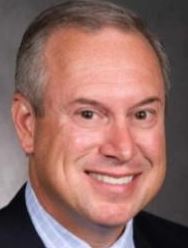
Hage
Vouchers, here. Charters, there. Virtual, over there. Politically, school choice sectors have been islands. But there are signs the movement is building bridges to advance common goals.
Florida's lead here surfaced at this week’s American Federation for Children summit, during a panel discussion on just that topic. In the Sunshine State, charter schools and supporters of vouchers and tax credit scholarships have teamed up to advance legislation, said panelist Jon Hage, founder and CEO of Florida-based Charter Schools USA.
“We realized it was time to join forces,” Hage said. “We felt we were sort of the Army, and they were the Navy … What we’re trying to do is have a common Department of Defense.”
The Florida school choice coalition doesn’t stop at two sectors. Through a group formed in 2010 – the Florida Alliance for Choices in Education – it includes online providers, home-schoolers and district school choice options like magnet schools. In the middle of this year’s legislative session, the group held a rally that, for the first time, brought parents together from across the spectrum.
Panelists suggested the benefits of a united front included strength in numbers, a more focused message and crossover appeal.
In response to a question from moderator Nina Rees, CEO of the National Alliance for Public Charter Schools, Hage said some Democratic lawmakers in Florida were more willing to support charter bills this year because they had supported tax credit scholarships in the past. Plus, the coalition offered a tighter, more compelling argument – one that emphasized school choice options even more and better deflected the usual criticisms. (more…)
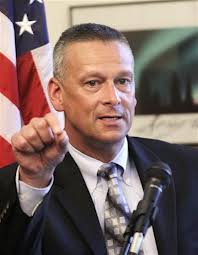
Indiana State Superintendent Tony Bennett
Indiana: The race for state superintendent is a referendum on the direction of education reform, including expanded school choice (Associated Press).
Florida: The state's teachers unions are among the weakest in the nation, according to a new Fordham Institute report (Orlando Sentinel). The Duval County school district agrees to settle with a proposed virtual charter school, run by online provider K12, that it had initially opposed (State Impact Florida).
Washington: Education leaders from around the state sign a letter saying they oppose the charter school initiative on Tuesday's ballot (Seattle Times).
Tennessee: Education Commissioner Kevin Huffman, also a member of Jeb Bush's Chiefs For Change, urges parents to use his state's latest education report card to ask questions and consider options (The Tennessean). Groups pushing for education reform and school choice spend heavily in campaign contributions (The Tennessean).
Michigan: Critics question the state's decision to okay new charters from companies whose existing schools are not performing well (Detroit News).
Wisconsin: One school district hopes to stem declining enrollment by expanding online offerings (Oshkosh Northwestern).
Maine: Five proposed charter schools apply to open next year (Kennebec Journal).
Georgia: A lawsuit claims language in the proposed charter school amendment is purposely misleading (Athens Banner Herald). Students from historically black colleges in Atlanta rally for the amendment (Atlanta Journal Constitution.)
Jay Bookman at The Atlanta Journal-Constitution is among the more faithful opponents to school vouchers and has frequently criticized a Georgia measure, as he did today, as representative of "another step in an incremental, largely undeclared assault on public education ..." Leaving aside Bookman's hyperbole, his current argument is a useful entry point for discussing the historical nature of public education. Specifically, the emergence of additional public and publicly funded private learning options brings us largely full circle to the educational choices at the "beginning of the American experiment" that the AJC columnist romanticizes about. More to the point, Bookman isn't quite accurate when he writes:
From the beginning of the American experiment, public schools have been understood as a mechanism of assimilation and a means of giving us a shared understanding. They have been the 'common schools,' the place where as children we are exposed not just to a common curriculum but to others unlike ourselves.
Would that it were so. American education evolved within the American experiment into the early 19th century as an enterprise that recognized little distinction between "public" and "private." Efforts to centralize education into the "common school" we know today did not proceed without challenges. Indeed, the earliest attempts in administering a public education in New York took root in the state's "permanent school fund," which supported church schools and charitable groups that provided free education for the neediest children. The idea of a common school didn't emerge until Horace Mann, toward the middle of the 19th century, embarked on what educational historian Lawrence A. Cremin called a "campaign of public education about public education." (more…)

