Florida business leaders put a spotlight Wednesday on the promise and potential pitfalls of Common Core - the tough, new academic standards that are rolling into Florida schools and will help re-shape teaching, learning and testing.
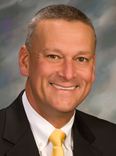
Bennett: "The state should own this initiative."
At a wide-ranging, day-long education summit in Orlando, several participants suggested a public awareness campaign to inform parents about the changes – which may be initially painful when they're implemented in the 2014-15 school year - and to rally broad support in a way that has eluded many of the state’s other, recent education reforms.
“These tend to be Tallahassee conversations. But if we don’t do this right, it becomes a Miami conversation or a Jacksonville conversation” and not in a positive way, Marshall Criser III, president of AT&T Florida and chairman of the Florida Council of 100, told redefinED during a break. “We have an opportunity and responsibility to take this back to our communities ... Because if not us, then who?”
“The state should own this initiative,” Education Commissioner Tony Bennett told attendees, reminding them of the marketing effort a decade ago for Just Read, Florida. “It shouldn’t be teachers against people. It shouldn’t be the state against schools, state against districts. This should be a statewide rollout that says this is important to our children and this is important to the future of our state.”
The Council of 100 sponsored the summit with the Florida Chamber Foundation, the National Chamber Foundation and the Institute for a Competitive Workforce. About 100 people attended, including three lawmakers, two superintendents, Board of Education Chairman Gary Chartrand and Florida Education Association President Andy Ford.
Spurred by the National Governors Association and the Council of Chief State School Officers, the Common Core standards in math and language arts have been adopted by 44 states. They’re well-thought-out and well-vetted. They’re benchmarked against international standards. They’re designed to instill a deeper knowledge than state standards do now. In the long term, supporters say, the higher bar will better prepare students for college and careers and an ever-more-competitive world. In the short term, though, ouch: They’re expected to result in a steep drop in test scores – and all the angst that comes with it.
“That’s a pain point,” Criser said. “But people have to understand that’s good,” he continued, because it’s the first step on a better path.
The discussion around Common Core has centered almost exclusively on public schools. But its gravitational pull is expected to be so strong that the impact will be felt at the private schools, too, to varying degrees. (more…)
Editor’s note: Hillsborough Superintendent MaryEllen Elia was also part of the National School Choice Week event in Tampa yesterday that featured Florida Superintendent Tony Bennett, and her remarks at the all-boys magnet school may have been even more noteworthy. Hillsborough is the eighth biggest school district in the nation. Here is the heart of Elia's comments, edited slightly for length and clarity.

Elia
The parents of the young men choose to send their sons here. They want their sons to be here. And I know I’m preaching to the choir when I talk about choice, but I think choice is one of the best things about education and should be embraced by all. Woe to all of us if we have to face a world where everyone is the same. …
So one of the things that I think that’s really important, that most of you probably don’t know, is that Hillsborough County has almost 50,000 students that are in some school by choice. So think about that. We’re about 200,000, so 25 percent of our students have chose another school than what would normally be their assigned school. We think that’s important. Obviously you do, right? And I think one of the things we have to do, in generally in reform in education – and again, I’m probably speaking to the choir here – but I think the concept of choice needs to be an integral part of the reform movements we have. So not only students, but also teachers, have choice in the kinds of approaches they take in the classroom.
I want to give you an example. You might not know this, but I started magnet schools, which were really our first choices in Hillsborough County, in 1989. And I was trying to convince parents that a computer was something their child probably would want to learn how to use. … We did a presentation in Hillsborough High School’s auditorium (about a new magnet school) … and a parent said to me, ‘My child will never have to use a computer. Never. So why would I send them to this little elementary school that is down close to downtown when I don’t live there? ’ And I said, ‘Well, what does your child like?’ And she said, ‘They like dinosaurs.’ I said, ‘If every book your child read for the next three months was about dinosaurs, would he be a better reader?’ And she said, ‘Yeah, he eats and sleeps and talks dinosaurs all the time.’ And I said, ‘You want him to really be a good student, you give them the things that they like. Believe me, kids like technology.’ We filled the school that year, and we have since gone on to have … over 35 magnet schools.
The big issue is, no child’s the same. And we’ve got to make sure that we can meet those needs of children and teachers, and teaching the things and learning the things the way they are going to be most successful. So in my world, interest is a huge, huge push for kids. … (more…)
 The Fordham Institute may be the closest thing to an honest academic broker in the contentious private school choice arena these days, and its latest report will no doubt enhance that reputation. "Red Tape or Red Herring?", released today, provides strong evidence that private schools are not averse to academic or financial oversight – a finding that runs counter to a longstanding libertarian narrative.
As Fordham president Chester Finn Jr. acknowledged in the forward: “Many proponents of private school choice — both the voucher and tax credit scholarship versions — take for granted that schools won’t participate (or shouldn’t participate) if government asks too much of them, regulates their practices, requires them to reveal closely held information and — above all — demands that they be publicly accountable for student achievement.”
The report looks at the participation rate of private schools in voucher and tax credit scholarship programs in 11 states and surveys from 241 private schools that do and don’t participate, and it finds that testing requirements are not a significant deterrent. Only a quarter of the schools ranked state-required testing as a “very” or “extremely” important factor. Among the schools not participating in voucher or scholarship programs, testing was the fifth most-cited concern – behind such issues as protection of religious activities and admission processes and government paperwork.
This is not to suggest that private schools are eager to embrace more government regulation. The report did find a modest negative correlation between the degree of regulation in a state and the rate of schools participating. But the survey is a reality check on private schools and the educators who run them. Catholic schools remain a major player in the voucher-scholarship market, in part because their mission is to serve poor children, and they also demonstrate remarkable leadership on the issue of testing and academic accountability.
The report echoes similar on-the-ground work in Florida. (more…)
Common Core. To conservatives: "I suggest you give up the bashing of a critically important reform simply because your political enemy endorsed it." EdFly Blog.
 Charter schools. The highly successful Pembroke Pines charter school system says it deserves a share of the Broward school district's capital improvement dollars, reports the Miami Herald. The Pinellas school district will vote yet again Tuesday on whether to shutter the long-troubled Imagine charter school in St. Petersburg, reports the Tampa Bay Times. A Palm Coast charter hopes to bounce back from an F, reports the Daytona Beach News Journal.
Teacher evaluations. Senate President Don Gaetz says the new evals may be too complicated and, combined with other big changes in education, could put the system at risk of imploding, reports the Florida Current. Washington Post ed blogger Valerie Strauss uses Gaetz's comments to tee off on Florida ed reform.
More on teacher pay. Gov. Rick Scott's proposal runs up against competing demands, reports the Tampa Bay Times. It "would provide welcome relief" but doesn't make up for "all of the damage this governor has done to public education," writes the Times editorial board. Cash shows respect, writes Times columnist Dan DeWitt. It'll help show teachers are valued, writes the Pensacola News Journal. Give Scott credit for supporting merit pay and across-the-board raises, writes the Daytona Beach News Journal. His commitment needs to be more than a one-time gimmick, writes the Palm Beach Post. A good thing no matter the motivation, writes the Gainesville Sun. Transparent pandering, writes the Panama City News Herald. "Met with skepticism," reports the Tampa Tribune. Lawmakers should be careful about both teacher raises and a proposal to transform the state retirement system, writes the Ocala Star Banner.
Satanists. They like the school prayer bill Scott signed last year. Really. Coverage from Tallahassee Democrat and Associated Press. (more…)
Count newly-elected Florida Rep. Manny Diaz, Jr. among a number of state lawmakers who are public school district employees. But Diaz, an assistant principal in the Miami-Dade public school district, isn’t just a cheerleader for traditional public schools.
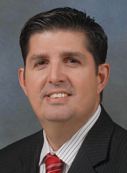
Rep. Diaz
He’s also a huge – and very vocal - advocate for school choice.
“We have an evolving student body – different than what it was five years ago,’’ Diaz, a Republican who represents his hometown of Hialeah, said during a recent telephone interview with redefinED. “I do believe we have to look at all the options.’’
Diaz has been appointed to the House Education Committee, as well as the K-12 and Choice & Innovation subcommittees. Among his goals there: to help guide fellow lawmakers and education leaders toward reform that is “student-centered and parent-centered.’’
To that end, Diaz said he fully supports district programs, such as magnet schools; high-quality charter schools; and other nontraditional options, such as tax credit scholarships.
“I think the competition makes our educational choices better,’’ he said. And better can only be defined by results. “I’m big on the accountability side,’’ Diaz said. “It’s a matter of having the political courage to move forward, to take measures already in the law.’’
If a district school isn’t helping students succeed academically, bring in interventions, he said. If a charter school isn’t operating ethically, shut it down.
Diaz also responded to recent news reports in which Gov. Rick Scott called for private schools that accept tax credit scholarships to give those students the same tests as their public school peers. (more…)
by James Herzog
Sadly, if we hear even once about a tragedy like the Sandy Hook Elementary School shootings last week in Newtown, Conn., it is once too much. We all want answers to ensure parents can take their children to school each day and remain confident that learning will occur in a safe environment.
Yet our beloved Sunshine State – and every state in the nation – is not immune from seeing a similar tragedy in one of our own schools, though God forbid such a day happens again anywhere. As recently as March, we learned about a dedicated Episcopal high school administrator in Jacksonville, Fla. who was shot and killed by a disgruntled former teacher. The massacre at Columbine High School in Denver back in 1999 led to intense national scrutiny, followed by efforts like “Rachel’s Challenge” to promote a more civil society. (It was named in honor of Rachel Joy Scott, one of the slain students). These events show student safety is a top priority for public and nonpublic schools alike.
Against this backdrop, many news articles have suggested actions that should be considered by the Florida Legislature during the upcoming 2013 session. One idea which could be a “no brainer” for lawmakers is to secure final passage of a long-awaited “student safety/ notification” bill. It’s a non-controversial and bipartisan measure that has been under consideration for the past two sessions – and even passed unanimously from the Florida House floor – but fell short of final passage in the Senate.
During the 2012 session, Senate Bill 494 and House Bill 273 regarding student safety were based upon a key proposal reintroduced from the 2011 session. The proposal would require response agencies that already notify public school districts about local emergencies - such as bomb threats, natural disasters and fires - to also notify nonpublic schools. The bills provided an “opt-in” method for nonpublic schools to determine whether to receive such alerts. (more…)
Florida Catholic schools are embracing Common Core academic standards and seriously considering whether to take the coming state tests aligned to them. In the meantime, their leaders say, 30 to 40 Catholic schools want to administer the FCAT in 2014, in what would be a trial run for potential transition to Common Core testing.
“Our mission is the same, public or Catholic school, to create productive citizens in our world that actually have the skills in life they need,” Alberto Vazquez-Matos, schools superintendent for the Diocese of St. Petersburg, told redefinED. “We’ll all be raising the standards and talking the same academic language.”
The push by Catholic schools towards common standards - and perhaps common tests - is an interesting counterpoint to the debate that followed last week’s comments by Gov. Rick Scott. Scott re-opened the door to a long-running conversation about voucher and tax-credit scholarship programs by saying he wants to see students in those programs take the same tests as their public school peers.
Right now, the state does not require tax credit scholarship students to take the FCAT, but they are mandated to take another comparable, state-approved test such as the Stanford Achievement Test or Iowa Tests of Basic Skills. Disabled students who use McKay vouchers to attend private schools are not required by the state to take any such tests.
This year, Catholic schools in Florida enroll 7,673 tax credit scholarship students. (The scholarship program is administered by Step Up for Students, which co-hosts this blog.)
Scott’s comments sparked suggestions from some school choice critics that private schools were dodging comparisons to public schools. But Florida’s Catholic schools have been quietly moving towards Common Core for more than year. In fact, all 237 Catholic schools in Florida will be rolling out a “blended’’ version of the language arts standards, right along with public schools, in 2014. (more…)
 Florida: Tony Bennett is selected the state's new education commissioner (redefinED). He tells reporters afterwards that he champions school choice first and foremost because of the social justice component (redefinED). A new group headed by T. Willard Fair, co-founder of the state's first charter school, aims to create a pipeline of black executives and entrepreneurs to help lead private and charter schools (redefinED). The Miami-Dade school district ranks No. 10 in the country for school choice, according to a new report from Brookings (redefinED). A Catholic school in Tampa is at the heart of a University of Notre Dame project to revitalize Catholic schools, particularly for Hispanic students. (redefinED).
Louisiana: Voucher parents are worried in the wake of the legal ruling that puts the program in limbo (advertiser.com). Gov. Bobby Jindal makes a pitch for vouchers at a Brookings Institution event in Washington D.C. (Huffington Post).
Washington: More than 150 teachers, parents and administrators attend a charter school conference in the wake of the successful passage of a charter school ballot initiative (Tacoma News Tribune). (Full disclosure: The conference was sponsored by the Washington Charter School Research Center, which was founded by Jim and Fawn Spady. Fawn Spady chairs the board of directors at the American Center for School Choice, which co-hosts this blog.)
Michigan: The education adviser to Gov. Rick Snyder presents the governor's sweeping public school choice proposal to business and education leaders (Grand Rapids Business Journal). (more…)
 Oldest African-American school in Florida. St. Peter Claver Catholic School in Tampa is profiled by Fox 13 in Tampa. Many students attend with tax-credit scholarships.
A different take on charter school payout controversy. Red flags should have prompted more oversight from the Orange County school district, writes Adam Emerson at the Choice Words blog after doing some independent reporting.
Informing or advocating? Some question whether Volusia Superintendent Margaret Smith crossed the line in “informing” voters with automated phone calls about an upcoming tax referendum, reports the Daytona Beach New Journal.
Task force looking at tax hike. From The Florida Current: “A task force looking at construction needs of public schools is finalizing a proposal for a half mill property tax increase with the money split between traditional schools and charter schools.”
Virtual settlement. From the News Service of Florida (subscription required): “Days before an appeals court was set to hear arguments, the Duval County School Board and backers of a proposed virtual charter school have agreed to settle a legal dispute about approval of the school, an attorney said Thursday."
John Giotis, a Republican activist who heads a Catholic school in St. Petersburg, Fla., is among 15 people named to a new National Educators for Romney group.
The 15-member group is headed by Rod Paige, who served as U.S. Secretary of Education during President George W. Bush's first term.
Giotis, headmaster of The School of the Immaculata, was among the social conservates in Florida who sided with Romney in the Republican primary. He is the latest Floridian to assume a high-profile position in Romney's education circle. Jeb Bush wrote the forward to Romney's education plan. Former Florida Board of Education Chair Phil Handy co-chairs one of his education policy advisory groups. And Julio Fuentes, president & CEO of the Hispanic Council for Reform and Educational Options (as well as a Step Up For Students board member), serves on an ed policy committee.
A Romney campaign said the new group will lead efforts to support "Romney and his bold education reforms that will put students first."
Paige said in the release: "I’ve worked with Republicans and Democrats to bring quality education to all of our children, and I can say with authority that Mitt Romney understands the reforms this country needs. For too long, we’ve watched as our most disadvantaged children have been denied the one tool they need to rise from poverty and live a successful life—a world-class education. Mitt Romney has proposed real reforms that will finally bring the change we need and that our children deserve. In Chicago, we are seeing again that entrenched special interests will oppose those efforts, but Governor Romney is a leader who can overcome that opposition. I am proud to support him in this endeavor.”

