On Wednesday, U.S. Sen. Marco Rubio, R-Fla., introduced a bill that would create a federal tax credit scholarship program for low-income students. Today he offers his thoughts about it in an op-ed for the Tampa Bay Times. Here's an excerpt:
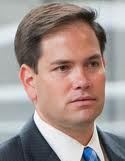
Sen. Rubio
Unfortunately, hundreds of thousands of schoolchildren in our country are not as fortunate as I was. These children are being failed by our nation's broken public school system, and they and their parents deserve the freedom and flexibility of school choice. There is perhaps no greater symbol of failure in our education system and our society than the worried faces of parents sending their kids off to a failing school because they don't have the liberty to choose a better, safer school.
While some students may be lucky enough to attend high-quality public charter schools in their areas, a private school education has become unattainable for the majority of low-income and middle-class families. It's too difficult for parents in today's economic environment to incur the financial burden of paying tuition at a private school, forcing parents to bypass better and safer education options.
Further, because of our nation's fiscal crisis, private schools may not be able to distribute a high number of institutionally funded scholarships to children. The result is a large number of students and families yearning for the opportunity of gaining a better education at a high-performing private school that will adequately prepare them to compete in a 21st century global economy.
To ensure that more American children receive that opportunity, I have introduced the Educational Opportunities Act, to create a new federal tax credit for individuals and corporations to help families pay for expanded educational opportunities. Full op-ed here.
Eric J. Smith, the highly regarded Florida education commissioner who left after Gov. Rick Scott became governor, has landed at the George W. Bush Institute. His name and new title - fellow in education policy - surfaced today in the Huffington Post, in an op-ed he penned urging states to keep pushing for strong accountability measures. Part of Smith's argument included a general nod towards expanded school choice:
Another essential principle of strong accountability systems is state intervention when schools don't see achievement rates rise. And the most intensive interventions should occur in schools whose students don't reach grade-level standards.
In that vein, school choice is an important option for students. Every single student deserves a quality education. It is simply not acceptable for a parent to be forced to keep their child in a failing school in the hope that the local teachers and administrators will eventually clean up their act.
States generally want to be creative and federal legislation isn't standing in their way of doing that. Officials are empowered to employ tools beyond the standard choice policy of vouchers, including innovative reforms like allowing students in low-performing schools to get connected with high quality educators online.
The George W. Bush Institute's principles call on states to build on the current foundation, apply the lessons learned, and provide parents with an even broader array of choices if their child is trapped in a persistently low-performing school.

