State of the State. Gov. Rick Scott gives props to teachers and pushes for a boost in ed funding. Coverage from Gradebook, Tampa Bay Times, Orlando Sentinel, SchoolZone, Palm Beach Post, Gainesville Sun, Tallahassee Democrat, The Florida Current, StateImpact Florida. A special spotlight for a Temple Terrace teacher, reports the Times/Herald Capital Bureau.
 More on the legislative session. An education issue overview from StateImpact Florida. A roundup of school choice bills from redefinED.
Virtual schools. Pasco drops a challenge to a proposed Florida Virtual Academy charter. Tampa Bay Times.
McKay vouchers. Another reason Texas should adopt them. EdFly Blog.
AP tests. Should Florida students get paid for passing them? Gradebook.
School spending. The Brevard school board revises its $30 million list of cuts in response to community input, reports Florida Today. The Flagler school board moves towards putting a tax referendum on the ballot for next spring, reports the Daytona Beach News Journal. An audit committee in Manatee sees progress in how the district is responding to budget errors that led to a $3.4 million deficit, reports the Bradenton Herald. More from the Sarasota Herald Tribune. (more…)
Backers of a bill that would give Florida students with disabilities quicker access to state-funded vouchers for private schools say they need another year to work on the proposal.
Senate Bill 172, filed by Sen. Miguel Diaz de la Portilla, R-Miami, was withdrawn from consideration last week.
The bill called for removing the rule that students spend a year in a Florida public school immediately prior to becoming eligible for the McKay Scholarship. Advocates support that provision whole-heartedly, but some feared potential complications between parents and school districts.
“We want to go back and rework it a little,’’ said Steve Hicks, president of the Coalition of McKay Scholarship Schools, which presents private schools that accept the vouchers.
The plan is to gather stakeholders and meet during the year before presenting a new bill for the next legislative session, he said.
Sen. Diaz de la Portilla could not be reached for comment.
 Editor's note: This op-ed appeared in today's Tampa Bay Times.
Few public issues are as absorbing as the balance between religion and government, so a ballot initiative that aims to change the boundary is worthy of rigorous debate. Instead, Florida's Amendment 8 is being treated to a proxy campaign on school vouchers.
A new radio ad by the Florida Education Association: "Amendment 8 allows the government to give our tax dollars to any group claiming to be a religious organization, so any religious group or sect can use our money to fund their own religious schools."
FEA president Andy Ford: "This is designed to open the state treasury to voucher schools."
Alachua School Board member Eileen Roy: "It's the very death of public schools. That's not overstating it, in my opinion."
These are provocative arguments, to be sure, but they are basically irrelevant. The amendment was placed on the ballot by two legislators — Sen. Thad Altman, R-Viera, and Rep. Scott Plakon, R-Longwood — who have said repeatedly they want to protect religiously based social services. Their interest was piqued by a lawsuit, Council for Secular Humanism vs. McNeil, that challenges a prison ministries program, and by the fact that the New York-based council has called it "a springboard to mounting other challenges."
In turn, the pro-Amendment 8 campaign is being led by a coalition of community-service providers and religious leaders who have raised less than $100,000 to date. They believe that if the secular humanists will sue over prison ministries, they might one day challenge the Catholic Charities or Catholic hospitals or the YMCA. After all, the current constitutional language is explicit: "No revenue of the state or any political subdivision or agency thereof shall ever be taken from the public treasury directly or indirectly in aid of any church, sect, or religious denomination or in aid of any sectarian institution."
Now it is certainly true that voucher advocates have previously pushed to alter the no-aid clause. But it is just as clear that they played no role in getting this amendment on the ballot and, most telling, have raised not a penny for the campaign. Their reasons are pragmatic, not philosophical: Federal and state court decisions in recent years have rendered the no-aid clause all but moot as it relates to school choice. Read full editorial here.
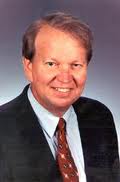 Former Florida House Speaker Jon Mills (pictured here) will now get his day in court, representing a group that has sued the state over both the funding and quality of public education. But the state Supreme Court’s decision on Tuesday to let the suit move forward also invites a more enticing legal debate: Does the constitutional requirement of “a uniform, efficient, safe, secure, and high quality system of free public schools” mean that every school must look the same?
That question may sound facetious, but unfortunately has judicial grounding. In 2006, the state high court invalidated Opportunity Scholarships by rejecting “separate private systems parallel to and in competition with the free public schools.” And the court didn’t stop there. It went further, arguing that “uniformity” calls for consistency in school accreditation, teacher certification and education qualifications, background screening for employees, academic standards, and curriculum in reading and history.
The question of school variety and choice might not sound like fodder for a case that’s primarily about money, but give Mills credit for being open to all interpretations of high quality. “The mission,” he said when the case was first filed in 2009, “is for students to have a good educational opportunity and to succeed, and it seems to me we need more options and not less.”
That is clearly the direction in which Florida is moving. (more…)
Editor’s note: The McKay Scholarship Program for students with disabilities has on occasion been criticized because it does not require that student progress be measured with a standardized test. Robyn Rennick with the Coalition of McKay Scholarship Schools argues that such a policy would be ineffective and counterproductive.
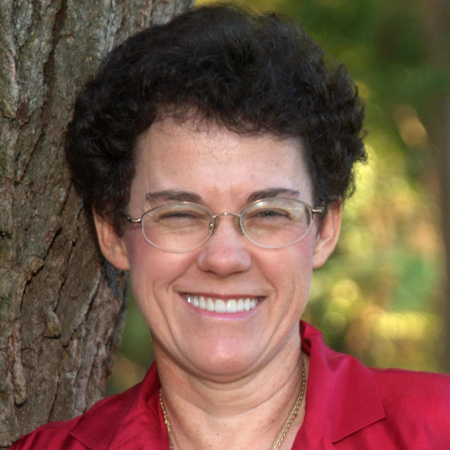
Rennick
The McKay Scholarship is quite different from tax credit scholarships in Florida or other programs that are working with the general student population. All recipients of McKay Scholarships have diagnosed disabilities and had either an Individual Education Plan or 504 Plan in the public school. Therefore, by definition, they are a unique group of students with all types of disabilities from low cognitive functioning, to autism, to learning disabilities.
The issue of requiring standardized testing was thoroughly investigated and discussed prior to crafting the initial legislation to create the McKay Scholarship. Legislators determined it was an inappropriate measure of accountability. The testing issue was brought up again between 2004 and 2006 when the accountability bill for scholarship programs was being crafted. Legislators again saw the inappropriateness of this type of testing and did not place it the legislation. They recognized that the “one size fits all” approach to testing is wrong for this population of students.
How do you test such a diverse population? What standardized test measures the growth of a severely non-verbal autistic child whose progress may be measured in gaining 40 words in a year and in being able to sit appropriately for five minutes? What standardized test measures the progress of a developmentally disabled child who is learning proper hygiene? Placing these children in a standardized test format would never show the immense progress they may have made that year, compared to where they were. It would also be a cruel exercise to make the children follow.
What of the learning disabled students? Shouldn’t standardized testing be used to show their progress? When the Coalition of McKay Scholarship Schools surveyed its members, we found more than 50 percent of the schools did use a standardized test, especially those serving the learning disabled population. However, what is also typical is these students often enter the private schools three or four years behind their peers on standardized test scores. If a student only “gains” a year on the standardized test, they are still behind. Has the school failed?
We have seen the controversy in our public system as to whether “experts” agree that standardized tests really show whether a school is working. From a research basis, for scores to be compared, the population has to be similar. As we have already noted, the McKay population is extremely diverse. Also, the population has to be large enough to develop an aggregate score. Forty-five percent of schools with McKay students have 10 or fewer students. No researcher would validate aggregate scores from such a small group of subjects. Even in a school with 100 students, the diversity of the groups would not allow for a true picture. So to require standardized testing which is reported to DOE, and then to craft a “research report” from that, would be the most flawed research and a tremendous waste of everyone’s effort, time and money.
This is a parent choice program. Parents are the consumers. They can leave if their children’s needs are not being met. (more…)

