Gov. LePage
New Hampshire: The ACLU and Americans United for Separation of Church and State file suit against the state's new tax credit scholarship program (New Hampshire Public Radio). More from Associated Press.
Maine: State Education Commissioner Stephen Bowen points to problems in the process after the state charter school commission rejects four of five applicants (Bangor DailyNews). Gov. Paul LePage tees off on the commission and the teachers union after the rejections (Portland Press Herald). Supporters of virtual charter schools are also upset (Portland Press Herald). The teachers union blasts LePage for wanting to lift the cap on charter schools (Portland Press Herald). Public school administrators say charters should have to feel effect of education budget cuts too (Bangor Daily News).
Kansas: Vouchers, tax credit scholarships and an expansion of charter schools are all expected to be part of the legislative discussion this year (Wichita Eagle.)
Kentucky: A bill is filed to allow a limited number of charter schools to open in the state for the first time (Kentucky Public Radio).
California: Parents at Desert Trails Elementary School finally succeed in using the parent trigger law to get a charter school to take over their school (Los Angeles Times). More from Hechinger Report and Education Week.
Georgia: A state representative is planning to file a parent trigger bill for the session that begins today (Associated Press).
Mississippi: Business leaders are backing the legislative push for charter schools (Associated Press). Racial divisions and mistrust are at play in debate over charter schools (Hechinger Report). (more…)
Mississippi: State lawmakers are expected to try again this year to pass charter school legislation, but some suburban Republicans continue to have concerns (Desoto Times Tribune). Lt. Gov. Tate Reeves says there's bipartisan support for charter schools (Associated Press). More from the Memphis Commercial Appeal. At least one lawmaker is talking about the possibility of tax credit scholarships (GulfLive.com)
 Florida: Jonathan Hage, CEO of Charter Schools USA, is named Florida Trend magazine's Floridian of the Year for 2012. A new state lawmaker works in public schools as an assistant principal, but supports publicly funded private school choice options (redefinED).
Arizona: The state's education savings accounts program expands to include students from the lowest-performing public schools (Arizona Republic.)
Oregon: The founders of a charter school chain are accused of racketeering and money laundering and charged with scamming $17 million from the state (The Oregonian).
Washington D.C.: Charter schools in the district expel students at far higher rates than traditional public schools (Washington Post).
Indiana: Lawmakers will look at expanding the state's voucher program during the upcoming legislative session (Associated Press).
Louisiana: The legal challenge against the state's voucher program heads to the state supreme court (New Orleans Times Picayune). (more…)
by Fawn Spady
School choice has encountered greater travails in few venues besides Washington State. Before they narrowly approved a new charter law this November, voters rejected charter initiatives in 1996 and 2000 and repealed a charter law enacted by the legislature in 2004. Washington State is in fact the only state where charter schools have ever faced voters directly. Now, opponents including the Washington State teachers union and the state superintendent of schools are threatening to sue to try to have the law held unconstitutional.
But you can’t keep a good idea down, as we saw last week at the Washington Charter School Resource Center conference. My husband Jim and I started the center in 2000. We hosted 160 interested people, 80 percent of them educators, at a forum on how to start a charter school successfully. Many hope to open a school next fall.
We are frustrated that the opposition remains so intense when the need for new approaches and frankly, for empowering parents with more educational options, is so obvious. Not even half of our fourth- and eighth-graders were proficient on national reading and math tests in 2011. Although we are fortunate in Washington State to have fewer low-income families than the national average, we rank only 37th in high school completion. Our graduation rate was 73.7 percent in 2011, and it was just 56.5 percent for Native Americans, 65.4 percent for African Americans and 64.5 percent for Hispanics. This is simply unacceptable.
Thankfully, we heard the imperative for change from those attending our forum. A principal told us he was tired of doing the same thing over and over and expecting a different outcome. A parent said she just knows there is a better choice for her special needs children. A retired teacher said public charter schools give her the desire to return to public education. A former school board member declared charters a way to engage parents in schools.
Particularly encouraging for us is the wealth of expertise eager to assist us in moving forward. (more…)

Vouchers and tax credit scholarships are in line with Democratic Party support for social justice and equal opportunity, says Florida state Rep. John Patrick Julien, D-North Miami. And yet, he says, Democratic lawmakers in Florida who support those options risk getting "whipped" by party leaders who don't.
He says he's a perfect example.
He lost the August primary by 13 votes after the party establishment lined up behind his opponent, Rep. Barbara Watson, D-Miami Gardens. Julien, who strongly backs expanded school choice, challenged the outcome, alleging some absentee ballots were obtained fraudulently. But last week a Tallahassee judge dismissed the suit.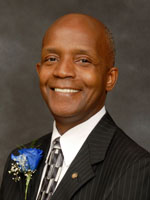
Democratic lawmakers who “care about educating the children, especially the poor children, they would want to support (vouchers and tax credit scholarships),” Julien told redefinED in the podcast interview attached below. “But they would get whipped out of it. … A lot of these folks, I guarantee you, if they try to push back, they’re going to be told, ‘Um, go talk to John Patrick Julien down there in Miami. And ask him how those votes worked out for him.’ “
Julien isn’t leaving quietly. He told Sunshine State News his family didn’t flee a dictatorship in Haiti so he could “be a slave” to Democratic Party leadership. He used similar language with redefinED: “If you want to sit down with me and treat me as a human being, and help me understand why my vote is wrong, I welcome it,” he said. “But what I don’t welcome are people that want to put the chains back around my ankles and my arms, and pull me in the direction that they want.”
Democratic opposition to vouchers and tax credit scholarships, Julien suggested, doesn't mesh with party values. “Democrats say that they want to educate people. Democrats say that they fight for the poor. Democrats say that their entire mantra is to be the voice for the voiceless. Democrats say that they are there for the sole purpose of fighting for the people,” he said. “What better fight is there than to fight to educate a poor child?”
The row in South Florida runs counter to long-term trend lines. Support for school choice among Florida lawmakers has grown over the past decade; in 2010, nearly half of them voted for a major expansion of the tax-credit program. Last spring, though, Democratic support dropped to about a third for a much more modest expansion. In the podcast, Julien offers one possible reason why.
Julien also suggests the Democratic Party should have a “big tent” on school choice. But as long as teachers unions remain a top financial contributor, he said, it’s not going to happen. “If you look at who my primary opposition was in this election cycle,” he said, “it was the teachers union.”
 I was wrong.
For 15 years I have dedicated myself to empowering low-income families to choose the best school for their kids. I was the strongest advocate for parental choice you would ever meet.
But I was wrong.
For almost two decades I swatted away false arguments from choice opponents. "There’s no evidence students do well in choice programs." No, the consensus of studies show they do. "Creams the best low-income students away from public schools." Sorry, studies show just the opposite.
But the scales have now fallen from my eyes. I have to leave the movement. Why?
I just learned that vouchers will mean the end of high school football. Yes, that's right - giving low-income parents choices will mean the end of that great American tradition - and I just can't tolerate that.
You see, high school football used to be the most important thing in my life. When I was 15 and my father told me our family was moving from Iowa to Florida, my only question was, "Does the high school have a good quarterback"? When I was 17, the only thing I wanted for my birthday was a case of Gatorade (three practices a day, in full pads, in the summer in South Florida). Some of my fondest memories are of taking the field for the Fort Lauderdale High School Flying L's. Yes, that was our team name.
Given this background, I hope my fellow choice advocates will understand my abdication.
A group called Save Texas Football has just come out with a video explaining how choice will kill high school football in Texas. As I watched it, I was so impressed by the quality of the message and the production, I said to myself, "There's no way a grassroots, amateur group did this." Sure enough, the group behind the video is Progress Texas, a 501C4 advocacy group that is run by veterans of Texas Democratic politics. C4s don't have to reveal their donors, but I'll buy you a hot dog at this Friday’s game if the major funder of this group isn’t the Texas teachers union. (more…)
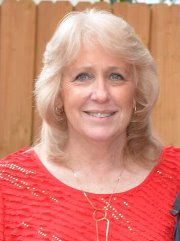 If you need any more proof that the political coalition for school choice is as broad as it gets, listen to Nancy Stacy, a school board member-elect in Marion County, Fla. Stacy is a Republican Party activist, backed by the Tea Party, who describes herself as “to the right of Jerry Falwell.” But in some of her battles with school boards, she said, her closest allies were feisty moms “to the left of Hillary Clinton.”
Now Stacy, 58, has plans to use her new power as a school board member to pitch school choice and parental empowerment to low-income parents, particularly minority parents. She suggests many of them are probably fans of President Obama, but … so what?
“One thing all parents have in common with one another, regardless of political party, is we all want the best education for our children,” she said in a phone interview with redefinED. “I work with anybody that can help me with that goal.”
For two decades, Stacy has been a steady pain for the district, unleashing her inner pit bull on everything from curriculum to scheduling. Don’t get her started. Within minutes, the retired construction company owner will be railing against a school system that has “become a jobs program,” blows money on “snake oil peddling consultants,” and is run by “a bunch of jocks.“
Stacy said she was inspired by Herman Cain to run for school board instead of again backing other candidates. Her opponent was a retired school administrator. He had strong backing from the teachers union. The reaction last month when he lost?
People were “freakin’ slap out,” she said. “Totally.”
They don’t believe what she’s going to do next, either, she said. (more…)
 Chicago: The teachers union strike is over, but it highlights a growing rift within the Democratic Party over school choice and education reform (Christian Science Monitor). Mayor Rahm Emanuel can now focus on expanding charter schools (Chicago Tribune). (Image from louisville.com)
Florida: The state teachers union sinks $1 million into the campaign over a constitutional amendment that has little to do with education (redefinED). Republican Gov. Rick Scott and a Democratic candidate for Congress make a joint appearance at a new charter school (redefinED). The latest enrollment numbers show school choice in Florida has become mainstream (redefinED). The Volusia school superintendent recommends the school board reject all nine applications for new charter schools next year (Daytona Beach News Journal).
Maine: A task force begins considering legislative proposals for expanding school choice. (Kennebec Journal)
Virginia: A Richmond charter school welcomes a critique from school district officials. (Richmond Times-Dispatch)
Tennessee: State education officials fine the Nashville school district $3.4 million for denying a charter school application. (Education Week)
Michigan: Lawmakers are set to discuss parent trigger legislation. (MLive.com) (more…)
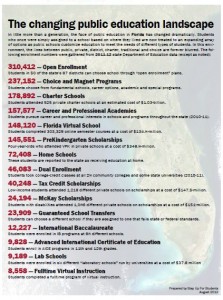 Though we know little about the parents who long have chosen their school through where they decide to live (or to pretend to live), Florida keeps count of those who no longer want their neighborhood school. And here's some data to chew on: In a state known for its breadth of learning options, that number last school year reached 1.2 million.
In other words, using a conservative approach with new 2011-12 enrollment records, 43 of every 100 students in Florida public education opted for something other than their zoned school.
This number is produced largely from state Department of Education surveys required of the 67 school districts and reflects, not surprisingly, surging growth for choice options. Though total public school enrollment grew by only 1 percent last year, reaching 2.7 million, charters grew by almost 16 percent, online by 21 percent, private scholarships for poor children by 17 percent. (See an enrollment compilation of 2011-12 options here.)
Granted, Florida is not like most other states in this regard. A combination of educational, budgetary and political factors, including the gubernatorial tenure of Jeb Bush, has put the Sunshine State on an accelerated path of parental empowerment. That said, it is a diverse, highly populous state with national political significance, and this kind of transformation is central to the new definition of public education.
The national education debate is still absorbed by adults who grew up with a pupil assignment plan built almost entirely on geography. Many of them went to the same schools as their parents and even their grandparents, and it’s natural they would define public education that way. That may help explain why parent activists or groups such as the PTA continue to oblige the teacher unions that pressure them to resist laws giving parents more options. The union message – that traditional public schools are endangered – plays to the parents’ natural fears.
That’s why these numbers are worthy of pause. (more…)
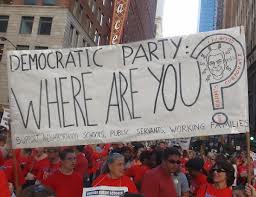 Chicago: Expansion of charter schools, which tend to employ non-unionized teachers, is a big undercurrent in the teachers union strike (New York Times). Media coverage of the strike puts charter schools in a positive light (redefinED). (Image from aei-ideas.org)
Florida: Khan Academy and Step Up For Students are partnering to bring cutting-edge technology to private schools that accept tax-credit scholarships (redefinED). The new chair of the state Board of Education says "the train has left the station" when it comes to expanding school choice (redefinED).
New Jersey: State lawmakers to take a closer look at online education. (NJSpotlight)
Rhode Island: The superintendent of the Providence school district and the president of the teachers union are working together to promote district-operated charter schools (Boston.com). State education leaders disagree about whether to close a low-performing charter school (Providence Journal).
Nevada: Lawmakers may consider parent trigger legislation in the wake of the Won't Back Down movie. (Las Vegas Sun)
Louisiana: In the wake of the state's new voucher program, the state's top education official offers a plan for closer scrutiny of private schools (New Orleans Times Picayune). About 5,000 students enroll in the new voucher program (New Orleans Times Picayune). A spokesman for a Louisiana teachers unions tries to explain why the group said a black school choice group supports "KKK vouchers" (Daily Caller).
New Hampshire: A Q&A with the head of the state's first tax credit scholarship funding organization. (Concord Monitor)
Talk about unintended consequences. Has anything ever - ever - generated more positive publicity for school choice than the teachers strike in Chicago? For charter schools especially, the strike is the gift that keeps on giving. They're open. The traditional public schools are not. Meanwhile, the framing of the strike in the mainstream press dovetails with the parental empowerment rumble from Won’t Back Down. But don’t take my word for it. Check out the ABC News clip above and the snippets below.
New York Times: "Sharonya Simon was looking for a better fit for her son when she pulled him out of a gifted program in a traditional district school five years ago and enrolled him — and later her daughter — in Chicago International Charter School Bucktown, on the Northwest Side. At the neighborhood school, “I did not feel like he was being challenged,” she said during a parents’ meeting at the school on Wednesday. Ms. Simon also said that teachers spent too much time disciplining troubled students, and that many of her son’s classmates came from families with uninterested parents. At the charter school, she said, “you have a different group because of what we have to go through to get our kids into a charter school. You have more involved parents here.””
Education Week: “Broy (Andrew Broy, the president of the Illinois Network of Charter Schools) said his organization has received three times as many inquiries as normal about charter schools from parents and others over the past few months, as news of the impasse between the district and the union has spread. "There's no doubt that over the past two months there's been an increase in the amount of interest charters have received," he said. He suspects that interest has spiked in recent days. "A lot of parents are seeing their neighbors sending their kids to a charter school and are saying, 'Why are you still in session?'" Broy added.”
Chicago Tribune columnist John Kass: When Chicago Teachers Union President Karen Lewis led her members out on strike this week, she said real school would be closed. "Negotiations have been intense but productive," she said. "However, we have failed to reach an agreement that will prevent a labor strike. Real school will not be open (Monday)." Real school? You mean that public system where four of 10 students don't graduate? Since real school wasn't open, I was compelled to visit an unreal school. A South Side school where 100 percent of the students graduate, and 100 percent are accepted to college. A Roman Catholic all-boys school that draws from poor and working-class neighborhoods, a school where there are no cops or metal detectors, no gang recruitment, no fear.”
Huffington Post: “With the strike having an adverse affects on those students who are already the most disadvantaged, parents are now questioning what they can do to get their children off the streets and back into school. Akers (Beth Akers, fellow in the Brookings Institution's Brown Center on Education Policy) believes having options in public schools would help these students. "Unfortunately they don't have a lot of options right now," Akers said to The Huffington Post. "That's the issue with k-12 education right now and why we believe in the notion of introducing choice in this market. Right now it's sort of a monopoly that these teachers are all part of the union and students don’t have the option of selecting into another school." “ (more…)

