Students at the University of Austin are getting an overview of the nation’s rapidly expanding education choice movement, including its storied history in Florida.
The survey course includes guest lectures delivered by top national researchers and thought leaders, including Ron Matus, director of research and special projects at Step Up For Students. The nonprofit organization is Florida’s and the nation’s largest education choice scholarship funding organization. Matus, who spent 25 years as a journalist and eight years as the state education reporter at the Tampa Bay Times, has authored many white papers on education innovation in Florida for Step Up.
The topic of Matus’s lecture was “Freedom, Pluralism and School Choice: Competing Rationales and Contemporary Practice” and included a special emphasis on education innovation in the Sunshine State.
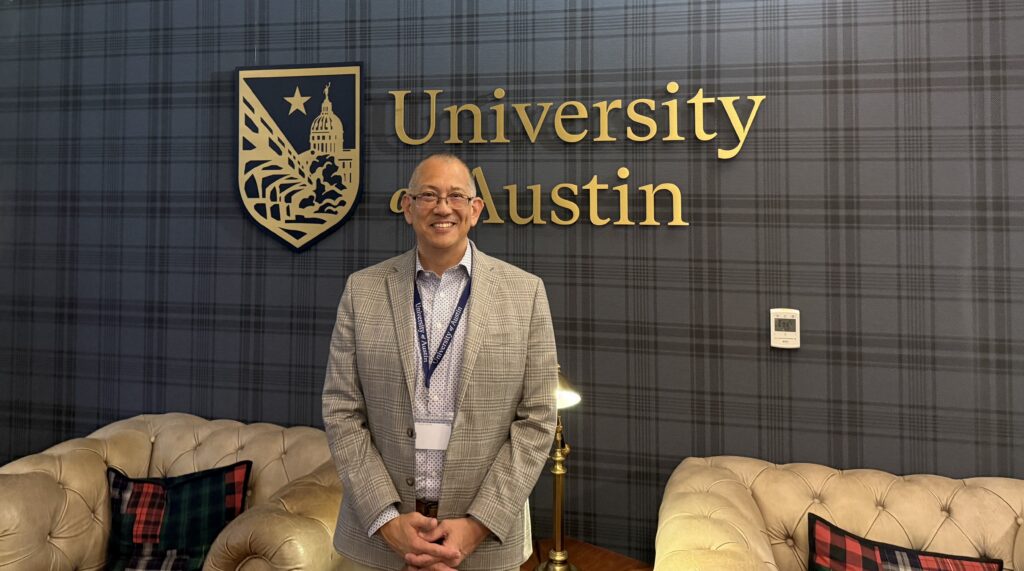
Matus shared the evolution of public education in Florida from its first model of neighborhood zoned district schools to the rise of charter schools, homeschooling, private school scholarships, educational savings accounts, a la carte learning, and even public schools now offering individual courses paid for with education savings accounts. He also described the many learning options now available, from traditional private schools to farm and forest schools to microschools and programs customized by families.
Matus also recommended reading that exposed students to various arguments in favor of education choice, including economist Milton Friedman’s 1955 groundbreaking essay “The Role of Government in Education,” which emphasized free markets and competition, and John E. Coons, a professor emeritus at the University of California, Berkeley, School of Law, who focused on dignity and fairness to all families regardless of income.
Erin Davis Valdez, executive director of the university’s Center for Education and Public Service, developed the course, which followed two K-12 practicums with rotations that began in the fall of 2025 at participating private and charter schools.
She describes the program as being in “the incubator phase,” and hopes to expand it into an academic minor.
“What we’re trying to do every term is offer a course for students interested in education policy as a career or in teaching as a career or something adjacent to it, like entrepreneurship,” she said. “But for now, students can take these as elective classes, and it builds their interest in the field.”
Valdez, who was homeschooled as a young child in Lakeland, Florida, a year before it became legal, said she chose the guest lecturers by looking for the best researchers and thought leaders in the movement. In addition to Matus, the list includes Eric Wearne, an associate professor in the Education Economics Center at Kennesaw State University and director of the Hybrid Schools Project. Wearne, who once described most traditional teacher prep programs as “thinly veiled arms of the HR department of the school district,” spoke on “Design Policy for New School Models.”
Others included Patrick Wolf, Distinguished Professor and 21st Century Chair in School Choice at the University of Arkansas, who spoke about the history of school choice policy, Jay P. Greene, senior fellow at the Defense of Freedom Institute, who spoke on the national responsibility of American universities; Katherine Bathgate, CEO and founder of SchoolForward, who spoke about economic foundations and emerging policy issues I education freedom; Mary K Wells, managing partner at Bellwether, who spoke on the last 30 years of education reform efforts; and Anita Scott, director of public policy for the Texas Home School Coalition, who spoke on connecting policy and practice in the homeschooling community.
Matthew Ladner, a senior adviser for education policy implementation at The Heritage Foundation’s Center for Education Policy and former executive editor of the NextSteps blog, is scheduled to lecture on June 1 about new directions in education choice and the question of accountability. The class will conclude June 8 with a lecture by Robert Pondiscio, a senior fellow at the American Enterprise Institute, whose topic is “The Last Days of Public School.”
You may have read or seen a story this week about the Florida Education Association, the state's largest teachers union, filing a lawsuit challenging the state’s scholarship programs and its charter schools.
Basically, the union is claiming that because private and charter schools don’t have to follow the same rules as district schools, the funding of these programs violates the Florida state constitution. The state constitution has a provision that Florida must provide a "uniform, efficient, safe, secure, and high-quality system of free public schools".

The union wants the courts to interpret this provision to mean the state can fund nothing but district-run schools, or at least make all schools that receive state funding be “uniform.”
Of course, the whole purpose of education choice is to create alternatives to traditional district schools to meet the needs of Florida’s incredibly diverse students.
Today, over 50% of taxpayer-funded K-12 students in Florida do not attend their zoned district school. In Miami Dade, our largest district, that figure is over 70%. The largest category of choice is district-run choices: magnets, open enrollment, career academies. Districts have admirably responded to competition.
In a ruling from 20 years ago, the state Supreme Court cited this uniformity provision when ruling that a small scholarship program was unconstitutional. The Harvard Law Review called the ruling an “adventurous reading and strained application” of Florida’s constitution. In contrast, a legal challenge to the tax credit scholarship was defeated in 2017.
The justices on the state Supreme Court — and their legal philosophy — is very different than even a decade ago. It would be very difficult to imagine that this court would interpret the uniformity provision in the same way as 20 years ago.
However, it will be very important to demonstrate to everyone how important education choice is.
Step Up led the coalition that defeated the lawsuit the union brought in 2014. This effort was a wonderful opportunity to show the country what choice meant to Florida families. The culmination of this effort: over 10,000 people came to Tallahassee to show their support for choice:
There will be an even stronger coalition this time around.
By Lauren May, Mary Camp, and Ron Matus
First, Florida. Now, Indiana. Which state will be next for a Catholic school comeback?
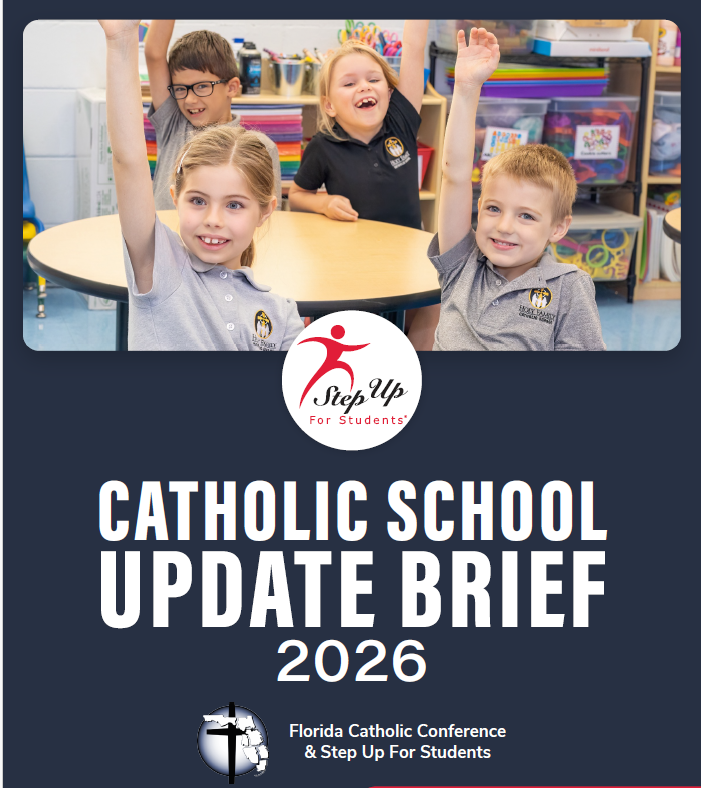
Our new, 2026 “Catholic school update brief” highlights not only continued Catholic school growth in Florida – which saw enrollment rise for a fifth straight year – but signs of resurgence beyond Florida, nudged by the historic expansion of school choice across America.
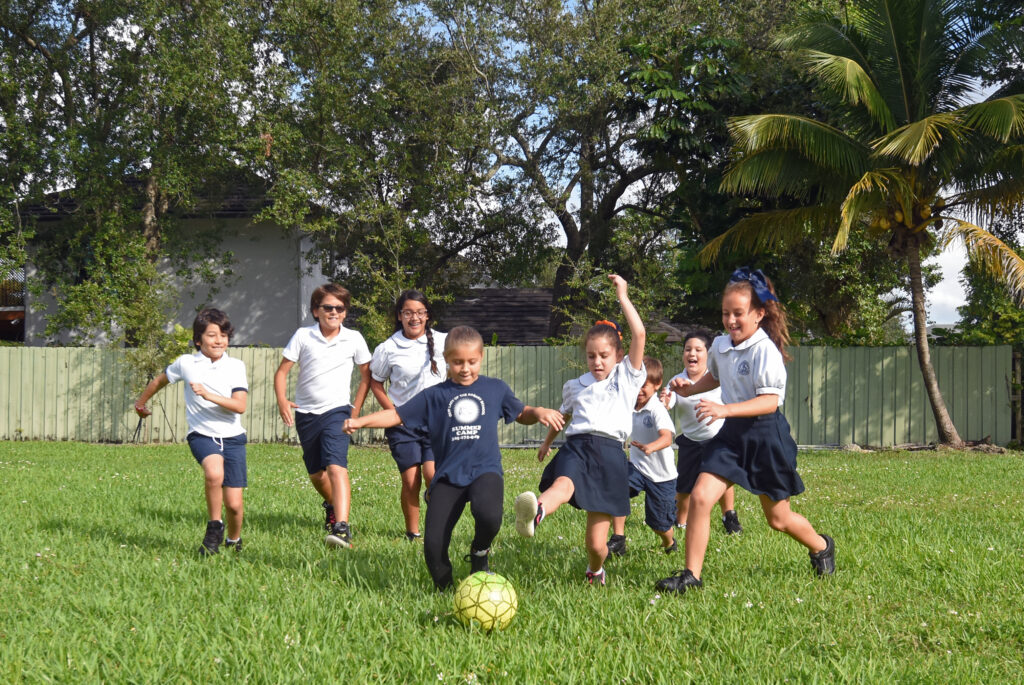
As we noted when the latest National Catholic Educational Association statistics were released in March, Indiana is now, like Florida, showing net enrollment growth over the past decade. Among the Top 10 states for Catholic school enrollment, the Sunshine State and Hoosier State are, for now, the outliers.
But don’t sleep on Ohio, which saw its Catholic schools grow by more than 3,000 students this year; or Texas, where a jaw-dropping 274,000 students applied for that state’s brand-new choice program. Don’t overlook smaller states with big choice programs and momentum, including Iowa and New Hampshire. And don’t forget about the potential of the new federal scholarship tax credit to enhance what’s been happening in the states.
Our brief includes a 50-state chart where you can track Catholic school enrollment year-by-year over the past decade. (Big thanks to the NCEA for collecting the data.)
It also includes more insight into the pace-setting growth in Florida, including a rapid rise in the number of students using special-needs scholarships.
If you have any questions, don’t hesitate to reach out. Our emails are in the bios at the end of the brief.
Editor's note: This post is shared by our sister organization, Step Up, Step Further Scholarship Fund, a new federal scholarship program launching in 2027 to support students in public and private schools.
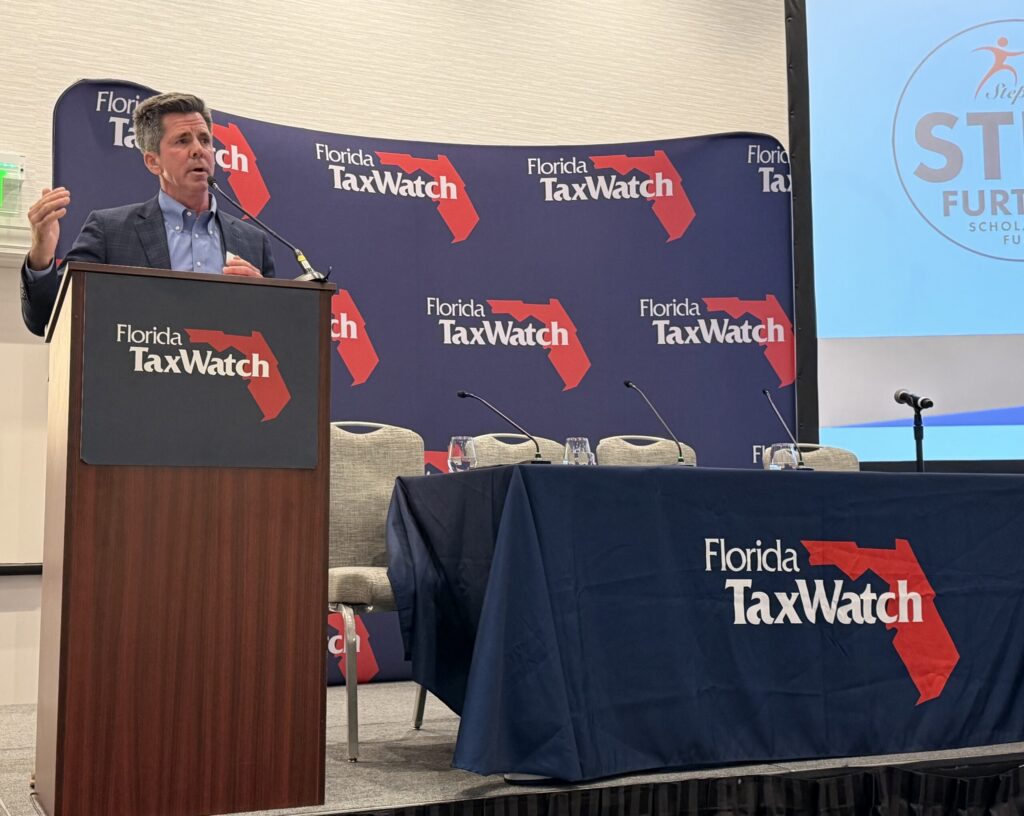
At Florida TaxWatch’s policy forum, Step Up For Students Founder and Chairman John Kirtley shared how the new federal Education Freedom Tax Credit will help expand opportunity for K-12 low income district school students. “The income levels that the federal law allows are, in my opinion, pretty generous,” Kirtley said. “They’re 300% of the area’s median income, which in Florida will be anywhere up to probably $250,000. However, a scholarship organization can set its own income limits.”
The new tax credit will continue to allow Step Up, Step Further, sister organization of Step Up For Students, to focus on serving the lowest-income students in Florida.
Kirtley went on to illustrate how Florida school districts have seen a dramatic increase in graduation rates since 1981, when the graduation rate hovered under 50%. He noted that a statewide push for greater accountability in schools and grading them has resulted in a graduation rate of over 90%.
“That’s an incredible improvement, and we should all be very proud of that. A great example of how the districts have responded is very close to home for me. My high school, Fort Lauderdale High School, when schools were first graded back in 1999, my high school was an ‘F.’ And it was an ‘F’ for several years,” Kirtley said.
Read the full article at Florida Politics > https://floridapolitics.com/archives/791109-john-kirtley-makes-case-for-choice-encouraging-use-of-education-savings-accounts/
Less than two months after the application season began, record-breaking interest continues with more than 500,000 students applying for Florida’s K-12 education choice scholarships.
Step Up For Students, the nonprofit organization that administers 98% of the state’s scholarships, opened applications for the 2026-27 school year on Feb. 1. A record 200,000 applied during the first three days.
By midday Feb. 10, a total of 300,106 students had applied for scholarships, which represents an 11.7% increase over the same 10-day period last year. By Friday morning, Feb. 27, a total of 401,507 students had applied.
Applications reached the 500,000 mark on March 30, which was 22 days earlier than in 2025.
Step Up For Students CEO Gretchen Schoenhaar said last week that the organization’s team and systems were ready for the surge of interest. Step Up’s technology systems processed 15% more applications on the first day this year than at the same time last year. Of the families who called for assistance, more than 90% reported being “satisfied” or “very satisfied” with the support they received.
“Florida continues to set the pace for the nation in education choice,” Schoenhaar said. “Families have become accustomed to seeking options in their children’s education and Step Up For Students is proud to support them every step of the way.”
Since its inception in 2002, Step Up has administered more than 3 million scholarships.
During the 25-26 school year, more than 525,000 students have been funded on Florida’s K-12 scholarship programs to access learning options of their choice. If these students were counted as a single school district, it would be the largest in the state and the third largest in the country. That makes Florida the national leader in education options.
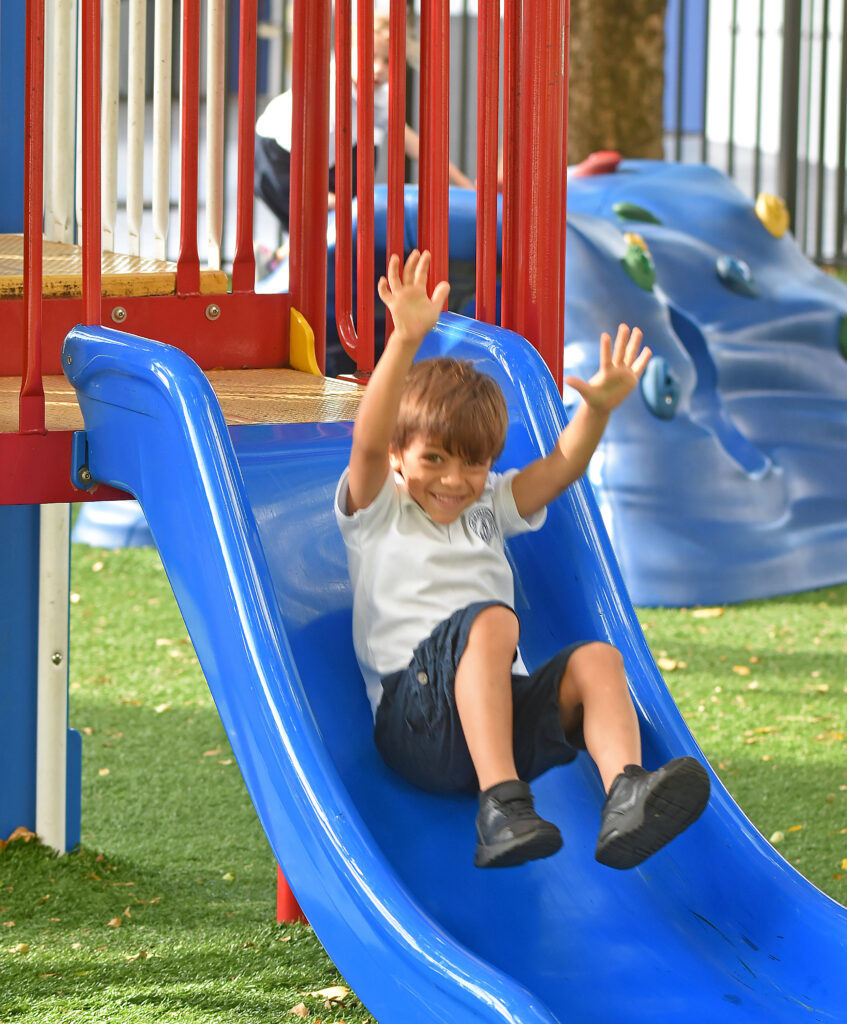
However, not all families end up using their scholarships. Top reasons include: Their preferred private school lacked capacity; they were on a waitlist for a charter school and were accepted; they chose to attend a district school, etc.
Step Up is on track this school year to have 2.75 million transactions on MyScholarShop, its online marketplace, for over $425 million. Step Up is on track to process over 4.5 million reimbursement requests this year, worth over $595 million, four times what it had just two years ago.
Current scholarship families have until April 30 to renew their scholarships for the next school year. All families who want a PEP scholarship must also apply by April 30.
Applications and more details are available here.
We will continue to update the numbers in this post until applications close.
Greater collaboration is being credited for a dramatic decrease this year in the number of Florida K-12 scholarship students experiencing scholarship funding delays because their names were also found on public school rolls.
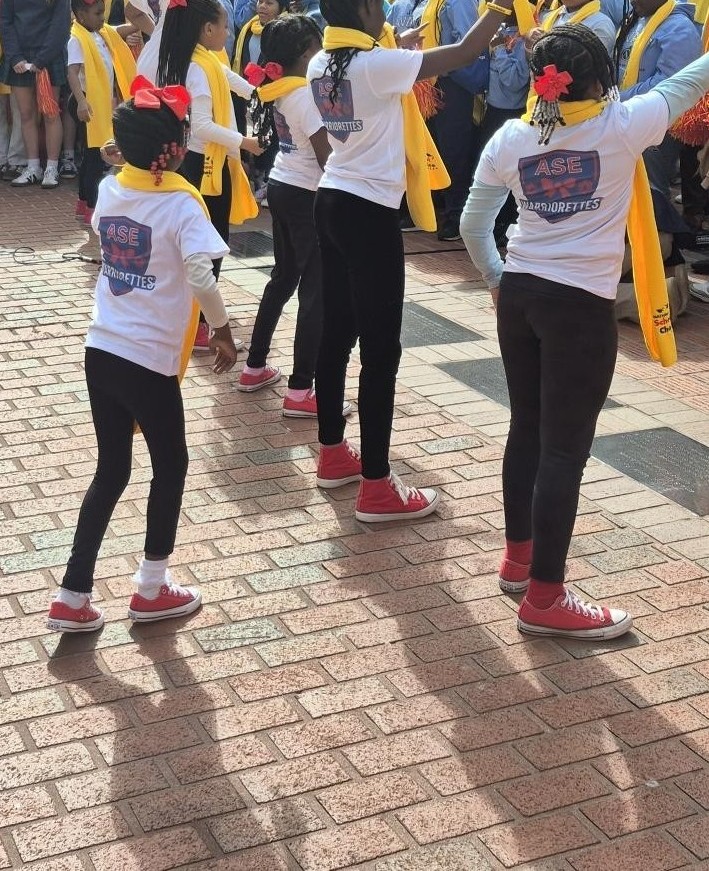
According to the latest state figures, the rate of matched students in the Family Empowerment Scholarship for Educational Options was less than 1%, while the rate of students applying for the Family Empowerment Scholarship for students with Unique Abilities Scholarship was about 5%. Officials attributed the higher match percentage for FES-UA to that group’s greater mobility, given the various services available through the public school system.
In the latest quarter, fewer than 6,000 scholarship students were reported in public schools compared with 27,000 in the quarter that included the start of the 2025-26 school year.
The improvements occurred after officials at the Florida Department of Education worked with the state’s 67 school districts and Step Up For Students to improve the crosscheck process and pinpoint more students who were being double counted.
During the 25-26 school year, there are six crosschecks where the Florida DOE compares Step Up’s list of students who are on scholarship with school districts’ lists of students who were reported as attending a public school. If a student appears on both lists, Step Up For Students immediately freezes the student’s funds to ensure that public tax dollars are spent properly.
Step Up then contacts the families of these students and requests documentation showing that they were not enrolled in a district school, which is sent to the DOE. These students are funded on the scholarship only after the DOE clears them.
All scholarship accounts that were frozen from 2024-25 and the first two quarters of 2025-26 due to students appearing in a public school crosscheck have been resolved.
DADE CITY, Fla. – A friend told Sarah Jones a few years ago she should open her new petting zoo to homeschool groups, but Sarah didn’t think that would go over too well. She didn’t know much about homeschoolers, and the stereotypes in her head told her their parents wouldn’t warm to a tattoo-covered building contractor with a salty vocabulary.
But then the friend persuaded Sarah to bring her animals to a fundraiser for mental health programs. Homeschoolers with special needs were in attendance. One little girl, autistic and nonverbal, was smitten by a pony dressed up like a unicorn. She brushed it for hours. And when she got home, according to a note her mother sent to event organizers, she spoke her first words, telling Mom, “I love you.”
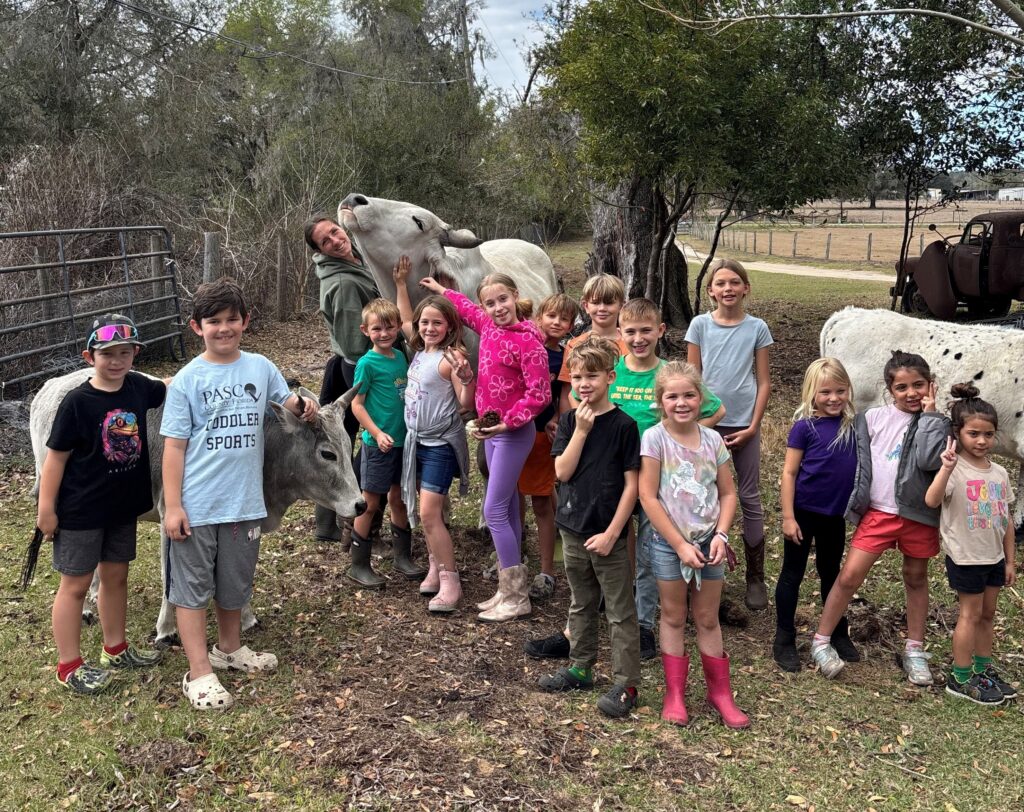
Sarah saw it as another flashing sign in what had become an undeniable string of signs. Her life was headed in a different direction.
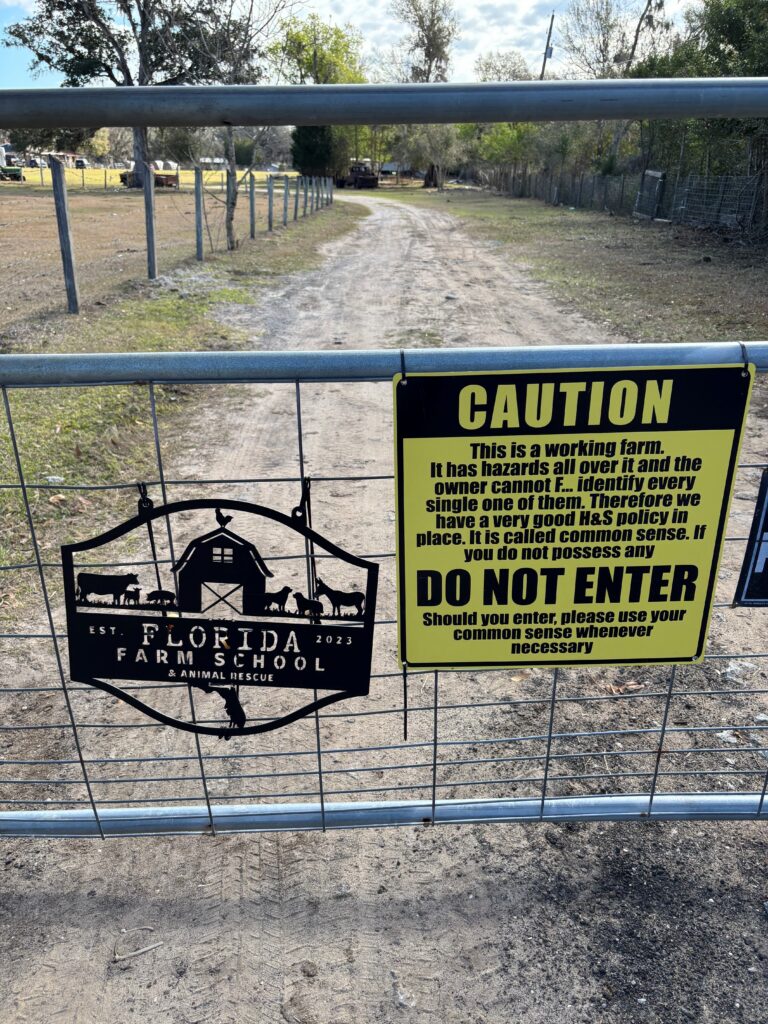
Now she runs Florida Farm School, an à la carte learning provider rooted in land and livestock that serves about 50 homeschool students.
Once a week, on Mondays or Thursdays, families bring their pre-school- to middle-school-aged kids to Sarah’s 20-acre spread in the sand hills 45 minutes north of Tampa. Over the course of four hours, they learn how to grow their own food, make their own medicine, build things with their hands, and, more than anything, interact and care for more than 100 animals.
In the process, they learn even deeper lessons. Responsibility. Resilience. Compassion. Curiosity. The value of hard work. The value of teamwork.
Maybe even how to pause and evaluate what really matters.
“When you live in the city, it’s constant noise,” said Sarah, who grew up 60 miles away, in Florida’s most densely populated county. “Go to one of these (Tampa Bay) neighborhoods and tell me if you can hear the birds sing. No wonder we’re all so full of anxiety.”
“Here,” she continued, “the innocence of pure joy every day is infectious.”
Homeschooling on steroids
Florida Farm School is a sweet, quirky story unto itself. But it also represents another big shift in public education in America, with Florida again leading the way.
More than 150,000 students in Florida are now using state support to learn completely outside of full-time schools, up from 8,000 five years ago. Think of it as homeschooling on steroids. Their parents are using flexible state scholarships, aka education savings accounts, to customize their educational programming by mixing and matching from an ever-growing menu of providers. This “à la carte education” is taking shape in more and more states as ESAs gain traction, but nothing on Florida’s scale is happening anywhere else in America.
Sarah Jones would seem to be an unlikely pioneer, except that now, in a state where education choice is the new normal, anybody with a good idea can give it a shot in an education marketplace that gets more vibrant by the day. The number of à la carte providers that aren’t schools now tops 7,000, nearly four times as many as two years ago. Tutors and therapists are the biggest categories, but untold numbers of unconventional providers like Florida Farm School are entering the mix, too.
‘A wildfire of positivity’
Sarah’s background is in business, not education.
She owned a moving company. Then, a residential cleaning company. Then, a construction company. The latter installed cabinets and counters for thousands of new homes all around the Tampa Bay area.
After COVID-19 hit in 2020, things began to change in Sarah’s world. First, little by little. Then, in a revelation.
The way Sarah sees it, “this was my fate,” she said. “I never planned this.”
One day at the baseball field, watching her youngest son play, Sarah spied somebody’s renegade pet rabbit roaming next to the field. She caught it … and took it to a farm she had recently visited … which led to more visits … and to riding horses …
Next thing you know, Sarah and the owner were discussing the possibility of opening an indoor livestock petting zoo, and Sarah began acquiring animals at auction. Ultimately, she decided to go it alone on her land in Dade City, which she had originally bought to develop into ranchettes.
That’s when things started taking a more dramatic turn.
“It’s magic out here,” Sarah said. “I heard the leaves in the trees and birds singing, and it changed me. I couldn’t remember the last time I heard that. I asked myself, ‘How much of this have I missed?’”
Other incidents besides the girl and the pony/unicorn began leaving a deeper impression. Sarah recalled two elderly women who visited the farm, giggling and reminiscing as they sat with baby goats in their laps. Another time, after the farm began serving homeschoolers in 2023, the kids learned how to build herb walls. Then, on their own initiative, some of them went home and taught their neighbors.
What Sarah thought was a simple lesson turned out to be “a wildfire of positivity,” she said.
'No kid is forgotten'
The farm is a multi-dimensional enterprise.
Sarah occasionally takes in farm animals that have been neglected or abandoned. She plans to breed “minis,” little versions of cows, donkeys, and other farm animals that are in growing demand as novelty pets. She also hopes to sell a few acres to a group that wants to cultivate a food forest, a forest-like garden full of edible plants.
A handful of parents help with the learning activities, and in some cases, lead them. As a team, they’ve taught the kids how to make everything from laying boxes for chickens to candles, soap, and ice cream.
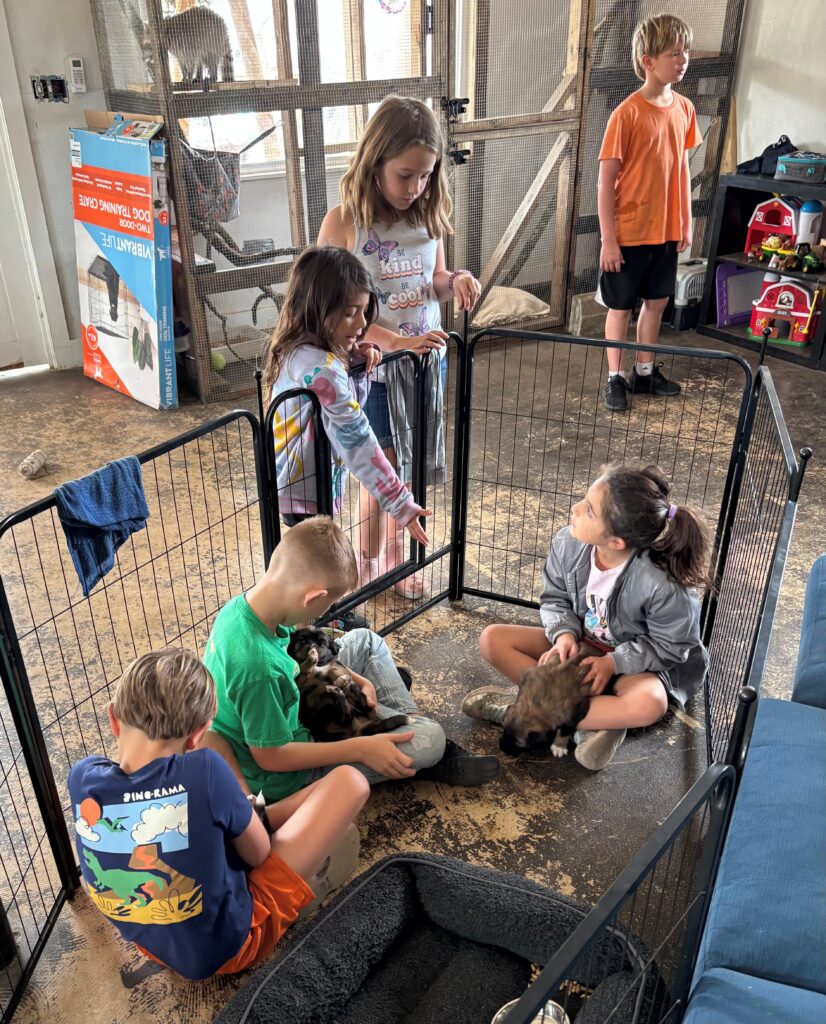
Farm chores are central. The kids muck pens, scrub water buckets, gather eggs. They watch live births and bottle-feed babies. Some of them have taken piglets home and fostered them.
The menagerie in their midst is growing. It now includes at least 50 chickens, 15 turkeys, 15 ducks, 15 cows, 13 pigs, six dogs (not counting a litter of puppies), five donkeys, two goats, two raccoons, and a mule.
The school, though, is the farm’s heart.
The educational offerings are expanding, too. Science activities just kicked off on Fridays, anchored by another à la carte provider, a mobile STEM academy.
Sarah said many of the families served by Florida Farm School are of modest means. They wouldn’t be able to access the school without the choice scholarships.
Andreea Barron said her family is one of them. She’s a former public school teacher. Her husband is in the military.
She said that in six months, the school has been life-changing for her 6-year-old son, Beckham, who uses a scholarship for students with special needs.
Beckham was enrolled in one of the area’s highest rated public schools. Andreea was a teacher there. But while he was excelling academically, he was struggling socially. Andreea decided to homeschool and eventually heard about the farm school.
“He’s blossomed so much,” she said. “The animals are his therapy. The people here and the animals teach him confidence. They make sure no kid is forgotten.”
“You know it in your heart that this is home,” she continued. “I’ll never let go of this.”
Sarah said she won’t either. Once you realize what’s possible when you have “the freedom to explore, and to breathe, and to be you,” she said, you don’t go back.
Maybe public education is learning the same lesson.
New research by the American Federation for Children found that scaling Florida’s Tax Credit Scholarship Program over 15 years improved public school student achievement.
The report published March 4 by AFC senior fellow Patrick Graff, a former Florida Catholic school teacher, compared two leading peer-reviewed studies of each approach that used Florida data: a 2023 study of Florida’s Tax Credit Scholarship Program over 15 years and a 2024 analysis of the effects of additional school spending on student achievement.
Key findings
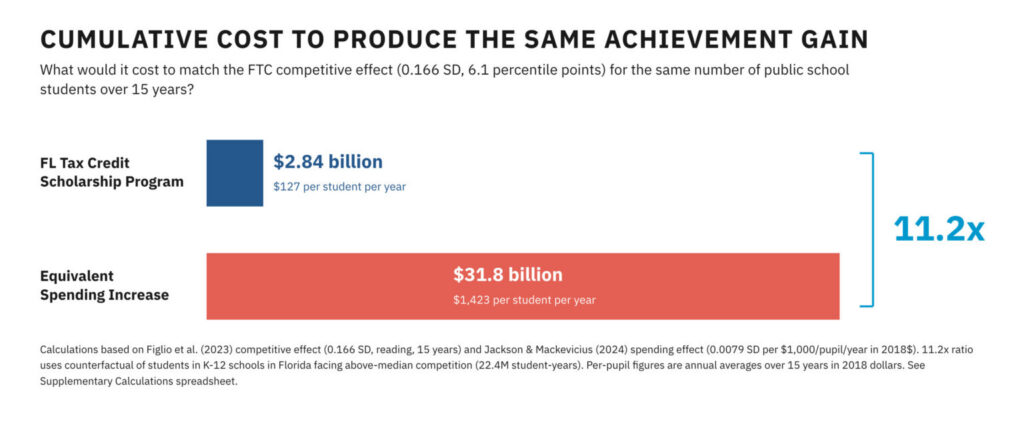
Not a zero-sum game: Florida’s experience shows that school choice can benefit students, no matter where they learn, families, and taxpayers at the same time. Florida now enrolls over half a million students in private school choice programs, and its public school students still outperform students in most states while spending less.
Read the full report here.
Step Up For Students, the nation’s largest education choice scholarship funding organization, is pleased to announce it has been renewed as an SFO for the 2026-27 school year following a unanimous vote by the Florida Board of Education.
Step Up has served Florida for more than two decades, starting with the Florida Tax Credit Scholarship Program. The nonprofit currently administers five programs and one stipend with over 520,000 students, and processes 10 million financial transactions.
On Feb. 1, Step Up once again set the new national record in education choice: It received a record 200,000 applications in the first three days of Season Open, and by the 10th day it had received a record 300,000 applications. It is currently nearing 400,000 applications.
“Step Up For Students is grateful for the confidence the Board of Education has shown in our ability to manage the state’s education choice programs,” said Step Up CEO Gretchen Schoenhaar. “There is no initiative of this size, scope and complexity in the country, and we are honored to serve the parents, students, schools, providers and vendors as well as to partner with the DOE and legislature in Florida.”
When Florida in 2023 made all K-12 students in the state eligible for a scholarship program and transformed the programs into education savings accounts (ESAs) that gave parents more flexibility in how they spend their children’s scholarship funds, it unleashed unprecedented demand from families. Step Up has responded with technological innovations and process improvements that have defined the customer experience.
Central to that is Step Up’s Education Market Assistant (EMA), an online platform to manage an ESA program from start to finish, including the onboarding of parents through the online application, the processing of those applications and the reporting features required by the state. EMA also serves as the platform for education service providers, vendors, and private schools to engage with parents.
EMA brings together parents and providers in an efficient marketplace and ensures all ESA funds are spent effectively and efficiently consistent with state law, including preventing fraud. The platform has influenced similar technologies across the nation.
For the second year in a row, Step Up has realized significant improvements in performance even as participation in the state’s scholarship programs continues to grow:
Step Up welcomes continued collaboration with the Florida Department of Education and the Legislature to find solutions to systemic challenges in the education choice scholarship programs.
PALATKA, Fla. — All Risa Byrd wanted to do was start a little preschool. That’s it. But then the former public school teacher got swept up in one of the most epic education stories in American history. Now her fast-growing school is the latest example of what’s possible when school choice is the new normal.
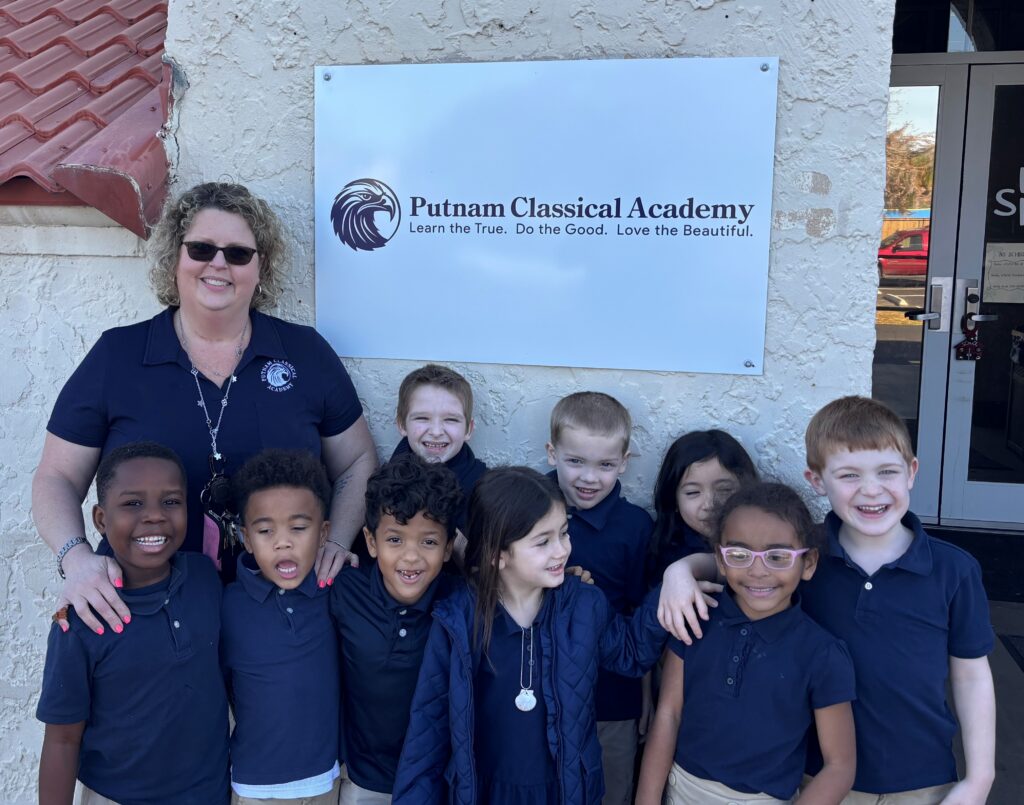
In 2022, Byrd retired from a 26-year teaching career to start Little Sprouts Learning Center. The goal was modest: Get her granddaughter’s academic journey off on the right foot.
A few months later, though, Florida lawmakers passed, and Gov. Ron DeSantis signed, one of the most sweeping school choice bills of any state, ever. Suddenly, every student in Florida was eligible for a state-supported choice scholarship.
Byrd didn’t realize it at first. But her school had caught a wave.
In the fall of 2023, Byrd added kindergarten and first grade, starting with eight students in those grades. She called the school for the higher grades Putnam Classical Academy.
By the fall of 2024, Putnam Classical had 50 students in grades K-5.
By the fall of 2025, it had 234 students in grades K-6, in addition to 60 in preschool.
Now Byrd’s looking for a whole other building to house a separate middle school. When she announced plans via Facebook, 111 students signed up in three days.
“Parents are desperate for their kids to be well educated,” Byrd said, particularly those from underserved communities. “They’ve been written off.”
Byrd is one of hundreds of former public school teachers who have leveraged Florida’s choice scholarships to create their own learning options. They can be found in every corner of the state, even in rural and semi-rural counties like Putnam, where a paper mill is the biggest private employer, the biggest town has 10,000 people, and the best-known landmark may be a blast-from-the-past diner.
The parents driving demand aren’t looking for anything exotic, Byrd said. They just want safe schools with top-quality academics, high expectations, and no drama.
“Parents got the word that we don’t play. That’s the biggest draw,” Byrd said. “They’re fed up. They know kids can’t learn, and teachers can’t teach, if there’s sheer chaos in the classroom.”
Byrd’s story may be a particularly dramatic example of what’s happening in Florida, and particularly symbolic.
More than half of Florida’s 3.4 million students are now enrolled in something other than their zoned neighborhood schools, and more than 1 million are enrolled outside of district schools entirely. Perhaps it’s fitting, then, that Putnam Classical leases a century-old building that once served as the local school district’s headquarters.
Despite the name, Putnam Classical isn’t truly classical yet. Byrd said she and her staff, which includes 20 teachers, will transition to a more recognizable “great books” curriculum within two years.
The first order of business is to establish a higher rate of basic literacy.
A self-described “data nerd,” Byrd is a “science of reading” adherent and a huge fan of Natalie Wexler, author of “The Knowledge Gap” and a leading proponent of using a content-rich curriculum to boost vocabulary and comprehension.
For the early grades, Putnam Classical uses an explicit, evidence-based phonics curriculum developed by the University of Florida. For the higher grades, it uses the highly regarded Core Knowledge curriculum for language arts, science, and social studies.
“If you teach these kids to read, you will change the trajectory of their lives,” Byrd said. “Then they can be an astronaut, a chef, anything they want to be.”
Byrd said as a public school teacher, she earned a reputation for working well with struggling readers, so more and more were sent her way. It became obvious, she said, that many students acted out because they couldn’t read well.
One time, she said, she stopped a 10th grader from disrupting her classroom, then took her out to the hallway to talk. The girl broke down and told her, in between sobs, “I’d rather everyone in that room think I’m a b---- than think I’m stupid.”
In three years, Byrd said she’s expelled two students. The school isn’t orderly because it’s draconian about discipline, she said. It’s orderly because kids are achieving academically and are proud of themselves. “When you learn to read,” Byrd said, “school becomes a lot more fun.”
About half of the students at Putnam Classical are Black or Hispanic; about 75% would be eligible for free- or reduced-price lunch in public school. The school does not charge tuition beyond the amount of the choice scholarship, which averages about $8,000 statewide and is far less than what districts spend.
Most of the students who switched to Putnam Classical were not reading at grade level when they arrived, Byrd said. Some incoming second graders didn’t know their letter sounds.
But now?
Now more than 60% are showing average or better growth compared to their peers nationwide, according to the STAR reading assessment Putnam Classical uses. In other words, students who were previously losing ground in their prior schools are now catching up and starting to get ahead.
Dalton Crews chose Putnam Classical for his 5-year-old, Delilah. He said he attended a private elementary school before moving on to public school and thought it built a good foundation for academics and character. He wanted the same for his daughter, and thankfully, he said, choice made it possible.
“I love the teachers. They communicate really well. They always tell me what’s going on,” said Crews, who installs fire sprinklers for a living. “They tear up when the kids leave. That’s love. They’re good people.”
Shentae Roberts said her 10-year-old granddaughter, Ja’Zyiah, was receiving good grades in her prior school, even though it was obvious to her family that she was struggling with basic material.
Her daughter tried contacting the school to get more information, she said, but never got a response. That’s why, in 2024, her daughter switched Ja’Zyiah and younger brother, Hakiem, to Putnam Classical.
“Best thing she did,” Roberts said.
Roberts said her granddaughter initially struggled at Putnam Classical, too. But the teachers gave her the attention and instruction she needed, she said.
The result: Ja’Zyiah “came back 10 times stronger,” Roberts said. “All the staff get to know the children, and they’re responding to them. They’re pulling the children to the next level.”
Byrd said more good things are ahead, not just for her school.
Even though Florida has been a national leader in private school choice for a quarter century, Byrd said she didn’t know much about it until HB 1, the landmark legislation Gov. DeSantis signed in 2023. Now, though, she realizes the game-changing potential not just for families but for teachers.
“Every public school teacher says, ‘If I were the boss, I would do it this way,’ “ Byrd said.
Well, now’s their chance.

