 Editor’s note: This article appeared Tuesday on postandcourier.com.
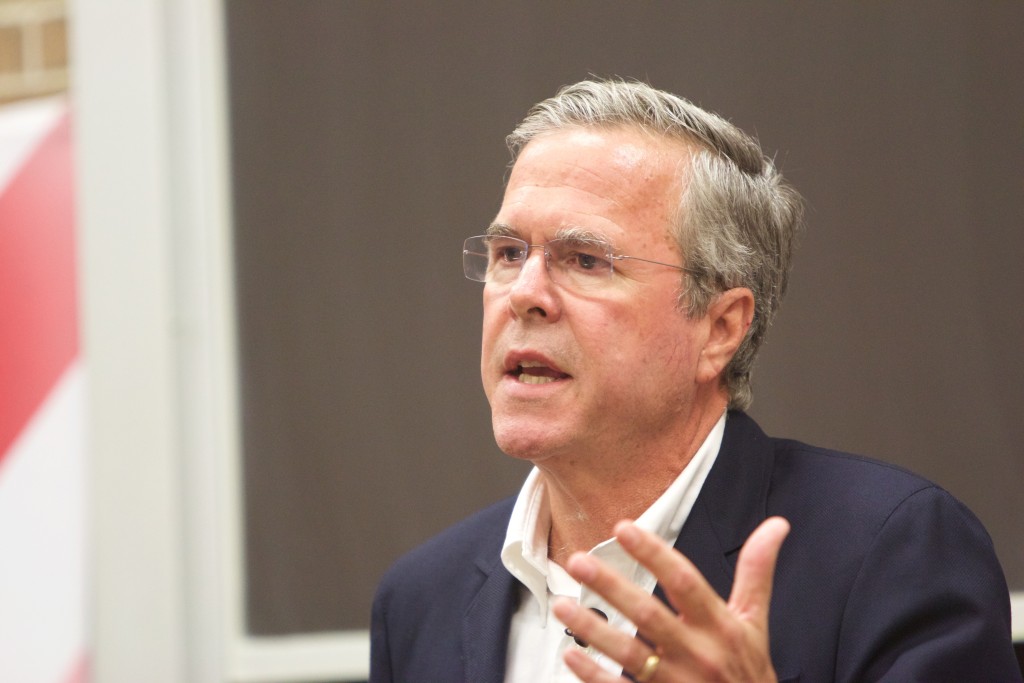
Former Florida Gov. Jeb Bush gave Republicans in the South Carolina House a pro-school-choice pep talk ahead of a public hearing on legislation that would give parents money for private tuition.
Bush, who signed Florida’s first school choice law nearly 25 years ago, encouraged the House GOP Caucus to charge ahead with efforts to give parents taxpayer-funded choices in both public and private schools.
“I want to maybe give you a sense of what the future looks like,” Bush told the caucus during an April 4 luncheon that was open to the media.
“The world gets better when parents make more choices,” he added. “There are lessons on the way to make sure it’s done right, but the idea parents know best for their kids is irrefutable in my mind.”
Chairman of the nonprofit ExcelinEd, Bush said he was in South Carolina this week before Easter as an evangelist for school choice.
It was a pitch that seemed to preach to the choir.
Republicans in the House have been pushing for private school choice for nearly two decades. After years of dividing the GOP, legislation helping parents pay for private school almost reached Gov. Henry McMaster’s desk last year. It failed at the end of the session with Republicans in the House and Senate unable to agree on student testing.
To continue reading, click here.

Riverview Charter School in rural Beaufort County, South Carolina, is one of 298 schools in the state designated as rural fringe, which means they are 5 miles from an urban area of at least 50,000.
Editor’s note: This commentary from Jason Bedrick, a research fellow in the Center for Education Policy at the Heritage Foundation, and Matt Ladner, director of the Arizona Center for Student Opportunity and reimaginED executive editor, appeared Thursday on thetanddd.com.
“All children in South Carolina should have access to the highest quality education possible.” So declared Gov. Henry McMaster in recently proclaiming School Choice Week in South Carolina.
To that end, the South Carolina legislature is currently considering a proposal to give families greater freedom to choose learning environments that align with their values and meet their children’s individual learning needs.
The proposal would create education savings accounts (ESAs), letting families access about $6,000 in state funds to pay for private school tuition, tutoring, textbooks, online courses, special needs therapy and numerous other educational expenses. Ten states have already adopted ESA policies, including five in the last two years.
It’s not hard to understand why.
The pandemic — and especially district schools’ response to it — awakened parents to the need for education choice. Unnecessarily long school shutdowns, mask mandates and concerns over the politicization of the classroom have propelled public support for education choice policies, like ESAs, to all-time highs.
A recent poll of likely voters in South Carolina, conducted by the South Carolina Policy Council, found six in 10 supported the ESA proposal. Support among African American voters was even higher, at 68%.
But not everyone is on board. The teachers’ unions and their allies are doing everything they can to block families from accessing alternatives to the district school system.
In an effort to peel away votes from South Carolina legislators representing rural areas, ESA opponents are arguing that choice policies either don’t benefit rural areas or are harmful to rural district schools.
For example, state Sen. Nikki Setzer, D-Lexington, argues that students in rural areas can’t benefit from the ESA proposal because they supposedly lack private options. “What real option are we giving them? Are we gonna let Johnny in Bamberg drive to Richland County?” he asked recently, “Give me a break.”
Meanwhile, Carol Corbett Burris, executive director of the Network for Public Education, frets that education choice policies would supposedly create a “death spiral” for district schools, “especially in rural areas” because when “kids leave the system, they leave behind all kinds of stranded costs.”
These two claims — that there are no schooling options in rural areas and that rural schools are imperiled because so many students will leave for those options — are mutually exclusive. They cannot both be true, but they can both be — and indeed are — false.
To continue reading, click here.
In his recent State of the State address, South Carolina Gov. Henry McMaster said that until last year, the state’s system for funding K-12 education was “archaic and confusing, a piecemeal system” with 29 separate line-item appropriations. Now, McMaster said, a consolidated formula ensures that funding follows each student.
All education committee hearings in South Carolina should open with staff placing flags on a map marking the states that adopted new choices in K-12 education since the last meeting. It likely would add a sense of urgency to lawmakers’ deliberations.
There has even been activity since Gov. Henry McMaster’s State of the State address at the end of January, where he called specifically for the creation of education savings accounts. Since then, lawmakers in both Iowa and Utah have approved flexible account-style options for every student in their states.
Over the last two years, lawmakers in states such as Indiana, Missouri, New Hampshire, and West Virginia also have created accounts. Legislators in Texas, Oklahoma and Florida, to name a few, are now considering similar proposals, with Rep. Byron Donalds, a Republican, representing Florida congressional District 19 in southwest Florida, and former Education Secretary Betsy Devos among those signing an open letter to Florida lawmakers in support of a proposal to expand the state’s existing private learning options.
South Carolina lawmakers entered the session with momentum from last year after a proposal nearly crossed the finish line. But they need to make sure the details that helped derail last year’s proposal do not stall the current proposals.
For example, lawmakers need to specify that the new “education scholarship trust fund” refers to the state’s office that will operate the new accounts, while “education savings accounts” refers to individual student accounts. Technical details like this in the proposal may mean the difference between well-functioning accounts and language that gets mired in litigation (or stalls before implementation).
The proposal’s provisions should clarify that, while parents must sign a contract with the state to use an account, they are then free to choose providers for their children. Parents do not need a contract saying they will follow state rules governing private education providers.
Students should be allowed to access individual public education services such as classes or extracurricular activities, but students should not be allowed to attend a public school full-time and receive an account to use for other education expenses. This would result in taxpayers paying twice for each account student, once for the cost of a public school and then again for the account.
To date, lawmakers have appropriately included criminal background check requirements for participating education vendors, but these requirements should apply only to individuals in schools, tutoring centers, and other educational settings who deal directly with students or have access to student information.
Lawmakers should not put new requirements such as background checks on companies that build computer hardware or print books as these may steer these vendors away.
Account programs that have operated for many years elsewhere in the country can offer best practices for South Carolina: state policymakers should create a rolling application period that allows families to apply throughout the year; student eligibility can be verified using existing state procedures without creating new requirements; and families should be able to use account funds to pay for services related to diagnosing a child with special needs.
Lawmakers have still another alternative: Since 2013, South Carolina has been home to a small private school scholarship program that has strict limitations on student eligibility and the number of scholarships that can be awarded each year.
Yet similar education options funded through charitable donations to scholarship organizations in states such as Florida and Arizona now serve some 200,000 students between them. These are some of the largest choice programs in the country thanks to inclusive rules around student participation and program size.
South Carolina policymakers are considering a new tax credit scholarship opportunity for students. Lawmakers should allow every child to participate and offer families the chance to pay for a variety of education products and services outside of private school tuition, a feature in the current education savings accounts proposal. Students could use the tax credit accounts to choose a private school or families could customize their child’s learning experience.
And the need has never been greater. Research from the state’s Education Oversight Committee during the pandemic noted lower student scores in reading and math. A more recent analysis showed that the percent of middle and high schools labeled “below average” or “unsatisfactory” increased from 2019 to 2022. Every child deserves the chance for a great education, so every South Carolinian should be concerned with these results.
All these things should encourage lawmakers to straighten out the details in education choice proposals this year so they can add South Carolina to the list of states that prioritized student needs in 2023.
 South Carolina parents and students are ready for summer. In Greenville, high schools like Eastside and Riverside held their graduations last week. Charter schools around the state also had their graduation ceremonies and year-end events in recent days.
But not all the important education work is finished for this school year.
At the Statehouse, state lawmakers are considering a proposal that would allow parents to choose how and where their children learn. State officials will be debating different versions—one that makes only modest options available, and another with provisions to meet the needs of a student body that has seen student scores decline dramatically coming out of the pandemic.
Students need lawmakers to dream big.
According to researchers, the drop in student achievement nationwide over the last two years is comparable to the score declines among Louisiana students after Hurricane Katrina in 2005. COVID was a storm that affected students all over the country. Researchers found that, on average, math scores among sixth graders dropped by 3.3 points, while eighth grade scores fell 4.5 points. Third grade reading scores fell by 3 points, and eighth grade scores decreased by 1.5 points.
But in findings that have special meaning for South Carolina, the gap between children from higher income homes and those from lower income households expanded by 15 percent in reading and 20 percent in math. South Carolinians are well aware of the poverty and the persistently low-performing schools found all along the I-95 corridor.
The pandemic did not result in students falling between the cracks—COVID opened a gaping hole in the floor and pushed children through it.
Lawmakers should give families more flexibility to help their students, no matter their background or family income level.
State officials are debating whether to create a small, pilot program offering K-12 private school scholarships or to allow children access to education savings accounts (ESA). With an ESA, parents can use their child’s portion of the state education formula to purchase tutoring services, pay for education therapists, buy textbooks and other curricular materials, find online classes, pay tuition at a private school, and more.
They can also customize their child’s learning experience. Just over the state line to the north, families in North Carolina can use ESAs to help children with special needs find therapy and other education services to meet a student’s unique needs. In the first two years that the accounts were available, 64 percent of participating families used them for more than one product or service, another flexible feature of the accounts.
South Carolina lawmakers must consider the value of provisions that allow families to purchase computer hardware and pay for college entrance exams and not just private school tuition. Lawmakers should do more for families than create a temporary program that offers a small number of children the chance to attend a new school. State officials should give families a variety of options. And under the ESA proposal, the number of children who can take advantage of these opportunities increases every year.
During the pandemic, children in Arizona, Mississippi, and North Carolina using education savings accounts were able to continue their academic work with less interruption than children at assigned schools. One estimate finds that current students will earn some $10 trillion less in lifetime earnings due to learning losses from the pandemic. A figure this large is sure to harm the entire economy.
Imagine if more children had access to ESAs before the pandemic and could have avoided such staggering problems in terms of their achievement today and later in life. South Carolina lawmakers should keep this in mind as they debate a small, temporary program or a broader, flexible set of accounts that will allow students the chance to change the trajectory of their school career—and career later in life.
After the pandemic, students need reasons to think big. State lawmakers can lead by example.
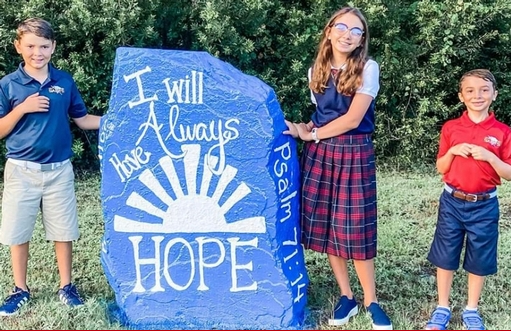
Nationally K-12 STEM certified Christian Academy of Myrtle Beach, whose mission is to develop young Christian leaders through partnering with parents and to fuse Christian faith with academics, athletics, and fine arts, is one of 419 private schools in South Carolina. Head of school Katherine Cannon says while the school offers tuition assistance, the education savings account program would expand eligibility to more low-income families.
Horse racing, teacher raises, and a budget flush with cash. South Carolina lawmakers have plenty to debate before the legislative session ends June 15. But parents hope legislators don’t bolt for home before finally offering K-12 students more quality learning options.
Recently, the S.C. House of Representatives flew through budget negotiations, completing the process in a matter of hours. They approved a proposal containing billions in new federal taxpayer spending, along with provisions that boost teacher pay and give bonuses to state employees.
Lawmakers in both chambers are also considering legalizing gambling on horse racing as yet another way to increase state revenue. But while they debate the merits of racetrack betting, South Carolina parents and K-12 students are left sitting in the stands, waiting for state officials to wager that families know what is best for a child’s future.
Lawmakers are considering proposals to allow students to use education savings accounts to choose how and where they learn. As readers of reimaginED will know, some residents in neighboring North Carolina can already use their child’s portion of state education spending to meet a child’s unique learning needs. Those funds, deposited in individual accounts, may be used to purchase textbooks, hire a personal tutor, find an education therapist, pay private school tuition, and more.
The education savings accounts allow families in North Carolina (and 10 other states, including Florida, with similar account options) to customize their child’s learning experience. Parents and students can choose a new school and get help with challenging coursework and pay for textbooks and learning materials to challenge their student or help them catch up to their peers.
While S.C. representatives finished the budget in record time this year, they have continued to drag their feet in bringing education savings accounts to state families. Since 2017, lawmakers in North Carolina, Kentucky, Missouri, New Hampshire, West Virginia, and Indiana have managed to enact the accounts for their constituents. Florida, Tennessee, Mississippi, and Arizona lawmakers had already made the accounts available to thousands of students.
Despite all this progress elsewhere, movement in the South Carolina legislature has stalled over the years.
Currently, South Carolina lawmakers are considering two proposals—one in each chamber—that would give families and their students quality education opportunities similar to the accounts in these other states.
The proposal before state senators, in particular, would give students a range of choices, like the accounts described in North Carolina, Florida, and elsewhere. The Senate proposal would let students choose a new school and/or a set of services, including personal tutors and computer hardware to help with online course delivery. Lawmakers in both the House and Senate have the chance again to complete what can only be considered unfinished business for state families.
South Carolina students need help now. In one of the state’s largest cities, Greenville, the number of students earning failing grades reportedly tripled in 2020. Student achievement among those attending schools along the I-95 corridor--the subject of much discussion in recent years due to litigation over South Carolina education spending—still trail statewide averages, according to Palmetto Promise Institute research. Statewide, there is a 30-point difference between white students and black students in 4th grade reading.
The need for action, for viable education options, is urgent.
State families should not have to wait another year to see how many other states create account options for K-12 students before South Carolina acts. Lawmakers showed they can move quickly to formulate a budget. They should apply the same urgency to helping students.
 Alabama: The Institute for Justice, a national civil rights law firm, says vouchers are constitutional in the state (Al.com).
Alaska: School choice opponents voice their concerns at a public hearing over a constitutional amendment to allow public funding of private schools (Anchorage Daily News, Nonprofit Quarterly). The proposed constitutional change passes the House Education Committee but the amendment faces a tough road ahead (Anchorage Daily News). There are 27 charter schools in the state with no cap on how many schools may operate (Alaska Dispatch).
Arizona: The state has many school choice programs (Camp Verde Bugle). A state court rules the Department of Education cannot recoup $5.9 million in over-payments to charter schools due to a change in teacher performance pay because it didn't notify the schools of the rule change (Arizona Republic). Charter school operators plan to open 25 new charter schools in Phoenix (Arizona Republic).
California: Parent trigger elicits emotions from parents on both sides (Hechinger Report). The superintendent of LA Unified says every "student has the right to a choice of a highly effective school" (Reason Magazine). San Diego school board members are attempting to exclude some charter schools from receiving bond money approved by city voters (Fox 5 San Diego).
D.C.: A new study reveals area charter schools are being shortchanged on student funding compared with district schools (Washington Post).
Florida: School choice is growing by leaps and bounds (Sunshine State News). The Palm Beach Post editorial board says giving students public school choice could reduce the disadvantages faced by low-income students. After 17 years as president and CEO of Florida Virtual School, Julie Young announces her retirement (redefinED, Orlando Business Journal). Gov. Rick Scott proposes allowing charter schools access to construction funds if they serve students within attendance zones of low-performing public schools (Tallahassee Democrat).
Georgia: A lawmaker wishes to expand the tax credit scholarship program with a $100 million cap (GPB News).
Illinois: Nobel charter schools name thee schools after donors who give $1 million or more, but the donors do not decide curriculum or which teachers to hire (Chicago Sun Times).
Indiana: The Lafayette Journal & Courier editorial board argues that private schools should continue to take the state test in order to create a fair comparison with public schools. Since vouchers can be worth no more than 90 percent of per-pupil state funding to local school districts, vouchers save the state money (Indianapolis Daily Star). Five voucher schools in the state say they teach intelligent design or creationism (Journal-Gazette). The Star Press editorial board worries that allowing students to use vouchers without ever attending public school creates two classes of education. (more…)
Tennessee: Gov. Bill Haslam proposes a voucher that's limited to low-income students in low-performing schools, with additional state funding for those schools to boot (KnoxNews). More from timesfreepress.com and Nashville Public Radio. Haslam reiterates that his proposal won't affect funding for public schools (Nooga.com). Both supporters and opponents find details to criticize (KnoxNews). Haslam's administration is also backing a bill that would cap enrollment at a virtual charter school run by K12 Inc, reports timesfreepress.com.
Florida: At a National School Choice Week event, new Florida Education Commissioner Tony Bennett gives some school districts credit for expanding public options such as magnet schools and career academies (redefinED).
Louisiana: The teachers union in New Orleans asks for the names of teachers in the city's charter schools in the hopes of organizing them (The Lens).
Arkansas: Former Florida Gov. Jeb Bush makes an appearance during National School Choice Week, urging lawmakers to expand charter schools and other choice options and calling education reform both the civil rights and economic issue of our time (Associated Press). More from the Arkansas Press-Gazette.
Virginia: Democratic lawmakers kill a charter school bill and snub their party's national platform in the process (Watchdog.org). More from the Associated Press. A bill to allow home-schoolers to play sports in public schools - a so-called "Tebow" bill - passes the House but must still clear the Senate (Associated Press).
Georgia: The state charter schools commission holds its first meeting since being revived by passage of a constitutional amendment (Atlanta Journal Constitution). More than 1,000 charter school supporters gather to celebrate the amendment's passage (Atlanta Journal Constitution).
South Carolina: State Superintendent of Education Mick Zais says at a National School Choice Week event that he supports a legislative proposal for tax credit scholarships (SCNow.com).
North Carolina: An expansion of charter schools brings debate about quality (Durham Herald Sun).
Mississippi: A bill backed by Gov. Phil Bryant to create a tax credit scholarship program clears the Senate education committee (Associated Press).
Texas: A charter school chief executive testifies in a trial about education funding that low state spending is hurting charters too (San Antonio Express News). The Amarillo school district joins others in supporting an anti-voucher resolution (NewsChannel 10). Gov. Rick Perry backs expansion of charter schools and a proposal for tax credit scholarships (Dallas Morning News). (more…)
California: The award-winning American Indian Model charter schools face closure after failing to fix problems with financial oversight that resulted in $3.8 million of questionable expenses (The Oakland Tribune).
Wisconsin: Three former state House speakers push for a voucher expansion (Associated Press). School choice options continue to grow with proponents pointing to achievement gains (WisconsinReporter).
Indiana: Ball State University pulls its sponsorship of seven struggling charter schools, likely ensuring their closure (Associated Press). School choice supporters press for an expansion of the state's voucher program (NWI.com).
Texas: A school choice proponent testifies that a tax credit scholarship program would save the state $2 billion a year (Houston Chronicle). More from San Antonio Express News. Waco-area school boards support a resolution opposing any publicly funded private school choice options for the state (Waco Tribune Herald).
Michigan: The legislative path for Gov. Rick Snyder's school choice expansion plans remain murky (MLive.com).
Tennessee: A school board member in Knox County tries unsuccessfully to convince his colleagues that private school vouchers are a good thing (Knoxnews.com). State lawmakers scrutinize Tennessee Virtual Academy, operated by K12 Inc., over poor test results (Tennessee Public Radio). Memphis charter schools are poised to grow - again (Memphis Business Journal). The NAACP pushes for more regulatory accountability for charter schools in the wake of complaints about one in Memphis (Memphis Commercial Appeal). Gov. Bill Haslam is expected to unveil his proposal for a limited statewide voucher in his State of the State speech tonight (News Channel 5).
New York: Twenty-four more Catholic schools in the state will close because they're not financially self-sufficient (New York Times). (more…)
Mississippi: State lawmakers are expected to try again this year to pass charter school legislation, but some suburban Republicans continue to have concerns (Desoto Times Tribune). Lt. Gov. Tate Reeves says there's bipartisan support for charter schools (Associated Press). More from the Memphis Commercial Appeal. At least one lawmaker is talking about the possibility of tax credit scholarships (GulfLive.com)
 Florida: Jonathan Hage, CEO of Charter Schools USA, is named Florida Trend magazine's Floridian of the Year for 2012. A new state lawmaker works in public schools as an assistant principal, but supports publicly funded private school choice options (redefinED).
Arizona: The state's education savings accounts program expands to include students from the lowest-performing public schools (Arizona Republic.)
Oregon: The founders of a charter school chain are accused of racketeering and money laundering and charged with scamming $17 million from the state (The Oregonian).
Washington D.C.: Charter schools in the district expel students at far higher rates than traditional public schools (Washington Post).
Indiana: Lawmakers will look at expanding the state's voucher program during the upcoming legislative session (Associated Press).
Louisiana: The legal challenge against the state's voucher program heads to the state supreme court (New Orleans Times Picayune). (more…)
 Washington: Supporters of a charter school ballot initiative raise $5 million in six weeks, including another $2 million from Bill Gates (Associated Press).
California: A judge rules that parents who won a parent trigger battle can open a charter school next fall (Los Angeles Times).
Florida: A new initiative to put more students into STEM fields taps students in traditional, magnet and charter schools (redefinED). A long-troubled Imagine charter school continues to test the patience of the school board in Pinellas County (Tampa Bay Times). In Palm Beach County, thousands of parents and students show up for a school choice showcase that includes magnet and charter schoools (Palm Beach Post).
Pennsylvania: Republican lawmakers postpone discussion on a proposed statewide authorizer for charter schools (Pittsburgh Post Gazette). The U.S. Department of Education questions how state education officials revised rules to gauge whether charter school met academic standards (Philadelphia Inquirer). A bill to toughen oversight of charter schools dies in the state House (Associated Press).
Georgia: State senate candidates are divided over charter schools and a charter school ballot initiative (Douglas County Sentinel).
New Jersey: Charter schools tied to the highly regarded KIPP network are gearing up to expand (NJSpotlight.com).
Louisiana: An effort to recall lawmakers who supported the state's new voucher program fizzles (Associated Press). (more…)

