Florida's tax credit scholarship program continues to enroll some of the most disadvantaged students from among the state’s lowest-performing public schools, according to the latest evaluation of the Florida Tax Credit Scholarship program. After they receive scholarships and enroll in private schools, they keep academic pace with all students nationally, based on their standardized test results.
The report is the eighth annual evaluation of the test score progress, and the second conducted by researchers at the Learning Systems Institute at Florida State University. Researchers examined the reading and math scores of 34,469 students in 1,285 private schools during the 2014-15 school year. Scholarship students in grades 3-10 have been required to take a state-approved nationally norm-referenced since 2006.
The tax credit scholarship program is administered primarily by Step Up For Students, which co-hosts this blog and employs the author of this post. It is the largest private school choice program in the country. Of the 69,950 students who received scholarships during the 2014-15 school year, 67 percent were black or Hispanic , and 53 percent lived in a single-parent household. The average household income was $24,135, or only 5 percent above poverty.
FSU researchers measure academic growth for students by comparing their national percentile ranking for one year to the next. A difference of zero reflects that the student has experienced the same academic growth as all other test-takers. In a finding that aligns with previous evaluations, researchers determined "the typical [scholarship] student tends to maintain his or her relative position in comparison with others nationwide. It is important to note that these national comparisons pertain to all students nationally, and not just students from low-income families."
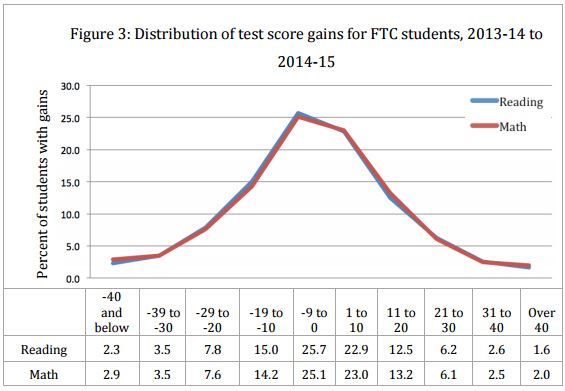
Researchers found that, on average, low-income students who receive Florida school choice scholarships make comparable gains to their peers at all income levels nationally. Source: FTC annual program evaluation.
 With more than 20 million children across the nation now choosing their schools, a new report from the Friedman Foundation looks at those who do not. Its conclusion: school choice is also benefiting students who stay in traditional public schools.
Authors Patrick Wolf of the University of Arkansas and Anna Egalite of North Carolina State University found 42 reports studying the competitive effects of charter schools, vouchers and tax-credit scholarships on district school student achievement. Florida, home to the largest private school choice program in the nation (Step Up for Students, the co-host of this blog and employer of this author, offers scholarships to 78,000 low-income students throughout the state), has been host to 10 of those studies.
Of those 42 studies, 30 found statistically significant achievement gains for one or more subgroup of students attending traditional district schools. Nine studies in Florida found positive gains for district students while one study found neutral to positive gains for district school students thanks to competition from charters.
The report contradicts arguments often advanced by choice opponents, who have asserted that the programs harm students, undermine public education and threaten America's education ideals.
In Florida, in particular, the report says that no study has found district school students were harmed by choice programs, which directly contracts the main arguments in an ongoing adequacy lawsuit in the state. (more…)
A two-year study of school vouchers in Louisiana found the program has a "significant and substantial negative" impact on student achievement, but researchers believe the program may be showing signs of improvement.
The two-year study found students receiving vouchers to attend private schools lost ground to their public school peers in math and social studies, but not in English and science, during the 2013-14 school year. Students' math scores, though still lower than their public school peers', saw significant improvement between the first and second year of the study.
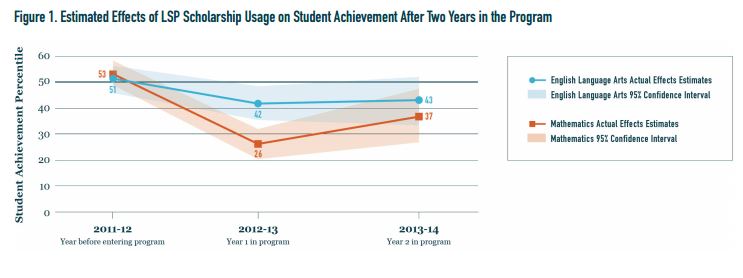 The results were released this evening in a compendium of four studies that form the deepest dive yet into the impact of Louisiana's school voucher program.
"In general our results present a mixed picture of the LSP’s effectiveness," the authors of the studies, led by the Education Research Alliance at Tulane University, wrote in an overview of their findings.
The remaining three studies found the private school choice program helps reduce racial segregation, stimulates improvements at surrounding public schools, and appears to have little effect on conscientiousness and other non-academic measures of student well-being.
The authors of the report on student achievement, Jonathan Mills of Tulane and Patrick Wolf of the School Choice Demonstration Project at the University of Arkansas, wrote that the negative effects they found are "unprecedented in the literature of random assignment evaluation of school voucher programs."
Past studies from around the country have generally found positive or neutral results. (more…)
 North Carolina's anti-voucher professors
Helen Ladd, William A. Darity, Rosyln Mickel, Charles Clotfelter, Sherick Hughes, and Jenni Owen are professors and program directors at various universities in North Carolina including Duke University, the University of North Carolina at Chapel Hill and the University of North Carolina at Charlotte. Earlier this week they filed an Amicus brief in favor of overturning North Carolina’s new voucher program.
In the brief, they argue research doesn’t support vouchers and that voucher proponents cherry-pick statistics and fail to control for demographic differences.
 The professors begin their case by citing a controversial study, by Chris and Sarah Lubienski. That study doesn't even look at the impact of vouchers but simply compares public and private school students on math (but not reading, though that data is available and similar studies have found higher reading scores for private school students).
While the professors accuse voucher proponents of failing to control for demographics in research supportive of vouchers, the evidence they present against Milwaukee’s voucher program is a Journal Sentinel article on the apples-to-oranges comparison between all public school students and the low-income voucher students. Interestingly, the professors must have missed the one sentence in the article noting the voucher students outperformed their low-income public school peers.
 The professors also selectively quote research. Take for example Patrick Wolf’s often misunderstood study on the D.C. voucher program. For the first several years the study showed higher achievement for students offered a voucher, but the statistically significant difference disappeared in the final-year report. The professors fail to mention the famous reason why. Nearly half of the control group (non-voucher students) ended up in private schools or charter schools anyway. They also didn’t note the substantial improvement in graduation rates for D.C. voucher students.
Finally, the professors worry about the harm a “parallel” system of education might cause traditional district schools, but they make no mention of the 22 studies on the competitive effects of voucher and tax-credit scholarship programs on public schools. Of those studies, 21 found that, though the improvements are usually slight, public schools actually do better when faced with competition from nearby voucher schools.
Cherry picking, failing to control for demographics, and selectively quoting research and data, the Duke and UNC professors end up committing many of the same faults they find with voucher supporters.
 We’ve heard the myths before. Parents can’t receive public support for their children to attend a faith-based school because that would violate constitutional restrictions. Faith-based schools are selective and homogenous. Faith-based schools shred the social fabric and civic unity. Despite overwhelming evidence to the contrary, the myths persist. And, in doing so, they continue to hamper efforts to bring faith-based schools fully into the panoply of choices from which all parent should be able to choose - and which compose public education in the 21st Century.
In its first report to the nation, “Religious Schools in America: A Proud History and Perilous Future,” the Commission on Faith-based Schools lists 10 of these myths – along with the facts that dispel them. The commission is a product of the American Center for School Choice, which co-hosts this blog. Its aim: To cast a brighter spotlight on the value and plight of faith-based schools, which are declining in urban areas where they have long been part of the solution in educating low-income children. The commission is holding a leadership summit in New York City on Nov. 19, where the report will be released. We’ll bring you more information in future posts. In the meantime, we thought the 10 myths worth sharing on their own.
Myth: Providing public support to families to choose a faith-based school violates the Establishment Clause of the U.S. Constitution.
Fact: The U.S. Supreme Court has ruled that providing publicly supported scholarships directly to parents, either through tax credit scholarships or vouchers, is constitutional and 17 states now have such programs in operation.
Myth: Religion has never been a significant part of American education.
Fact: Religion was the foundation of education in America from Colonial days into the early 20th century, with states passing laws requiring Bible reading in public schools as late as 1930. Public schools based on religion are not constitutional, but many American families still want to access a faith-based school for their children’s education.
Myth: Few countries provide support for parents to choose a faith-based school as part of their public education systems.
Fact: Actually, in the Western Hemisphere, only Cuba and the United States do not routinely provide public support for parents to make that choice. Most democracies have incorporated faith-based schools among the choices that are open to parents when selecting a school for their children. (more…)
 Politico has built an impressive audience by bringing intellectual heft to pinched political debates, but Stephanie Simon’s treatment of school vouchers followed a more predictable narrative: left vs. right, public vs. private, us vs. them. Not surprisingly, the result was tendentious.
Though the original headline’s claim that vouchers offer “no proof they help kids” was later amended to allow that “vouchers don’t do much,” the account was infused with the kind of righteous attitude that mars our political discourse. By paragraph three, Simon was presenting the “inconvenient truth,” as if to signal her impatience with complexity.
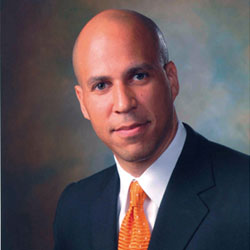
Cory Booker D-NJ
Yes, it is true that “Jindal, GOP allies back vouchers,” but it is also true an increasing number of Democrats are joining the fight. Louisiana's voucher expansion had the support of 19 Democrats (a third of all Democrats) in the state legislature. In Florida, nearly half the Legislature’s Democrats, and a majority of the Black Caucus, supported a major expansion of tax credit scholarships for low-income students in 2010. In North Carolina, a new voucher plan enacted this year was introduced with bipartisan sponsors. One of the Democratic Party’s rising stars, Newark Mayor Cory Booker, came to the vigorous defense of private options when challenged on the issue in his U.S. Senate primary.
Yes, some voucher students have produced what Simon called “miserable” scores on standardized tests, but that doesn’t necessarily distinguish them from some students in traditional public schools. Students who come from impoverished homes face enormous challenges, and their educational success is an obligation we face collectively as a nation. The test is whether each school is helping or hurting that progress, not whether it is run by public or private educators.
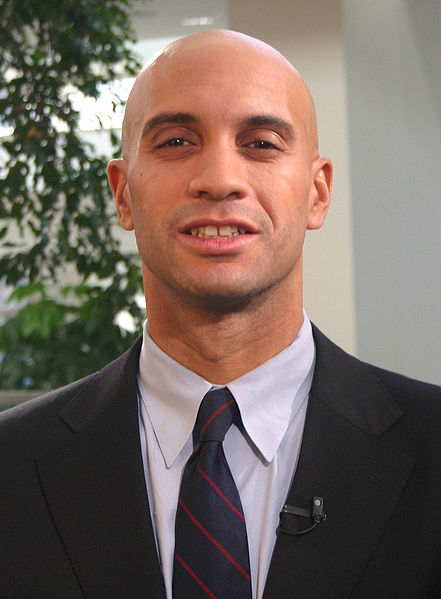
Adrian Fenty D-DC
Yes, voucher students in some states don’t take the same standardized test as district students, but that does not make it “impossible to compare academic results.” In Florida, noted Northwestern University researcher David Figlio has used various techniques – including concordance and regression models – to compare between nationally norm-referenced tests and the state test. In 2010, he wrote of low-income scholarship and public students: “The results are consistent with a finding of small but positive differences between program participants and non-participants.”
By seeing mostly through the lens of good and evil, Simon robbed readers of the kind of nuance that enriches political debate. Her reporting on testing data suffered accordingly. (more…)
In a blog entry last week, “I’m rethinking my opposition to school vouchers. Convince me,” Nicole Stockdale, the assistant editorial page editor at the Dallas Morning News, said she is grappling with whether to support school vouchers.
What stimulated Nicole’s dilemma is a bill in the Texas Legislature to allow low-income families to use tax credit scholarships (often referred to as school vouchers) to pay private school tuition and fees. She deserves a serious reply to her challenge, and, given I am president of a Florida nonprofit that administers the country’s largest tax credit scholarship program for low-income children, I thought I’d try.
Nicole identified three traditional anti- school vouchers arguments she wanted help refuting:
By allowing low-income students to have the same schooling options as more affluent students aren’t we delaying the process of improving ineffective district schools?
This is not an either-or proposition. All schools should be engaged in continual improvement, but this is not a rationale for denying low-income families access to additional schooling options.
Researchers studying Florida’s tax credit scholarship program found urban district schools improved when our program was first introduced. They hypothesized that the possibility of losing students caused these district schools to focus more attention on meeting the needs of low-income students. This same study also found the district schools most impacted by the loss of scholarship students - Florida now has about 51,000 high-poverty students on scholarship - had proportionally higher test score gains among their own low-income students.
So in Florida we’ve found that both the low-income students on scholarship and the low-income students who remain in district schools are improving at the same time. This finding confirms that different students are successful in different environments, that there is no one-size-fits-all solution for helping students learn. The relationship between the school and the child is the key. That’s why allowing all parents - including low-income parents - to match their children with the schools that best meet their needs is so necessary.
What about students who don’t choose to attend magnet, charter or private schools? Will we end up with non-magnet district schools comprised only of students from apathetic families?
Researchers have found Florida’s tax credit scholarships attract some of the state’s highest poverty and lowest-performing students. In essence, our program does the opposite of creaming. (more…)
Like other school choice programs where supply is overwhelmed by demand, the school district in Pinellas County, Fla. offers an option that causes plenty of joy and heartache. Some kids win the “fundamental school” lottery. Some kids lose. Some go on to the high-performing fundamentals, where they’re surrounded by peers with super-engaged parents. Others go to neighborhood schools that struggle mightily.
Are their outcomes different? Matthew Chingos, a respected researcher at the Brookings Institution, is aiming to find out.
Last week, the district agreed to give Chingos the data he requested so he could examine the impact of fundamental schools on math and reading scores. Once he gets the data, he expects to issue findings within a year, according to his research application.
His study is worth watching because it involves a school choice option offered by a school district, not by private schools or charter schools.
The fundamental schools in Pinellas stress parental involvement and student accountability. Students who fall short on academic, behavioral and dress code requirements can be reassigned to neighborhood schools. Ditto if their parents fail to meet requirements, including attending monthly meetings.
The 104,000-student Pinellas district created its first fundamental school in 1976, but expanded them rapidly in recent years. It now has more than 7,000 students in 10 full-fledged fundamental schools and two “school-within-a-school” fundamental high schools.
The schools boast some of the district’s highest test scores and lowest disciplinary rates. They also cause a fair amount of angst. (more…)

