 Editor's note: Better (a day) late than never. This was posted on The Charter Blog yesterday:
Twenty years ago today, the first public charter school opened in St Paul, MN, forging the path for the most innovative public education reform movement in a century. The concept of charter schools was proposed by a local Citizens League and authorized by bi-partisan legislation endorsed by a Democratic-majority legislature and a Republican governor. City Academy High School was started by two teachers and a youth recreation leader who wanted the autonomy to provide students at high risk of dropping out with the choice of a new type of public school that could better serve their needs.
Today, politicians from both sides of the aisle support charter schools, including Presidents Clinton, Bush, Obama, and Governor Romney. Legislatures in 41 states and Washington, D.C. have adopted charter school legislation. Additionally, in the last two years, 19 states strengthened their charter school laws by lifting caps restricting charter growth, providing more equitable funding and facilities support, and enacting new authorizing and accountability measures. Maine enacted its first charter school law.
And demand for public charter schools is at an all time high. More than 2,000,000 students attend approximately 5,600 charter schools, and more than 610,000 more are on waiting lists. Full post here.
(Image from unciaandtigris.blogspot.com)
Beyond the boos for his vow to undo President Obama's health care overhaul, Republican president Mitt Romney stressed school choice in his speech to the NAACP today, talking up charter schools and suggesting Obama’s ties to teachers unions hampered his efforts to help disadvantaged kids.
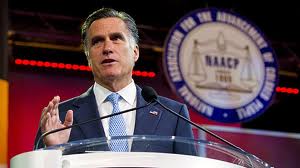 “If equal opportunity in America were an accomplished fact, black families could send their sons and daughters to public schools that truly offer the hope of a better life,” he said, according to his prepared remarks. “Instead, for generations, the African-American community has been waiting and waiting for that promise to be kept. Today, black children are 17 percent of students nationwide – but they are 42 percent of the students in our worst-performing schools.”
“Our society,” he continued, “sends them into mediocre schools and expects them to perform with excellence, and that is not fair. Frederick Douglass observed that, “It is easier to build strong children than to repair broken men.” Yet, instead of preparing these children for life, too many schools set them up for failure. Everyone in this room knows that we owe them better than that.”
Media coverage of today's event in Houston is focusing heavily on the negative reaction Romney received for his plans to scuttle "Obamacare." The Republican candidate got a more polite response to his education positions.
Romney noted his support for charter schools as governor of Massachusetts, despite opposition from teachers unions and Democratic lawmakers.He also pitched his plan to allow federal education funding to follow the student to the school of the parents’ choosing, including private schools “where permitted.”
The dig at Obama's education agenda came without mentioning the president’s name. (more…)
 Mitt Romney’s white paper on education, “A Chance for Every Child,” offers laudable support for increased parental choice and for other changes, such as tenure reform, that must occur to improve education in America. Like Obama, Romney wants to leverage federal dollars to move states in the right direction on public school choice, especially the removal of charter school caps and the adoption of open enrollment policies. He also advocates for private school choice “where permitted by state law.”
But is his plan viable? And will he lead to implement it?
Romney would remove most of No Child Left Behind’s accountability standards in favor of expanded reporting on how schools are different. He would allow states to set their own standards and tests, but print the state’s National Assessment of Educational Progress (NAEP) outcomes on school and district report cards. NAEP brings much value to the discussion of education performance in America, but none to how an individual school district or school is performing because it does not test sufficient numbers or in every school and district. Implicit in this move - away from accountability by achievement measures towards improved information about schools - is that such information is lacking today. But parents are actually quite knowledgeable about local schools’ pluses and minuses and can access sites such as www.Greatschools.org for more detailed information.
So, for this information to be vastly more empowering than it is today, Romney recognizes that school choice would have to be dramatically expanded. That’s especially true for public school choice where, frankly, most of the schools will be for the foreseeable future.
The Romney plan seeks to expand choice primarily in two ways. First, he would convert Title 1 and federal special education (IDEA) funds that go to schools serving economically disadvantaged students. They would become vouchers that the eligible Title 1 and special ed students could take to any other school, including a private school, or even to a tutoring provider or digital school. Second, he would require states, as a condition for receiving these funds, to adopt open enrollment policies and eliminate caps on charter and digital schools.
The Title 1 and IDEA proposal is worthy of consideration. (more…)

