Charter schools. The exorbitant payouts to the principal of a failing Orange County charter school are behind legislative efforts to tighten charter laws. Orlando Sentinel.
Privatization. The Volusia County school district considers outsourcing 500 custodial and grounds maintenance jobs, reports the Daytona Beach News Journal. The Bay County school district considers bids for privatizing the district's transportation services, reports the Panama City News Herald.
School choice. Vouchers and tax credit scholarships can make private school more affordable. Panama City News Herald.
Forget the furloughs. The Pasco school district finds the $3 million it needs to keep from making employees take two unpaid days off, as originally planned. Tampa Bay Times.
Raising the bar. Don't set it too high with graduation requirements, a high school principal tells the House K-12 Subcommittee. WTXL.
Educator conduct. Prosecutors drop fraud charges against a band teacher who was accused of using nearly $15,000 in school funds to pay for relatives who accompanied the band on a trip to Paris, reports the South Florida Sun Sentinel. More from the Palm Beach Post. An assistant football coach in Manatee County is accused of improperly touching a student and asking her for naked photographs, reports the Sarasota Herald Tribune. More from the Bradenton Herald. A Hernando middle school teacher with a history of off-campus incidents - including three DUI arrests - returns to the classroom after his latest DUI, reports the Tampa Bay Times.
Substitutes. The Marion County teachers union is accusing the district of using "full time" subs to avoid paying benefits. Ocala Star Banner. (more…)
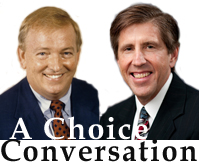
Editor's note: This is the fourth installment of "A Choice Conversation," a dialogue between Doug Tuthill, president of Step Up For Students, and John Wilson, a former National Education Association leader who writes the Unleashed blog at Education Week.
Doug Tuthill: John, I’d like your feedback on some ideas I have about privatization in public education.
For me, privatization in public education occurs when government allows private interests to usurp the public good. Public education would not exist without the products and services individuals and private corporations provide. So the fact that local and state governments contract for these products and services is not a concern. The problem occurs when government officials sign contracts that put private concerns over the public interest.
When I was a teachers union leader, I was regularly criticized for placing the private interests of teachers above the public good. While I gladly pleaded guilty to advocating for our union members, which I was legally and morally obligated to do, I rejected the charge I was trying to privatize public education. If the school board agreed to a contract that put the interests of our union members above the public’s interest, that was the board’s fault. Their job in contract negotiations was to represent the public; my job was to represent the teachers.
All the individuals and corporations that contract with school boards - textbook publishers, charter school providers, teachers unions, builders, bus drivers - have private interests they advocate for when they negotiate contracts. If any of these contracts contribute to privatizing public education, it’s the school board’s responsibility.
John Wilson: Doug, while I agree private interests should not usurp public good, I do not accept that teachers as public employees have private interests within their professional responsibilities or collective bargaining agreement. Salaries, benefits, working conditions, and teaching and learning responsibilities are all in the interest of the public as taxpayers or in the interest of the public as to the impact on assuring a quality teacher for every child. The union may be private, but the members are public; therefore teacher interests cannot be compared to the interests of private sector and for-profit vendors.
I would also add that many of my union colleagues define privatization more broadly as turning over to a private provider a job that has been previously done by a public employee. I would contend this is the single factor that causes mistrust of charter schools and private management organizations. For those of us who believe public money is for public schools, we will have to reconcile how we create choice and customization under the public domain. (more…)
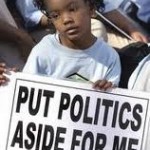 Families who benefit from expanded school choice options – charter schools, virtual schools, vouchers, tax credit scholarships – are increasingly being portrayed as pawns in a coordinated campaign to privatize public schools. That’s especially troubling given that the voices of those families are so rarely included in the conversation.
The latest example: Statements from a movement to end high-stakes, standardized testing.
United Opt Out National, which led an effort over the weekend to “occupy” the U.S. Department of Education in Washington, D.C., says it wants to “end Wall Street Occupation of Education.” Among its goals: An end to "the use of public education funds to enact school 'choice' measures influenced and supported by the corporate agenda."
This story in The Florida Independent about the group’s efforts (a Miami-Dade teacher/parent is among the group’s leaders) focused most specifically on its concerns about for-profit charter schools. But by referencing vouchers and tax credit scholarships, the story suggested those options were also part of a plot to undermine public schools.
That kind of characterization about school choice is happening more and more as newspapers and TV stations echo the emotional story line that gets repeated the most. (more…)
 Editor's note: Corporate greed! Profits! Privatization! Shout the same, alarming buzz words enough - as critics of education reform are doing - and it defines the debate. But as Doug Tuthill, a former teachers union president, argues in this post, businesses benefit more from the status quo in education than they will from expanded parental choice.
Public education would not exist without the products and services provided by for-profit corporations. Every year, for-profit corporations receive billions of tax dollars from school districts to build schools and supply them with desks, books, computers, pens, pencils, paper, calculators, buses, crayons, and power to turn on the lights. And yet school choice critics continue to assert that giving parents more schooling options is a plot by for-profit corporations to make more money.
I don’t buy it.
The profit margins of businesses providing goods and services to public education are greater under the current command-and-control system because the costs of sales and servicing contracts are lower when the customers are large, centrally controlled organizations. My friend Jean Clements, who is the teachers union president in Hillsborough County, Florida, was the first person to explain this to me.
Four years ago, I asked Jean why her union refused to sell union memberships to private school teachers. Her answer? She would lose money. Jean said the membership revenue she would receive from teachers in small, non-district schools would not cover the costs of negotiating and servicing their collective bargaining contracts.
Large school districts allow teachers unions to spread their costs across a large number of members, which is why large districts are their preferred market. It’s also why unions are so opposed to public education occurring in schools not owned and managed by school districts.
I suspect the same economy-of-scale issues influencing Jean’s business decisions are also relevant for Dell, Pearson and Apple. (more…)

