
Cheri Shannon
The head of one of Florida’s two statewide charter school support groups is stepping down to lead a more targeted effort. Cheri Shannon, president and CEO of the Florida Charter School Alliance, is leaving at the end of the month to lead University Prep, a new charter network she says will focus exclusively on low-income students. To some extent, she’ll be coming full circle, having once run a charter school in Kansas City, Mo., that served students who were predominantly black and high poverty.
“This is my passion, my mission. ... I felt called, for lack of a better word, to come back in and do that work,” Shannon told redefinED. “This is where I want to end my career, making a difference in the lives of kids who deserve a difference.”
Shannon joined the alliance in April 2011 as its founding CEO. A former associate superintendent in the Kansas City school district, she has years of experience in both traditional school districts and the charter sector.
Her new venture already has four charter school proposals in the pipeline, including one scheduled to go before the Pinellas County School Board on Tuesday. The school boards in Broward and Palm Beach counties have already signed off on the University Prep applications in their districts. The application in Hillsborough is scheduled to go before that district’s board next month, Shannon said.
The Pinellas proposal is for a K-8 school in St. Petersburg with a projected, first-year enrollment of 694 students. The plan is to open next fall. (To read more about the application, go to page 318 of the school board agenda packet.)
The proposal stands before an interesting legal backdrop - a 2010 settlement from a class-action lawsuit that accused the Pinellas district of failing to educate black students in violation of the state constitution. Under its terms, the Pinellas school board set an aspirational goal of having at least 500 spaces in charter schools available for black students. (more…)
 Education reform, for some of us, is full of tough calls. And for some of us, there can be particular agony in the gray area where race, poverty and both types of accountability – parental choice and regulatory – intersect.
Last week, the school board in Pinellas County, Fla., voted 4-3 against their superintendent’s recommendation to begin the process of closing a charter school in the city of St. Petersburg. The Imagine elementary school, serving predominantly low-income, African-American kids, had just earned its third F grade in four years of operation because of painfully low standardized test scores. Only 29 percent of its students were reading at grade level, according to the state test; only 13 percent were reaching the bar in math. Only one school in the district had performed worse – another charter – and the board had already voted to shutter it.
In the case of Imagine, the board was knotted by a a number of entangling factors, including a vote two months ago – before the release of school grades – to renew the school’s contract. Before the second vote, nearly 20 parents, teachers, administrators and company officials pleaded with the board to keep the school open. They were passionate, thoughtful, respectful – and collectively powerful. We thought their comments were worth sharing, and we excerpted a number of them below. (You can see the speakers on this video here; their presentations begin just before the 41 minute mark. The board debate begins at 3:18:39).
As you weigh the pros and cons, a few points to keep to mind: Black students in Pinellas perform worse than black students in every other urban district in Florida. The number of charter schools has grown rapidly in Pinellas, but not in neighborhoods with large numbers of low-income families of color. The district still isn’t home to a known quantity like KIPP or YES Prep with a record of success with minority kids. And the school board, like many of its counterparts across Florida, recently passed a resolution critical of standardized testing.
Here are the excerpts, edited for length:
Qiana Scott, parent: “You can’t make a decision to close down an institution that is there for the kids based on a standardized test. Because all of our kids are not standard. Kids learn differently. They are taught differently. And at Imagine, that is something that is definitely recognized. So the teachers take that extra time and the extra care to say, “You learn this way, I will teach you the way that you learn best.” So therefore, our kids are learning. It definitely hurts a lot of the parents and a lot of the staff because everybody has worked so hard all year, and to hear that Imagine could possibly be closed down – that’s like splitting up a family. And that’s what we are at Imagine. We are family.“ (more…)
 Florida has long given folks nationwide good reason to pay attention to school choice happenings at the state level. Now comes a compelling story at the local level.
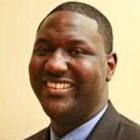
Glen Gilzean, 31, is seeking a school board seat to help lead the 101,000-student Pinellas County school district. He's a former staffer with the state education department; an education entrepreneur whose business helps low income kids; an energetic guy with a solid grasp of education issues. He also happens to openly support school choice options like vouchers and tax credit scholarships.
That support prompted headlines after Florida Gov. Rick Scott appointed Gilzean to the District 7 seat in January. And it was mentioned again when Gilzean announced last week that he’s running to hold on to the seat. It should be kept in perspective.
District 7 has more black students than any other school board district in Pinellas. And as I’ve written before (and will continue to do so), black students in Pinellas score lower in reading and math than black students in any major school system in Florida. The trend lines are upsetting and baffling and don’t get the attention they deserve. They have also spurred growing numbers of parents in Pinellas to embrace expanded school choice options.
Gilzean’s support for choice may put him more in synch with the community pulse than candidates who reject such options. But he’s not a Johnny-one-note. Like many choice supporters, he sees choice as another tool to help kids, not as a silver bullet and not as an excuse to let traditional public schools flounder.
The election is Aug. 14. It will be fascinating to see if school choice becomes an issue in coming months – and, if so, how it’s portrayed and how voters respond. We know choice in Florida has strong support at the state level. The unique election in Pinellas may give us clues about how it's viewed on the ground.

