Recently I attended the American Federation for Children’s policy summit in Washington, D.C. This event was an exciting, informative, two-day conference filled with panel discussions, keynote speakers such as Lisa Leslie and Mike McCurry, and networking opportunities with education reformers from all over the country. I left D.C. feeling similar to when I left the Foundation for Excellence in Education conference this past November. Invigorated. Energized. Hopeful.
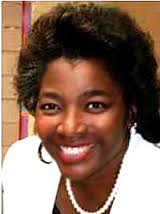
Alberta Wilson: "Parents should be involved. They are the stewards of their children. If we continue to do things as we are doing them, we won’t be successful."
But I also kept thinking these events should be experienced and enhanced, a thousand times over, by one very important, and missing, demographic.
Parents.
My background is important, but not necessarily the reason, why I want to see more parents at education conferences throughout the country. I have been a Democratic activist and community organizer for the last 25 years. I now organize parents for Step Up For Students. Perhaps that does influence my thoughts and opinions.
However, I remember suggesting more parental involvement after attending education conferences as a teacher. I simply expect more now. I expect parents to be included in every substantive event, conference, policy discussion, roundtable, and town hall meeting, and I’m routinely disappointed when they aren’t anywhere to be found.
Of course, many of the participants are parents as well as education reformers. We bring that passion for school choice from personal experiences. I can talk about years spent driving my children out of county to put them in a public school that worked for them and then utilizing scholarships a few years later when a private school better fit their needs.
But we should hear more stories from a diverse population of moms and dads.
At the AFC Conference, Dr. Alberta Wilson, president and CEO of Faith First Educational Assistance Corp. and consultant for Capstone Legacy Foundation, shared my concerns. At several sessions, she spoke from the audience to implore that more parents be included – at every level.
I caught up with her recently and asked her to elaborate. (more…)
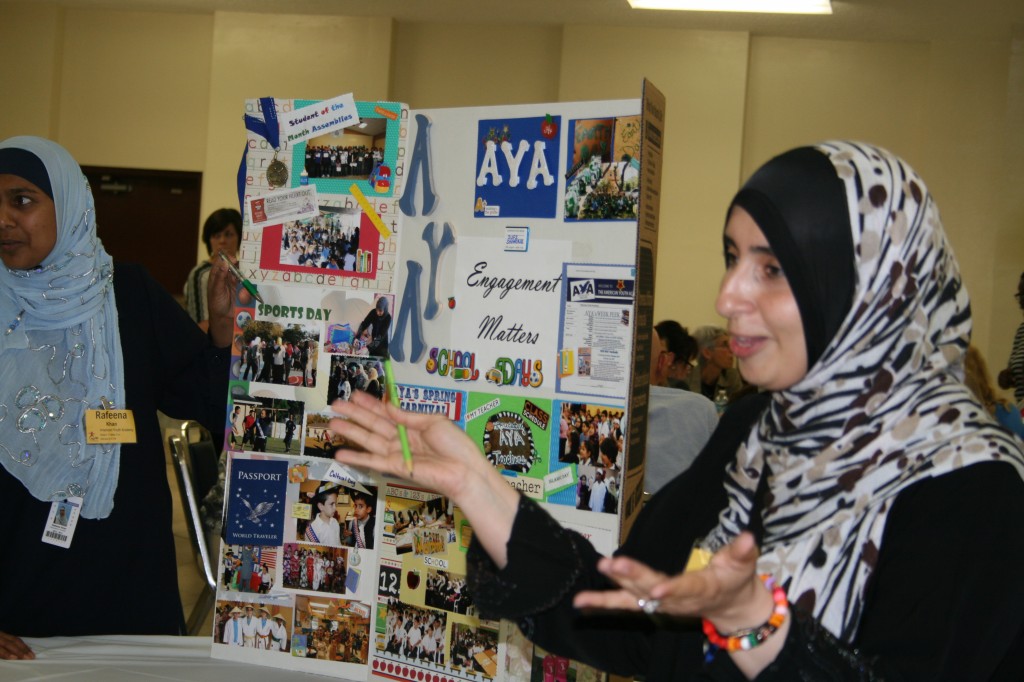
First-grade teacher Manal Ramadan explains to other educators how to get parents more involved at school. Ramadan, of American Youth Academy in north Tampa, was participating in Step Up For Students' first Success Partners Celebration Showcase at Incarnation Catholic School.
Teacher Tiffany Smith-Sutton noticed right away the difference it made when parents came to their child’s school to bake cupcakes or learn about fractions during Family Math Night.
Homework came back on time. Test scores went up. Classroom behavior improved.
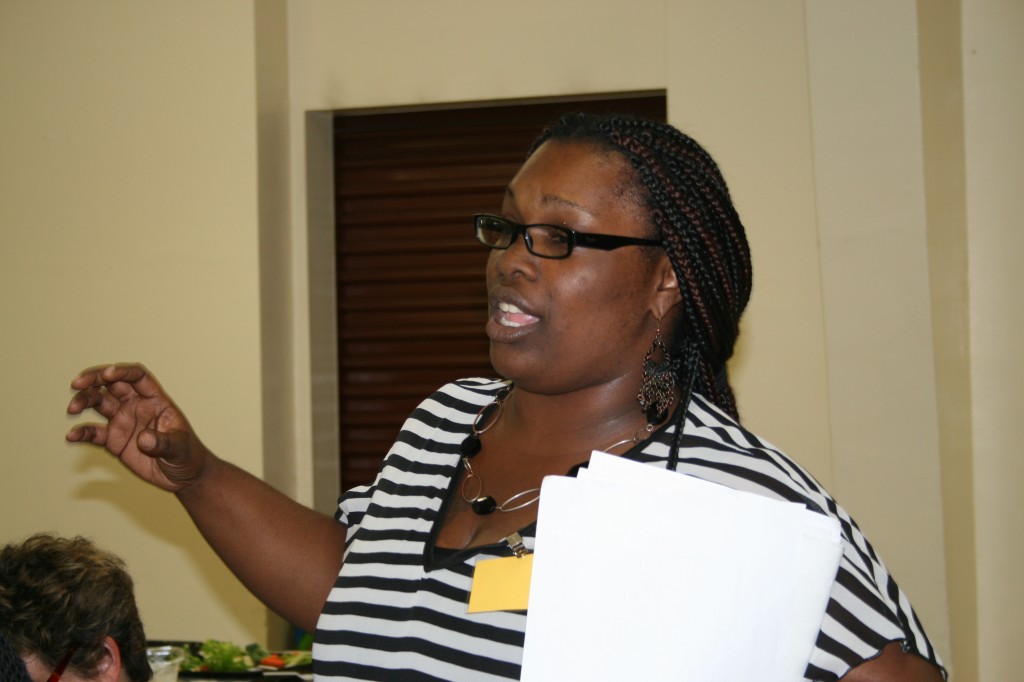
Tiffany Smith-Sutton of Bible Truth Ministries Academy talks about enticing parents to come to their child's classroom.
“With their parents there, students are good,’’ said Smith-Sutton, a first-year preschool and kindergarten instructor at Bible Truth Ministries Academy in Tampa.
And parents grow more involved in their child’s education.
It’s that connection that Step Up For Students, the nonprofit that oversees Florida’s tax credit scholarships, hopes to replicate in all 1,300 schools it works with through a free program designed to strengthen the bond between schools and families.
Success Partners started in 2011 with 10 private schools in Tampa that accept tax credit scholarships. The idea was to let each school come up with a way to forge better relationships with parents that meets their specific needs.
School teachers and administrators took part in a year-long training to learn how to create their parental engagement partnership plans. A key part is the Learning Compact, a web-based software application that introduces school leaders to new Common Core State Standards; state-of-the art learning and teaching strategies; and parent and student interventions.
Step Up For Students, which co-hosts this blog, added 17 more schools in the Tampa Bay area to the program in 2012-13. All but one of the schools came together last week to showcase what’s working and to inspire other educators to join the effort. The project will include more than 100 schools this fall.
“When parents are engaged in their children’s learning, children succeed,’’ said Carol Thomas, Step Up’s vice president for student learning and one of the creators of Success Partners. (more…)
Editor's note: This is the latest installment of an ongoing dialogue between Doug Tuthill, president of Step Up For Students, and John Wilson, a former National Education Association official who writes a blog at Education Week.
Doug Tuthill: John, on your John Wilson Unleashed blog, you recently wrote that “there are really two groups of poor children” - a group that benefits from effective parenting and other sources of social capital, and a second group that does not. You said to pigeonhole these high poverty/low social capital children “into a ‘one size fits all’ school model is malpractice.”
 You concluded by saying we need “new policies and new practices that are customized to ensure that this group of children can succeed in our schools.”
I agree with you, and I know you have decades of experience working with these high poverty/low social capital children. Would you elaborate on what you think some of these new policies and customized practices should be?
John Wilson: Thanks, Doug, for giving me the chance to elaborate. First, let me say that equity in our schools gets a lot of rhetoric, but not much action. If there is one thing we should learn from Finland is that they made equity the focus of their transformation and excellence followed. In the United States, we have more challenges to overcome to achieve equity so we have to be bolder and smarter. Here are a few of my thoughts.
1. End segregation by socio-economics. I believe this is the civil rights issue of this century. The few school systems that have done this through creative student assignment plans and choice programs like magnet schools have seen student achievement for all rise, parent engagement increase, and opportunities for their students' future expand.
2. Provide every poor child with little or no social capital an education advocate. If we can provide children/juveniles in the court system with an advocate, would it not be smart to provide this for children in that pipeline as an intervention? I always tell friends don't enter the health care system without an advocate, and I would be remiss not to recognize the same need in education for poor children.
3. Strengthen career and technical education to provide more opportunities for all students. This pathway needs to be as strong as the college pathway so students can switch successfully. We could learn a lot from Finland and other European countries.
4. Provide wraparound services to all schools with the first priority being for the poorest. Health, housing, nutrition, safety and after- school programs affect academic achievement. We have seen the difference that Communities in Schools has made. It is time to replicate them.
I invite you to add to my starter list or challenge my ideas. (more…)
Tax credit scholarships. Tampa Bay Times columnist Robyn Blumner doesn't like U.S. Sen. Marco Rubio's proposal for federal scholarships.
 Charter schools. Tampa Bay Times columnist John Romano bemoans the number of charter schools that close because of low enrollment (but curiously doesn't mention traditional public schools that don't get closed despite the same problem). The Cape Coral City Council will consider a resolution asking the Lee County School Board to share capital funding with the city's charter schools, reports the Cape Coral Daily Breeze. More from the Fort Myers News Press.
Virtual schools. Expanding digital education is a top issue in the coming legislative session. The Florida Current.
Jeb Bush. In education, "he has a record of making messes," the Palm Beach Post editorializes (just days after two more credible, independent reports find Florida students leading the country in progress).
Parental engagement. Duval Superintendent Nikolai Vitti wants to import a Parents Academy program similar to one he worked with in Miami-Dade. Florida Times Union.
Education leadership. The Sarasota Herald-Tribune profiles Sen. Bill Galvano, R-Bradenton, the chair of the Senate Education Appropriations Subcommittee.
Teacher evaluations. The first year of statewide teacher evaluation data using the complicated the VAM formula shows the big difference in progress for students with the highest-rated teachers versus the lowest-rated teachers. StateImpact Florida.
Teacher testimony. Megan Allen, Florida's 2010 Teacher of the Year, testifies movingly before Congress about the impact that budget cuts will have on high-needs students. Answer Sheet. (more…)
Fox 13, a TV station in Tampa, Fla., did a nice piece this week about a unique partnership that shows how much and how fast education is changing. It’s between Khan Academy and Step Up For Students, the nonprofit that administers Florida’s tax credit scholarship program for low-income kids (and, full disclosure, co-hosts this blog). The story focused on Gateway Christian Academy, one of 10 private schools that accept scholarship students and volunteered to join the effort.
Like other partnership schools, Gateway Christian is holding “Khan Nights” to show parents how Khan Academy works, how the school is incorporating it into its curriculum and how it can make a difference for their children. As you’ll see from the clip, it’s using this technology, and reeling in a diverse group of moms and dads, all so it can maximize the academic outcomes for its kids.
As we wrote a few months back, the Khan Academy/Step Up venture is only one of a handful that Khan Academy has established with school districts nationwide, and the only one outside of California that involves a network of private schools. The way we see it, it’s a beautiful marriage between school choice and the latest learning tools, with a heavy dose of parental engagement thrown in. Thanks, Fox 13, for giving your viewers a peek at the future.
 If schools want parents and caregivers to chaperone field trips and cook hot dogs at the fall carnival, then a parental involvement plan should be their course of action. However, if schools want those same parents and caregivers to actively participate in decisions regarding their child’s success in school, then their best bet is a parental engagement plan.
Involvement vs. engagement. I have often been asked, “What’s the difference? Aren’t these two terms interchangeable?” To draw a comparison that resonates with many of my colleagues, I point to the time in our lives where a personal relationship moved from “being involved with a significant other” to becoming engaged. Being involved in a relationship usually meant we did things together, but steered away from “counting on each other” or the promise to share the ups and downs of life. With engagement came the commitment to making the relationship a success, with listening to each other critical and compromise inevitable.
So it is with parents in our schools. Schools with parent involvement plans direct their parents; they tell them what to do. Schools engaging their parents, on the other hand, establish two-way communication and believe compromise is essential.
At Step Up For Students, we’re focusing on engagement.
Over the last year, we’ve worked with 10 partner private schools, providing tools and strategies to help them better understand their responsibility for creating a culture that establishes and sustains parent-school partnerships. We know engaging families in all aspects of their children’s education yields positive results. So the staffs at these schools are actively engaged in learning with and from each other, sharing and reflecting as they identify and establish processes, conditions and structures needed to meet their goals.
Now in the second year of our work, we are supporting teachers and administrators as they learn how to engage in intentional study of their relationships. Educators identify significant elements of the partnership with parents, frame questions they want to study, consult relevant research, implement changes, collect and analyze both quantitate and qualitative data – and then codify their study to share with other educators. We’ve also expanded the effort this year and now have 28 schools on board.
The difference between “involvement” and “engagement” isn’t hair splitting. Quite simply, involvement is more of a “doing to” the parent while engagement is a “doing with.” Engagement establishes the need to listen first, asking thoughtful questions to better understand the assets and strengths of the family. (more…)
One school made a calendar for parents, with a note like this one below every month’s Bible verse: Research says … the greater the parents’ involvement, the greater the academic achievement for the student.
Another organized a “scavenger hunt” for families, built around tips to help their kids succeed in school. The school usually considered an event a success if 10 parents showed up. The scavenger hunt drew more than 50.
These projects are small examples from a big effort – one fairly unique to both public and private schools, and which highlights an overlooked piece of the ed reform puzzle. For more than a year, Step Up For Students, the nonprofit that oversees Florida’s tax credit scholarship program for low-income students (and co-hosts the redefinED blog), has been quietly working with some of its partner schools to help them build better, deeper relationships with parents.
We're not talking about once-in-a-blue-moon spaghetti dinners. This effort is systematic and long term, led by each school and organically tailored to what it determines are its needs. The plan is for each school to constantly improve its ties with parents – and eventually, its student achievement - based on data the schools themselves will collect.
“Getting parents to be true partners is going to make the work (of teaching and learning) a whole lot easier,” said Carol Thomas, Step Up’s vice president of student learning. Schools in general have “put all of our eggs in one basket, trying to improve teachers and students. And we rarely looked at how we can improve partnerships with parents.”
There's a contrast here with the pitched battle over teacher quality in public schools. To maximize gains from teachers, the biggest in-school factor in student success, ed reformers are going at teachers unions over everything from pay and tenure to evaluations and seniority rights. The recent strike in Chicago, which paralyzed the nation’s third-largest school district for a week, was in large part over these issues. Meanwhile, the potential good that comes from energizing and engaging parents goes untapped.
The Step Up project began last year with 10 schools in Tampa. It’s expanding this year to include 16 more from Venice to Dunedin. Eventually, it will include Step Up partner schools anywhere in the state (more than 1,300 private schools accept tax credit scholarships) that are interested.
This week, the project took another step forward, with Step Up’s Office of Student Learning holding a two-day training session with about 40 representatives from two dozen schools. (more…)
Like other school choice programs where supply is overwhelmed by demand, the school district in Pinellas County, Fla. offers an option that causes plenty of joy and heartache. Some kids win the “fundamental school” lottery. Some kids lose. Some go on to the high-performing fundamentals, where they’re surrounded by peers with super-engaged parents. Others go to neighborhood schools that struggle mightily.
Are their outcomes different? Matthew Chingos, a respected researcher at the Brookings Institution, is aiming to find out.
Last week, the district agreed to give Chingos the data he requested so he could examine the impact of fundamental schools on math and reading scores. Once he gets the data, he expects to issue findings within a year, according to his research application.
His study is worth watching because it involves a school choice option offered by a school district, not by private schools or charter schools.
The fundamental schools in Pinellas stress parental involvement and student accountability. Students who fall short on academic, behavioral and dress code requirements can be reassigned to neighborhood schools. Ditto if their parents fail to meet requirements, including attending monthly meetings.
The 104,000-student Pinellas district created its first fundamental school in 1976, but expanded them rapidly in recent years. It now has more than 7,000 students in 10 full-fledged fundamental schools and two “school-within-a-school” fundamental high schools.
The schools boast some of the district’s highest test scores and lowest disciplinary rates. They also cause a fair amount of angst. (more…)
Editor’s note: Kelly Garcia, who is interning this summer with Step Up For Students, began teaching middle school last year in the Hillsborough school district.
 One of my favorite responsibilities as a teacher at the YES Prep West charter school in Houston was the requirement to take small groups of students on field trips of my choice twice each year.
I fondly remember driving Ivan, Javier, Citlaly, Mercy and Frances to one of Houston’s most famous chocolate shops, The Chocolate Bar, where they indulged in gigantic pieces of chocolate cake and foot-long chocolate bars. These trips allowed me to expose my students to a piece of their home city that they had never experienced, and allowed them to show me a piece of themselves that I had never seen. The outings fueled my dedication to them.
Ninety-five percent of the students in the 10-school YES Prep system are Hispanic or African-American. Eighty percent are economically disadvantaged. And yet last month, YES Prep won the first-ever Broad Prize for public charter schools with the best academic performance.
I was not surprised. I was fortunate to have launched my career in education as a founding teacher at YES Prep West, then a brand-new school in the YES chain. (That's me and my class in the photo.) Here are some of the ways its system is different from traditional public schools – and, in my view, more successful.
Choosing the right people. YES has perfected the art of choosing the right people to put in their classrooms. In part because of the system’s reputation for success, thousands of applicants apply each year for a small number of teaching positions.
Applicants are weeded out by phone interviews with instructional leaders from various campuses, and by a sample lesson they teach to actual YES Prep students. School directors often invite the students to weigh in with their impression of a potential teacher, too. By the end of the application process, school leaders are left with high-caliber, hard-working, mission-driven people. YES teachers are committed to working incredibly long hours (usually 12-hour days without a true lunch break), answering cell phones in the evening to help students with homework, teaching Saturday school at least once a month and even conducting home visits for incoming students. (more…)

