
Kentucky Christian Academy in Campbellsville, one of 352 private schools in the state serving more than 67,000 students, partners with parents to help children grow academically and spiritually as affordably as possible.
Editor’s note: This article appeared Tuesday on thecentersquare.com.
Unlike other recent Kentucky General Assembly sessions, legislators did not pass a school choice bill before this year’s session ended last week.
However, proponents are not deterred and say steps Republican lawmakers took position their cause for success in 2024. Next year, they expect the legislature to pass a proposed constitutional amendment that would give it the power to fund school choice initiatives.
House Bill 174, filed this year by state Rep. Josh Calloway, R-Irvington, called for that amendment referendum. However, even if it cleared through the House and Senate, it would have been placed on the 2024 ballot – just like it would if it passes next year.
In January, a poll commissioned by EdChoice Kentucky found 54% of registered voters across the state supported a school choice amendment and the measure enjoyed at least 50% support in all of the state’s regions.
The strongest support is in Eastern and Western Kentucky, where 58% and 57%, respectively, support it.
In a statement to The Center Square, Jim Waters, president and CEO of the Bluegrass Institute for Public Policy Solutions, said the “temporary delay” is actually “the beginning of actual educational freedom in the commonwealth.”
Before this year’s session began, the Kentucky Supreme Court unanimously ruled last December a law creating educational opportunity accounts violated the state constitution regarding taxpayers funding public schools.
To continue reading, click here.

Cornerstone Christian Academy in Shelbyville, Kentucky, one of 352 private schools in the state serving more than 67,000 students, values the success of each student with small classroom sizes and programs like Abeka and Bob Jones University curriculum.
Editor’s note: This article appeared last week on timestribune.com.
A proposed amendment to Kentucky’s Constitution would authorize the General Assembly to provide for the educational costs of elementary and secondary school students outside of the public school system.
A group known as EdChoice Kentucky is the driving force behind the measure, which they say would allow families to design the right learning options for their children through school choice.
Since the state Constitution was adopted in 1891, it limits education spending to “Common Schools,” in other words, public schools. Recently, the Kentucky Supreme Court threw out legislation that would allow tax dollars to fund charter schools, saying it violates the constitution. This proposal would eliminate that restriction.
During a Wednesday press conference at the Capitol Annex, Andrew Vandiver, president of EdChoice Kentucky, said the issue of school choice enjoys wide support. “Nearly 75% of Republican voters support the amendment, and nearly 60% of independent voters. That’s a strong showing for educational choice.”
Rep. Josh Calloway, R-Irvington, and a lawmaker since 2021, is the sponsor of the proposed amendment. He noted, “Last year, the people of Kentucky elected the most pro-school choice General Assembly that has ever existed.
“Time and again, they have spoken out loudly in support of more educational choice options.”
He says the amendment’s legislation, House Bill 174, is simple. “It asks the voters to allow the General Assembly to empower parents to send their children to a learning environment that will help them succeed and is focused on the best fit for each and every child.”
Calloway pointed out that the December Supreme Court decision did more than just ban public money for private schools.
“It also set the stage to overturn decades of Kentucky’s education programs that are relied upon by families across the state of Kentucky. Things such as our bus transportation for both public and non-public school families.”
To continue reading, click here.
Kentucky Christian Academy in Campbellsville, one of 352 private schools in the state serving more than 67,000 students, partners with parents to help children grow academically and spiritually as affordably as possible.
Editor’s note: This article appeared Thursday on messenger-inquirer.com.
Hoping to rebound from a recent legal setback, school-choice advocates mounted a more ambitious effort Wednesday to allow public dollars to support students who aren't attending public schools.
Advocates proposed a constitutional amendment that would allow state lawmakers to “provide for the educational costs of students” outside the public school system.
School-choice supporters want to place the proposal on the 2024 statewide ballot for voters to decide if it wins approval from the General Assembly.
The measure reignited a fierce policy battle over school choice in the GOP-trending Bluegrass State.
Last year, the Republican-dominated Legislature passed a measure that would have allowed a form of scholarship tax credits to start supporting private school tuition.
The bill — opposed by many public school advocates — was limited in scope to apply to several of the state’s most populated counties. The measure was struck down in December by the state's Supreme Court.
Now school-choice supporters are starting over with a more far-reaching effort. This time, the measure would apply statewide, unlike the restrictions of last year's measure, supporters said.
“So the Kentucky Supreme Court opinion, while a temporary setback, is actually going to be a really good thing for Kentucky students and Kentucky families going forward,” said Rep. Jason Nemes. "Because we’re going to have school choice in Kentucky, and it’s going to be mighty robust.”
To continue reading, click here.
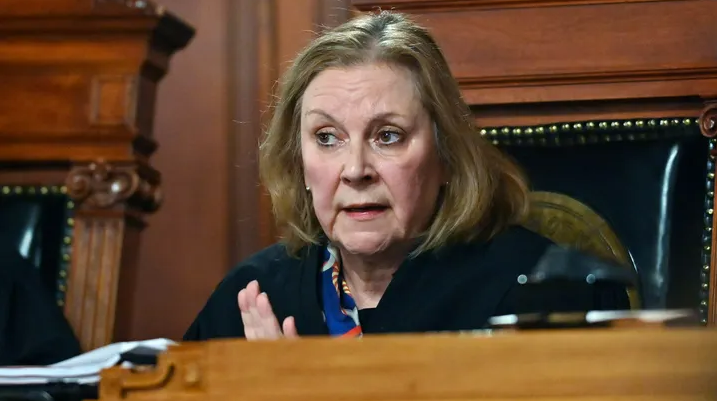
Kentucky Supreme Court Justice Lisabeth Hughes
Editor’s note: This article appeared Thursday on foxnews.com.
A controversial school choice program that would have provided dollar-for-dollar tax credits to those donating money for nonpublic school tuition is unconstitutional, the Kentucky Supreme Court ruled Thursday.
The program, blocked by lower court proceedings for more than a year, could have cost the state up to $25 million in its first year of implementation. Both individuals and corporations would have been able to write off up to $1 million on their state income taxes.
In a unanimous opinion, the court's seven justices cited a section of the Kentucky Constitution that prohibits the state from raising funds for nonpublic schools.
“Simply put,” the justices wrote, the school choice program “puts the Commonwealth in the business of raising 'sums ... for education other than in common (public) schools.'”
The court declined to speak to the intent of the 2021 law creating the tax credit program — namely, whether the goal of raising money for more children to have the choice of attending nonpublic schools is with or without merit, though the justices did cite precedent from a 1983 case:
“We cannot sell the people of Kentucky a mule and call it a horse, even if we believe the public needs a mule.”
“If the legislature thinks the people of Kentucky want this change, (it) should place the matter on the ballot,” the court wrote, citing Fannin v. Williams, the 1983 case that struck down the state's attempt to purchase textbooks for nonpublic school students.
Thursday's decision ends a lengthy legislative and legal process to make “education opportunity accounts” a reality in Kentucky.
To continue reading, click here.
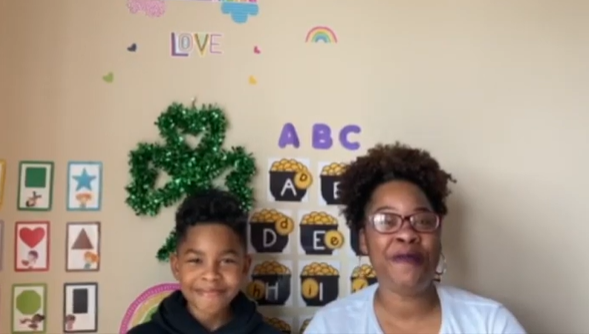
Akia McNeary of Florence, Kentucky, pictured here with her middle school-aged son, is a strong advocate for expanded school choice opportunities for all families.
Editor’s note: This commentary from Colleen Hroncich, a policy analyst at the Cato Institute’s Center for Educational Freedom, and Caleb O. Brown, host of the Cato Daily Podcast, appeared Monday on linknky.com.
Akia McNeary, a Kentucky mother of four, was disappointed when the so-called Council for Better Education filed a lawsuit to block Kentucky’s new Educational Opportunity Account program.
“Even within my own four children, I saw the need for multiple educational options,” she said. “If this group really wants better education in Kentucky, it should support letting lower income families access opportunities beyond their district schools.”
The EOA, the nation’s first tax-credit funded education savings account, will allow eligible parents to receive scholarship accounts that can be used for approved educational expenses, such as private school tuition, tutoring, classes and extracurricular activities at public schools, and higher education courses.
The accounts will be funded by donations from individuals and businesses who will receive tax credits for their donations.
Last fall, a circuit court judge sided with CBE and ruled the EOA unconstitutional. Kentucky’s Supreme Court agreed to try the case and held a hearing in Shelby County in October. The Institute for Justice is defending the program on behalf of McLeary and another parent.
The central issue in the case is whether the tax credit constitutes public funding of private school. If history is a guide, the answer to that question will be no. After all, there are nearly 30 tax credit scholarship programs throughout the country—as well as countless other tax credits and deductions at the state and federal levels.
To continue reading, click here.

Trinity Christian Academy in Lexington, Kentucky, is one of 351 private schools in the state serving more than 67,000 students. Trinity Christian prides itself on its Christ-centered classical curriculum and a low student-to-teacher ratio, existing to provide an “excellent classical education for the glory of Christ and the good of the Bluegrass.”
Editor’s note: This commentary appeared Thursday on courier-journal.com.
Two major educational events took place over the past week. First, the Kentucky Supreme Court heard oral arguments in the lawsuit seeking to block educational choice in Kentucky.
And, the Kentucky Department of Education released standardized test scores for Kentucky public schools from spring 2022. As expected, they reflect a staggering decline in core subjects like reading and math.
Both news events illustrate the urgency for expanding education options in Kentucky.
The issue before the Kentucky Supreme Court is whether the Education Opportunity Account Act is permissible under the state constitution. The EOA Act encourages private donations to nonprofit scholarship programs to help families with educational expenses, ranging from textbooks, technology and tutoring to private school tuition.
Donors who give to the program receive a state tax credit in return for their contribution.
Opponents claim this is the same as spending public dollars on nonpublic schools. But tax credit funded educational choice programs have been on the books for decades in other states.
From the U.S. Supreme Court down to every state supreme court that has heard a similar challenge, no lawsuit seeking to strike down a tax credit funded educational choice program has ever succeeded.
To continue reading, click here.
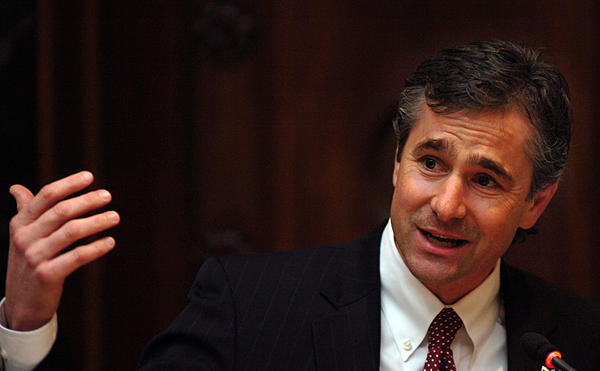
Kentucky House Majority Whip Chad McCoy sponsored HB9, which would provide a permanent funding mechanism for charter schools by allowing sate and local funding allocated to traditional district schools to follow students who enroll in a charter school.
An override of Gov. Andy Beshear’s veto Wednesday night could clear the way for charter schools to open in Kentucky, five years after they were made legal in the Bluegrass State.
The House voted 52-46 to send House Bill 9, sponsored by House Majority Whip Chad McCoy. The Senate later voted 22-15 to override Beshear's veto, making the measure law.
Kentucky is one of six states that allows its legislature to override a veto with a simple majority vote in both houses, which Republicans currently control.
HB 9 would provide a permanent funding mechanism for charter schools by allowing state and local funding allocated to district schools to follow the student if the student enrolls in a charter school.
It also provides charter school pilot programs in Louisville and northern Kentucky.
Lawmakers approved charter schools in 2017, but none have opened because no funding stream was approved. HB 9, sponsored by McCoy, R-Bardstown, was an attempt to remedy that.
McCoy said the locations for the pilots were chosen based on the greatest need. He agreed with a group of faith leaders who supported HB 9 and said, “we are failing the minority kids in the West End of Louisville when it comes to education."
“My hope is that if we run a pilot project, maybe we can get one there that show the rest of the state there’s nothing to be afraid of, these things are going on all over the country, and they’re not going to hurt public schools,” he said during a March 23 debate.
(You can listen to a reimaginEDonline podcast of McCoy talking about the successful override of Beshear’s veto of a 2021 bill that established an income-based education savings account program here.)
The override of HB 9 came nearly a week after Beshear announced his veto at a news conference.
“I’m against charter schools,” Beshear, a Democrat, told reporters as he fulfilled an earlier pledge to veto the bill, which initially passed both chambers by thin margins. Beshear called charter schools, which are publicly funded but privately operated, “wrong for our commonwealth.”
Echoing the criticisms of opponents and teachers’ unions, Beshear said, “they take taxpayer dollars away from already underfunded schools.” He added that the bill would likely be found unconstitutional if challenged in court.
The Network for Public Education, a national group that opposes charter schools, has promised to file a lawsuit. But supporters of charter schools and education choice praised the new law as a victory for families.
“We appreciate the legislators, who, with their vote finalizing the funding of public charter schools in the commonwealth, rejected the fearmongering displayed throughout this debate opponents of school choice,” the Bluegrass Institute said in a statement issued shortly after the vote.
“Kentucky’s parents will now have access to these innovative public schools just like families in 44 other states including our neighboring states —and the District of Columbia.”
Todd Ziebarth, senior vice president of advocacy and support for the National Alliance of Public Charter Schools, called equitable funding for charters “essential” and said, “We are thrilled that Kentucky is finally providing charter school students with the funding they deserve.”
According to the organization, charter schools serve underserved communities and do an exceptional job. Data show almost 70% of charter school students are students of color compared to about 53% of district school students.
A study by Stanford University’s Center for Research on Education Outcomes found that in urban charter schools, low-income Latino students gained 48 additional days in math and 25 additional days in reading per year, while low-income Black students gained 44 additional days in reading and 59 additional days in math per year.
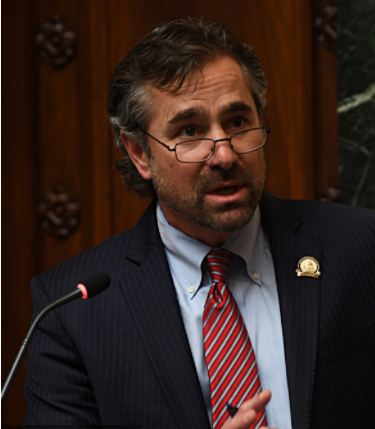
Kentucky House Majority Whip Chad McCoy presented House Bill 9, which would make changes to the appeal process if a charter school application is denied by a local school board. Kentucky's Republican-led legislature authorized charter schools in 2017 but none have been created because lawmakers did not provide a permanent funding mechanism.
Editor’s note: This article appeared Tuesday in U.S. News & World Report
After years of inaction, charter schools would gain a foothold in Kentucky and be supplied with a permanent funding stream under a bill that won passage Tuesday in the state House.
The bill calling for initial charter school openings cleared the House on a 51-46 vote after a nearly three-hour debate, on the same day the measure barely emerged from a House committee.
Twenty-two Republican lawmakers aligned with Democrats to oppose the proposal, but the measure mustered enough support to advance to the Senate. Republicans have supermajorities in both chambers. Only a handful of days are left to pass the bill in time to ensure lawmakers could take up a promised veto by Democratic Gov. Andy Beshear.
The bill had a bumpy journey through the House, reflecting the hot-button status of charter schools in the Bluegrass State. The measure was removed from one House committee and reassigned to the Education Committee, which underwent a couple of last-minute membership changes before the crucial vote that helped push the bill through committee.
Opponents put up a spirited fight in the full House. During the long debate, Democratic Rep. Angie Hatton said: “You can cut the tension in this room with a knife today.”
Kentucky's Republican-led legislature authorized charter schools in 2017 but none have been created because lawmakers did not provide a permanent funding mechanism. The new measure would set up a long-term funding method for charter schools. Public charters, like traditional public schools, would receive a mix of local and state tax support.
To continue reading, click here.

The Lexington School in Kentucky, one of 360 private schools in the state, prides itself on strong partnerships with families, small class sizes and qualified teachers.
Editor’s note: With this commentary, reimaginED welcomes its newest guest blogger, Garris Stroud, an educator, writer and education choice advocate from Greenville, Kentucky.
When Kentucky lawmakers made their successful push for education opportunity accounts (EOAs) in 2021, the Bluegrass State finally seemed poised to expand educational choice where there had once been none. But there was a catch.
Kentucky's EOA program would have provided tax credits to individuals who donated to state-approved account granting organizations. From there, the funds would flow to low-income and some middle-class families for various education expenses, including tutoring, extracurricular activities, and in some cases, non-public school tuition—but only for families in counties with more than 90,000 people.
EOAs have since been blocked in the Bluegrass State by a Franklin Circuit Court judge, though an appeal effort and possible Kentucky Supreme Court showdown are looming. But despite the program’s initial failure to launch, reinvigorated efforts from the Kentucky General Assembly could lead to greater choice for all of Kentucky’s families, including those in rural communities.
Choice for all families
Seeming confident that Kentucky’s EOA program will eventually get the green light, Sen. Ralph Alvarado and Rep. Josh Calloway have introduced new bills that would expand the program by raising the income eligibility cap and eliminating the population qualifier. This would lead to more families gaining access to the accounts, regardless of income or ZIP code.
“Instead of only helping students in the most populous counties, this bill gives students in every part of our state the chance to pick the right school, public or nonpublic,” Alvarado said in a recent news conference.
If successful, Kentucky’s revamped EOA program would help tackle a goal that few have tried and even fewer have accomplished: making school choice a kitchen table issue in rural communities.
The 90,000+ population cap featured in the 2021 legislation would have limited non-public school tuition to students in Jefferson and Fayette counties, areas where schooling options abound, at least compared to their rural counterparts. This shift, however, would ensure that educational opportunity is no longer an exclusively urban privilege.
It matters because every family, urban or rural, deserves an opportunity to provide their children with an excellent education. With the population cap lifted, families from every corner of the state could use these funds to enroll their children in the school they feel is the best fit, public or private.
Whether it be a single mom in Louisville looking to offset the cost of private school tuition, or a family in Eastern Kentucky seeking a different learning environment for their child across county lines, EOAs could help provide access to the funds that families need.
Will Kentucky’s EOA program withstand challenges?
These outcomes all depend on whether Kentucky's EOA program can withstand the legal challenges now embroiling it, meaning Kentucky families seeking access to those funds are at a standstill for the time being.
In the decision that voided Kentucky’s original EOA legislation, Franklin Circuit Court Judge Phillip Shepherd ruled that the pool of tax credits used for the accounts would violate the Kentucky Constitution, which argues that funds cannot be used for education purposes “other than in common schools until the question of taxation has been submitted to the legal voters.”
In other words, the ruling rests entirely on the notion that Kentucky’s EOA program would amount to public funds being used to support private schools. But supporters of the program say that isn’t the case.
The Institute for Justice is one such group, and its attorneys have argued that Shepherd’s ruling only makes sense if the pool of tax credits for the program came directly from state appropriations. But EOAs would not rely on such appropriations; the program would be funded by private donors who give donations in exchange for tax credits.
"Today’s ruling treats private donations as if they are government money," Institute for Justice attorney Joshua House said in a statement. "It holds that when private individuals donate their own money to education-related causes, and receive tax credits for those donations, it is in effect the government raising and spending money on education. That’s just wrong."
House’s argument may prove to be the backbone of the appeal effort, which school choice groups promise will soon be underway. From there, it would not be unexpected for the case to make it all the way to the Kentucky Supreme Court, setting up the ultimate showdown over school choice in the Bluegrass State.
But until that happens, the Kentucky Department of Revenue remains under an order to cease from the administration of all programs established by the bill, forcing families to play the waiting game yet again. When the time comes, let’s hope the decision puts students over politics and positions Kentucky children on the path to a brighter future.
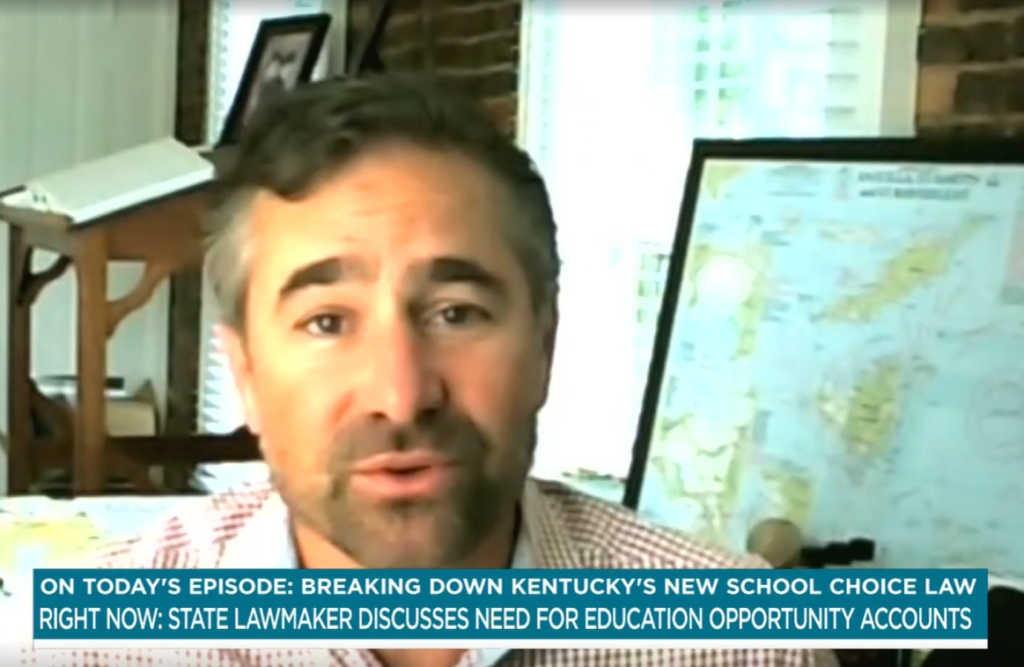 Earlier this year, Kentucky State Rep. Chad McCoy carried a landmark education choice bill creating a new tax credit funded program to passage and then participated in an override of a gubernatorial veto. The education choice win for McCoy’s state came at the end of a multi-year political struggle to create the Education Opportunity Scholarship program.
The legislation, HB 563, created a $25 million tax credit scholarship fund giving eligible families the ability to pay for private school tuition, tutoring and other educational expenses. The bill also gave families the option to chooses a different public school district.
Now, the new education bill is facing a court challenge from the Council for Better Education. The case is due back in court for a motions hearing in the coming weeks.
McCoy discussed the legal challenges of this legislation in an In Focus Kentucky segment. Here is an excerpt of his remarks:
Unfortunately, we've hit a point in our state's history where almost every law that we pass, especially when it's a law that has the opportunity to change the status quo, every one of them seems to end up in court … and it's kind of interesting, because you know, people want change.
Kentucky ranks, pick the number, pick the category, we're always at the bottom of every category. And yet we continue to only want to do what we've been doing, and that, you know, that's the definition of insanity … We've got to attempt to make the changes I think our constituents want.
This is something that when you talk to parents across the state, it doesn't matter if they've got an R or D behind their name, parents support school choice, and we've just got to keep pushing it, and the courts will do what the courts are going to do.
You can watch the full interview here.
You can watch a podcast of Step Up For Students president Doug Tuthill’s interview with McCoy here.

