
Sugarman
In 2002, in the Zelman case, the U.S. Supreme Court upheld the Cleveland school voucher program against a claim that the plan violates the “establishment clause” of the First Amendment to our national constitution. Simply put, the closely divided court concluded the Cleveland plan is part of a broader school choice scheme that in a number of ways gives families opportunities to select the schooling they believe is right for their children. That was understood to be the purpose and effect of the legislation and the fact that most of the vouchers were used at religious schools was beside the point. This decision shows a carefully constructed school voucher plan can survive a federal constitutional challenge.
Yet, voucher plans are still potentially illegal under state constitutional provisions that may be read by state courts to be more restrictive than the national constitution. States have very different provisions in their constitutions that voucher opponents cite in hopes of getting their state supreme courts to invalidate voucher plans. It is not possible to say what is the nationwide law on this issue because each state has its own separate constitution and because state supreme courts have in the past interpreted similar (or even identical) provisions of state constitutions in different ways.
This means that in every state where a school voucher plan is adopted there is likely to be a legal fight over its validity – as teachers’ unions, “separationists” who oppose anything they see as government aiding religion, and others who don’t like the voucher idea will go to court to try to win what they lost in the state legislature.
In March 2013, the Indiana Supreme Court, in the case of Meredith v. Pence, unanimously upheld the Indiana statewide school voucher plan against legal attacks in which opponents of the plan cited three different provisions of the Indiana state constitution. This was a big legal victory for supporters of the Indiana voucher plan, which at the time of the decision was serving about 9,000 students. (more…)
Editor's note: This post was written by Bert Gall, senior attorney with the Institute for Justice and the institute's lead attorney in the Indiana voucher case.

Gall
Yesterday, in Meredith v. Pence, the Indiana Supreme Court held that Indiana’s Choice Scholarship Program (CSP) does not violate the state constitution. By unanimously rejecting the legal claims brought by national and state teachers unions, the court ensured that the school voucher program - which provides publicly funded scholarships that low-and middle-income families can use to send their children to private schools or out-of-district public schools - will survive. Indeed, because about 62 percent of Indiana families are eligible to receive the school vouchers, the legal path is now clear for the CPS to become the largest school-choice program in the country.
That’s great news, not just for Indiana parents, but for all parents in every state who are clamoring for school choice so they can provide their children with a quality education. This is because the unions’ legal claims focused on two types of constitutional provisions that are common in most other state constitutions: 1) provisions requiring that states provide a “general and uniform” system of public education; and 2) provisions forbidding state support of religion.
The unions principally rely upon these two types of provisions when they challenge school choice programs. But unfortunately for them, state courts - particularly those that have yet to apply their provisions to school-choice programs - will now look to the Indiana Supreme Court’s decision for guidance when evaluating claims brought under those provisions. Fortunately for advocates of school choice, that guidance is both persuasive and intellectually sound.
First, the court showed that the duty to provide a “general and uniform” system of public schools is not violated when a state provides educational options above and beyond that system. Significantly, the court refused to adopt the Florida Supreme Court’s terribly flawed decision in Bush v. Holmes, a 2006 case which held that Florida’s analogous provision only allows educational funds to be spent on public schools. Just as they did in Indiana, teachers unions are attempting to export the holding of that decision (in which the Florida Supreme Court ignored both the plain language of its provision and misapplied basic canons of statutory construction) to other states with similar provisions. That task just got a lot harder: Holmes was already considered a flawed decision and a legal outlier, but today’s decision further marginalizes it. (more…)
From the Indianapolis Star:
Public tax dollars may be used to fund private school tuition under Indiana's school voucher program, the state Supreme Court unanimously ruled today.
"We hold that the Indiana school voucher program, the choice scholarship program, is within the legislature's power under Article 8, Section 1, and that the enacted program does not violate either Section 4 or Section 6 of Article 1 of the Indiana Constitution," the justices wrote in the 5-0 decision.
The ruling, on a teachers union-supported lawsuit from 2011, ends the legal challenge to the school voucher program at the state level. The case could be made again in federal court. But in 2002 the U.S. Supreme Court upheld a similar program in Ohio, making any further appeal a long shot.
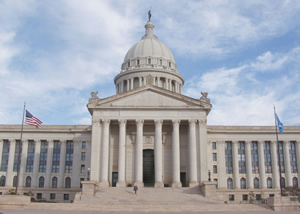 Oklahoma: The state supreme court tosses out a lawsuit challenging a voucher program for special needs students, saying the two school districts that filed suit did not have standing (The Oklahoman).
Indiana: The state supreme court hears arguments over the constitutionality of the state's fledgling voucher program (Indianapolis Star). Enrollment in the state's voucher program skyrockets in year two (Huffington Post).
Colorado: The Colorado State Court of Appeals hears the appeal over the Douglas County voucher program (Denver Post).
Louisiana: The state's voucher program heads to court this week (thetowntalk.com).
Georgia: In the wake of election victories, school choice supporters aim to expand the state's tax credit scholarship program (Atlanta Journal Constitution).
Florida: Incoming House Speaker Will Weatherford creates a new school choice and innovation committee to ensure choice issues don't get lost in the general education discussion (redefinED). (more…)

