State of the State. Gov. Rick Scott gives props to teachers and pushes for a boost in ed funding. Coverage from Gradebook, Tampa Bay Times, Orlando Sentinel, SchoolZone, Palm Beach Post, Gainesville Sun, Tallahassee Democrat, The Florida Current, StateImpact Florida. A special spotlight for a Temple Terrace teacher, reports the Times/Herald Capital Bureau.
 More on the legislative session. An education issue overview from StateImpact Florida. A roundup of school choice bills from redefinED.
Virtual schools. Pasco drops a challenge to a proposed Florida Virtual Academy charter. Tampa Bay Times.
McKay vouchers. Another reason Texas should adopt them. EdFly Blog.
AP tests. Should Florida students get paid for passing them? Gradebook.
School spending. The Brevard school board revises its $30 million list of cuts in response to community input, reports Florida Today. The Flagler school board moves towards putting a tax referendum on the ballot for next spring, reports the Daytona Beach News Journal. An audit committee in Manatee sees progress in how the district is responding to budget errors that led to a $3.4 million deficit, reports the Bradenton Herald. More from the Sarasota Herald Tribune. (more…)
Tax credit scholarships. Tampa Bay Times columnist Robyn Blumner doesn't like U.S. Sen. Marco Rubio's proposal for federal scholarships.
 Charter schools. Tampa Bay Times columnist John Romano bemoans the number of charter schools that close because of low enrollment (but curiously doesn't mention traditional public schools that don't get closed despite the same problem). The Cape Coral City Council will consider a resolution asking the Lee County School Board to share capital funding with the city's charter schools, reports the Cape Coral Daily Breeze. More from the Fort Myers News Press.
Virtual schools. Expanding digital education is a top issue in the coming legislative session. The Florida Current.
Jeb Bush. In education, "he has a record of making messes," the Palm Beach Post editorializes (just days after two more credible, independent reports find Florida students leading the country in progress).
Parental engagement. Duval Superintendent Nikolai Vitti wants to import a Parents Academy program similar to one he worked with in Miami-Dade. Florida Times Union.
Education leadership. The Sarasota Herald-Tribune profiles Sen. Bill Galvano, R-Bradenton, the chair of the Senate Education Appropriations Subcommittee.
Teacher evaluations. The first year of statewide teacher evaluation data using the complicated the VAM formula shows the big difference in progress for students with the highest-rated teachers versus the lowest-rated teachers. StateImpact Florida.
Teacher testimony. Megan Allen, Florida's 2010 Teacher of the Year, testifies movingly before Congress about the impact that budget cuts will have on high-needs students. Answer Sheet. (more…)
Charter schools. An Orange County charter that served dyslexic students is closing after seven months because of financial problems, reports the Orlando Sentinel. The parents of a charter in Miami-Dade are in limbo after a church decides unexpectedly to end the school's lease, reports the Miami Herald.
Virtual charter schools. In a repeat of last year, the charter school appeals commission sides with the Orange and Seminole school boards in their rejection of applications for Florida Virtual Academy schools. The state Board of Education will make the final call. SchoolZone.
Parent trigger. Two civil rights groups in Florida, LULAC and the NAACP, are opposed. StateImpact Florida.
Magnet schools. Parents plead with the St. Lucie County School Board to not close an arts magnet because of budget cuts, reports TCPalm.com. A new elementary school arts academy is in the works in Okaloosa, reports the Northwest Florida Daily News.
Career and technical. A bill filed by Sen. John Legg, R-Port Richey, would allow students to substitute industry certifications for other graduation requirements, reports Gradebook. More from the Orlando Sentinel. The Pinellas school district plans to create several new career academies for middle schools and put STEM labs in every elementary school in an effort to boost career education, reports the Tampa Bay Times. River Ridge Middle School in Pasco is realigning its curriculum to better reflect career education, the Times also reports. (more…)
I am grateful to Rebecca Sibilia and Sean Gill for their thoughtful response to my blog post encouraging Michelle Rhee to replace her failing schools model of school choice with an approach based on equal opportunity.
Rebecca and Sean defended StudentsFirst’s support of the failing schools model on pragmatic grounds. They wrote: “When state resources are limited or the existing supply of desirable private schools is limited, it also makes sense to prioritize vouchers or scholarships for those low-income children attending a low-performing school or living in low-performing school districts.”
Every community suffers from an insufficient supply of effective schools for low-income students. But in Florida we’ve learned that increasing demand - not limiting demand - is the best way to increase supply.
Access to Florida’s tax credit scholarship program for low-income students, which I help administer, is limited by a state-imposed cap. But our demand is not limited, so it often exceeds supply. This excess demand has not had a negative effect on students or the program. Instead, it has generated political pressure on the state Legislature to allow our cap to rise to meet this additional demand.
In 2010, as a result of excessive demand, the Florida Legislature voted to allow our program to grow 25 percent every year the demand hits or exceeds 90 percent of supply. The result has been extraordinary growth of supply and demand. While we have been awarding scholarships since 2002, 34 percent of our growth has occurred in just the last two years. This school year we added 10,000 more students to the program and had more than 12,000 students add their names to our waiting list after we hit our cap.
We’ve also been adding about 100 new private schools per year to the program, and some have started to expand their physical capacity to serve more students. Had we adopted the StudentsFirst approach of limiting demand when faced with limited supply, this extraordinary growth would not have occurred.
Today, more than 43 percent of Florida’s preK-12 students attend a school other than their assigned district school. Charter schools, magnet schools, virtual schools, career academies, dual enrollment and homeschooling are all growing dramatically. Private schools are already struggling to maintain their market share given all these choices. If we were to limit our scholarships to low-income students in state-designated failing schools, then many private schools serving low-income students might be forced to close - to everyone’s detriment. (more…)
Editor’s note: As we reported last night, Florida Education Commissioner Tony Bennett made newsworthy comments yesterday when he spoke at an all-boys magnet school in Tampa. He suggested school choice wasn't a matter of public vs. private, and credited Florida school districts – Hillsborough’s in particular - for expanding magnets, career academies and other quality choice options. Here are his full remarks, edited slightly for length and clarity.
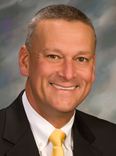
Bennett
The overview I want to give you about Florida’s choice framework is one that is, in my opinion, a true blueprint for our country. And I want to take you on this little journey. So just bear with me for a moment.
For many years, we said choice was about competition in education. And competition will raise all tides, right? The rising tide of competition will raise all the boats. And I can tell you, Florida has kind of changed that discussion. Again, being from Indiana, being from a state that tried and worked very hard to champion very similar policies, while competition in the educational system is good, the issue of choice here in Florida personifies the importance you put on what I believe to be the most important social justice issue in education. And by that, I want to do a little scenario.
If my wife and I didn’t have grown children, and in December when I was appointed, we would have gotten in our car, we would have driven to Tallahassee, and we would have driven around the community of Tallahassee, and we would have found the school that works best for the Bennett children. And the reason we could do that is frankly we could afford to. We could afford to live anywhere we wanted, send our kids to the school that we thought best fit their needs ...
And my point in this is, Florida is leading the discussion that all parents, regardless of the color of their skin or regardless of how much money they have, should have the same choice as Tony Bennett or MaryEllen (Elia, the Hillsborough superintendent). And that is a very different discussion in choice. And it is a discussion that I see is transcending what I believe can be really the first round of choice. And the first round of choice was frankly privates and charters against the public schools. Virtual schools against the traditional bricks-and-mortar buildings.
And I think MaryEllen in Hillsborough is an example of how we have taken that discussion in a completely different direction. Because this school (Franklin Middle Magnet and its Boys Preparatory Academy) provides a choice for children. This district provides a culture and a climate where choice is accepted and encouraged, and the opportunity that all children should have the same choices that Tony or MaryEllen have. They live that way.
So we’re now talking about choice – not just private schools and charter schools and virtual schools – we’re talking about public school choice. We’re talking about creative leaders like MaryEllen, like the team here, creating educational opportunities for children within the district. And really going to what we all heard was the purpose of choice to begin with, to provide incubation for innovation for our public schools. So I am very encouraged. (more…)
 It’s only fitting: Florida, a trailblazer in expanding school choice, will be among the busiest states during National School Choice Week.
This year’s celebration, which officially begins Sunday, is by far the largest ever, with more than 3,500 events in 50 states, up from 406 last year. Florida has at least 134 events on the schedule.
One of the highlights will be here in Tampa - a panel discussion featuring two nationally recognized education leaders. One is new Education Commissioner Tony Bennett. The other is MaryEllen Elia, superintendent of Hillsborough County Public Schools, the third largest school district in Florida and eighth largest in the country.
The pair will join other panelists representing the charter, magnet, private, virtual and home-schooling sectors. The event is set for Tuesday at 3:30 p.m., at the Boys Preparatory Academy at Franklin Middle Magnet School, one of the state’s first single-gendered public middle schools.
Other speakers include selected students, parents and teachers who will talk about the need to provide all children with more access to educational options. The event is sponsored by the Florida Alliance for Choices in Education, a group of school choice advocates that includes Step Up For Students, the nonprofit that oversees Florida’s tax credit scholarship program and co-hosts this blog.
Organizers are calling this year’s National School Choice Week “the world’s largest celebration of education reform.” The idea behind it is to raise awareness about the value of school choice, the need for more of it and the broad coalition that backs it.
“A quality education can be the ticket to the American dream for children across America,” Andrew Campanella, president of National School Choice Week, said in a prepared statement. “We must fight to ensure that every child has the ability to go to a great school.”
Editor's note: Step Up For Students president Doug Tuthill wrote the following letter, which was published this morning in the Tampa Bay Times. It's in response to this Times editorial about testing for students in Florida's tax credit scholarship program and recent comments from Gov. Rick Scott. Some recent news stories have also suggested that testing for scholarship students is limited or nonexistent.
 Florida's public education system is so rich with learning options that last year 1.3 million students chose something other than their assigned neighborhood school. So the debate about how best to hold these diverse programs accountable for student progress is important.
Unfortunately, the manner in which the Times questioned testing for one of those programs — a Tax Credit Scholarship for low-income students — was incomplete and misleading. While it is true scholarship students are not required to take the FCAT, that doesn't mean the test most of them take annually, the Stanford Achievement, is irrelevant. This test is considered the gold standard in national exams, and has now been administered for six years with two consistent findings: 1) The students choosing the scholarship were the lowest performers in their district schools; and 2) They are achieving the same test gains in reading and math as students of all incomes nationally.
The expansion of options such as magnet programs, charter schools, virtual schools and scholarships for low-income children strengthens public education. These options all undergo rigorous academic evaluation, and the new national Common Core standards will hopefully make comparative evaluations even easier for parents and the public.
The Florida Department of Education just released the last batch of applications for state education commissioner, including Tony Bennett's.
In his cover letter to Board of Education Chairman Gary Chartrand, dated Nov. 29, Bennett notes his work in Indiana and says he would welcome the opportunity to continue in Florida. "Your state was the leader in starting this movement of making decisions based solely on kids," he writes, "and I would like to take Florida to the next level."
Bennett's resume highlights a long list of initiatives in the Hoosier State, including a number related to parental school choice. The statewide voucher program has garnered the most attention, but Bennett notes progress in other sectors, too: "Successfully defended against caps on the number of charter schools, implemented a virtual voucher pilot program and ushered the program from pilot to full implementation, and proposed and developed the Indiana Charter Board - all while bringing accountability to charter schools in the form of A through F grades."
 Oldest African-American school in Florida. St. Peter Claver Catholic School in Tampa is profiled by Fox 13 in Tampa. Many students attend with tax-credit scholarships.
A different take on charter school payout controversy. Red flags should have prompted more oversight from the Orange County school district, writes Adam Emerson at the Choice Words blog after doing some independent reporting.
Informing or advocating? Some question whether Volusia Superintendent Margaret Smith crossed the line in “informing” voters with automated phone calls about an upcoming tax referendum, reports the Daytona Beach New Journal.
Task force looking at tax hike. From The Florida Current: “A task force looking at construction needs of public schools is finalizing a proposal for a half mill property tax increase with the money split between traditional schools and charter schools.”
Virtual settlement. From the News Service of Florida (subscription required): “Days before an appeals court was set to hear arguments, the Duval County School Board and backers of a proposed virtual charter school have agreed to settle a legal dispute about approval of the school, an attorney said Thursday."
Amendment 8 debate. Video at the Naples Daily News. Featuring Jim Towey, Ave Maria University president, and Howard Simon, Florida ACLU executive director. The Naples Daily News also runs this op-ed in favor of 8.
Drug-sniffing dogs. The U.S. Supreme Court considers arguments in two cases, including one in Florida, with potential implications for the use of drug-sniffing dogs in public schools, reports Education Week.
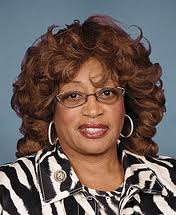
U.S. Rep. Brown
Request for investigation. U.S. Rep. Corrine Brown, D-Jacksonville, wants an investigation of online education provider K12, reports StateImpact Florida.
Online growth. Lake County appoints its first virtual school principal, reports the Orlando Sentinel.
Growth in tax credit scholarships. From redefinED (with speadsheet showing district-by-district growth over the past eight years). From Gradebook.
Vouchers and the Florida Supreme Court. Critics of the three justices up for a merit retention vote say their 2006 ruling on vouchers is evidence of liberal judicial activism, the Washington Post reports in a broader story about the campaign against the justices.

