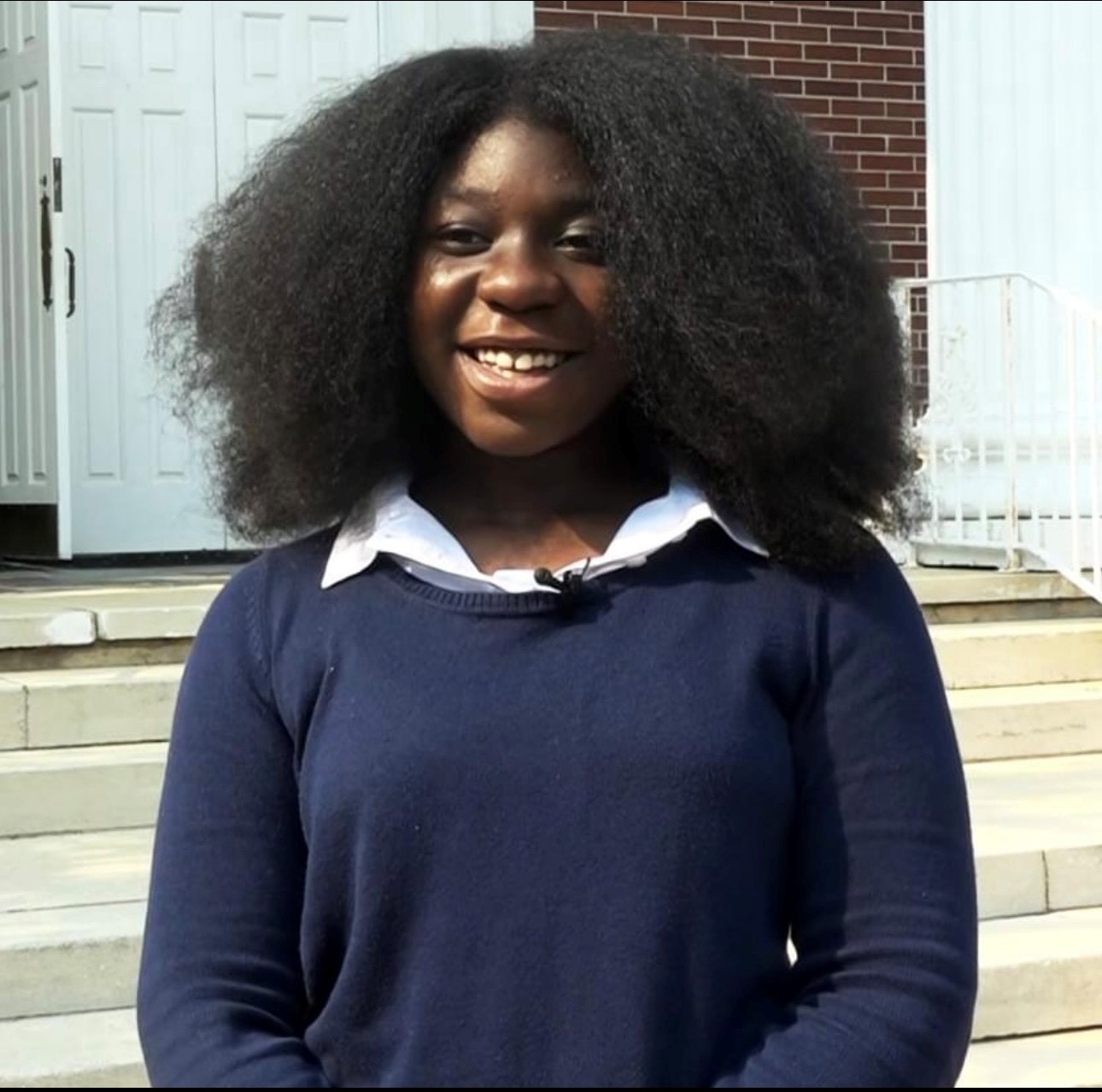
 It’s halfway through summer vacation, and 12-year-old E’leese Shelton is bored.
When you breeze through elementary and middle school and graduate high school before becoming a teenager, learning is your thing.
So, the trip earlier this summer to North Carolina was nice. The family visited High Shoals Falls and escaped the Florida Panhandle heat. But, given her choice, E’leese would rather be reading, writing, and learning.
“I want to go to school,” E’leese said.
She can’t. Mom’s rule.
E’leese, who lives with her family in Tallahassee, wanted to begin her next chapter early with summer classes at Tallahassee State College (TSC), but her mom, Danrell Shelton, said no.
“I said, ‘You're gonna rest the whole summer and then pick it up in the fall. So, I'm gonna step in at this time because I don't need you to get in college and burn out. No, we're gonna take a break,’ ” Danrell told the younger of her two children back in the spring.
So E’leese is counting the days until Aug. 19 when the fall semester begins at TSC. It’s the first step toward her goal of becoming a pediatrician. After TSC, E’leese intends to enroll at Florida State University (FSU) and major in chemistry.
“I can’t wait,” she said.
E’leese graduated in May from Tallavana Christian School, a private PreK-12 school in Havana. She attended the school with the help of a Florida Tax Credit Scholarship, made possible by corporate donations to Step Up For Students.
“It’s a great scholarship,” Danrell said. “It was a great help for her and us financially, paying for her schooling so she could keep going.”
Not surprisingly, a 12-year-old who graduates high school garners a lot of attention, but E’leese doesn’t think she has accomplished anything special.
“I don’t,” she said. “I see it as I just finished high school, and now I’m going to college. Like it’s regular.”
When E’leese was 2, Danrell bought her a LeapFrog tablet. It wasn’t long before Danrell realized E’leese was teaching herself. She was reading by that age and within two years, E’leese could handle basic math. She skipped kindergarten and first grade. She began freshman high school courses when she was 9.
“When she was in second grade, she was doing third-grade work,” Danrell said. “When she was in third grade, she was doing fourth-grade work.”
And so on.
This is nothing new for Danrell and Fred Shelton’s children. E’leese’s older brother, E’ven, who attended private and district schools, graduated high school at 15. He graduated in May from FSU with a degree in anatomy. He is headed to Tulane University in New Orleans, where he will begin medical school.
Darnell stressed both of her children were more than willing to push themselves beyond their grade year.
“I’d ask, ‘Is this too hard? Are you OK with this?’ And they were like, ‘Yeah, we’re fine with this,’ ” she said. “And they would get on a computer and do the work themselves. We barely had to check homework. We just checked for grades.”
That’s what E’leese’s parents stressed to the administrators and teachers as E’leese leapfrogged her way through Tallavana Christian. Don’t focus on her grade. Focus on her grades.
Ebony Townsend, Tallavana Christian’s principal, was E’leese’s third-grade teacher. Because E’leese was so young, Townsend said she lacked basic third-grade skills, like tying her shoes, coloring inside the lines, and penmanship.
“But the academics, she was on point every single time and made A's throughout,” Townsend said.
E’leese worked to catch up to her classmates in those non-academic areas while surpassing them scholastically.
“Her focus and dedication are different from other children,” Townsend said. “She set forth a goal, and she wanted to reach it. And at the same time, she has really supportive parents and because of their support, you know, she was able to be successful.
“When she said, ‘This is what she wanted to do,’ they said that they were going to support it 100% She had motivation from her own brother who graduated early from school. So since he graduated early, she wanted to beat him. She has a competitive spirit about her.”
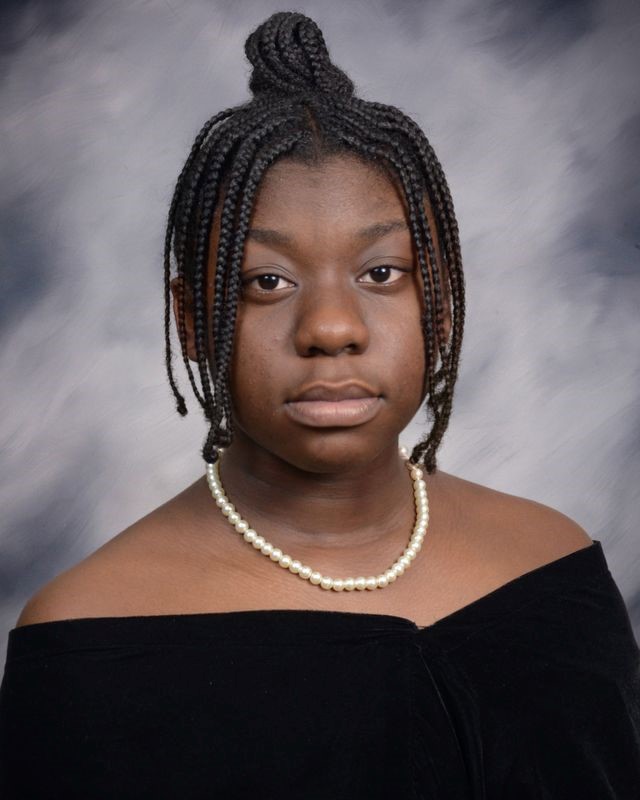
E’leese said the first time she gave any thought to her age in regard to what grade she was in happened when she was 9.
“That’s when my mom said I was starting high school classes, and then I guess I did the math,” she said.
The math said E’leese, who turns 13 in September, would enter college before she became a teenager.
“I was like, ‘Oh, give me that,’ ” she said. “I just started taking those classes, and I was like, ‘Yes. Pretty cool.’ ”
Danrell said E’leese is mature for her age, which is one reason why she was able to handle sitting in classrooms with classmates who are four or five years older.
“She’s a people person, older, younger, anybody,” Danrell said. “Her maturity level is way up there.”
E’leese admitted it was awkward at first.
“But then they just kind of treated me like I was 18 years old, like I was just like them, one of the friends or something like that,” she said.
She doesn’t expect to be intimidated when she walks into her first classes at TSC.
“I'm a little nervous, but I'm excited to basically have the college experience,” she said.
Townsend believes E’leese’s academic success will continue at TSC and beyond.
“I definitely expect a lot from her in the future,” Townsend said. “And she can do anything she puts her mind to.
As for her career plans, E’leese has wanted to be a pediatrician since, not surprisingly, a young age.
“I would go to my doctor, a pediatrician, and we would talk a lot,” she said. “One day he told me I could shadow him, and I thought that was a pretty cool idea, and from then on I wanted to be a pediatrician.”
When did that conversation take place?
“I think,” E’leese said, “I was like 3.
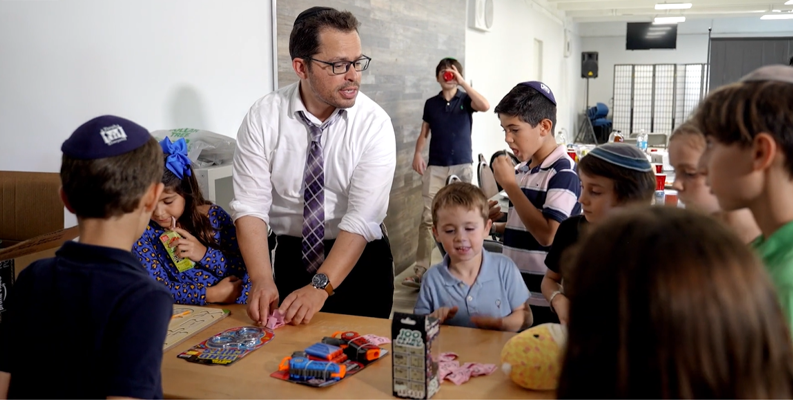
Educator and entrepreneur Rabbi Isaac Melnick, with support from The Drexel Fund, will open a new elementary school that is an outgrowth of more than two decades of strong secular and Jewish education leadership.
Rabbi Isaac Melnick thinks learning should be fun. As a young teacher in a Hebrew dual-language charter school in South Florida, he ran a lively after-school program that taught Torah to students who wanted to receive Judaic instruction. He called the program Torah 4 Everyone. He also ran Camp Cooluna, a summer camp that offered water slides, crafts and costumes alongside instruction in Jewish scriptures.
When the after-school program was forced to go all virtual during the pandemic, Melnick didn’t miss a beat. He started Jewish American Zoom, which offered Judaic teaching in an atmosphere of entertainment, wacky competitions and prizes that included Amazon gift cards and massive Hershey’s Kisses.
The program, which Melnick called JAZ, was such a hit that some kids lamented it only operated Monday through Thursday.
Now, with more than a decade of experience launching and managing extra-curricular programs, Melnick wants to open a full-fledged Jewish day school. Shorashim Academy is slated to open for the 2023-24 school year in the Hallandale, Florida area.
He’s garnered support from The Drexel Fund, a national philanthropic nonprofit that aids entrepreneurs who want to start private schools that offer greater access to underserved populations and have the potential for replication.
Melnick was recently accepted into the organization’s Founders Program, which is providing him with a year’s salary as well as an opportunity to obtain seed money for startup costs. The fellowship program also offers training on such topics as school governance and budgeting.
As a fellow, Melnick will visit high-performing schools across the country and work with mentors who will help him develop a business plan for the new school.
Melnick and his school were a natural fit for the program according to Eric Oglesbee, director of Drexel’s founder’s program and a Drexel alum who founded River Montessori High School in Indiana.
“At the Drexel Fund, we are attracted to entrepreneurs with a clear and compelling vision for serving underserved populations in their local communities,” Oglesbee said. “Additionally, we are focused on supporting the development of financially sustainable, replicable models that from first principles are likely to produce outstanding academic results and deep character formation.”
What makes Melnick’s vision compelling, Oglesbee said, is his passion paired with his expertise and connections.
“We felt what he needed from us was the opportunity to have an entire year where he could devote 100 percent of his energies toward opening Shorashim Academy and to engage in a customized learning plan with a cohort of other first-time school founders to help him have a strong launch into a sustainable school,” Oglesbee said.
One unique feature of Shorashim Academy is that it will cater to a Jewish population that is more casually observant than those who attend the rapidly growing surrounding day schools in South Florida, which are primarily Orthodox.
“They may celebrate major holidays like Yom Kippur and Passover,” Melnick said. “They may have special meals and traditions and observe some form of Shabbat and occasionally visit the synagogue,” but their lives look more like the surrounding secular culture.
Melnick explained his target families fall into two groups: low-income families for whom a private education is financially unthinkable and middle-income families for whom private school might be possible but would require extreme sacrifices that would force them to forgo vacations and other aspects of a typical middle-class lifestyle.
“These are people who otherwise would not send their children to Jewish day schools,” he said.
Despite the challenges, members of the Orthodox community are required to provide their kids with a Jewish education regardless of the cost.
“I would sell my house,” said Melnick, a husband and father of four who is Orthodox. “Not all families are willing to do that.”
Melnick says Shorashim Academy is needed because Jewish students who don’t attend Jewish schools are at risk of losing their connections to their Jewish identity and Israeli heritage when they become adults. He’s seen that happen to former students from the non-religious Hebrew language charter school who attended his after-school Judaic program.
“Some of these kids are in their 20s, and they are struggling with it,” he said.
That’s why he believes an immersion program is critical. The academy’s name – Shorashim, from the Hebrew word for roots – reflects its purpose.
The school will initially be open to about 30 first and second graders. More grades will be added each year until the school serves students in preschool through 12th grade.
Upper grades are part of the long-range plan, which Melnick expects will take 12 to 15 years to implement.
Each day will begin and end with prayer. Two periods will focus on religious instruction, including fostering of an awareness and appreciation of Israeli culture, with the rest used for academics. Melnick hopes to offer evening Judaic classes for parents.
To make the school accessible to students regardless of income, Melnick plans to accept state K-12 education choice scholarships. He said the Florida Legislature’s recent expansion of state scholarship programs has placed private education within financial reach of more families.
As an example, Melnick explained that a family of six like his can qualify with a household income of up to $148,600. (Step Up For Students, which hosts this blog, manages state K-12 scholarship programs. You can find out more about scholarship programs and the latest eligibility rules here.)
“We’re very grateful for the scholarship program,” he said. “I’m very impressed with how powerful these scholarships are.”
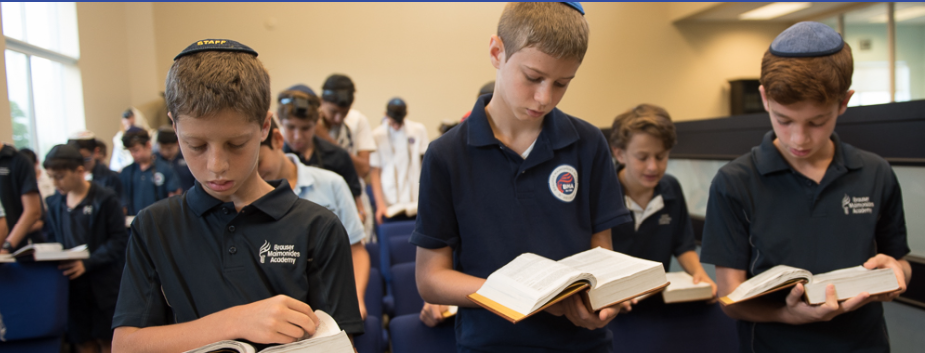
About 28% of students at Brauser Maimonides Academy, a Fort Lauderdale Modern Orthodox school, attend on state scholarships.
Editor’s note: This commentary from William Mattox, director of the Marshall Center for Educational Options at The James Madison Institute in Tallahassee and a reimaginED guest blogger, appeared Tuesday on Florida Politics. It was excerpted from a new JMI report presented this week at an international conference in Ireland.
You can read more on this subject here. from reimaginED senior writer Lisa Buie.
An exodus is underway from New York City and its surrounding environs. Many Jews are leaving the Big Apple and moving to the Sunshine State.
And their migration to Florida — America’s Promised Land — is being fueled in part by a very interesting factor: school choice.
“Many young families up north are enticed by Florida’s robust menu of state-supported private-school scholarships,” writes Allan Jacob in the Wall Street Journal. “These programs make private school tuition far more affordable in Florida than in New York and New Jersey.”
Now, at first blush, this “education migration” might seem like a peculiar phenomenon without any relevance beyond a relatively small subpopulation. But there is reason to believe that something much more significant is happening here.
There is reason to believe we are witnessing the beginning of a “new normal” in which many education-minded families move to freedom-loving states that facilitate parents’ efforts to direct the education of their children.
In this new normal, Florida could easily become America’s unrivaled “education destination,” and enjoy the short- and long-term benefits of attracting education-minded parents (and their talented offspring) to the Sunshine State.
To continue reading, click here.
 The Orlando Sentinel recently published a blog entry about a new website that opposes students using publicly-funded vouchers to attend private schools that teach creationism. The site asserts, “Teaching creationism with public money is unconstitutional. It violates the First Amendment of the U.S. Constitution which lays out a clear separation of church and state.”
I’m fine with citizens opposing the teaching of creationism. I would not send my child to a school that taught creationism in lieu of evolution, but the assertion that it’s unconstitutional is false.
In the 1925 Pierce v. Society of Sisters decision, the U.S. Supreme Court ruled parents are responsible for determining how and what their children are taught. And in the 2002 Zelman v. Simmons-Harris decision, the court ruled parents may use public money to pay for tuition at faith-based schools provided their choice is genuinely independent, and the funds go first to the parents and then to the school.
Florida’s school voucher programs all adhere to the Zelman requirement that funds go first to the parent and then the school, which is why using publicly-funded vouchers to attend faith-based schools is an exercise of the First Amendment’s freedom of religion clause, and not a violation of the Establishment Clause. (By the way, the term “separation of church and state” does not appear in the U.S. Constitution. That phrase was used by President Thomas Jefferson in a January 1, 1802 letter he wrote to the Danbury Baptist Association of Connecticut, reassuring them that he opposed the government interfering with their religious practices.)
The Sentinel wrote that some state officials think tax credit scholarships are more constitutional than vouchers because tax credit funds never touch the state treasury, but, again, the key to the Zelman decision is the path the funds travel to arrive at a faith-based school. Once public funds are given to the parents, they become less public and more private, which is why their expenditure is an exercise of religious freedom and not government-supported religion. (more…)
Editor’s note: Every month, Step Up For Students - which co-hosts this blog - profiles a family that benefits from Florida’s tax credit scholarship program. Here's the latest:

Anastasia
Vivian Calhoun is raising a princess. She didn’t plan on it, but it’s working out just fine.
She gets to give and receive lots of hugs and kisses from her 6-year-old great-granddaughter, Anastasia, who came into the world to parents who couldn’t take care of her. But with Vivian’s help, the young girl is living much more of a fairy tale than was ever expected.
“She thinks she’s a princess,” Vivian said with a chuckle. “If you ask, she’ll tell you she’s royalty.”
Anastasia’s mother wasn’t able to care for her and her father has never really been a part of her life, Vivian said. And Anastasia’s grandmother, Vivian’s daughter, had problems of her own, so the great-grandmother did the only thing she could: Become Anastasia’s guardian and only true parental figure.
“It was an easy decision,” Vivian said.
Still, Vivian, 68 and a widow after 35 years of marriage, lives on her disability checks. She had to retire from working as a manager for staffing company because back surgery left her with permanent nerve damage. She gets less than $200 monthly from the state to help with Anastasia and does all she can to make the money stretch, she said. But seeing the effects of drugs and violence up close with loved ones, she wanted to ensure that Anastasia had a safe learning environment, and received individualized attention in smaller classrooms in a place that could instill similar values as Vivian was trying to teach at home. She also wanted Anastasia to feel like people at school were an extension of her family.
Vivian yearned to send Anastasia to a local private school that matched these needs, but she didn’t have the financial means until a neighbor told her about Step Up For Students, Florida’s Tax Credit Scholarship Program that helps send low-income Florida students to private K-12 schools or out-of-district public schools.
During the 2011-12 school year, Anastasia started kindergarten at Christ’s Church Academy, formerly called Mandarin Christian School, in Jacksonville and is now 6 and in the first grade.
“Everybody is just so wonderful. It’s been smooth sailing,” Vivian said of the school and Anastasia’s adjustment to school life. “She’s so happy and doing so well.”
Anastasia loves CCA so much, her great grandmother said, that she doesn’t like school vacations and early dismissal days.
“She doesn’t want to leave the school, and that tells me a lot about the school,” Vivian said. (more…)
Editor's note: Every month, Step Up For Students profiles a family that benefits from Florida's tax credit scholarship program. This month it's the Jenkins family of Tampa.
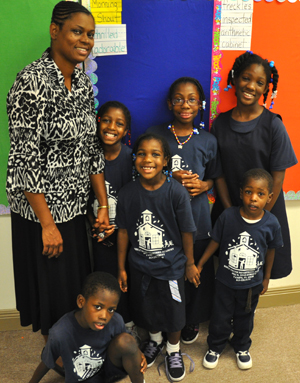
Sharla Jenkins and her family at school.
Sharla and Donald Jenkins are raising six children, but less than a year ago, they were parents of two.
After relatives wound up in a personal crisis, Sharla and Donald became guardians to their three nieces and nephew. With all of the children ages 9 and under, including one active 3-year-old boy, her life is busier than ever– and the family’s home is louder for sure.
On Oct. 18, the courts finalized the arrangement. Sharla and Donald are now permanent legal guardians to their nieces and nephew, but would love to one day take it a step further and adopt the children. In the meantime, the new additions to the family are treated like they have always been a part of the Jenkins’ clan. For Sharla, that meant providing all the school-aged children with an education that she felt suited the children best.
All five are now Step Up For Students scholars attending Bible Truth Ministries Academy in Tampa, a small private school serving pre-K through eighth grade children. Even Demarcus, the 3-year-old, attends preschool there.
“There was no way I could afford to send them to private school,” said Sharla, who is a full-time volunteer at the school where she teaches and even fills in for the principal when she’s away. Her husband’s income supports the now large family.
The couple’s biological children, Sarah, 9, and Elijah, 7, have been attending Bible Truth since they were in preschool. And it was important to them that their nieces and nephew got the same education.
“It’s a more personal environment of say being in a classroom with 35 kids,” Sharla said, adding that the average classroom size at Bible Truth is 16 students. “The teachers know how to better help them.”
The second part, she said, was especially important with the new youngsters who now share her home. (more…)
Editor's note: This op-ed ran in today's Orlando Sentinel.
This photo is from the St. Andrew Catholic School website.
Florida allocates five different scholarships from prekindergarten to college that allow students to attend faith-based schools. They don't violate the U.S. Constitution because students choose, and government doesn't coerce.
Both factors were why, in 2002, the U.S. Supreme Court ruled that a Cleveland school voucher did not violate the Establishment Clause, even as 96 percent of the students chose faith-based schools. To the court, in the landmark Zelman v. Simmons-Harris case, the program met three critical standards that also apply to Florida: The primary objective is education; students can choose among secular and sectarian schools; and parents exercise an independent choice that is not steered by government.
The article "Many church schools get tax cash" in Sunday's Orlando Sentinel did not mention the Zelman case or that the Florida Supreme Court specifically avoided religion in 2006, when it overturned the private-school portion of the Opportunity Scholarship program. Consequently, readers might have thought that these programs are constitutionally suspect, when they are not.
The tax-credit scholarship is one of Florida's five scholarships. It strives to give low-income students access to the same learning options now available to more affluent families, via a $4,335 scholarship. This program complements other choice programs, such as magnet and charter schools, and is built on the truism that students learn in different ways. Last year, parents placed more than 1.2 million public-education students in schools other than their assigned district school.
In this new world of customized learning, encouraging differentiated instruction while maintaining quality control is a challenge. The tax-credit scholarship does this, in part, by requiring nationally norm-referenced tests that show these students are achieving the same gains in reading and math as students of all income levels. (more…)

