For their project, Gussie Lorenzo-Luaces and three classmates at Deer Park Elementary in Tampa, Fla., wanted to find out what kind of paper allows a paper airplane to fly the farthest. After five trial runs, they determined copy paper, with its smooth surface and stable weight, worked best.

Gussie Lorenzo-Luaces, a third-grader at Deer Park Elementary School in Tampa, was one of more than 2,000 students participating in the 33rd annual Hillsborough Regional STEM Fair last week.
The boys’ exhibit was among more than 1,800 presented at last week’s 33rd annual Hillsborough Regional STEM Fair, which featured 2,000 students from district schools, charter and private schools, and home schools.
That diversity was a big plus for Gussie’s mom, Susie, who was curious where other students in the county registered on the science track.
“I just feel they don’t need separation,’’ she said. “I like seeing them all together.’’
Increasingly, though, Hillsborough students are not all together in academic competitions.
In the past year, district officials have begun excluding charter schools from some districtwide contests, including Battle of the Books, a reading competition, and the Math Bowl and Math League for elementary and middle school students.
The reasons for the splintering are not clear. But everything from cost, to fear of competition, to a desire for charter schools to be more independent, has been suggested. At the least, the move points to potential pitfalls as school choice options mushroom across the landscape – even in a district with a choice-friendly reputation like Hillsborough.
“They’re all our children,” said Lillia Stroud of King’s Kids Academy of Health Science, a new charter in Tampa. Stroud said she can relate to the district’s concerns, but “separation at any level is disheartening.” (more…)
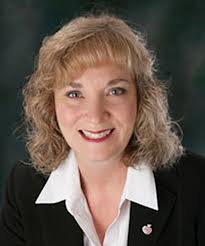
Glenda Ritz
Indiana: State superintendent Tony Bennett, a leading light in the school choice and ed reform movement, loses his bid for re-election to Glenda Ritz, an elementary school media specialist (Indianapolis Star). Gov.-elect Mike Pence promises to continue pushing reform (Indiana Public Media).
Georgia: Voters back a constitutional amendment that creates a new state commission than can approve charter schools (New York Times).
Washington: Vote on the charter school ballot initiative is still too close to call (Seattle Times).
California: Mayor Antonio Villaraigosa vowed to fix public education by pushing for groundbreaking initiatives such as Public School Choice, which allowed teachers, charters and other outside operators to bid on low-performing schools. The result: dramatically improved test scores and graduation rates (Huffington Post op-ed).
Tennessee: The Memphis school district and charter schools snipe over funding (Memphis Commercial Appeal).
Mississippi: Republican lawmakers plan a big push for charter schools next year (Madison County Journal).
Florida: Voters reject Amendment 8, a "religious freedom" measure that critics claimed was about private school vouchers (Tampa Bay Times). Speculation abounds about Tony Bennett as a possibility for state education commissioner (redefinED).
New York: Tensions rise over proposal to convert low-performing schools in Buffalo into charters (Buffalo News).
Washington D.C.: Charter school academic ratings are released for a second year (Washington Post).

Shannon
School district officials and state lawmakers aren’t the only ones outraged by a failing Orlando charter school that cut its principal a check, as it was closing its doors, for half a million dollars.
“This is totally unacceptable,’’ Cheri Shannon, president and chief executive officer of the Florida Charter School Alliance, told redefinED Friday.
Added Lynn Norman-Teck of the Florida Consortium of Public Charter Schools, in a prepared release: “The alleged behavior of NorthStar is the exception, not the rule. There are many examples of public charter schools, their governing boards, and administrators, with exemplary records.’’
The Orlando Sentinel reported Thursday that NorthStar High School’s board of directors paid Principal Kelly Young $519,453.36 in taxpayer dollars. The lump-sum payment occurred two days after the Orange County School Board accepted the school’s plan to close instead of being shut down by the district for poor performance.
The principal’s payout was based on a contract that paid her $305,000 a year through 2014, even though the school’s contract with the district was up for renewal in 2012, the Sentinel reported. In addition, the charter school is still paying Young $8,700 bi-monthly to oversee the school’s shutdown, the newspaper wrote.
The story has stoked criticism of charter schools, which receive public money but are run by private boards. And it comes at a sensitive time. Charter schools in Florida served 180,000 students last year and are expected to enroll twice that many by fall 2017. Proponents, including Gov. Rick Scott, are pushing for even greater expansion. (more…)
 Editor's note: Better (a day) late than never. This was posted on The Charter Blog yesterday:
Twenty years ago today, the first public charter school opened in St Paul, MN, forging the path for the most innovative public education reform movement in a century. The concept of charter schools was proposed by a local Citizens League and authorized by bi-partisan legislation endorsed by a Democratic-majority legislature and a Republican governor. City Academy High School was started by two teachers and a youth recreation leader who wanted the autonomy to provide students at high risk of dropping out with the choice of a new type of public school that could better serve their needs.
Today, politicians from both sides of the aisle support charter schools, including Presidents Clinton, Bush, Obama, and Governor Romney. Legislatures in 41 states and Washington, D.C. have adopted charter school legislation. Additionally, in the last two years, 19 states strengthened their charter school laws by lifting caps restricting charter growth, providing more equitable funding and facilities support, and enacting new authorizing and accountability measures. Maine enacted its first charter school law.
And demand for public charter schools is at an all time high. More than 2,000,000 students attend approximately 5,600 charter schools, and more than 610,000 more are on waiting lists. Full post here.
(Image from unciaandtigris.blogspot.com)
 Florida: The Seminole County School District, one of the state's biggest, offers more online classes and other educational options to compete with private and charter schools and home schooling (Orlando Sentinel). Meanwhile, another large district receives 36 applications for new charter schools (Palm Beach Post).
Tennessee: Gov. Bill Haslam says questions remain on a voucher proposal that's expected to get legislative attention next year (Nashville Public Radio). State education officials and the Nashville school board are in a standoff over a proposed charter school that wants to open in an affluent part of the city (Education Week).
Louisiana: In the wake of the new voucher program, state education officials will consider tightening rules for the establishment of new private schools. (New Orleans Times Picayune) Expanded online learning options give Louisiana students a chance to graduate early or catch up on credits. (The Advocate)
Washington: The state PTA opposes the charter school initiative on the November ballot. (The News Tribune)
Texas: Some charter school supporters oppose a state education funding lawsuit that suggests state resources are inadequate. (Austin American Statesman)
Indiana: Between vouchers and charter schools, northwest Indiana parents have more school choices than ever before. (Post Tribune) (more…)

