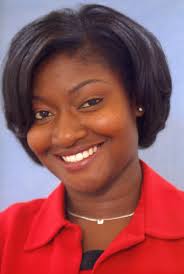
Rep. Morgan
Say school choice and some Democrats say profits, privatization, Republican plot.
Democrat Alisha Thomas Morgan says equal opportunity.
“We’ve got to put policies in place to ensure that how much my parents make or the neighborhood I live in does not determine the quality of education,” Morgan, a state representative in Georgia, says in the redefinED podcast attached below. “And so I think in terms of leveling the playing field, in terms of equal access, in terms of equality. To me, these are very much Democratic values and why I support school choice.”
Morgan is among a new breed of Democrats, many of them younger, many of them minority, who are embracing school choice despite the strains it can put on their relationships with fellow Dems and longtime allies. First elected in 2002 – at the age of 23 – Morgan, a Miami native, said she underwent her own evolution on school choice in part because conversations with parents led her to recognize “a lot of my opposition was really political.”
Now she’s a rising national star in school choice and ed reform circles, a Democrat who hasn’t been afraid to step out front on charter schools and tax credit scholarships in her home state and politely encourage other Democrats to live up to their core principles. “Education is not a Democrat or Republican issue; it’s a kids’ issue,” she said. “But I do think that Democrats should provide leadership here, and not be sort of dragged along as these reforms happen across the country.”
That’s not to say Morgan doesn’t empathize. It can be lonely as a pro-school-choice Democrat, she said. And it can be tough convincing other Democrats when their positions are at odds with Republicans on so many other issues. “What I’ve learned to do is to separate that we agree on this set of issues and these things we can work together; the other things, I’m going to fight you, just like the other Democrats do,” she said. “But I don’t think some of my friends on the Democratic side have been able to make that separation.”
In the interview, Morgan also said:
The privatization argument doesn’t make a lot of sense. (more…)
 Florida: Tony Bennett is selected the state's new education commissioner (redefinED). He tells reporters afterwards that he champions school choice first and foremost because of the social justice component (redefinED). A new group headed by T. Willard Fair, co-founder of the state's first charter school, aims to create a pipeline of black executives and entrepreneurs to help lead private and charter schools (redefinED). The Miami-Dade school district ranks No. 10 in the country for school choice, according to a new report from Brookings (redefinED). A Catholic school in Tampa is at the heart of a University of Notre Dame project to revitalize Catholic schools, particularly for Hispanic students. (redefinED).
Louisiana: Voucher parents are worried in the wake of the legal ruling that puts the program in limbo (advertiser.com). Gov. Bobby Jindal makes a pitch for vouchers at a Brookings Institution event in Washington D.C. (Huffington Post).
Washington: More than 150 teachers, parents and administrators attend a charter school conference in the wake of the successful passage of a charter school ballot initiative (Tacoma News Tribune). (Full disclosure: The conference was sponsored by the Washington Charter School Research Center, which was founded by Jim and Fawn Spady. Fawn Spady chairs the board of directors at the American Center for School Choice, which co-hosts this blog.)
Michigan: The education adviser to Gov. Rick Snyder presents the governor's sweeping public school choice proposal to business and education leaders (Grand Rapids Business Journal). (more…)
Editor’s note: Today, we introduce a new feature (even if we’re not sure the name will last) - an occasional compilation of bite-sized nuggets about school choice and education reform that are worth noting but may not be worth a post by themselves.
More anti-Muslim bigotry in school choice debates
It’s nearly impossible to go a month without hearing another example of anti-Muslim bigotry in a school choice debate.
The latest example: Louisiana state Rep. Valarie Hodges, who now says she wishes she had not voted for Gov. Bobby Jindal’s voucher bill because she fears it will promote Islam. “There are a thousand Muslim schools that have sprung up recently,” she said. “I do not support using public funds for teaching Islam anywhere here in Louisiana.”
The lawmaker’s comments echo Muslim bashing in school choice debates in Kansas, Alabama, Tennessee and other places in the past few months alone. Sadly, religious bigotry has long been a part of the school choice narrative. To repeat what we wrote in April:
The courts have ruled that vouchers and tax credit scholarships are constitutional. We live in a religiously diverse society and this pluralism is a source of pride and strength. We can’t pick and choose which religions are acceptable and unacceptable for school choice. And we should not tarnish whole groups of people because of the horrible actions of a few individuals. In the end, expanded school choice will serve the public good. It will increase the likelihood that more kids, whatever their religion, become the productive citizens we all want them to be.
Jeb Bush endorses pro-choice school board candidate
Jeb Bush doesn’t endorse local candidates often. But last week, he decided to back a Tampa Bay-area school board member who openly supports expanded school choice, including vouchers and tax credit scholarships.
Glen Gilzean, 30, is running against four other candidates to keep the Pinellas County School Board seat that Gov. Rick Scott appointed him to in January. The district in play includes much of the city of St. Petersburg and has more black voters than any other.
I don’t know how much Bush’s endorsement will help Gilzean. He's a black Republican in a district that leans Democratic (even if school board races in Florida are officially nonpartisan). But I do know this: Black students in Pinellas struggle more than black students in every major urban school district in Florida, and frustrated black residents are increasingly open to school choice alternatives. (more…)
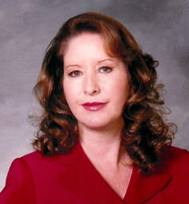
Romero
by Gloria Romero
Diane Ravitch, are you listening?
This is former state Sen. Gloria Romero calling.
I am the author of California’s first Parent Trigger law, the first parent trigger law in the nation. Since I first wrote that law, some 15 other states have seen some version of the law introduced in their states.
I wanted to reach out to you since we have never met, and I look forward to meeting you so we can one day talk directly with each other. Woman to woman.
In one of your recent blog posts on Education Week, you wrote that the parent trigger came from the American Legislative Exchange Council (ALEC). On the blogosphere, I now read many claims that ALEC wrote the law. This is completely false, and I ask you to correct this.
Please, stop saying that some organization I had never met until just this year gave me the idea and somehow, miraculously, turned it into law without me not knowing about it. ALEC happens to like the law and encourages other states to write similar laws. That is true. But that does not mean it developed either the idea or the law. That’s preposterous! Quite frankly, it’s also a bit sexist and ethnocentric to assert my work actually came from someone else - that somehow the Latina senator from East Los Angeles couldn’t think on my own, or figure out how to write a bill and turn it into law.
To be fair, you are not alone in failing to acknowledge my role, or the role of other strong individuals (mostly women of color) in getting the bill passed. I always recognize Ben Austin from Parent Revolution for suggesting the idea. Unfortunately, the materials Parent Revolution distributes make it sound as if parents cascaded on the state Capitol and forced this into law. It seldom concedes in its materials that someone actually had to write a bill and argue and negotiate for its enactment. While it sounds romantic to say parents demanded this and descended on the Capitol to force this into law, that is too much Hollywood. In fact, we did have parents in Sacramento. But many of them were from organizations that were not affiliated with Parent Revolution, and they are seldom acknowledged.
One day I will write the full story of how the Parent Empowerment Act (its official title) became law. In the meantime, let it suffice to say that both you and Parent Revolution and anyone else who writes about the law should know that once the idea was discussed with me, I chose to expand and develop it in a bill. I developed a strategy. I worked with my legislative staff to write language. I assembled a “rag tag” army of civil rights activists who understood that this was our moment to enact the change in which I so strongly believed. And I never saw an ALEC representative. (more…)

